How to Start a Crystal Jewelry Collection: A Practical Guide for Beginners
Why People Collect Crystal Jewelry
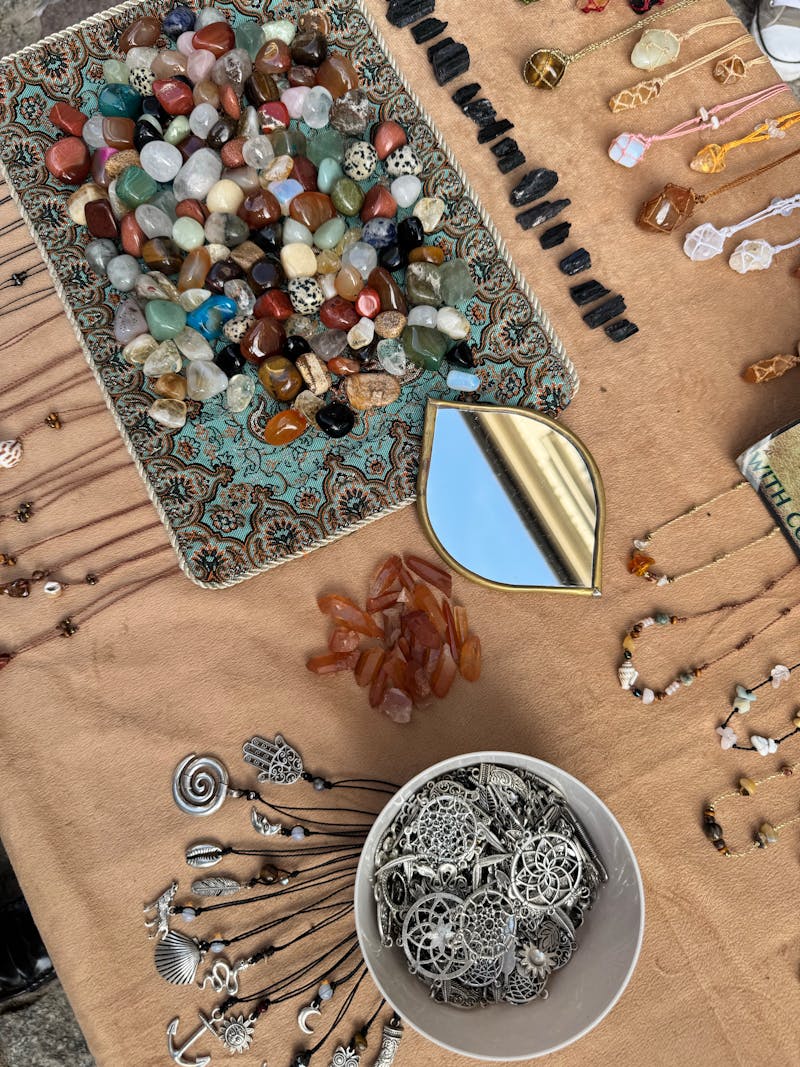
If you have ever found yourself drawn to the glint of an amethyst pendant or the soft pink glow of rose quartz resting on a shop counter, you are far from alone. Crystal jewelry has surged in popularity over the past decade, and people collect it for reasons that go well beyond simple decoration.
For many collectors, the appeal starts with aesthetics. Crystals are, by their nature, visually stunning. No two pieces are identical, and the way light plays across a well-cut gemstone creates something genuinely unique. Whether you prefer the deep violet of amethyst, the ocean-blue of aquamarine, or the grounding earth tones of smoky quartz, there is a crystal out there that resonates with your personal style.
But crystal jewelry also carries a deep healing and spiritual dimension. For centuries, various cultures have attributed energetic properties to different stones. Amethyst is said to promote calm and clarity. Citrine is linked to abundance and confidence. Black tourmaline is prized for its supposed protective qualities. While scientific evidence for these claims varies, the ritual of selecting, wearing, and caring for a crystal can itself be a powerful mindfulness practice.
Some collectors approach crystal jewelry from an investment perspective. Rare specimens—especially those with exceptional color, clarity, or unusual inclusions—can appreciate in value over time. High-quality pieces from well-known lapidary artists or established jewelry brands tend to hold their value particularly well.
Finally, crystal jewelry serves as a form of self-expression. Your collection tells a story about who you are, what you value, and what catches your eye. Unlike mass-produced fashion jewelry, every crystal piece has its own character.
Getting Started: The Right Way to Begin
One of the biggest mistakes beginners make is buying too much too fast. It is tempting to walk into a crystal shop—or browse an online store—and want everything. Resist that urge.
Start with just one to three pieces. This gives you time to learn what you genuinely enjoy wearing, what fits your lifestyle, and what resonates with you on a personal level. A small starter collection also means you can invest in better quality per piece rather than spreading your budget thin across dozens of cheap items.
Think of your first few purchases as a discovery phase. You are not building a museum collection—you are figuring out your taste. Some people discover they love bold, colorful statement pieces. Others find they gravitate toward subtle, neutral-toned stones that pair with everything. Both approaches are valid.
Visit local crystal shops, gem shows, and artisan markets when possible. Handling stones in person teaches you far more about quality and preference than any online guide can. Pay attention to which stones you keep coming back to look at. That instinct is usually worth following.
Choosing Your First Crystal Jewelry Piece
When it comes to your very first piece of crystal jewelry, a bracelet is almost always the smartest choice. Here is why: bracelets are versatile, they are easy to wear, they do not get in the way of daily activities, and you can see and feel the stone throughout the day. For a deeper dive into getting started with crystal bracelets specifically, check out our complete beginner guide to crystal bracelets.
After a bracelet, your next logical addition is a necklace or pendant. Necklaces keep the crystal close to your heart (literally), and many people find this positioning meaningful for stones associated with emotional healing, like rose quartz or green aventurine. Pendants also tend to showcase larger, more impressive stones than bracelets, making them great statement pieces.
Rings are a wonderful third addition, though they require a bit more consideration around sizing and durability. Crystal rings take more daily wear and tear than necklaces or bracelets, so choose harder stones (Mohs scale 7 or above) for rings—amethyst, citrine, and clear quartz are all excellent choices.
Earrings round out the basics and add a lovely finishing touch to any outfit. Crystal drop earrings, in particular, catch light beautifully and can elevate even a simple outfit.
Budget-Friendly Strategies for Every Level
You do not need to spend a fortune to start a meaningful crystal jewelry collection. Here is a practical breakdown by budget range:
Under 0: The Starter Set
This is more than enough to build a solid foundation. At this price point, you can typically get one or two good-quality beaded bracelets and a simple pendant. Look for tumbled stone bracelets (beaded stretch bracelets)—they are among the most affordable options and come in an enormous variety of stone types. A 5-5 tumbled amethyst or rose quartz bracelet from a reputable seller is an excellent starting point.
00-00: The Growing Collection
At this level, you can begin to diversify. Consider adding a faceted pendant, a wire-wrapped crystal necklace, or a set of complementary bracelets. This budget also opens up options for better-quality settings—sterling silver or gold-filled rather than base metal. You might also explore raw crystals versus tumbled stones to decide which aesthetic you prefer.
00 and Beyond: The Curated Collection
This is where collecting gets serious. At this price point, you can invest in rare specimens, custom-crafted pieces from independent jewelers, and solid gold settings. Think museum-quality amethyst geode slices, high-grade larimar pendants, or custom-made rings featuring investment-grade stones. If you are considering this level, take your time, research thoroughly, and buy from established sellers with strong reputations.
Understanding Crystal Materials: Natural, Synthetic, and Fake
This is perhaps the single most important topic for any new crystal collector to understand. The market is unfortunately full of misleading products, and knowing what you are buying protects both your wallet and your experience.
Natural crystals are exactly what they sound like—mined from the earth, cut and polished (or left raw), and set into jewelry. They may have minor imperfections, inclusions, and color variations, all of which are signs of authenticity. Natural crystals are what most collectors ultimately want.
Synthetic crystals (also called lab-grown or lab-created) have the same chemical composition and crystal structure as their natural counterparts, but they are created in a laboratory. They are not fake in the traditional sense—they are real crystals, just not mined. Synthetic amethyst, for example, is chemically identical to natural amethyst. These stones tend to be more affordable and can have remarkable clarity. However, they should always be disclosed as lab-grown by the seller. For a thorough comparison, read our detailed guide on natural stone versus synthetic crystal.
Glass imitations are where things get problematic. These are simply colored glass shaped to look like crystals. They have no crystalline structure, no energetic properties (if you believe in that), and minimal value. Unfortunately, they are extremely common in cheap jewelry. Dyed howlite sold as turquoise, glass sold as obsidian, and plastic resin sold as amber are all rampant in the market.
How to spot fakes: Look for perfectly uniform color with zero inclusions (suspicious in stones that should have them), unusually low prices for supposedly rare stones, bubbles visible under magnification (a dead giveaway for glass), and sellers who cannot or will not specify the origin of their materials.
Building a Purpose-Driven Collection
As your collection grows, it helps to think about organizing it by purpose. This makes it easier to choose the right piece for the right moment and ensures your collection stays practical rather than cluttered.
Everyday Wear
These are your go-to pieces—durable, versatile, and comfortable for all-day wear. Tumbled stone bracelets, simple pendants, and small stud earrings fall into this category. Choose stones with a Mohs hardness of 6 or above for everyday pieces, as softer stones scratch more easily. Quartz varieties (amethyst, citrine, rose quartz, clear quartz) are ideal everyday stones.
Meditation and Healing
If you use crystals for spiritual or mindfulness practices, you might keep separate pieces specifically for this purpose. Larger raw or tumbled stones, crystal pendants worn during meditation, and palm stones all work well. Some people prefer to keep their healing crystals separate from their fashion pieces to maintain what they see as the energetic integrity of each set.
Special Occasions
Statement pieces—large pendants, elaborate earrings, bold rings—belong here. These are the showstoppers you save for events, dinners, or moments when you want to make an impression. Since they see less frequent wear, you can choose softer, more delicate stones that you would not risk for daily use.
Investment and Rarity
As your knowledge deepens, you may start acquiring pieces specifically for their rarity or potential value appreciation. This category includes unusual color variants (like paraiba tourmaline or padparadscha sapphire), stones with exceptional clarity, museum-quality specimens, and pieces from renowned lapidary artists. This tier requires significant research and trusted dealer relationships.
Styling Crystal Jewelry: Making It Work
One of the joys of crystal jewelry is how naturally it pairs with other materials. Here are some tried-and-true combinations:
Crystal and silver: A classic pairing. Sterling silver amplifies the cool tones of stones like amethyst, blue lace agate, and aquamarine. This combination works for everything from casual to formal occasions.
Crystal and gold: Warm and luxurious. Gold settings beautifully complement warm-toned stones like citrine, tiger eye, and carnelian. Rose gold pairs especially well with rose quartz and morganite.
Crystal and leather: Earthy and bohemian. Leather cord necklaces with raw crystal pendants create a relaxed, natural look that works well for everyday wear.
Stacking: Do not be afraid to wear multiple crystal bracelets together. If you are wondering about the energetic implications of stacking, our article on wearing multiple crystal bracelets covers the considerations in detail. From a style perspective, the key is to choose stones with complementary or harmonious colors. A stack of neutral stones (clear quartz, smoky quartz, howlite) is effortlessly chic, while a rainbow stack makes a bold, playful statement.
Caring for Your Crystal Jewelry
Proper care keeps your crystals looking beautiful and ensures they last for years. Different stones have different needs, but here are the universal basics:
Cleaning: Most crystal jewelry can be gently cleaned with lukewarm water and mild soap. Use a soft brush for any dirt in settings. Avoid harsh chemicals, ultrasonic cleaners (which can fracture certain stones), and steam cleaning unless you are certain the stone can handle it. For comprehensive cleaning guidance, see our article on how to clean crystal jewelry: dos and don'ts.
Storage: Store each piece separately to prevent scratching. Softer stones (like turquoise, opal, and pearl) are particularly vulnerable to harder stones. Use individual pouches, compartmentalized jewelry boxes, or soft cloth bags. Keep pieces away from direct sunlight for extended periods, as some stones (amethyst, rose quartz, citrine) can fade with prolonged UV exposure.
Avoiding damage: Remove crystal jewelry before swimming, bathing, exercising, or doing household chores. Chlorine, salt water, sweat, and cleaning chemicals can all damage both the stones and their metal settings. Put jewelry on after applying perfume, lotion, or makeup—these products can dull or etch crystal surfaces over time.
Energetic cleansing: If you follow crystal healing traditions, many practitioners recommend periodically cleansing crystals to refresh their energy. Common methods include placing them in moonlight (especially during a full moon), smudging with sage or palo santo, burying them briefly in soil, or placing them on a selenite charging plate. While these practices are spiritual rather than scientific, many collectors find them to be a meaningful part of their crystal care routine.
Common Beginner Mistakes to Avoid
Learning from others' experiences can save you money and frustration. Here are the pitfalls that catch most new collectors:
Buying based solely on price: The cheapest option is rarely the best value in crystal jewelry. Extremely low prices often mean glass imitations, poor-quality materials, or unethical sourcing. You do not need to buy the most expensive option, but suspiciously cheap crystals should raise a red flag. A genuine tumbled stone bracelet from a reputable source typically costs 0-0; anything significantly below that range is worth scrutinizing.
Ignoring size and fit: This applies especially to bracelets and rings. A bracelet that is too tight is uncomfortable and risks breaking the elastic. One that is too loose slides around and may fall off. Always check sizing charts and, when possible, try pieces on before buying.
Not researching the seller: Before making a purchase, check the seller's reviews, return policy, and information about their sourcing. Reputable crystal dealers are transparent about whether their stones are natural or lab-grown and where they come from. If a seller cannot or will not provide this information, shop elsewhere.
Overlooking metal quality: The setting matters as much as the stone. Base metals (like nickel alloy) can cause skin irritation and tarnish quickly. Sterling silver (stamped 925), gold-filled, or solid gold settings are worth the extra investment. Stainless steel is another excellent, affordable option that resists tarnishing.
Storing everything together: Throwing all your crystal jewelry into a single box or drawer is a recipe for scratched, tangled, and damaged pieces. Invest in basic storage solutions from the start—individual pouches cost just a few dollars and protect your collection significantly.
Taking Your Collection to the Next Level
Once you have established a solid foundation and developed your taste, you might feel the pull to go deeper. Here is what advanced collecting looks like:
Rare and unusual varieties: Start exploring beyond the common quartz family. Stones like larimar (found only in the Dominican Republic), charoite (exclusive to Siberia), sugilite, and tanzanite offer unique colors and stories. Rarity drives both beauty and value.
Hand-cut versus machine-cut: Machine-cut (or cabochon) stones are uniform, symmetrical, and affordable. Hand-cut stones show the lapidary artist's skill and often have more character. Freeform cuts, in particular, follow the natural shape of the rough stone and create truly one-of-a-kind pieces. As your collection matures, you will likely develop an appreciation for the craft behind hand-cut stones.
Independent designers and small studios: Mass-produced crystal jewelry is widely available, but the most interesting pieces come from independent artisans. Look for jewelers who hand-select their stones, design their own settings, and can tell you the story behind each piece. Instagram, Etsy, and craft shows are great places to discover emerging crystal jewelry artists.
Certification and documentation: For high-value pieces, consider getting a gemological certificate. Organizations like the GIA (Gemological Institute of America) can verify the identity and quality of stones, which is especially important for expensive or rare specimens.
Frequently Asked Questions
How many pieces should I start with?
One to three pieces is ideal for your first purchase. This gives you a chance to learn your preferences without overwhelming your budget or your jewelry box. You can always add more over time—building a collection is a journey, not a race.
How do I know if a crystal is real or fake?
Look for natural imperfections (inclusions, slight color variations), check the price against market norms (too cheap is suspicious), examine for bubbles under magnification (indicates glass), and buy from reputable sellers who disclose their materials. When in doubt, a local gemologist can test the stone for you.
Can I wear crystal jewelry every day?
Absolutely—many crystals are durable enough for daily wear. Quartz varieties (amethyst, citrine, rose quartz, clear quartz) are all excellent everyday choices with a hardness of 7 on the Mohs scale. Just be mindful of activities that could damage your jewelry, like heavy lifting, swimming, or contact with chemicals.
What is the best crystal for a beginner to buy first?
Clear quartz is often recommended as a first crystal because of its versatility and availability. Amethyst is another excellent choice—it is beautiful, widely available, moderately priced, and one of the most popular crystals worldwide. A simple tumbled amethyst bracelet makes a perfect first piece.
How should I store my crystal collection?
Store each piece individually in a soft pouch or compartment to prevent scratching. Keep the collection away from prolonged direct sunlight and moisture. A jewelry box with dedicated compartments works well, and silica gel packets can help control humidity for pieces stored long-term.
Final Thoughts
Starting a crystal jewelry collection is one of those hobbies that can be as simple or as deep as you want it to be. Some people are happy with a few beloved pieces they wear every day. Others build extensive collections spanning hundreds of stones, each with its own story and significance.
The most important thing is to buy what you love. Trends come and go, but a crystal that genuinely speaks to you will never go out of style. Take your time, learn as you go, and enjoy the process. Your collection is a reflection of your journey—and that makes every piece in it meaningful.
Disclosure: This article was created with the assistance of AI writing tools. While we strive for accuracy and helpfulness, we recommend consulting with a qualified gemologist or crystal specialist for professional advice on crystal identification, valuation, and care. The healing properties mentioned are based on traditional beliefs and should not replace professional medical advice.

Comments