How to Make a Hammered Gold-Fill Ring: A Complete Step-by-Step Tutorial for Beginners
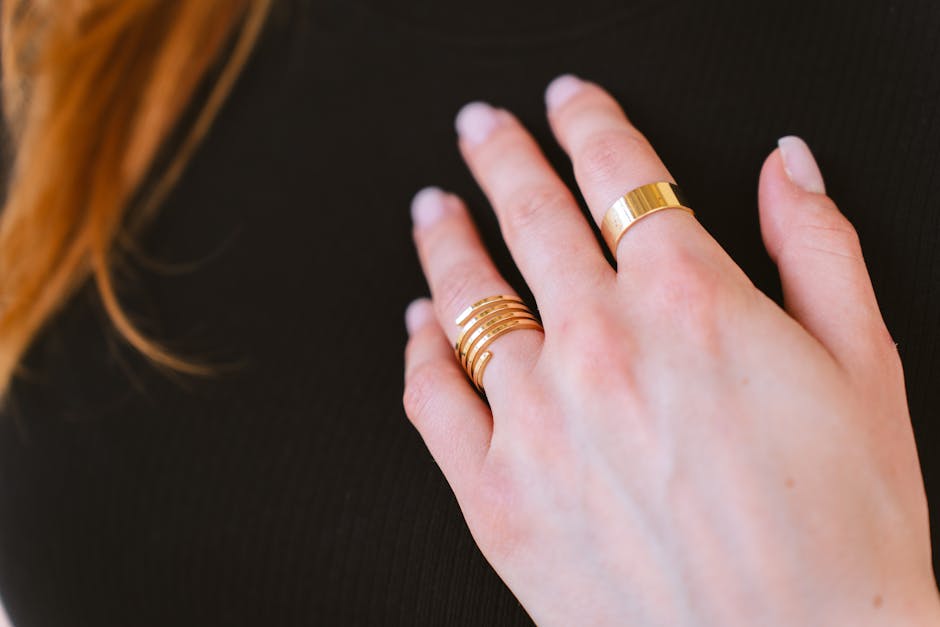
I made my first hammered ring on a Tuesday afternoon with a $12 hammer and a piece of wire I bought at a craft store. It was ugly — lopsided, the texture was uneven, and the edges weren't filed smooth. But I wore it anyway. Something about a ring I made with my own hands felt different from anything I'd ever bought.
That was three years ago. Since then, I've made hundreds of hammered rings — for myself, for friends, for craft shows, and eventually for SageStone. And I've learned that the hammered ring is one of the most forgiving and rewarding projects a beginner can tackle. You don't need a studio. You don't need expensive equipment. You need about $40 in tools, $15 in materials, and a couple of hours.
Here's everything I wish someone had told me when I started.
What Exactly Is a Hammered Ring?
A hammered ring is exactly what it sounds like: a ring shaped from metal wire and then textured with a ball-peen hammer. The hammering creates a faceted, almost crystalline surface that catches light beautifully. No two rings ever look exactly the same, which is part of the appeal.
Gold-fill wire is the most popular material for beginners because it's real gold bonded to a brass core — it wears like solid gold but costs a fraction of the price. Sterling silver is another great option. Copper is the cheapest and warmest-looking, though it will patina over time.
What You'll Need: Tools
Here's the complete tool list. I'll note which ones are essential and which are nice-to-have:
Essential Tools
- Ball-peen hammer ($8-15) — This is the star of the show. You want one with a rounded end (the "ball" side). The flat end is for general hammering; the ball end creates the textured dimpled surface. Avoid hammers that are too heavy — 4 to 8 ounces is ideal for beginners. I use a 6-ounce Stanley that cost me $10.
- Steel bench block or anvil ($10-25) — You need a hard, flat steel surface to hammer on. A small 2x2 inch bench block is perfect. Don't use a regular hammer on your kitchen counter — you'll ruin both the counter and the ring.
- Round-nose pliers ($6-12) — For bending the wire into a circle and adjusting the shape. The tapered jaws let you make curves of different sizes.
- Flat-nose pliers ($6-12) — For gripping the wire firmly and making sharp bends. Chain-nose pliers (tapered flat jaws) work well too.
- Wire cutters ($5-10) — Flush cutters are best — they cut the wire flat on one side so you don't have jagged edges. Don't use scissors or your kitchen shears.
- Ring mandrel ($8-20) — A tapered steel rod marked with ring sizes. You'll use this to shape the ring and check the size. Plastic mandrels exist but they're too soft — the hammer will dent them. Get steel.
- Needle file set ($5-10) — For smoothing rough edges after cutting. You specifically want a fine-cut flat file. A set usually includes round, half-round, and flat files — all useful.
Nice-to-Have Tools
- Nylon-jaw pliers ($8-12) — These have smooth nylon jaws that grip wire without leaving marks. Great for final shape adjustments without scratching the surface.
- Polishing cloth ($3-6) — A jeweler's rouge cloth for a final shine. Sunshine brand makes good ones.
- Ring sizer ($2-5) — A set of plastic ring gauges. Useful if you're making rings as gifts and need to secretly figure out someone's size.
- Safety glasses ($5) — Wire can snap unexpectedly when you're cutting or bending. Protect your eyes. I didn't wear them for my first year and got a wire fragment in my eye once. Lesson learned.
Total essential tool cost: roughly $50-80. If you're crafty, you might already have some of these. The tools last for years — I'm still using the same hammer and mandrel I bought three years ago.
What You'll Need: Materials
- Gold-fill round wire, 14-gauge or 16-gauge ($15-25 for 1 foot) — 14-gauge is thicker and more substantial but harder to bend. 16-gauge is easier for beginners and still looks great. I recommend 16-gauge for your first few rings. Gold-fill (not gold-plated!) is important — it has a much thicker gold layer that won't wear off. You can buy gold-fill wire from Rio Grande, Halstead, or even Amazon.
- Sterling silver round wire ($8-15 for 1 foot) — A more affordable alternative. Silver hammers beautifully and develops a lovely patina over time.
For one ring, you need about 2.5 to 3 inches of wire, depending on the ring size. A foot of wire gives you 4-5 rings, so the material cost per ring is about $3-6.
How Much Wire Do You Need for Each Ring Size?
Here's a quick reference. These are approximate — always cut a little extra and trim later:
- Size 5: about 2.25 inches
- Size 6: about 2.4 inches
- Size 7: about 2.5 inches
- Size 8: about 2.6 inches
- Size 9: about 2.75 inches
- Size 10: about 2.9 inches
The formula is simple: ring circumference = wire length. The mandrel makes it easy — just wrap the wire around the mandrel at the target size and mark where to cut.
Step-by-Step: Making Your Hammered Ring
Step 1: Measure and Cut the Wire
Wrap the wire around the ring mandrel at the size you want. Go one size larger than your target — the ring will shrink slightly when you hammer it. Mark the point where the wire overlaps with a fine-tip marker.
Cut the wire with your flush cutters. Cut straight across — an angled cut will make it harder to close the gap later. Use the flat side of the cutters (the side that leaves a flush edge) facing the part you're keeping.
Step 2: File the Cut Ends
This step matters more than you'd think. Use your flat file to smooth both cut ends until they're flat and slightly rounded (not sharp). Hold the wire and file in one direction — back-and-forth filing doesn't work as well.
Test the ends by running your finger over them. If you feel any sharpness or roughness, keep filing. The ends need to meet flush when the ring is closed, or you'll have a visible gap.
Step 3: Shape the Ring on the Mandrel
Place the wire on the mandrel at your target size (remember, one size up from what you actually want). Wrap your fingers around the wire and press it against the mandrel, sliding it back and forth to start the curve.
Once you have a rough curve, use your round-nose pliers to close the ends together. The wire won't be a perfect circle yet — that's fine. You'll refine the shape after hammering.
At this point, the ends should overlap slightly. That's intentional — you'll hammer the ring, which will stretch and work-harden the metal, and the ends will move apart slightly.
Step 4: Hammering — The Fun Part
Place the ring on the steel bench block. Hold the hammer lightly near the end of the handle — you want control, not force. Tap the ring with the ball end of the hammer, working your way around the entire surface.
Key tips for good hammering:
- Strike evenly around the ring. If you hammer one spot too much, it'll get thinner and the ring won't be round.
- Let the weight of the hammer do the work. You're tapping, not swinging. Think of it like raindrops, not thunder.
- Rotate the ring a quarter turn after every 3-4 taps to keep the texture even.
- The ring will flatten and widen slightly as you hammer. This is normal and part of the look.
- Don't hammer the ends where they meet — you'll mushroom the metal and the ring won't close properly.
After the first pass, flip the ring over and hammer the inside. This helps keep the ring round and adds texture to the interior surface.
Step 5: Reshape on the Mandrel
After hammering, the ring will probably be slightly oval or uneven. Put it back on the mandrel and tap it gently with the flat side of your hammer (or your nylon-jaw pliers if you have them) to bring it back to round.
Slide it up and down the mandrel a few times. This work-hardens the metal and helps it hold its shape.
Step 6: Close the Ring
Use your flat-nose pliers to bring the two ends together. If you filed them well in Step 2, they should meet flush with no visible gap.
Sometimes the ends overlap a bit too much after hammering. If that happens, use your wire cutters to trim a tiny sliver off one end, re-file, and try again. It's better to remove material than to force a gap closed.
For a more secure closure (and a cleaner look), you can solder the seam. But that requires a torch and soldering skills, which is a whole separate tutorial. For now, a tight butted joint works fine for most wearers.
Step 7: Final Shaping and Polishing
Put the ring back on the mandrel one last time. Tap it gently to make sure it's perfectly round. Check the size — it should have shrunk by about a quarter to half a size from the hammering.
Use your polishing cloth to buff the surface. The hammered texture will shine beautifully where the hammer flattened the metal, while the deeper dimples will stay slightly matte. This contrast is what makes hammered rings so attractive.
If you want a more mirror-like finish on the raised areas, you can use a polishing compound on a buffing wheel, but that's optional. A good polishing cloth gives a beautiful soft shine that suits the handmade aesthetic.
Common Mistakes (and How to Avoid Them)
Mistake 1: Hammering Too Hard
New makers tend to whale on the ring like they're driving a nail. The result: a flat, thin, warped piece of metal that doesn't look like jewelry. Remember: light, even taps. You can always hammer more, but you can't un-hammer.
Mistake 2: Not Filing the Ends Enough
A rough or angled cut end means the ring won't close properly. You'll see a gap or feel a sharp edge when wearing it. Take the time to file both ends perfectly flat. It's tedious but it makes the difference between "homemade" and "handmade."
Mistake 3: Skipping the Mandrel Between Steps
If you just hammer on the bench block and never check the shape on the mandrel, your ring will be lopsided. Check the shape frequently. After every 15-20 hammer taps, put it back on the mandrel and reshape.
Mistake 4: Using the Wrong Wire Gauge
18-gauge or thinner wire will bend too easily during hammering and won't hold its shape. 12-gauge or thicker is extremely hard to bend by hand. Stick with 14 or 16-gauge for your first rings.
Mistake 5: Forgetting to Account for Shrinkage
Hammering work-hardens and slightly shrinks the ring. If you start at size 7, you'll end up around size 6.5 or 6.75. Always start one size larger than your target.
Variations to Try Once You're Comfortable
Double-Hammered Texture
Do a first pass with the ball-peen hammer, then do a second pass with a cross-peen hammer (the wedge-shaped end). The two different hammer marks create an interesting layered texture that looks more complex than it is.
Bezel-Set Stone Hammered Ring
Once you can make a clean hammered ring, try adding a small bezel setting. You solder a tiny cup of fine silver to the top of the ring, set a 4mm or 6mm stone, and press the bezel over it. It sounds intimidating but it's the natural next step — and it transforms a simple band into a "real" piece of jewelry that you can sell.
Stacked Hammered Rings
Make 3-4 thin hammered rings in the same size (or slightly different sizes) and wear them together. This is a very popular style right now. You can mix metals — one gold-fill, one silver, one copper — for a warm, layered look.
Wide Band
Use 12-gauge or even 10-gauge wire for a wider, more substantial band. These are harder to shape but have a bold, sculptural quality. They're particularly popular with men's jewelry.
Safety Tips
- Wear safety glasses. I know I said this already but I'm saying it again. Wire can snap. Fragments can fly. Your eyes are not replaceable.
- Hammer in a well-ventilated area if you're doing any soldering or polishing with compounds.
- Don't hold wire with your bare hand directly behind where you're cutting. The cut end can be sharp and can pinch skin.
- Keep fingers clear of the hammer strike zone. Sounds obvious but when you're concentrating on the ring, it's easy to lose track of where your fingers are.
- If you progress to soldering, use a fire-resistant surface, keep a fire extinguisher nearby, and tie back long hair. Soldering torches get very hot very fast.
What Does It Cost to Start Selling Hammered Rings?
If you're reading this and thinking about selling your work (which is how SageStone started, by the way), here's a realistic cost breakdown:
- Material cost per ring: $3-6 (gold-fill) or $1.50-3 (sterling silver)
- Tool amortization: about $0.50-1 per ring (if you spread the $80 tool cost over 100 rings)
- Total cost per ring: $4-7
- Typical selling price: $25-65 depending on material and design
- Profit margin: roughly 70-85%
That's an excellent margin for a handmade product. The main cost isn't materials — it's your time. A beginner might spend 30-45 minutes per ring. With practice, you can get it down to 15-20 minutes.
The Part Nobody Talks About
Here's something I've noticed after making hundreds of rings: the first 10 are going to be rough. Maybe the first 20. That's normal and expected. Every skilled jeweler went through the same learning curve.
What separates people who keep going from people who quit isn't talent — it's whether they can tolerate making ugly things while they learn. Your fifth ring will be better than your first. Your twentieth will be better than your fifth. And at some point, maybe around ring number 30 or 40, you'll hold one up and think: "Actually, that's pretty good."
That's the moment to keep going. Not to rest on it, but to push further. Try the bezel setting. Try the double texture. Try mixing metals. Every new skill you learn opens up design possibilities that weren't available before.
And here's the best part: people can tell when something is handmade. Not in a "that looks amateurish" way, but in a "someone put real time and care into this" way. There's a warmth and imperfection in handmade jewelry that factory-made pieces simply cannot replicate. Your customers — or your friends, or whoever you're making rings for — will notice.
Start with one ring. Make it ugly if you have to. Then make another one. That's how it begins.

Comments