Crystal Shapes and Their Meanings: A Practical Guide
Why Crystal Shape Actually Matters
Two pieces of rose quartz can look completely different depending on how they were cut. One's a rough chunk with jagged edges. One's a smooth palm stone. One's been carved into a heart. Same mineral, same color, same everything — except the shape changes what you can do with it, how you display it, and honestly, how much it costs.
This isn't about energy or metaphysics (though crystal workers have assigned meanings to shapes for centuries). From a purely practical standpoint, different shapes serve different purposes in a collection. Some are better for display. Some are better for handling. Some are better for jewelry. Understanding the options helps you buy smarter.
The Basic Shapes You'll See Everywhere
Raw or Rough
This is exactly what it sounds like — the stone as it came out of the ground, maybe washed, maybe lightly cleaned, but not cut or polished. Raw specimens are popular with collectors who want something that looks natural and unprocessed.
The good: they're usually the cheapest form, they show the mineral's natural crystal structure (which is interesting from a geology perspective), and no two are alike. The not-so-good: rough edges can scratch surfaces, they're harder to clean, and they don't always show color well because natural surfaces can be dull or chalky.
Tumbled Stones
These have been placed in a tumbling machine with grit for days or weeks until the edges are completely smooth and the surface is polished. They're small, usually between half an inch and two inches across.
Tumbled stones are the entry point for most collectors. They're cheap (often $1-5 each), easy to store, pleasant to hold, and good for jewelry projects. The downside is that tumbling removes the natural crystal faces, so you lose some of the geological interest. Also, tumbling can mask treatments — a dyed stone looks just as shiny as a natural one once it's been polished.
Points and Towers
A point is a crystal that's been cut or shaped so one end tapers to a tip while the other end is flat or rough. A tower is just a taller, thinner point. These are probably the most recognizable crystal shape after tumbled stones.
Points are popular for display because they catch light well and look intentional on a shelf. Some collectors like to arrange them by color or mineral type. From a practical standpoint, a good point shows off the stone's clarity and internal features (inclusions, color zoning) better than most other shapes.
Watch out for "points" that are actually just shaped glass or resin. Real crystal points should have visible internal structure — even if it's just tiny fractures or color variations. If it's perfectly clear and perfectly uniform, ask what it's made of.
Palm Stones and Worry Stones
These are flat, oval-shaped polished stones designed to fit in your hand. Palm stones are smooth on both sides. Worry stones have a small indentation on one side for your thumb.
They're functional. People keep them at desks, in pockets, or on nightstands because they're pleasant to hold and fidget with. If you're buying crystals as gifts for people who aren't collectors, palm stones are usually a safe bet — they're approachable, don't require any knowledge, and they look nice on a shelf.
Geodes and Slices
A geode is a roundish rock with a crystal-lined cavity inside. When it's cut open, the interior is full of crystal points. Slices are thin cross-sections cut through a geode or nodule.
Geodes are dramatic display pieces. A large amethyst geode on a shelf is the kind of thing that makes non-collectors stop and stare. Slices are popular as coasters, bookends, or wall hangings. Both tend to be on the pricier side, especially for larger specimens with good crystal coverage inside.
Carved Shapes
Crystals carved into specific shapes — hearts, animals, skulls, spheres, pyramids, flowers. This category is huge and ranges from simple polished spheres to incredibly detailed carvings.
Carved pieces are where the price jumps. The material cost matters, but you're also paying for the labor of carving and polishing. A rose quartz sphere costs more per gram than rough rose quartz because of the waste from cutting a sphere out of a rough block and the time involved in polishing it to be perfectly round.
Quality varies a lot. Cheap carvings often have uneven surfaces, visible tool marks, or wobbly proportions. Good carvings are symmetrical, smooth, and show the stone's color and clarity well. Price usually reflects quality here.
Spheres
Spheres deserve their own section because they're a major category. A crystal sphere is exactly what it sounds like — a ball made from a single piece of stone, polished to be smooth and round.
Making a good sphere is hard. It requires cutting a rough piece into a cube, rounding the corners on a grinding wheel, and then hand-polishing through progressively finer grits until the surface is perfect. A well-made sphere has no flat spots, no wobble when you roll it, and an even polish all around.
Spheres are popular display pieces because they show the stone's color and internal features from every angle. They're also heavy — a 3-inch sphere of solid quartz weighs about a pound. Factor that into your display planning.
Clusters
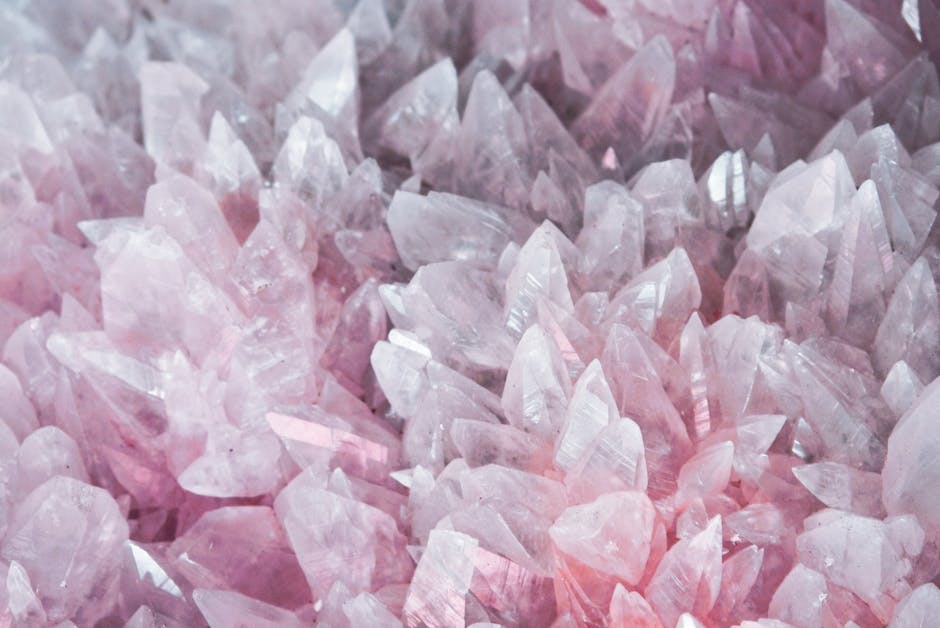
A cluster is a group of crystal points growing from a shared base. They haven't been cut — they grew this way naturally. Amethyst clusters are the most common, but you can find them in quartz, citrine, celestite, and other minerals.
Clusters are popular because they look dramatic and they're completely natural — the arrangement of the points is determined by geology, not by a lapidary's cutting decisions. They also tend to be good value per gram compared to cut and polished pieces, because there's less labor involved.
How to Choose the Right Shape
It depends on what you want from your collection.
For display: Geodes, clusters, towers, and large polished specimens. These are the eye-catching pieces that make a shelf look intentional.
For handling: Palm stones, worry stones, and tumbled pieces. These are the ones you'll actually touch and hold.
For learning: Raw specimens and clusters. These show natural crystal structure and make it easier to learn mineral identification.
For gifting: Palm stones, small towers, and simple carvings. They look nice, they're easy to understand, and they don't require the recipient to be a collector to appreciate them.
For investment: This is its own topic, but generally, natural specimens with good crystal form, rare minerals, or notable locality (mine of origin) hold value better than carved pieces, which are somewhat fungible.
Price Differences Between Shapes
As a rough guide, from cheapest to most expensive per gram:
Raw rough → Tumbled → Palm stones → Small towers/points → Spheres → Carved pieces → Geodes and large clusters
Carved pieces and geodes are the wildcards. A small carved heart might be $5. A large, high-quality carved skull might be $500. A small geode might be $10. A museum-grade amethyst cathedral geode might be $5,000. Size and quality matter more than the shape category itself.
The Shape Doesn't Change the Stone
At the end of the day, a sphere of amethyst is still amethyst. A carved rose quartz skull is still rose quartz. The shape affects display, handling, and price, but it doesn't change the mineral itself. Don't let anyone convince you that a "crystal skull" has properties that a "raw chunk" of the same stone doesn't. It's the same silicon dioxide either way.
Buy shapes that fit how you actually use your collection. If you display everything, invest in pieces that look good on shelves. If you carry crystals around, stick to tumbled stones and palm stones. If you're just starting out, a mix of tumbled stones and a few small towers gives you variety without breaking the bank.
Comments