Necklace Chain Length Guide: What Works for You
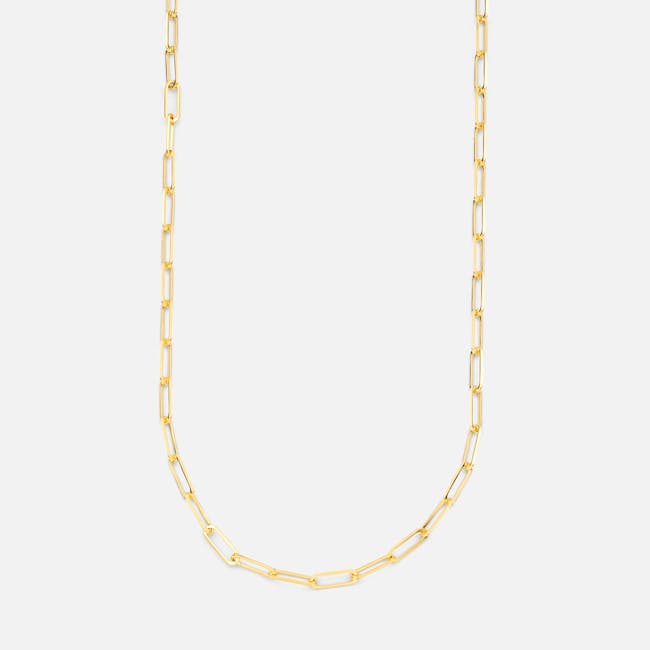
How Long Should My Necklace Be? Answers to Every Question You Have
What's the most popular necklace length?
The 16-to-18-inch range is by far the most common necklace length sold worldwide, and for good reason — it sits comfortably near the collarbone on most adults and works with virtually any neckline. Industry data from major jewelry retailers consistently shows that 18 inches is the single best-selling chain length, accounting for roughly 35-40% of all necklace sales across both fine and fashion jewelry categories.
But "most popular" doesn't mean "best for you." Chain length is one of those details that seems minor until you put on a necklace and it either disappears into your collar or hangs awkwardly in the wrong spot. Understanding how different lengths interact with your body and your wardrobe makes a real difference in how often you actually wear a piece.
How do I measure myself for a necklace?
Take a soft measuring tape — the kind used for sewing — and wrap it around your neck at the height where you want the necklace to sit. Then add 2 to 4 inches to that measurement. The extra length accounts for the fact that necklaces drape rather than sit flat against the skin, and it gives you some flexibility in how the chain falls.
If you don't have a measuring tape, use a piece of string or ribbon, mark the point where it feels right, and measure that length against a ruler. This method is actually slightly more accurate because a string mimics the drape of a chain better than a stiff tape measure.
A practical shortcut: if you already own a necklace that fits well, lay it flat and measure end to end. Double-check that measurement by wearing the necklace and using a mirror to see where the pendant (if any) lands on your chest.
What does each standard necklace length actually look like?
Jewelry industry standard lengths were developed over decades of retail experience. Here's a practical breakdown of each one and what it actually does when you put it on:
12-14 inches (Collar). Wraps snugly around the base of the neck. This length works best with open necklines — boat neck, off-shoulder, and strapless styles. It's less common for everyday wear and tends to feel restrictive if you have a wider neck. Collar-length chains are most often seen in choker styles and bridal jewelry.
16 inches (Choker). Sits just above the collarbone. This is the classic choker position and has been fashionable in various eras from Victorian England to the 1990s and again in recent years. It frames the face well and draws attention to the neck. If you have a shorter neck, 16 inches can feel tight — consider going to 17 or 18 inches instead.
18 inches (Princess). Falls right at the collarbone. This is the default length for most pendants and chains. It works with almost everything: crew necks, V-necks, scoop necks, and open collars. If you're only going to own one chain length, 18 inches is the practical choice because it pairs with the widest variety of clothing.
20-22 inches (Matinee). Falls between the collarbone and the bust line. This length works beautifully with higher necklines like turtlenecks, mock necks, and crew necks that would otherwise crowd a shorter chain. It also works well as a standalone statement piece or layered over longer chains. The 20-inch length in particular has gained popularity in men's jewelry over the past several years.
24-28 inches (Opera). Falls below the bust. This is where chains start to feel more dramatic and deliberate. Opera-length chains work with simple, high-necked outfits or can be doubled over to create a layered choker effect. They're less practical for very active days because longer chains can catch on things more easily.
30+ inches (Rope/Lariat). Falls below the bust and can often be wrapped or tied. Rope-length chains offer maximum versatility — you can wear them long, double them, knot them, or layer them with shorter pieces. They tend to work best with simple, uncluttered outfits where the chain itself becomes a focal point.
How does my body type affect which length works best?
Necklace length interacts with body proportions in ways that aren't always obvious. Taller people (generally over 5'7" or 170cm) can carry longer chains without the proportions looking off. A 24-inch chain on someone who is 5'10" falls at a different point relative to their body than the same chain on someone who is 5'2".
For shorter frames, chains in the 16-20 inch range tend to look most proportional. Going much longer can visually shorten the torso. However, this is a guideline, not a rule — if you love long chains and feel confident in them, wear them. Personal style trumps proportion advice every time.
Neck circumference matters too. People with wider necks (over 14 inches around) often find that 16-inch chains feel uncomfortable and should start at 18 inches minimum. People with narrower necks have more flexibility and can wear shorter lengths comfortably.
Bust size also affects how chains drape. Chains that fall right at bust level can shift sideways or feel awkward. If this is an issue for you, consider going slightly shorter (above the bust) or slightly longer (well below it) rather than trying to hit the exact bust line.
Which necklace length works with different necklines?
This is where necklace length gets genuinely useful. Matching your chain to your neckline is one of the simplest ways to look put-together without any extra effort:
Crew neck / T-shirt. An 18-inch chain with a small pendant sits right above the neckline and frames it nicely. A 20-inch chain can also work, especially with a larger pendant. Avoid very short chains that compete with the neckline for the same space.
V-neck. Follow the V shape. A chain that ends just above or right at the point of the V creates a natural visual line. Usually, 18-20 inches hits this spot on most body types. A pendant with a V-shaped design or a drop element is particularly effective here.
Scoop neck / round neck. These necklines create an open frame that's ideal for chains with pendants. The 16-18 inch range generally works well, letting the pendant sit in the open space created by the neckline. Avoid chains so long they disappear inside the shirt.
Turtleneck / high neck. You need length here. A 20-24 inch chain sits visibly below the neckline. Shorter chains will either bunch up on top of the fabric or disappear underneath it. This is where matinee and opera lengths really shine.
Button-down shirt. Leave the top one or two buttons undone and wear a 16-18 inch chain that sits in the open space. This is a classic, polished look for work or business settings.
Strapless / off-shoulder. Shorter lengths work best here because they fill the open space above the neckline without competing with the bare shoulders. A 14-16 inch collar or choker creates a balanced look.
Halter neck. The halter creates a V-shape that works well with chains in the 18-20 inch range. Avoid anything too short that crowds the halter strap at the neck.
What about pendant size relative to chain length?
The pendant and the chain need to work together as a unit. A common mistake is pairing a large, heavy pendant with a delicate short chain — the pendant overwhelms the chain, and the whole thing looks off-balance. Similarly, a tiny charm on a long, thick chain can look lost.
As a general rule: larger pendants need longer chains (20+ inches) and more substantial chain links. Small pendants and charms work well on 16-18 inch chains with finer links. If you're buying a pendant separately from a chain, hold them next to each other before committing — the visual weight should feel balanced.
Chain thickness matters too. A very thin chain (under 1mm) with a heavy pendant will stretch over time and is more likely to break at the connection points. A good rule of thumb is that the chain should look sturdy enough to support the pendant without strain.
Can I extend or shorten an existing necklace?
Yes, in most cases. Adding length is straightforward — a jeweler can attach an extender chain (usually 2-4 inches) to the existing clasp. This is inexpensive and gives you flexibility. Many necklaces now come with built-in extenders, which is worth looking for if you're between sizes.
Shortening a chain is also possible but slightly more involved. The jeweler needs to remove links and reattach the clasp. This works well for chain necklaces but is trickier for beaded necklaces where the bead pattern might be disrupted by removing length. If you're shortening a beaded piece, you may need to have it restrung entirely.
DIY options exist too. Chain extender clasps are available at most craft stores and online for a few dollars. If you're comfortable using basic jewelry pliers, you can swap out clasps and add extenders at home. Just make sure the new clasp matches the metal quality of the original chain to avoid discoloration or allergic reactions.
How do layering necklaces work with different lengths?
Layered necklaces have been a dominant trend for several years now, and the key to making it work is having chains at different lengths that don't tangle or compete with each other. The standard approach is to space chains 2-3 inches apart: for example, a 14-inch choker, a 16-inch mid-length, and an 18-inch pendant.
The easiest way to build a layered look is to start with a statement piece — usually the longest chain with a pendant — and add shorter, simpler chains above it. The chains closest to your neck should be the most delicate, with the visual weight increasing as you go down. Mixing metals is now widely accepted in fashion, but if you prefer a cohesive look, stick to one metal tone throughout the layers.
A practical tip: if you find layered necklaces tangle easily, look for pre-layered pieces where the chains are attached to a single clasp in the back. These stay in position much better than separate chains. Alternatively, use small silicone cord stops (available at bead shops) to keep individual chains separated at the clasp end.
Does necklace length matter for men's jewelry?
Absolutely. Men's chain lengths have shifted noticeably in recent years. The 20-inch chain has become the new default for men's everyday jewelry — it's long enough to sit visibly below the collar of most shirts but not so long that it gets in the way. The 22-24 inch range works well for men who want a more relaxed, casual look or who are wearing the chain over a T-shirt.
For men wearing pendants, 20-24 inches is the practical range. A pendant at 18 inches on a broader frame can feel too high, almost like a choker. The 22-inch length has become particularly popular with dog tags and religious pendants because it puts the pendant right at the upper chest where it's visible with most casual necklines.
Thicker chains (3mm and up) are standard for men's jewelry, and these heavier chains drape differently than fine chains — they tend to sit slightly higher than their measured length would suggest because the weight keeps them closer to the neck. Keep this in mind when choosing a length.

Comments