10 Essential Crystals for Beginners
May 31, 2026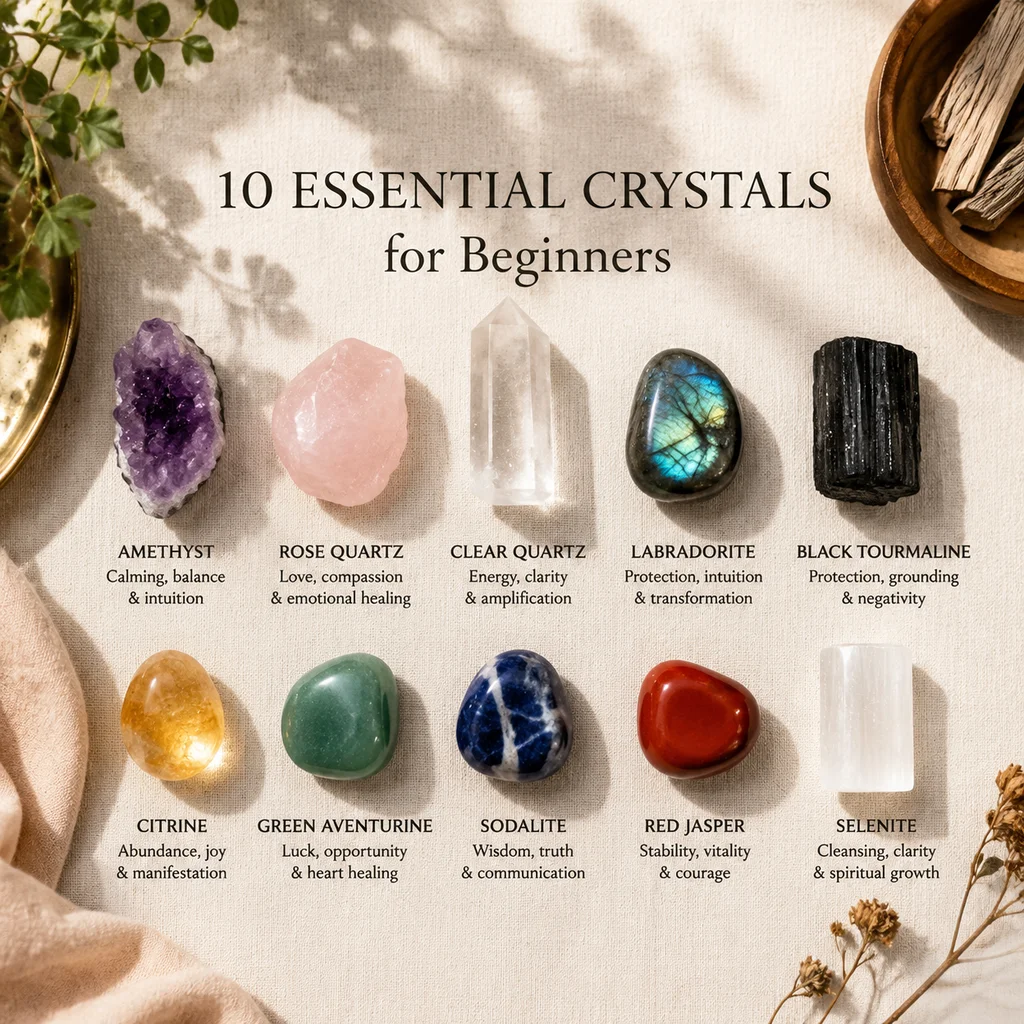
Walk into any crystal shop or browse online, and you'll quickly discover there are hundreds — maybe thousands — of different stones to choose from. Rose quartz, amethyst, citrine, obsidian, jade, jasper, agate, carnelian, selenite, kunzite... the list goes on. If you're just getting started, this abundance is more paralyzing than exciting.
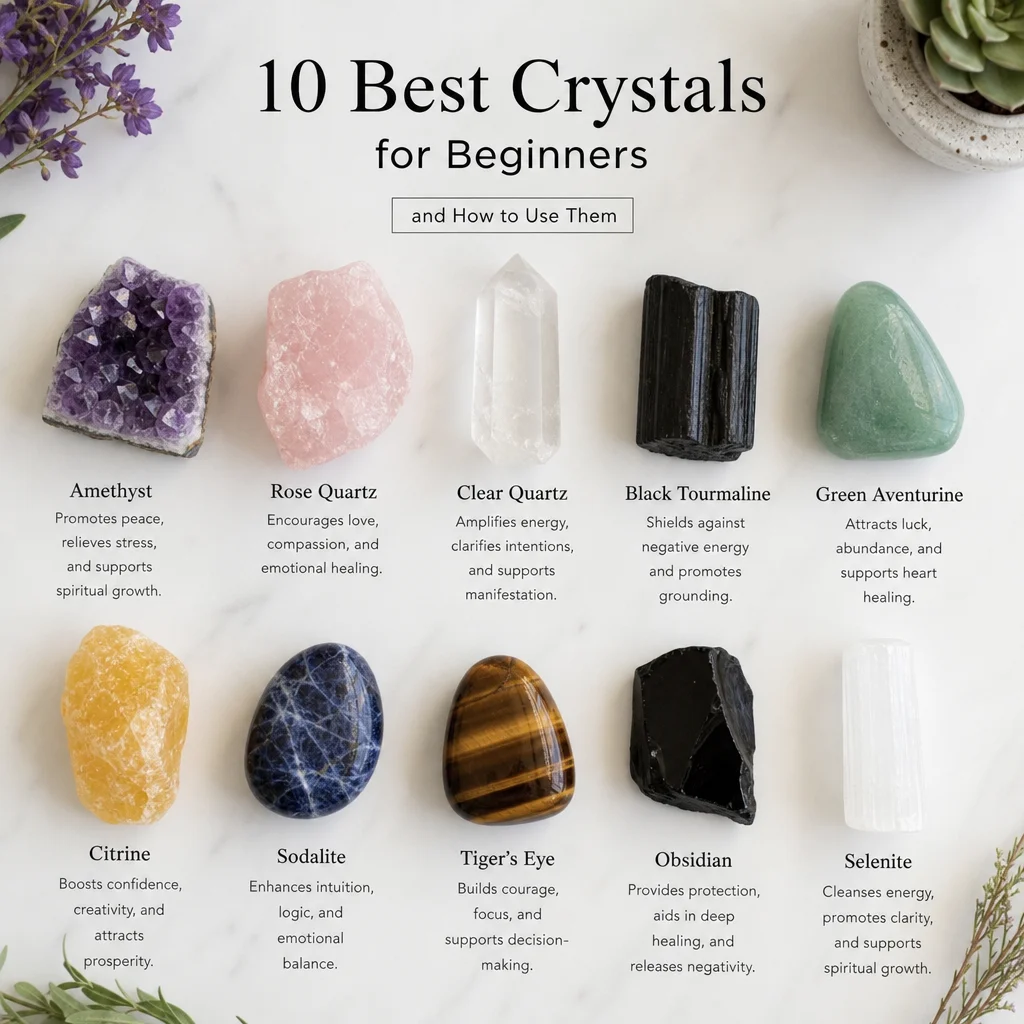
The good news: you don't need 50 stones to get started. In fact, a well-chosen set of 10 crystals covers virtually every common intention people work with — protection, emotional balance, mental clarity, energy, and grounding. Here's a practical, no-nonsense guide to building your first crystal kit.
The 10 Essential Stones
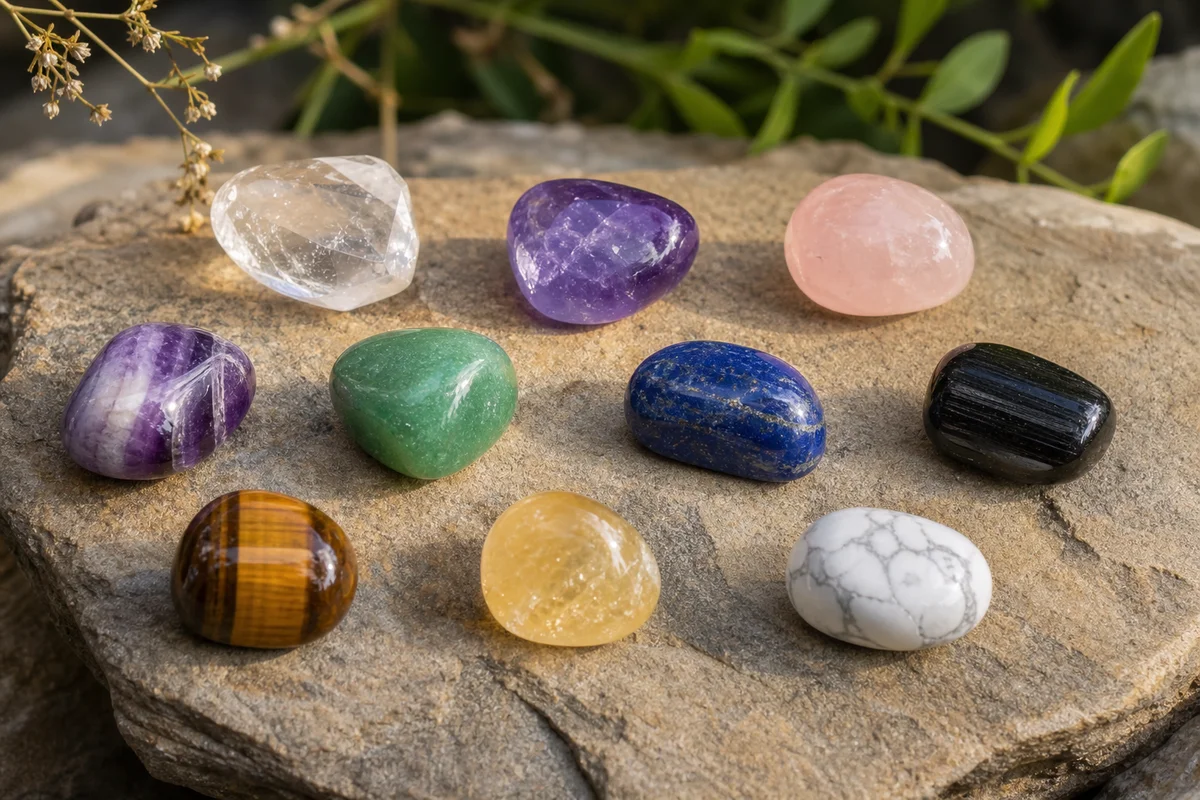
These 10 stones were selected based on three criteria: versatility (each one serves multiple purposes), availability (all are common and affordable), and complementarity (they work well together as a set).
1. Clear Quartz — The Foundation Stone
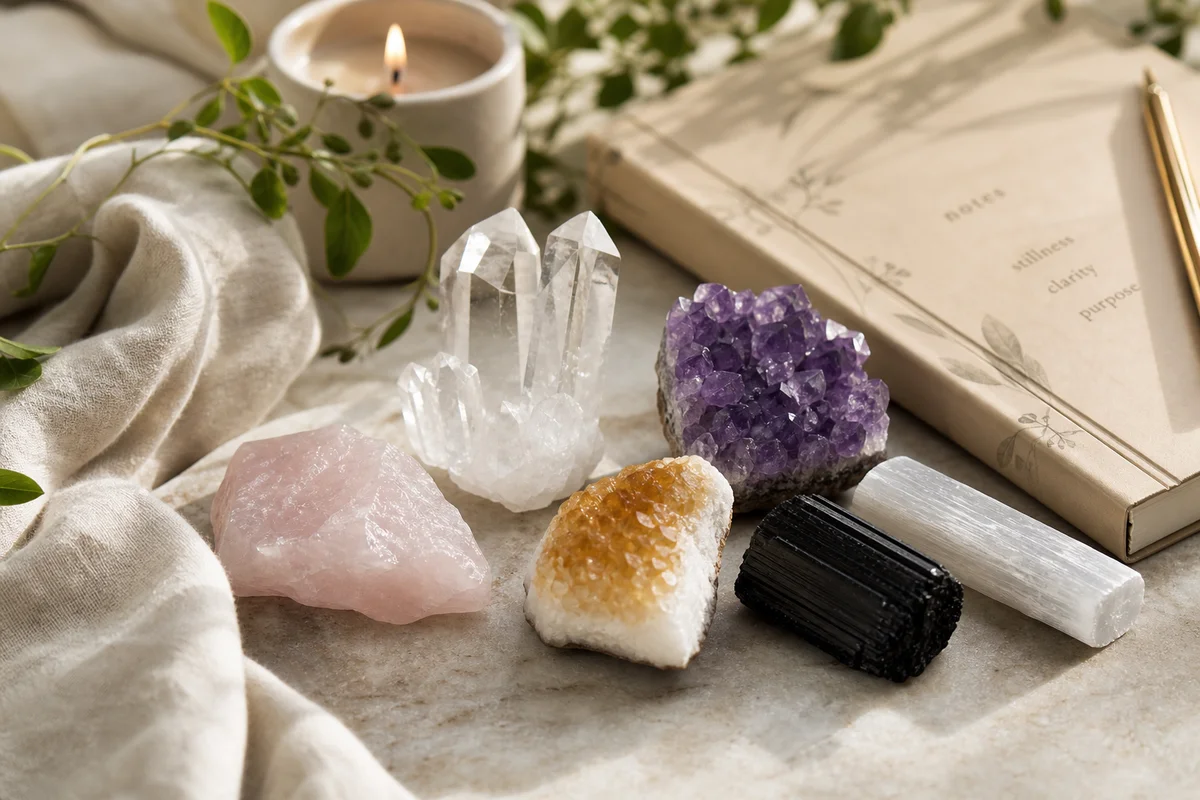
Every crystal kit needs a clear quartz. It's the most versatile mineral in the crystal world, used for amplifying the properties of other stones, clearing energy, and as a general-purpose tool in meditation and intention-setting. Clear quartz is silicon dioxide (SiO₂) in its purest form, and it's the most abundant mineral in Earth's continental crust.
What to buy: A single clear quartz point, 2-4 inches long. Points are more useful for directed energy work than tumbled stones. Expect to pay $5-15 for a good quality natural point. Synthetic (lab-grown) quartz is identical chemically but some people prefer natural for aesthetic and philosophical reasons.
2. Amethyst — The Calm Stone
Amethyst is quartz colored by trace amounts of iron irradiated by natural radiation in the Earth. It's the go-to stone for stress relief, sleep support, and emotional regulation. Amethyst has one of the longest cultural histories of any crystal — the ancient Greeks associated it with preventing drunkenness (the name comes from amethystos, meaning "not intoxicated").
What to buy: Either a tumbled stone for pocket carrying or a small cluster for a bedside table. Tumbled stones cost $2-5, clusters start around $10-20 depending on size and color quality.
3. Black Tourmaline — The Protection Stone
If you're drawn to crystals for protection, black tourmaline is where you start. It's an iron-rich borosilicate mineral with a deep black color and a striated (lined) surface texture. Black tourmaline is piezoelectric — it generates an electric charge when subjected to pressure — which gives it its reputation for energetic protection and grounding.
What to buy: A rough (natural, unpolished) piece is traditional and affordable at $5-10. Tumbled black tourmaline is smoother for pocket carrying but costs about the same. Some people buy several small pieces to place in different locations — one by the front door, one on a desk, one near electronics.
4. Rose Quartz — The Heart Stone
Rose quartz is pink-colored silicon dioxide, with the color coming from trace amounts of titanium, iron, or manganese. It's the universally recognized stone for love, compassion, and emotional healing. Rose quartz is unusual among quartz varieties because it rarely forms distinct crystal faces — it's almost always found as massive, granular material rather than well-formed crystals.
What to buy: A palm stone (smoothed oval shape that fits in your hand) or a tumbled stone. Palm stones cost $8-15, tumbled stones $2-5. Heart-shaped carvings are popular but cost more for no functional difference.
5. Citrine — The Energy Stone
Natural citrine is quartz colored by iron, typically ranging from pale yellow to deep amber. It's associated with motivation, creativity, and personal power. Be aware that most citrine on the market is actually heat-treated amethyst — this is a standard industry practice and the resulting stone is chemically identical, but natural citrine (which is rarer and more expensive) typically has a paler, more subtle yellow.
What to buy: A tumbled stone or small cluster. Heat-treated citrine is affordable at $3-8. If you specifically want natural (unheated) citrine, expect to pay $15-30 and buy from dealers who specifically label it as natural.
6. Selenite — The Clarity Stone
Selenite is a crystallized form of gypsum (calcium sulfate), and it has a distinctive moonlit-white translucence that gives it its name (from selene, Greek for moon). It's used for mental clarity, energetic cleansing of other crystals, and creating a calm atmosphere. Selenite has the unusual property of being soft enough to scratch with a fingernail (Mohs 2), which means it needs gentle handling.
What to buy: A selenite wand or tower. These are affordable ($8-20) and can be used to "sweep" energy over other stones or around a space. Selenite charging plates (flat slabs) are also popular — you place other crystals on them to cleanse.
7. Lapis Lazuli — The Communication Stone
Lapis lazuli is a rock (not a single mineral) composed primarily of lazurite, calcite, and pyrite, with a distinctive deep blue color and gold flecks. It's been valued since ancient times — Cleopatra reportedly used powdered lapis as eyeshadow. In modern crystal practice, it's associated with communication, truth, and intellectual clarity.
What to buy: A tumbled stone or small polished piece. Quality varies enormously — the best lapis has deep, uniform blue with visible but not excessive pyrite flecks. Low-quality lapis is pale, heavily calcite-streaked material that barely looks blue. Expect $8-25 for a good tumbled piece.
8. Carnelian — The Motivation Stone
Carnelian is a reddish-orange variety of chalcedony (cryptocrystalline quartz) colored by iron oxide impurities. It has a long history across many cultures — the ancient Egyptians used it in talismans, and it was popular in Roman signet rings. Carnelian is associated with creativity, courage, and taking action.
What to buy: Tumbled stones are the most practical form. Color ranges from pale orange to deep red-brown, with brighter, more saturated orange being generally preferred. $3-8 for a good quality tumbled piece.
9. Green Aventurine — The Luck Stone
Green aventurine is a quartz variety containing fuchsite mica inclusions that give it a characteristic sparkly, translucent green appearance. The name comes from the Italian avventura (adventure/chance), reflecting its association with luck and opportunity. It's one of the most affordable green stones, which makes it a practical choice for beginners.
What to buy: A tumbled stone or palm stone. $2-5 is standard for a good quality tumbled piece. The sparkly inclusions should be visible — if the stone looks uniformly opaque green, it's probably green dyed quartz rather than true aventurine.
10. Hematite — The Grounding Stone
Hematite is iron oxide (Fe₂O₃) with a distinctive metallic silver-gray luster and a weight that surprises people unfamiliar with it — it's roughly twice as dense as most common stones. Hematite is the go-to stone for grounding, focus, and protection against negative energy. It's also one of the most affordable stones on this list.
What to buy: A tumbled stone or small ring. Tumbled hematite is $2-5. Rings are popular but break easily (see our dedicated guide on hematite ring breaks). A simple tumbled stone is the most practical starting option.
Budget Tiers: How Much Does a Starter Kit Cost?
Budget Kit ($25-35)
All 10 stones in small tumbled form. Buy from online mineral dealers or gem shows rather than boutique crystal shops — the same stones are often 50-70% cheaper from dealers who source directly from mines and cutting facilities. The total weight will be around 200-300 grams, which is plenty to start working with.
Standard Kit ($50-80)
Replace a few of the tumbled stones with more functional forms: a clear quartz point, a rose quartz palm stone, a selenite wand, and an amethyst cluster. The remaining stones stay in tumbled form. This gives you more versatility — the quartz point for directed energy, the palm stone for meditation, the selenite for cleansing.
Premium Kit ($100-150)
Larger specimens, better quality selections, and more varied forms. A 3-inch clear quartz point, a quality amethyst cluster, a Brazilian rose quartz palm stone, natural (unheated) citrine, and a selenite tower. You're still buying the same 10 types, but each piece is individually selected for color, clarity, and size.
Where to Buy Without Getting Ripped Off
The markup on crystals varies enormously depending on where you shop. Here's a rough guide to what's fair.
Mineral shows and gem fairs: The best prices by far. Dealers sell wholesale-to-retail with minimal markup. You can handle the stones, compare quality, and negotiate on multi-stone purchases. The Tucson Gem and Mineral Show (February, Arizona) is the world's largest, but most regions have annual shows.
Online mineral dealers: Good prices, reliable quality, but you can't see the exact specimen before buying. Reputable dealers like Crystal Classics, The Crystal Trader, and various Etsy sellers with good reviews offer fair pricing and clear photos of the actual stones.
Boutique crystal shops: The most expensive option, often 2-4x dealer pricing. You're paying for the curated experience, attractive displays, and sometimes misleading metaphysical claims. If you want to support a local business, buy a few statement pieces here and fill out the rest of your kit from dealers.
Big online marketplaces (Amazon, AliExpress): Extremely cheap but buyer beware. Quality is inconsistent, mislabeling is common (dyed quartz sold as natural aventurine, glass sold as obsidian), and you have no way to verify what you're getting. Useful for bulk tumbled stones where quality doesn't matter much.
How to Store and Organize Your Kit
A simple divided box — the kind used for fishing tackle, craft beads, or small hardware — works perfectly for a 10-stone kit. Line each compartment with a piece of soft fabric or felt to prevent scratching. Label each compartment with the stone name until you learn to identify them by sight and feel.
Keep your kit out of direct sunlight (amethyst fades, citrine can shift color over time) and away from moisture (selenite dissolves, pyrite in lapis can oxidize). A drawer, closet shelf, or covered box on a desk is ideal.
If you're using your crystals regularly, consider a small carrying pouch — a piece of velvet or soft cotton with a drawstring. A pouch with 2-3 stones for daily carry (common choices are black tourmaline for protection, rose quartz for emotional support, and clear quartz as an amplifier) lets you take your practice with you.
How to Cleanse and Charge Your Crystals
Before you start working with your new stones, it is important to cleanse them. Crystals absorb energy from their surroundings and the people who handle them before they finally reach your hands. Cleansing resets the stone to a neutral baseline, ensuring you aren't taking on any leftover energetic baggage from the mining process, shipping, or the shop itself.
There are several highly effective ways to cleanse your starter kit. The most popular method is using sound—ringing a tuning fork or a singing bowl near the stones clears them through vibration. You can also use smoke from sage or palo santo. Alternatively, placing your crystals in direct moonlight overnight is a gentle, safe method for all stone types.
Be careful with water and sunlight. Avoid using water to cleanse soft or porous stones like selenite, as they will dissolve or become structurally damaged. Similarly, leaving vibrant stones like amethyst and rose quartz in direct sunlight for extended periods will cause their colors to permanently fade. To "charge" your crystals with a specific intention after cleansing them, simply hold the stone in your hands, take a deep breath, and mentally state your goal.
Practical Ways to Use Crystals Every Day
Once your kit is cleansed and ready, the next question is inevitably: what do you actually do with them? You don't need complex rituals to benefit from your stones. The simplest way to integrate crystals into your life is through physical proximity. Keeping a stone in your pocket, bra, or worn as jewelry ensures you stay connected to its specific energy and intention throughout your busy day.
If you want a more focused experience, try incorporating crystals into your daily meditation. Hold a stone like clear quartz or amethyst in your receiving (non-dominant) hand while you sit quietly for five minutes. This gives your mind a tangible focal point, making it much easier to drop into a relaxed state. Placing stones directly on your body while lying down is another excellent way to direct specific energies.
Finally, you can use your crystals to shift the energy of your physical environment. Place black tourmaline near your front door or on your work desk to absorb electromagnetic fields and negative energy. Keep rose quartz on your nightstand to promote a peaceful, loving atmosphere for sleep. The key is consistent, intentional placement.
Frequently Asked Questions
Do I need to cleanse new crystals before using them?
Many people like to clean new crystals as a ritual, and there's no harm in it. Practical cleaning methods include rinsing in water (for water-safe stones like quartz and citrine, but not selenite or lapis), smudging with sage or palo santo, or placing them on a selenite plate overnight. Choose whichever method appeals to you.
Can I add more stones later?
Absolutely. The 10-stone kit is a foundation, not a limit. As you work with these stones and develop preferences, you'll naturally want to explore others. Many crystal enthusiasts eventually have collections of 50-100 stones, but starting with 10 focused choices prevents overwhelm and lets you build a real relationship with each stone.
What if I can't afford all 10 at once?
Start with 3-5. Clear quartz, amethyst, and black tourmaline cover the basics of clarity, calm, and protection. Add rose quartz and citrine next, then fill in the rest as budget allows. A gradual approach often leads to better choices because you're selecting based on experience rather than theory.
Frequently Asked Questions
How do I know which healing crystal is right for me?
Trust your intuition! The best way for beginners to choose a crystal is by picking the one you are naturally drawn to. Whether you love its color or how it feels, your energy aligns with what you need most. At SagStone, we believe the right handcrafted piece will always find you, bringing a perfect balance of beautiful artisan design and grounding natural energy to your everyday life.
Can I wear my beginner crystal jewelry every single day?
Yes! Wearing your stones daily is
Comments