Crystal Jewelry for Weddings: A Complete Guide for Brides, Bridesmaids, and Guests
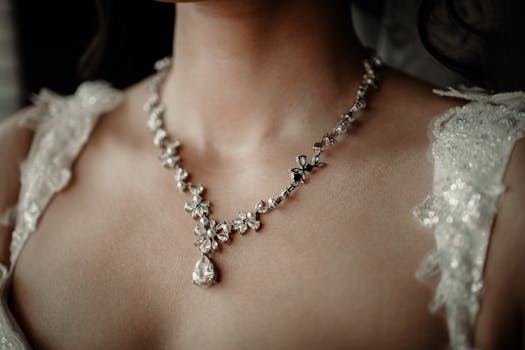
Crystal jewelry belongs at weddings more than you might think
Walk into any bridal shop and you'll see crystal everywhere — hair combs, drop earrings, brooches, shoe clips. The wedding industry has been using crystal (both natural stone and glass) in bridal accessories for decades. What's changed recently is that brides and their bridal parties are moving beyond the standard "clear crystal everything" approach and choosing colored stones that match their wedding palette, their personality, or just their personal taste.
This shift makes sense. A bride who is wearing a blush pink gown with dusty rose bouquets is going to look more cohesive with rose quartz earrings than with standard clear crystal drops. A fall wedding with burgundy accents pairs better with garnet or ruby touches than with generic silver sparkle. The trend toward intentional, personalized weddings has made colored crystal and gemstone jewelry one of the fastest-growing bridal accessory categories — Etsy reported a 34% increase in "gemstone bridal earrings" searches between 2023 and 2025.
Jewelry for the bride
The classics that still work
Pearl earrings are the oldest trick in the bridal jewelry book, and they still work in 2026. A pair of 7-8mm freshwater pearl studs or drops is elegant, understated, and photograph well. They don't compete with the dress, the veil, or the makeup. They just quietly add a finished look. If you're only buying one piece of bridal jewelry, make it pearl earrings.
Crystal hairpieces have become more popular than traditional veils for many brides, especially for outdoor and destination weddings. A small crystal-encrusted comb or pin placed at the back of an updo catches light in photos without the drama (and wind issues) of a full veil. Prices range from $30 for simple designs to $300+ for elaborate pieces with colored stones.
"Something blue" with gemstones
The "something blue" tradition is a natural fit for crystal jewelry. Aquamarine is the most popular choice — its pale blue color is subtle enough that it doesn't read as obviously blue from a distance, but close-up photos will show it clearly. A small aquamarine pendant, a pair of blue topaz studs, or even a thin blue sapphire bracelet all work.
If you want something more vivid, blue sapphire or tanzanite gives a deeper, richer blue that shows up well in photos. Sapphire is significantly more expensive — a small sapphire pendant can run $150-$400 — but tanzanite offers a similar color at a lower price point ($50-$150 for small pieces).
Making the choice
There's no rule that says the bride's jewelry has to be delicate. Some of the most striking bridal looks in recent years have featured bold pieces — a chunky amethyst ring, layered gold chains with mixed stone pendants, or large crystal drop earrings. The key consideration is whether the jewelry complements the dress neckline and overall aesthetic. A high neckline dress with a bold necklace underneath is crowded. A strapless gown with a statement necklace is balanced.
Try your jewelry on with your dress before the wedding day. Not the day before — ideally a month before, so you have time to exchange or adjust if something doesn't look right. Lighting matters too; check how your pieces look in both natural daylight and indoor reception lighting.
Jewelry for the bridal party
Matching without being identical
The old approach was to buy identical jewelry sets for every bridesmaid. That still works for formal, traditional weddings, but a lot of brides in 2026 are opting for a "coordinated, not matching" approach instead. This means choosing a color palette or stone type and letting each bridesmaid pick her own style within those boundaries.
A practical example: the bride chooses "rose gold with pink stones" as the theme. One bridesmaid gets rose quartz studs, another gets a morganite pendant, a third gets pink tourmaline drop earrings. The overall look in photos is cohesive because the colors and metal tones are consistent, but each person gets to wear something that suits her face shape and personal style.
Crystal tassel earrings: the 2026 bridesmaid favorite
If there's one specific style that dominates bridesmaid jewelry in 2026, it's the crystal tassel earring. These are drop earrings with multiple thin chains of small crystal beads that create a fringe or tassel effect. They move when you walk, catch light from multiple angles, and photograph beautifully. The style works with virtually any neckline because the interest is at the ear, not the neck.
Prices for crystal tassel earrings range from $15 to $80 depending on the stone quality and metal. They're available in every color, which makes them easy to match to any wedding palette. The one downside is that they can be heavy — if your bridesmaids will be wearing them for 8+ hours, look for lightweight versions with fewer strands.
Bridesmaid gifts that actually get worn again
Crystal jewelry is a popular bridesmaid gift because, unlike monogrammed tote bags or matching robes, it has a decent chance of being worn again after the wedding. A simple stone pendant or pair of earrings in a neutral color (clear, light pink, pale blue) works for everyday wear. Something too wedding-specific — like a piece engraved with the wedding date or the word "bridesmaid" — probably ends up in a drawer.
Budget around $25-$50 per person for bridesmaid jewelry gifts. That's enough to get something that looks and feels good quality without putting an unreasonable burden on the wedding budget.
Jewelry for wedding guests
The golden rule: don't outshine the bride
This isn't about being self-effacing. It's about basic social awareness. The bride is (usually) the most dressed-up person at her own wedding. If you show up in a diamond-encrusted choker and chandelier earrings, you're going to look out of place — not because you look bad, but because you're wearing gala-level jewelry to an event where the dress code is typically "cocktail" or "semi-formal."
For female guests, the sweet spot is elegant but understated: a pair of crystal drop earrings (2-3 inches max), a delicate pendant necklace, or a single stone ring. Avoid anything that makes noise when you move (heavy dangling pieces), anything that flashes dramatically under reception lighting, and anything that could be mistaken for the bride's own jewelry if it's the same color.
For male guests, a simple stone tie pin, small cufflinks, or a thin bracelet is plenty. Black onyx or dark stones are the safest bet because they're neutral enough to work with any suit color.
Jewelry for the mothers of the bride and groom
Mother-of-the-bride and mother-of-the-groom jewelry falls into a specific category: statement pieces that are refined rather than flashy. These are typically women in their 50s-70s who want to look polished and put-together without appearing overdressed.
A single strand of pearls or a pearl pendant is the traditional choice and still appropriate. For something more modern, a larger stone pendant (10-12mm) on a thicker chain works — think amethyst, citrine, or smoky quartz in a simple bezel setting. These stones have enough color to read as intentional but aren't so flashy that they draw attention away from the couple.
Cuff bracelets are another good option for mothers. A gold-fill cuff with a small stone accent (single 6-8mm cabochon) is elegant and doesn't require matching to a specific necklace or earring set. It's also one of the easiest styles to wear regardless of sleeve length.
Color coordination strategies
Matching your jewelry to the wedding palette is a nice touch, but it's not required. A guest who wears her own favorite emerald earrings to a blue-and-white wedding is fine. What you want to avoid is clashing — don't wear orange-toned stones to a cool-toned pink and gray wedding, for example.
The safest approach for guests: clear crystal, white pearl, or light gray stones. These are effectively neutral and work with any wedding color scheme. They're also the easiest to re-wear later, which is practical if you attend multiple weddings in a season.
For brides and bridesmaids, the palette match matters more because the photos will show the overall color scheme. If your wedding is primarily green and white, choose stones in the green family (emerald, peridot, jade, aventurine) or neutral tones. If the palette is warm (blush, gold, champagne), go with rose quartz, morganite, citrine, or amber.
Budget tips
Crystal and semiprecious stone jewelry costs a fraction of fine diamond or precious gemstone pieces while looking almost as elegant in photos and at normal viewing distances. A pair of genuine crystal drop earrings might cost $25-$60, while a comparable diamond pair starts at $500 and goes up fast.
This price gap is especially relevant for bridesmaids. Buying six sets of diamond earrings for your bridal party is a $3,000+ proposition. Six sets of crystal earrings in matching colors? $150-$360. The photos look nearly identical, and no one at the wedding is inspecting your bridesmaids' jewelry with a loupe.
Lab-created stones are another way to keep costs down. Lab-grown sapphires, rubies, and emeralds have the same chemical composition and optical properties as mined stones at roughly 30-50% of the price. They're also considered more ethically sourced by many buyers, which matters to some people.
DIY crystal wedding jewelry
Making bridesmaid jewelry yourself is more realistic than most people think. Basic beaded earrings require nothing more than headpins, ear hooks, round-nose pliers, and the stones. A beginner can make a simple pair of crystal drop earrings in about 15 minutes after watching one tutorial video.
The advantage of DIY isn't just cost — it's customization. You can match the exact shade of your wedding palette, control the stone size and shape, and add personal touches like a tiny charm at the clasp. Etsy and Amazon both sell individual crystal beads in bulk (100+ pieces for $10-$20), so the per-pair cost is often under $5.
The disadvantage is consistency. Handmade pieces vary slightly in length and angle, which can look "off" in group photos if the differences are noticeable. Practice on a few pairs before committing to the final batch, and use a ruler or jig to keep lengths consistent.
Comments