Bracelet Stacking Guide — How to Layer Without Looking Cluttered
Full disclosure: I brainstormed and drafted this article with the help of AI, then edited it into my own words. The tips and opinions here come from my real experience stacking bracelets over the past few years.
A couple years ago, I walked into a jewelry shop and saw the most gorgeous wrist display on the clerk behind the counter. She had maybe six or seven bracelets on one arm — thin chains, beaded strands, a leather cuff — and somehow it all looked effortless. I went home that night, pulled out every bracelet I owned, and put them all on at once. Seven pieces. It looked like a yard sale on my wrist. I felt ridiculous. That moment kicked off what became a genuine obsession for me: figuring out how to layer bracelets without looking like I got dressed in the dark.
The "Less Is Actually More" Sweet Spot
Here's the thing nobody tells you about bracelet stacking — there's a magic number. I learned it the hard way after that seven-bracelet disaster. Through months of trial and error, I found that three to five pieces is the sweet spot for most wrists. Anything under three feels a little lonely, like you started something and forgot to finish it. Anything over five starts competing with itself. The bracelets fight for attention, and instead of a curated look, you get visual noise.
I usually aim for four. That gives me room for one statement piece and three supporting players. It's enough to feel intentional without crossing into costume territory. If your wrists are on the smaller side, stick closer to three. If you've got a bit more real estate to work with, five can look stunning — but you have to be deliberate about every piece you add past the fourth.
Mix Your Materials Like You're Building a Playlist
The biggest mistake I made early on? Wearing five silver chains at once. I thought matching metals meant I was being cohesive. Turns out, matching everything just looks flat. The real magic happens when you mix textures and materials.
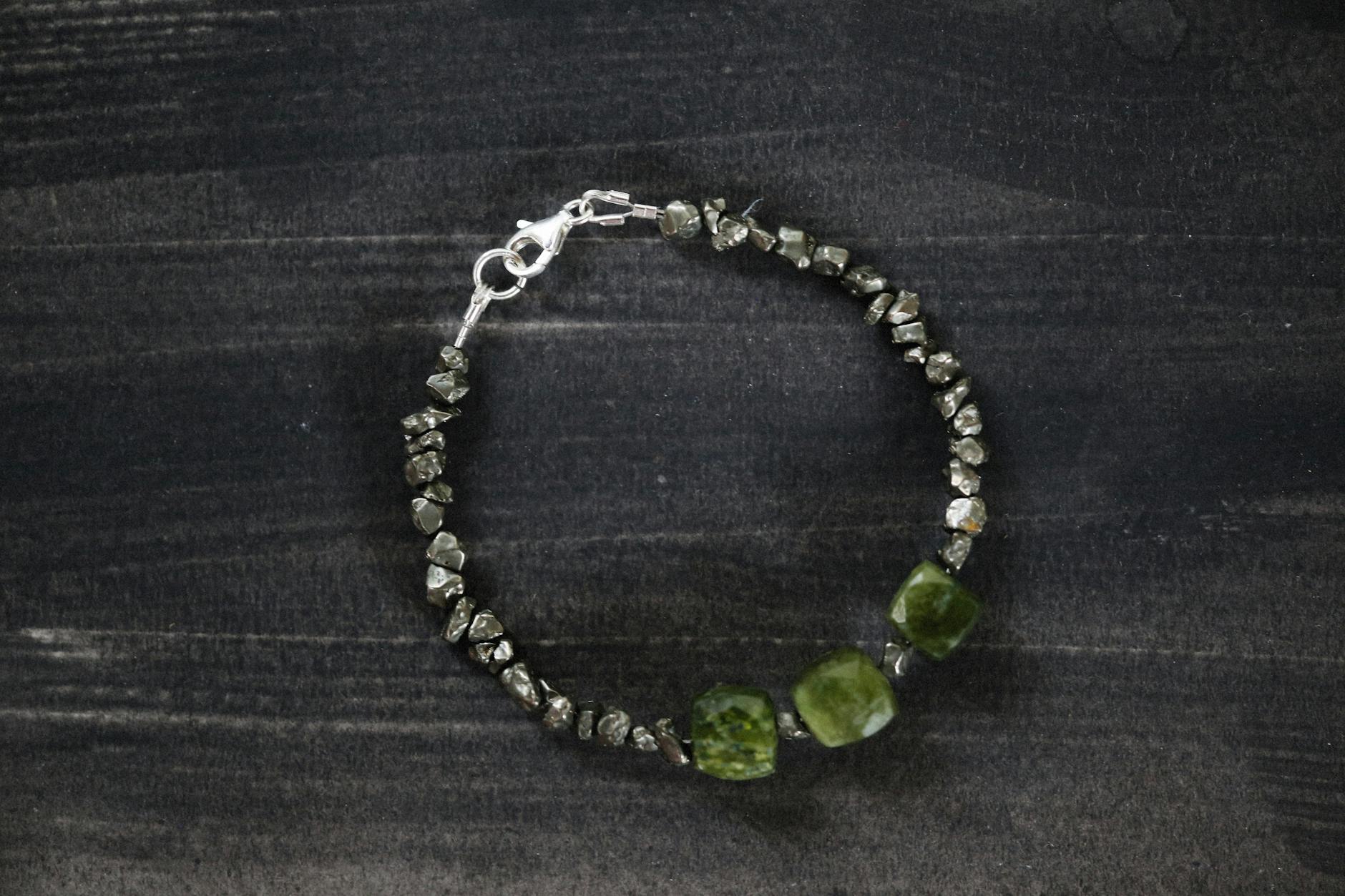
Think of it like building a playlist. You wouldn't put ten songs from the same artist back to back. You'd mix genres, tempos, moods. Bracelets work the same way. A delicate gold chain next to a braided cotton cord next to a strand of natural stone beads — each one makes the others more interesting. Leather adds warmth. Metal adds structure. Beaded stones add organic character. Woven or braided pieces add a casual, handmade feel.
My go-to combination lately has been a thin gold chain, a small turquoise bead bracelet, a braided leather strap, and a simple fabric friendship bracelet. Four different materials, four different vibes, and somehow they all get along.
Color: Pick a Lane, Then Wander a Little
Color coordination used to stress me out. I'd stare at my bracelet collection and overthink every combination until I gave up and wore nothing. Then I adopted a dead-simple rule: choose one dominant color, add one or two accent colors, and stop there.
If my outfit leans warm, I'll go with gold as my base and maybe add a pop of deep red from a cord or a touch of green from a jade bead. If I'm wearing cooler tones, silver takes the lead with maybe some blue lapis or a white pearl accent.
The safest combo I've found — and one I keep coming back to — is gold, brown, and cream. It sounds almost boring written out, but on the wrist it's incredibly versatile. A gold chain, a brown leather strap, and a cream-colored beaded bracelet. Works with jeans. Works with a sundress. Works with a blazer. I've worn that exact trio to weddings and to the grocery store.
What to Avoid Color-Wise
Don't try to match your bracelets to every color in your outfit. That's not layering, that's being a human color wheel. Pick your palette and let the bracelets complement your look, not mirror it exactly.
Thick Meets Thin: The Contrast Rule
This one changed everything for me. I used to wear all delicate, wispy bracelets because I was afraid anything chunky would look heavy. Then a friend handed me this wide braided leather cuff and told me to pair it with my usual stack. I was skeptical. But the contrast between that bold cuff and my thin gold chains was exactly what the whole arrangement had been missing.
The rule is straightforward: give yourself one thick or bold piece, then balance it with two or three thin ones. A chunky beaded stone bracelet with a couple of fine chain bracelets. A wide leather cuff with some delicate cord bracelets. A thick woven bracelet with thin metal bangles.
The contrast creates visual rhythm. Your eye bounces between the substantial piece and the delicate ones, and that movement is what makes the stack feel dynamic instead of flat. Without contrast, everything either looks too uniform or too chaotic. The thick piece anchors the whole look, and the thin pieces keep it from feeling heavy.
Leave Room to Breathe
This is the most underrated rule, and I almost never see it mentioned in styling guides. Your bracelets need space between them. When they're packed tight against each other, they tangle, they jingle into a messy racket, and they look cluttered regardless of how well-coordinated they are.
Give each bracelet a little wiggle room on your wrist. They should be able to shift independently when you move your arm. That small gap between pieces creates a sense of ease — like the difference between a room where all the furniture is pushed against the walls and one where everything is arranged with intentional spacing.
If your bracelets are tight and fighting for position, either remove a piece or switch to thinner bands. Sometimes just swapping one chunky bracelet for a slimmer version opens up enough space to make the whole stack look polished.
Different Occasions, Different Stacks
Once you've got the basics down, the fun part is adapting your stack to where you're going. I've developed go-to combinations for the situations I find myself in most often.
Everyday Casual
My daily stack is low-key: a simple cotton cord bracelet in a neutral tone, a thin silver chain, and maybe one small bead bracelet. Comfortable enough that I forget I'm wearing them. Simple enough that they don't clash with whatever I throw on in the morning. This is my default — the bracelet equivalent of a plain white t-shirt.
Dressy and Formal
For events where I need to look put-together, I strip it way back. One or two delicate gold chains and a single pearl bracelet. Maybe a very thin bangle if I want a tiny bit of movement. The key here is restraint. Formal settings call for elegance, and elegance tends to whisper. Save the bold cuffs and chunky beads for another day.
Sports and Outdoors
Active days need active materials. Silicone bands, woven nylon or paracord bracelets, and nothing you'd cry over if it got scratched or soaked with sweat. I keep a couple of sporty braided rope bracelets specifically for this — they're lightweight, durable, and they don't get in the way. Three max for active wear. You want function and a little style, not a distraction.
Vacation and Beach
This is where I go all out and it actually works. Something about being on vacation gives you permission to be a little more playful. I'll stack a shell bracelet, a leather cord, a couple of colorful beaded strands, and maybe a woven friendship bracelet someone made me. Vacation stacking is the exception to the "keep it tight" rule — you can be a little looser, a little more colorful, a little more fun. It should feel like a memory you're wearing.
Stacking for Guys
Bracelet stacking isn't just a women's thing, though the styling guides out there would sometimes have you think so. I've been helping my partner build his own stacks, and the principles are similar but the aesthetic is different.
Guys should aim for two to three pieces max. Leather, metal, and wood are your best friends here. A dark leather strap, a simple metal cuff or link bracelet, and maybe one wooden beaded bracelet. The goal is understated texture — you want someone to notice and think "that looks good" without immediately knowing why. Keep metals in one family (all silver or all gold/bronze) and stick to earthy, muted tones. Think rugged minimalism, not arm party.
What I've Learned After Years of Stacking
Bracelet stacking is one of those things that seems simple but has surprising depth once you start paying attention. The five rules — count your pieces, mix your materials, control your colors, play with thickness, and give everything room to breathe — they sound obvious once you know them. But nobody hands you a rulebook when you start.
The biggest lesson for me has been that restraint looks better than excess. Every time I've thought "just one more bracelet," it's been the wrong call. The stacks I get the most compliments on are always the ones where I stopped before I wanted to. Three or four pieces, thoughtfully chosen, will always outshine eight pieces thrown on without intention.
Start with what you already own. Pull out your bracelets, lay them on a table, and start experimenting. You'll quickly see which combinations feel right and which ones feel forced. Trust that instinct — it's usually correct. And don't be afraid to break the rules once you understand them. Some of my favorite stacks came from doing something I thought wouldn't work, and then realizing it actually did.
Comments