Crown Chakra Meditation: 6 Stones for Sahasrara
June 11, 2026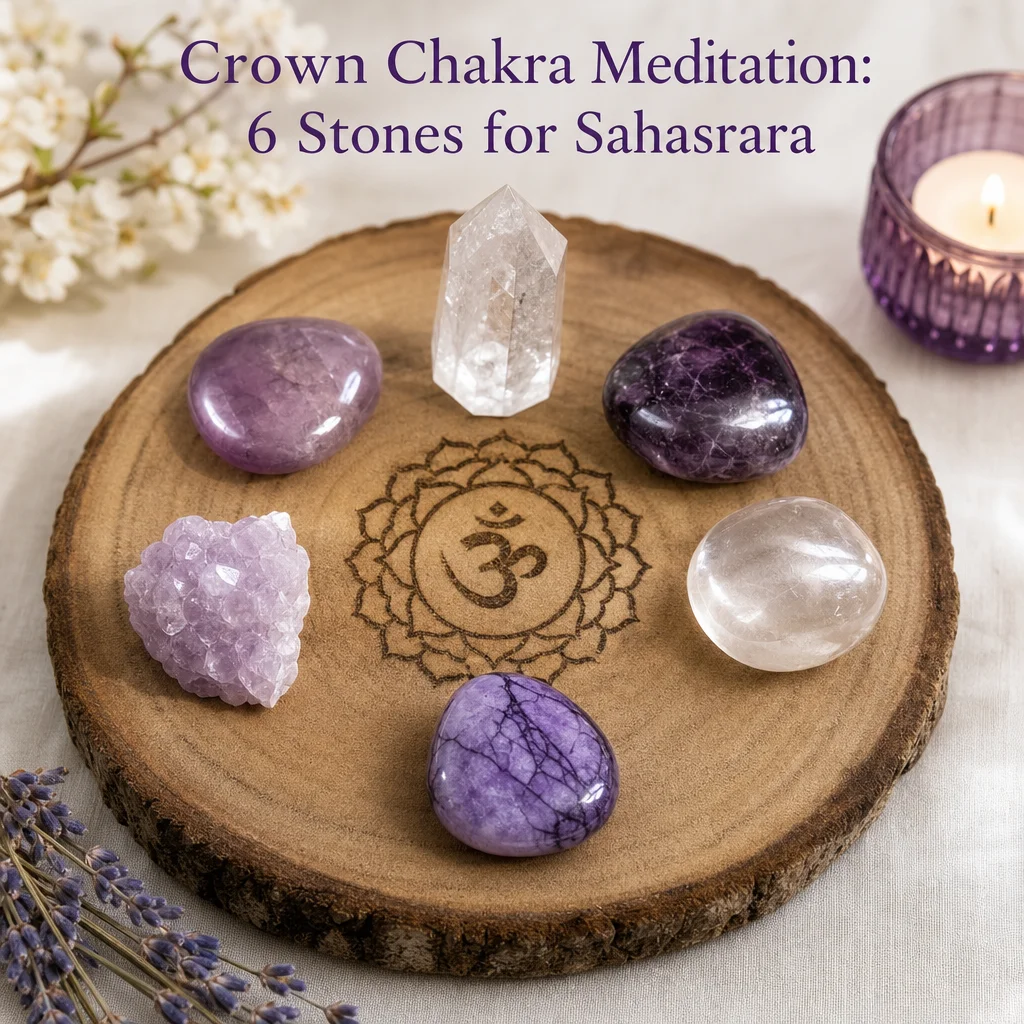
The Crown Chakra (Sahasrara): Your Connection to Something Greater
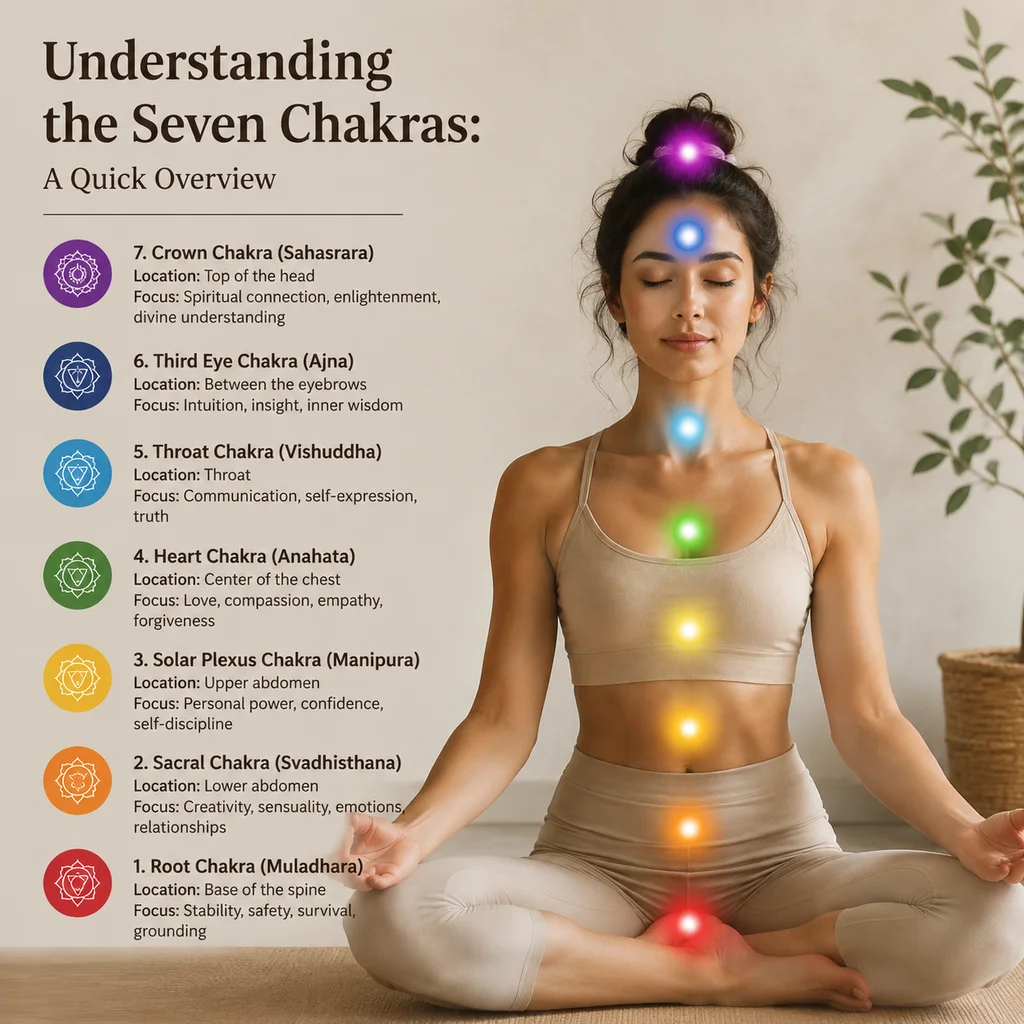
The seventh and final chakra in the traditional system, Sahasrara sits at the very top of the head — the crown. In Sanskrit, "sahasrara" means "thousand-petaled," referring to the traditional image of this chakra as a thousand-petaled lotus flower blooming upward. It's associated with the color violet or white, the element of cosmic energy (or simply "thought" in some traditions), and the pineal gland.
Where the other six chakras deal with specific aspects of human experience (survival, creativity, power, love, communication, and intuition), the crown chakra is about transcendence — the sense of connection to something beyond the individual self. Whether that "something" is God, the universe, nature, collective consciousness, or simply a state of pure awareness depends on your personal framework.
Crystals are not a substitute for medical treatment. The following is based on cultural traditions and spiritual practices, not scientific evidence.
6 Stones for the Crown Chakra
These stones have been traditionally associated with Sahasrara across various crystal healing traditions. I've chosen them for their availability, affordability, and the specificity of their crown chakra associations.
1. Clear Quartz: The Universal Amplifier
Clear quartz appears in nearly every chakra stone list, and for the crown chakra specifically, it represents purity and clarity of consciousness. The stone's transparency is symbolically linked to clear awareness — the mind without cloudiness or distortion.
What's genuinely interesting about clear quartz: its piezoelectric properties are scientifically established. It generates an electric charge under mechanical pressure, which is why it's used in watches, microchips, and ultrasound equipment. The idea that this stone might interact with the body's electromagnetic field isn't as far-fetched as some skeptics claim — but whether this translates to the spiritual benefits attributed to it remains a matter of personal experience and belief.
For crown chakra work, clear quartz points are traditionally placed above the head (just floating, not touching) during meditation. Alternatively, a clear quartz pendant worn at the throat or chest (where the upward energy is said to be most accessible) is the practical wearable option.
Price: $1-5 per 8mm bead. Most affordable option on this list.
2. Selenite: The Light Bearer
Selenite is named after Selene, the Greek goddess of the moon, and it's easy to see why — the stone has an ethereal, translucent white quality that looks like captured moonlight. It's a form of gypsum (calcium sulfate dihydrate), and it's one of the few stones that naturally forms in long, blade-like crystals with a fiber-optic quality.
In crown chakra traditions, selenite is associated with divine light, spiritual connection, and energy clearing. Many practitioners place selenite towers or wands above their meditation space, believing the stone's energy flows downward through the chakra system. Others use selenite wands to "comb" the aura, sweeping the stone from head to toe in a clearing motion.
Selenite is very soft (2 on the Mohs scale — you can scratch it with a fingernail) and water-soluble. Do not get selenite wet or expose it to humidity. It's strictly an indoor, dry-environment stone. A selenite wand (6-12 inches) costs $10-25 and is the most practical form for crown chakra work.
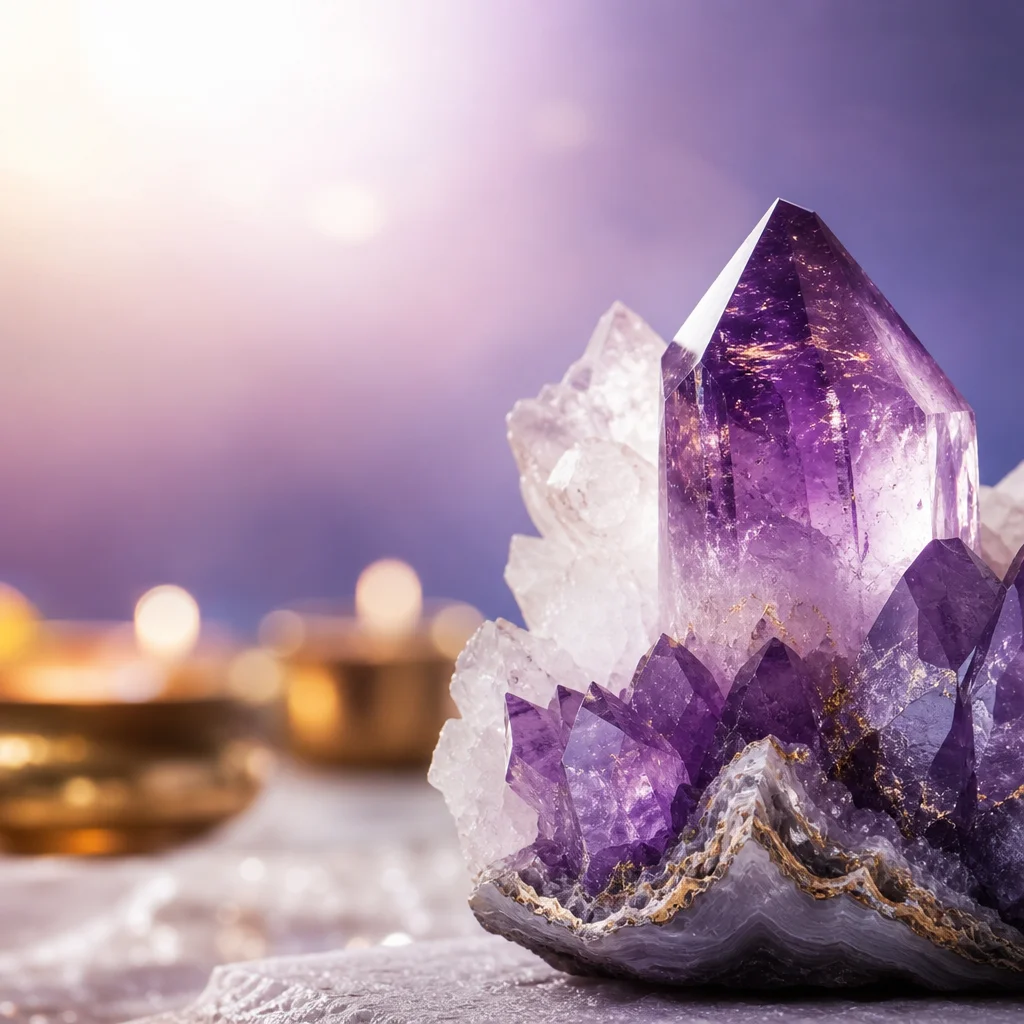
3. Amethyst: The Crown's Purple Bridge
Amethyst bridges the third eye and crown chakras. Its deep purple-to-violet color overlaps with both the indigo of Ajna and the violet of Sahasrara, making it the most versatile stone on this list. If you're only going to own one stone for upper chakra work, amethyst is probably the best all-around choice.
For specifically crown-focused practice, amethyst clusters or geodes are traditional — the idea being that the crystal formation (many points growing from a shared base) mirrors the "thousand petals" of Sahasrara. A small amethyst cluster placed above your head during meditation, or an amethyst pendant at the crown of the head, are common approaches.
Higher quality amethyst (deep purple, good clarity) costs $3-8 per 8mm bead. Tumbled stones for meditation: $2-5 each.
4. Apophyllite: The Angel Stone
Apophyllite is less well-known than the other stones on this list, but it has a dedicated following among crown chakra practitioners. It forms in pyramidal crystal clusters (usually clear or pale green) that are visually stunning — they look like tiny crystal temples.
In crystal lore, apophyllite is associated with the angelic realm, interdimensional connection, and the crown chakra specifically (not other chakras). Practitioners who work with apophyllite often describe it as having a "lighter" or "higher" frequency than clear quartz, though this is entirely subjective.
Apophyllite is somewhat fragile (4.5-5 Mohs) and can cleave along its crystal planes if dropped. Price: $5-20 for a small cluster. Best used as a meditation stone rather than worn as jewelry due to its fragility.
5. Howlite: The Quiet Crown
Howlite is the quiet achiever of crown chakra stones. It's white with gray veining, affordable ($2-4 per bead), readily available, and has a genuine calming effect — not from any mystical property, but from its smooth, cool, white appearance that psychologically suggests peace and clarity.
In the chakra system, howlite is sometimes associated with the crown because of its white color and calming properties. It's also associated with the third eye. Howlite is the least "intense" stone on this list, making it a good starting point for people who find the concept of crown chakra work overwhelming or abstract.
Practical advantage: howlite is durable enough for daily wear as jewelry, and its white color matches any outfit. A howlite crown chakra pendant or bracelet is subtle and won't draw unwanted attention.
6. Lepidolite: The Lithium Stone
Lepidolite is a lithium-bearing mica that ranges from light pink to purple with a characteristic scaly or flaky texture. It contains actual lithium — the same mineral used in mood-stabilizing medications. Whether the lithium in lepidolite has any physiological effect when worn or held is debatable (mineral lithium in stone form isn't bioavailable in the same way as pharmaceutical lithium), but the stone's association with calm and stability is both traditional and somewhat chemically grounded.
For crown chakra work, lepidolite represents calm connection to higher consciousness — the idea being that spiritual experiences are more accessible when the mind is calm and stable rather than anxious or racing. It's the stone for people who find meditation difficult because their mind won't stop chattering.
Lepidolite costs $4-10 per bead. It's relatively soft (2.5-3 Mohs) and can shed small mica flakes over time. Better as a palm stone or pendant than a bracelet.
Crown Chakra Meditation: A Practical Guide
Here's a straightforward meditation technique incorporating crown chakra stones. This isn't mystical or complicated — it's a relaxation and focus practice with a stone as a focal point.
- Find a quiet space. Sit comfortably with your spine straight. Early morning or evening works well.
- Place a crown chakra stone above your head. If you're lying down, rest it on the pillow above your crown. If sitting, hold it slightly above your head or place it on a small stand at head height.
- Close your eyes and breathe deeply. Five slow breaths — in for 4 counts, hold for 4, out for 6. This activates the parasympathetic nervous system.
- Visualize violet or white light. Imagine a soft glow at the top of your head, expanding upward like a fountain. This is the traditional visualization for Sahasrara.
- Sit with this image for 5-15 minutes. If your mind wanders, gently return to the light visualization. Don't judge yourself for wandering — that's what minds do.
- Slowly open your eyes. Notice how you feel before moving.
The stone serves as a physical anchor for your intention. Whether you believe it's doing anything energetically is beside the point — the practice of focused attention with a physical object is a well-established mindfulness technique.
Signs of Crown Chakra Opening (Traditional Perspective)
In the chakra framework, an active or "opening" crown chakra is associated with experiences of unity, deep peace, a sense of connection to all things, spontaneous moments of joy without cause, and a feeling of spaciousness in the mind. From a psychological standpoint, these experiences correlate with what researchers call "flow states," "peak experiences," or simply deep relaxation and reduced ego-identification.
The traditional warning about crown chakra work is "grounding" — some practitioners report feeling disconnected, floaty, or disoriented after intensive crown-focused meditation. The traditional remedy is to follow crown work with root chakra activities (walking barefoot, eating, physical exercise) to re-establish a connection to the physical body. This is genuinely good advice regardless of your beliefs about chakras — after deep meditation, engaging with the physical world prevents that spacey, disconnected feeling.
Combining Crown Chakra Stones with Other Chakras
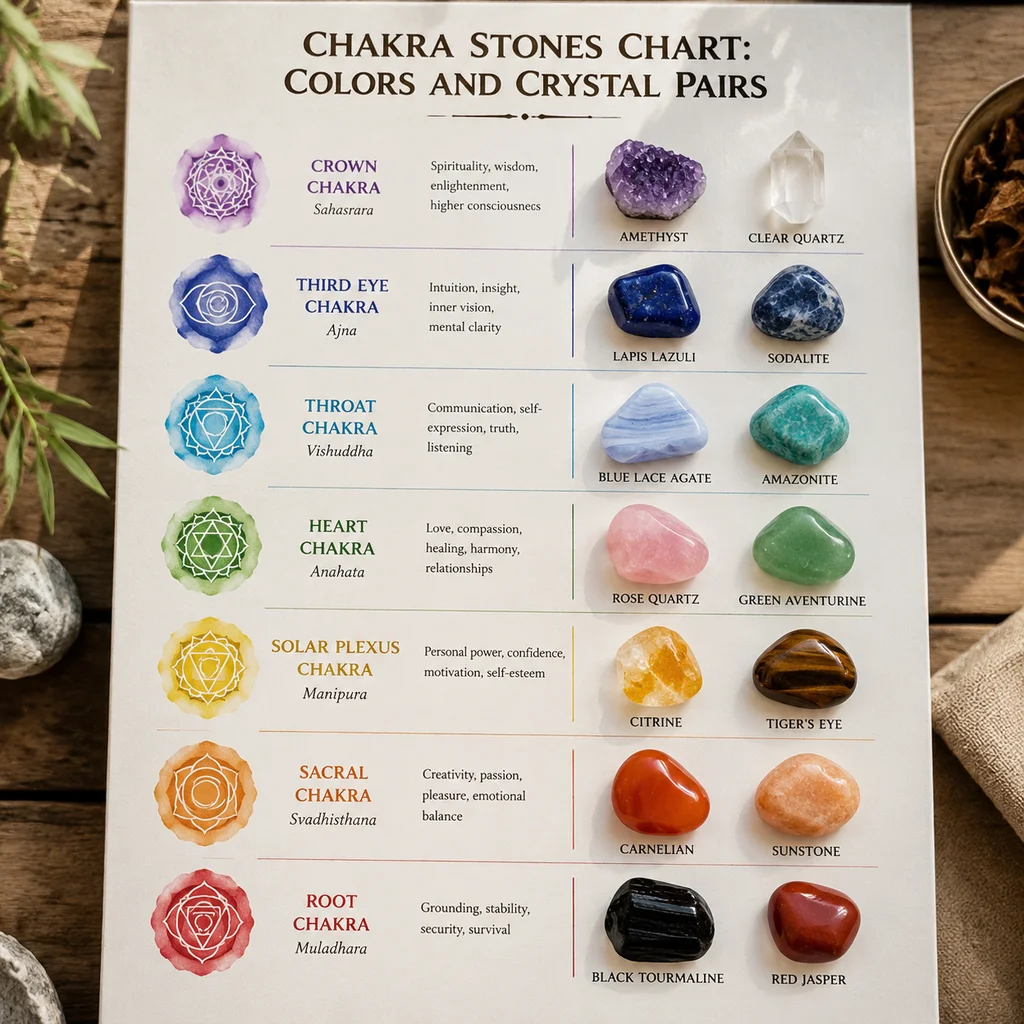
Working with the crown chakra in isolation can feel abstract. Many practitioners prefer to work with the entire chakra system simultaneously, using a different stone for each chakra in a single session. Common combinations for crown chakra pairing:
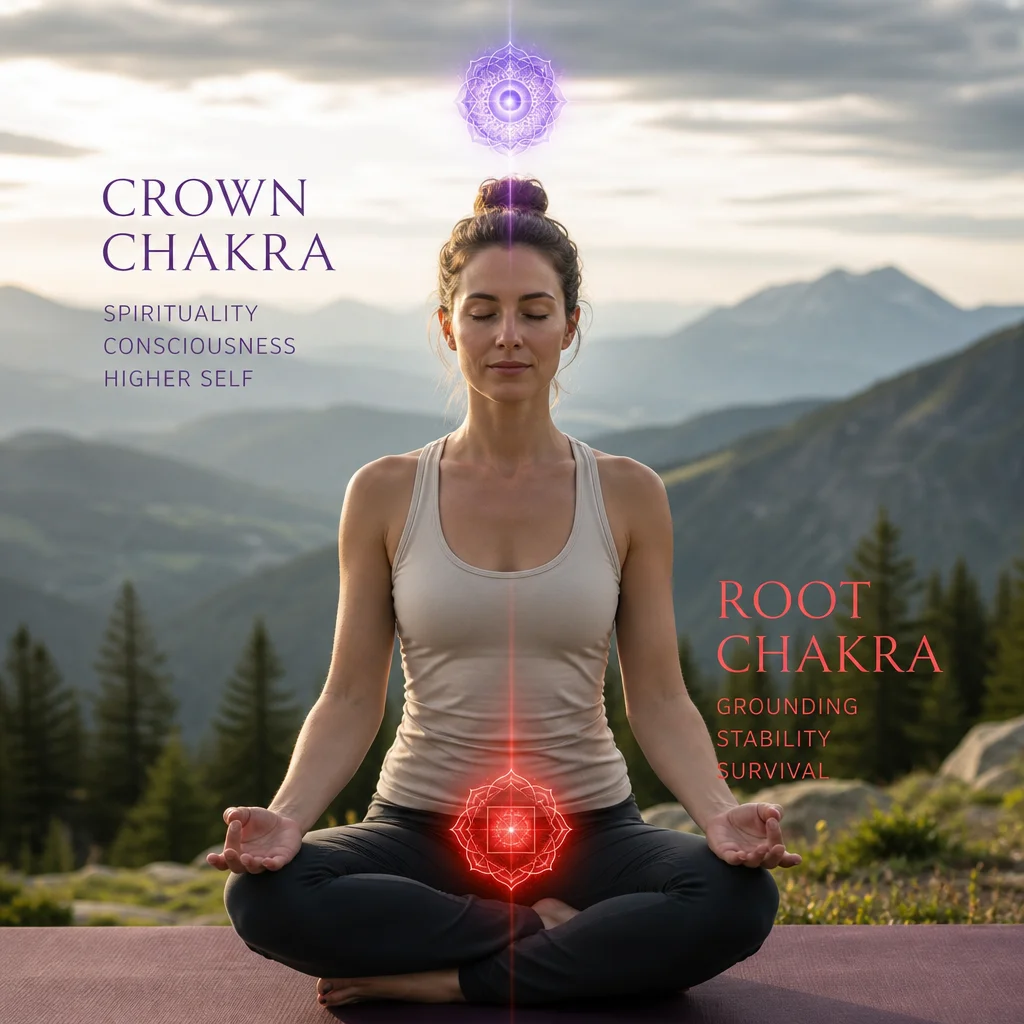
- Crown + Root: The "pillar" technique — a grounding stone (smoky quartz, black tourmaline) at the base and a crown stone above the head. This creates a sense of grounded spirituality.
- Crown + Third Eye: Amethyst or lapis lazuli covers both. This is the most common combination for upper chakra meditation.
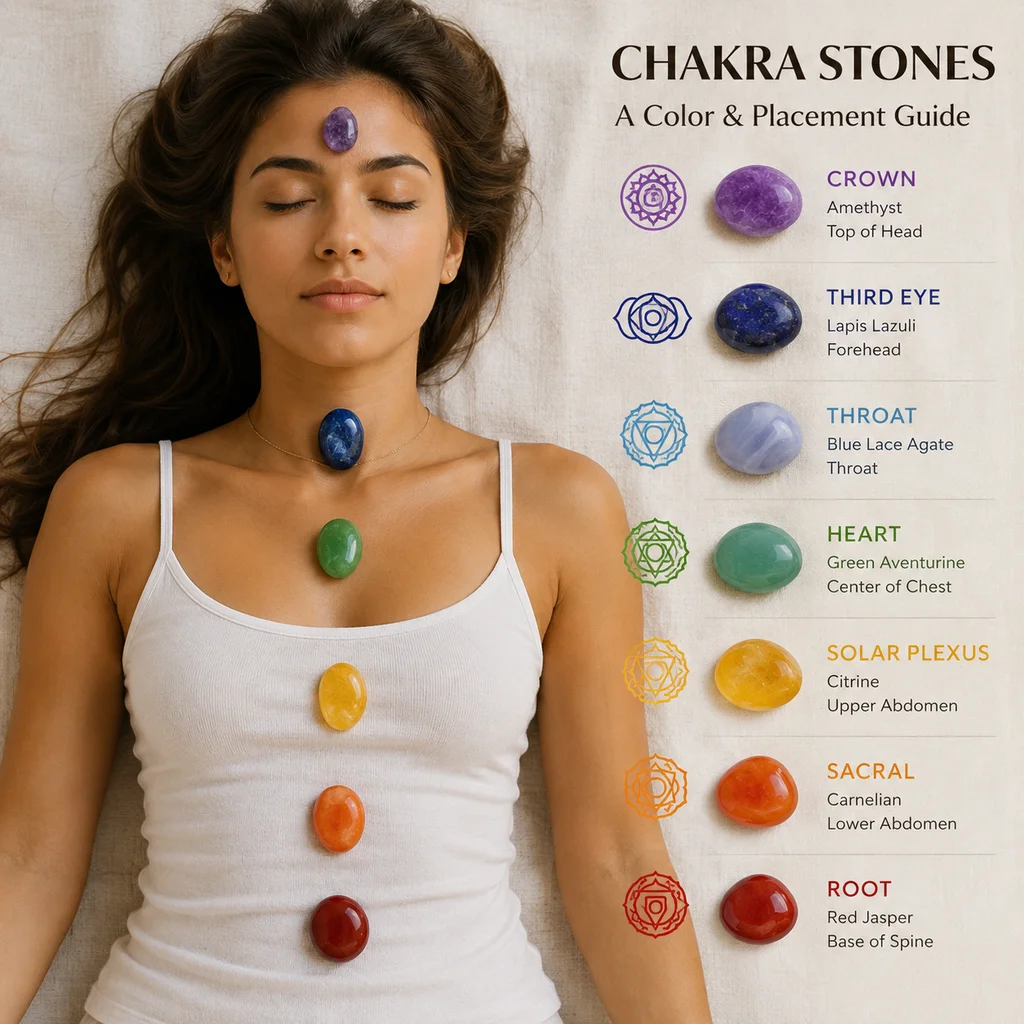
- All seven: One stone per chakra, placed along the body from root to crown. This is the full chakra meditation experience. Each stone serves as a checkpoint in a progressive body scan.
Frequently Asked Questions
What color is associated with the crown chakra?
Traditionally violet (deep purple) or white. Some traditions use gold. The violet association comes from the rainbow spectrum of the chakras (red at the root through violet at the crown). The white association represents all colors combined — unity, wholeness, the integration of all chakra energies. Stones for the crown chakra are typically clear, white, or violet in color.
Can crown chakra meditation help with sleep?
Many practitioners find that evening crown chakra meditation improves sleep quality. The deep relaxation and focus practice can calm racing thoughts that interfere with falling asleep. Placing an amethyst or selenite stone near your pillow is a common practice (amethyst is traditionally called the "dream stone"). However, crystals are not a substitute for medical treatment for insomnia. If you have chronic sleep problems, consult a healthcare professional.
Is the crown chakra related to the pineal gland?
The crown chakra is traditionally associated with the pineal gland, and there are interesting parallels. The pineal gland produces melatonin (regulates sleep) and DMT (a powerful psychedelic, though in tiny amounts during normal brain function). Descartes famously called the pineal gland the "seat of the soul." Whether the chakra system accurately maps to any physical structure is unknown — the pineal gland association is traditional and symbolic rather than scientifically established.
How often should I practice crown chakra meditation?
Daily is ideal, but even 2-3 times per week provides benefits. The key is consistency over intensity. Five minutes of daily practice is more valuable than one hour once a week. Many practitioners incorporate crown chakra focus into their existing meditation routine rather than doing it as a separate practice. Starting or ending any meditation with attention at the crown of the head is a simple way to incorporate it without adding another practice to your schedule.
Frequently Asked Questions
How do I know if my crown chakra is blocked?
A blocked crown chakra often manifests as isolation, brain fog, or a lack of purpose. You may feel entirely disconnected from the world. Wearing handcrafted crown chakra jewelry, like clear quartz or amethyst, can gently help clear this energetic blockage. Setting mindful intentions with these natural stones invites profound spiritual connection, helping you realign with your highest self.
Comments