How to Cleanse Crystals with Sage: Complete S...
June 5, 2026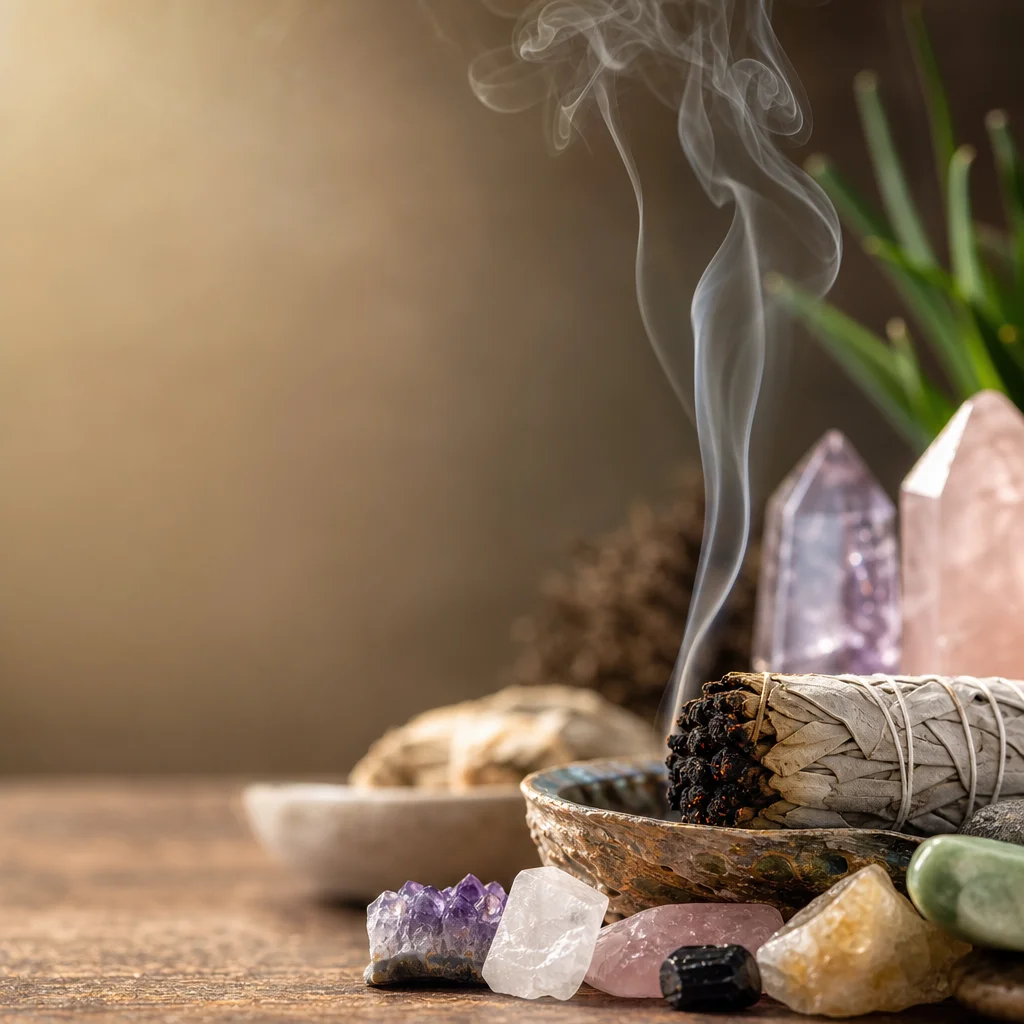
Understanding Crystal Cleansing
Crystals accumulate energy from their environment through daily handling, display on dusty shelves, and proximity to electronic devices. In crystal healing traditions, this accumulated energy is believed to eventually affect the stone's performance — a crystal that's been absorbing negative energy for weeks is thought to be less effective than one that's regularly refreshed. Whether you take this literally or metaphorically, the practice of crystal cleansing serves a real purpose: it creates intentional ritual around caring for your collection, which keeps you engaged with each stone's purpose and meaning.
Smudging with sage is one of the oldest and most widely practiced cleansing methods. The technique involves lighting dried herb bundles, producing smoke, and passing your crystals through the smoke to "clear" their energy. The practice originates in Indigenous American spiritual traditions, where smudging is a sacred ceremony used for purification of people, spaces, and objects. Modern crystal enthusiasts have adopted the technique with respect for its cultural origins while adapting it for personal use.
It's important to note that smudging is just one of many cleansing methods available. Sound cleansing, moonlight bathing, water rinsing, and burying in earth all work well for different situations. Smoke cleansing is particularly useful for crystals that can't be exposed to water (selenite, halite, malachite) and for situations where you want to cleanse multiple stones at once without handling each one individually.
Types of Sacred Herbs for Crystal Cleansing
White Sage (Salvia apiana)
White sage is the most commonly used herb for crystal smudging. Native to the American Southwest, white sage has been used by Indigenous peoples for thousands of years in purification ceremonies. The dried leaves burn slowly and produce a dense, aromatic smoke with a distinctive, sharp herbal scent. White sage bundles (sometimes called "smudge sticks") are widely available from metaphysical suppliers, though ethical sourcing matters — wild white sage populations have been depleted by commercial harvesting, so look for sustainably cultivated sources.
For crystal cleansing, white sage is considered the most thorough purifier. Its smoke is believed to clear all types of energy — positive, negative, and stagnant — leaving the crystals energetically neutral and ready to be recharged with your intention. This is particularly useful when you're transitioning a crystal from one purpose to another, or when a stone has been in a particularly stressful or negative environment.
Palo Santo (Bursera graveolens)
Palo Santo, Spanish for "holy wood," is a fragrant tree native to South America. When the dead wood is burned, it produces a sweet, warm smoke with notes of pine, citrus, and vanilla. Palo Santo has been used in spiritual ceremonies in Ecuador, Peru, and other South American countries for centuries. Unlike sage, which clears all energy, Palo Santo is said to attract positive energy while simultaneously clearing negative — it's cleansing and blessing in one step.
Palo Santo sticks are small pieces of wood rather than leaf bundles. You light one end, let it burn briefly, then blow out the flame so the wood smolders and produces smoke. The smoke is thinner than sage smoke but carries a sweeter, more pleasant aroma that many people prefer for indoor use. For crystal cleansing, Palo Santo is excellent when you want to maintain the stone's existing positive energy while refreshing it, rather than doing a complete energy reset.
Sweetgrass (Hierochloe odorata)
Sweetgrass is traditionally braided and burned after sage smudging. Where sage clears energy, sweetgrass is believed to attract positive, benevolent energy. In Indigenous American tradition, the sequence is: burn sage first to clear all energy, then burn sweetgrass to invite positive energy back in. For crystal cleansing, sweetgrass is used after sage smudging to "seal" the crystals with positive intention.
Sweetgrass produces a lighter, sweeter smoke than sage. Its vanilla-like scent is gentle and pleasant. Some practitioners skip the sweetgrass step and simply set an intention after sage smudging, but for a complete traditional ceremony, the two-step process (sage followed by sweetgrass) is the classic approach.
Step-by-Step Smudging Process
The smudging process is straightforward but benefits from a mindful, intentional approach. Rushing through it mechanically misses the point — the ritual aspect is as important as the smoke itself.
Step 1: Prepare your space. Open a window or door to allow smoke to exit. Smudging in a completely sealed room leads to excessive smoke buildup and lingering odor. Set out your crystals on a clean surface. Light a candle (many practitioners use the candle flame to light the sage rather than a lighter). Have a fireproof bowl or abalone shell ready to catch ashes.
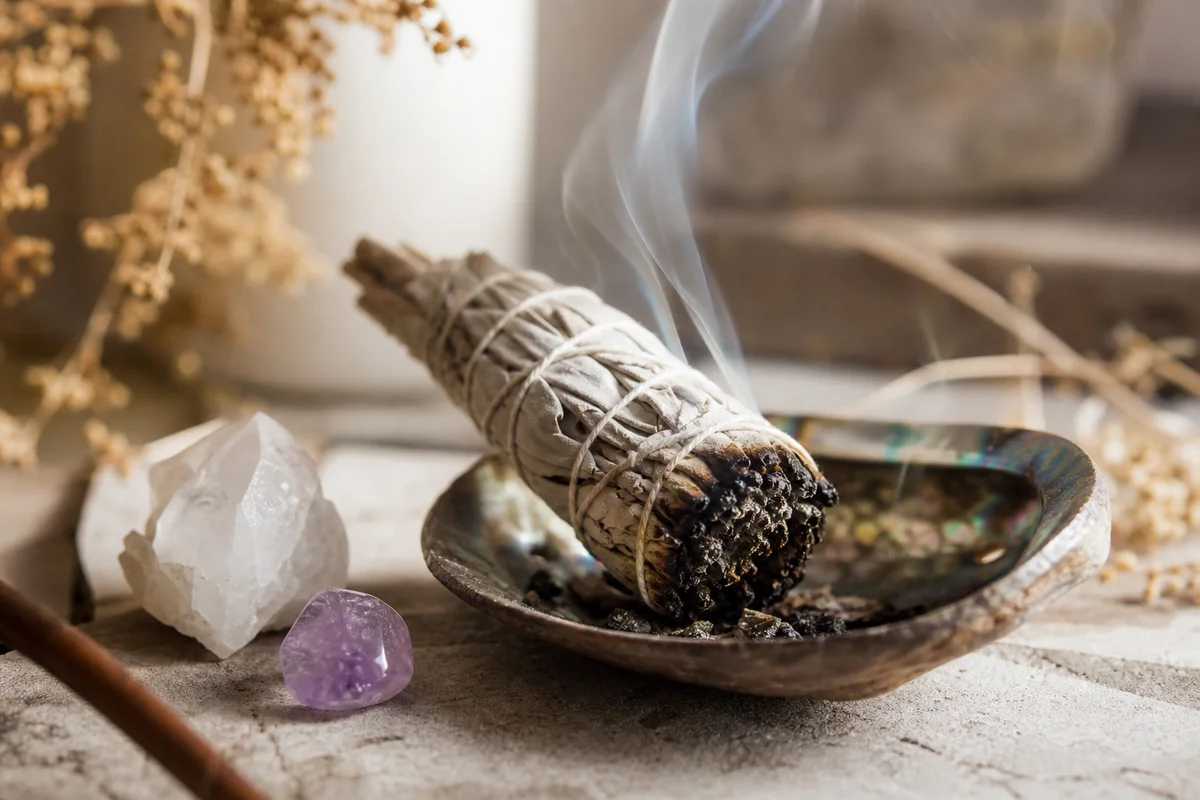
Step 2: Light the sage bundle. Hold the sage bundle at a 45-degree angle and light one end with the candle. Let it burn for 15-30 seconds until the end is glowing and producing smoke. Gently blow out the flame — you want the sage to smolder and smoke, not burn with an open flame. Fan the ember gently if the smoke diminishes.
Step 3: Cleanse your crystals. One at a time, pick up each crystal and pass it slowly through the smoke. Some practitioners use a feather to fan the smoke over the stones without touching them. Make sure the smoke flows around all sides of the crystal — front, back, sides, and bottom. For clusters or geodes with many crevices, spend extra time ensuring the smoke reaches into all the recesses.
Step 4: Set your intention. As you pass each crystal through the smoke, silently or aloud state your intention: "This crystal is cleansed and refreshed" or "I release all energy that no longer serves this crystal's purpose." The intention gives the physical action of smudging a focused mental component that many practitioners believe amplifies its effectiveness.
Step 5: Extinguish the sage. Press the smoldering end firmly into your fireproof bowl or abalone shell until it stops glowing. Never leave burning sage unattended. Once fully extinguished, the bundle can be reused multiple times until it's too small to hold comfortably.
Crystals That Should Not Be Smudged
While smoke cleansing is safe for the vast majority of crystals, a few considerations apply:
Soft or porous stones: Minerals with very low hardness (under 3 on the Mohs scale) might theoretically accumulate smoke residue in their surface texture. Malachite, azurite, and other soft stones with rough surfaces can be smudged briefly but shouldn't be exposed to prolonged heavy smoke. A quick pass through is fine — extended exposure isn't necessary.
Resin-based materials: Amber, copal, and other fossilized resins have low melting points and could theoretically be affected by the heat of nearby burning sage. Keep these stones at arm's length from the burning ember — the smoke itself won't harm them, but direct heat contact could.
Crystals with water-soluble components: Halite (rock salt) and other water-soluble minerals are fine for smoke cleansing — in fact, smudging is one of their best cleansing methods since they can't go in water. The same goes for selenite, which dissolves slowly in moisture.
How Often Should You Cleanse Your Crystals?
The frequency of crystal cleansing depends on how you use them. Crystals worn daily as jewelry absorb energy from your body and environment continuously — these benefit from weekly cleansing. Crystals used in healing sessions or placed in high-traffic areas should be cleansed after each significant use. Display crystals that sit untouched on a shelf need less frequent attention — monthly or even quarterly cleansing is sufficient.
There are also situational triggers that call for immediate cleansing regardless of your regular schedule: after a negative emotional experience while wearing or holding the crystal, after someone else has handled your personal crystals, after the crystals have been in a hospital, funeral home, or other emotionally charged environment, or when the stone simply "feels off" to you — heavier, duller, or less responsive than usual.
Some practitioners cleanse their entire collection during each full moon, using the lunar cycle as a natural reminder. This is a practical approach because it creates a regular schedule without requiring you to remember individual cleansing dates for each stone. A monthly full-moon cleansing session becomes part of your routine, ensuring nothing gets neglected.
Smudging vs. Other Cleansing Methods
Smudging vs. Moonlight
Moonlight cleansing is the gentlest method — simply place crystals outside or on a windowsill during a full moon. It requires no active effort beyond setup and retrieval, and it charges the stones with lunar energy while cleansing. Smudging provides a more active, intentional cleansing that many practitioners feel is "deeper." For regular maintenance, moonlight is convenient. For a thorough reset, smudging is preferred.
Smudging vs. Sound Cleansing
Sound cleansing uses singing bowls, bells, tuning forks, or even clapping to clear crystal energy through vibration. It's ideal for large collections because you can cleanse dozens of stones at once by surrounding them with sound. Smudging is more tactile and ritualistic. Sound cleansing is faster and more practical for bulk cleansing. Both are effective — choose based on your preference and the scale of the task.
Smudging vs. Water Cleansing
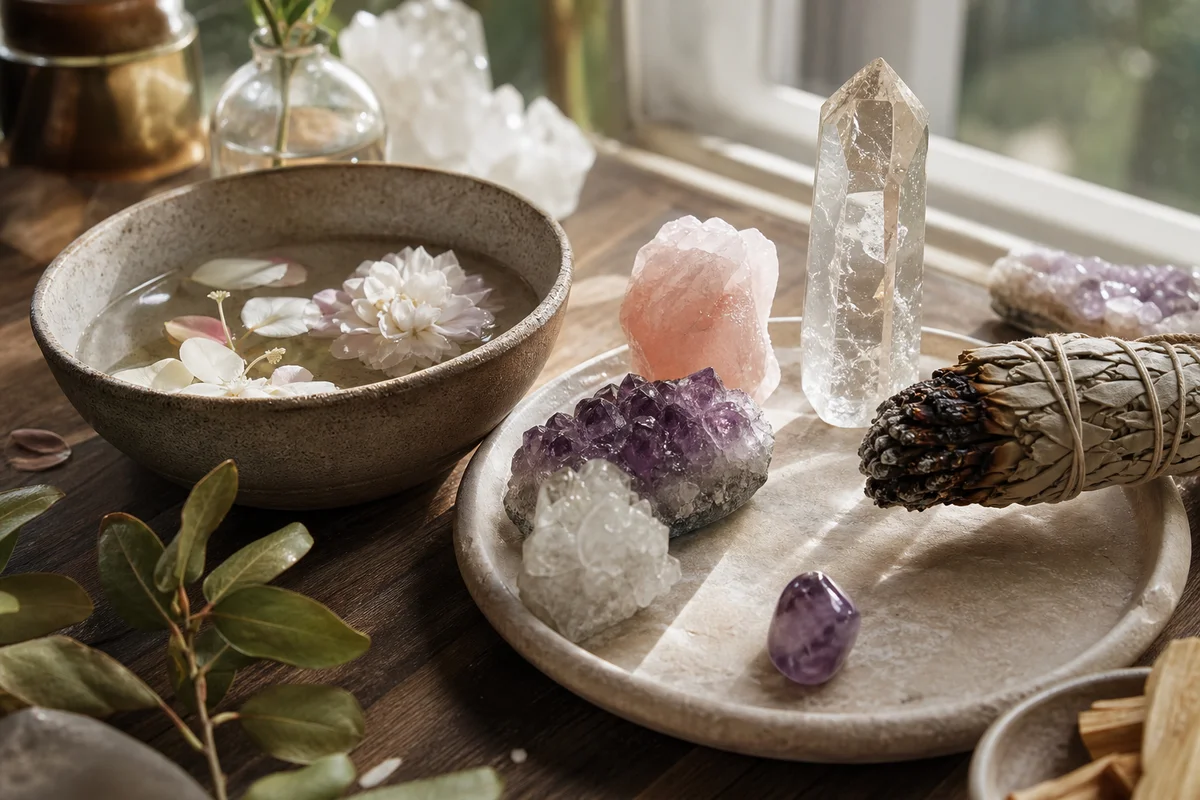
Water is the most physically cleaning method — it removes actual dust and surface contaminants in addition to any energetic impurities. However, many crystals can't safely go in water (selenite, malachite, halite, pyrite, lapis lazuli with calcite inclusions). Smudging works for all crystals regardless of their water sensitivity. For crystals that can handle water, a brief rinse followed by smudging combines physical cleaning with energetic cleansing.
Safety Tips for Smudging
Always smudge in a well-ventilated area. The smoke from burning sage can trigger asthma or allergic reactions in sensitive individuals — if you have respiratory concerns, use sound or moonlight cleansing instead. Keep a fire extinguisher or at minimum a cup of water nearby. Never leave burning herbs unattended. Be mindful of smoke detectors, which may trigger during extended smudging sessions. Use fireproof containers (abalone shells, ceramic bowls, cast iron dishes) to catch falling ash. Respect the cultural origins of smudging by approaching the practice with sincerity rather than treating it as a casual air freshener.
Frequently Asked Questions
Do I really need to cleanse my crystals?
From a purely physical standpoint, crystals are minerals and don't accumulate "energy" in a measurable sense. However, the practice of crystal cleansing serves real psychological functions: it creates ritual and intentionality around your collection, provides a regular mindfulness practice, and strengthens the personal meaning you've assigned to each stone. Whether or not you believe in energetic cleansing, the ritual itself has value.
Can I use regular cooking sage instead of white sage?
You can burn culinary sage (Salvia officinalis), but it produces a different kind of smoke. White sage has been specifically used in purification ceremonies for its particular aromatic qualities and cultural significance. Culinary sage will burn and produce smoke, but the experience will be different. If white sage isn't available, palo santo is a good alternative that's widely available and sustainably sourced.
How do I know when a crystal has been thoroughly cleansed?
Trust your intuition. Some people report feeling a physical sensation when a crystal is "done" — the stone might feel lighter, warmer, or tingly. Others simply smudge for a set amount of time (usually 10-15 seconds per stone) and trust that the process is complete. If you're new to crystal work, start with a consistent routine and adjust based on your experience over time.
Frequently Asked Questions
Which crystals should not be cleansed with sage smoke?
Most crystals are safe to smudge, but porous or delicate stones require extra care. Selenite can become brittle with prolonged smoke exposure, while calcite varieties may fade. If you're unsure, hold your crystal further from the smoke or use alternative cleansing methods like moonlight or sound bowls to protect your handcrafted crystal jewelry.
How often should I cleanse my crystals with sage?
Cleanse your crystals whenever they feel energetically heavy or after intense emotional work. As a general guideline, smudging once a week keeps most pieces vibrant. Crystal jewelry worn daily benefits from cleansing every few days. Trust your intuition — if a stone feels dull or less powerful, it likely needs a smudging session.


Comments