Chrysoprase: Why It Fades & How to Prevent It
June 3, 2026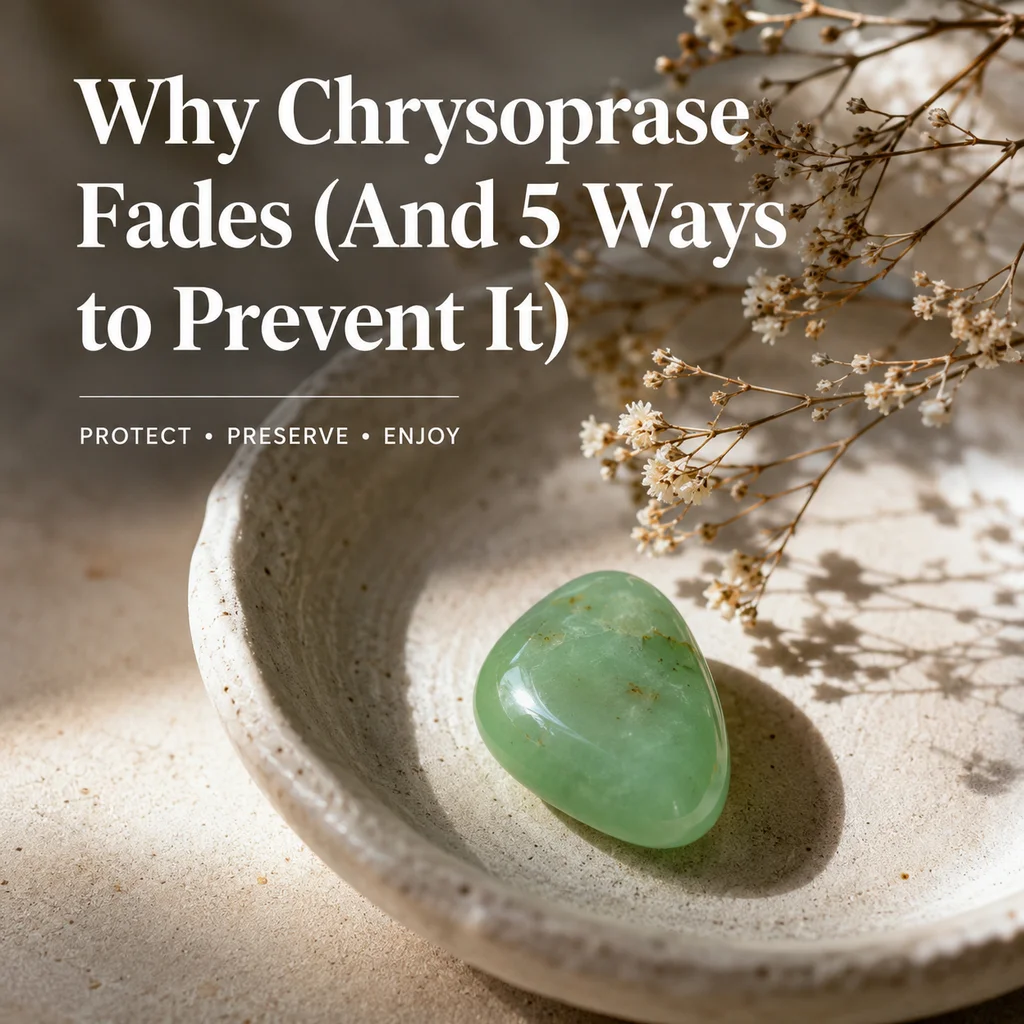
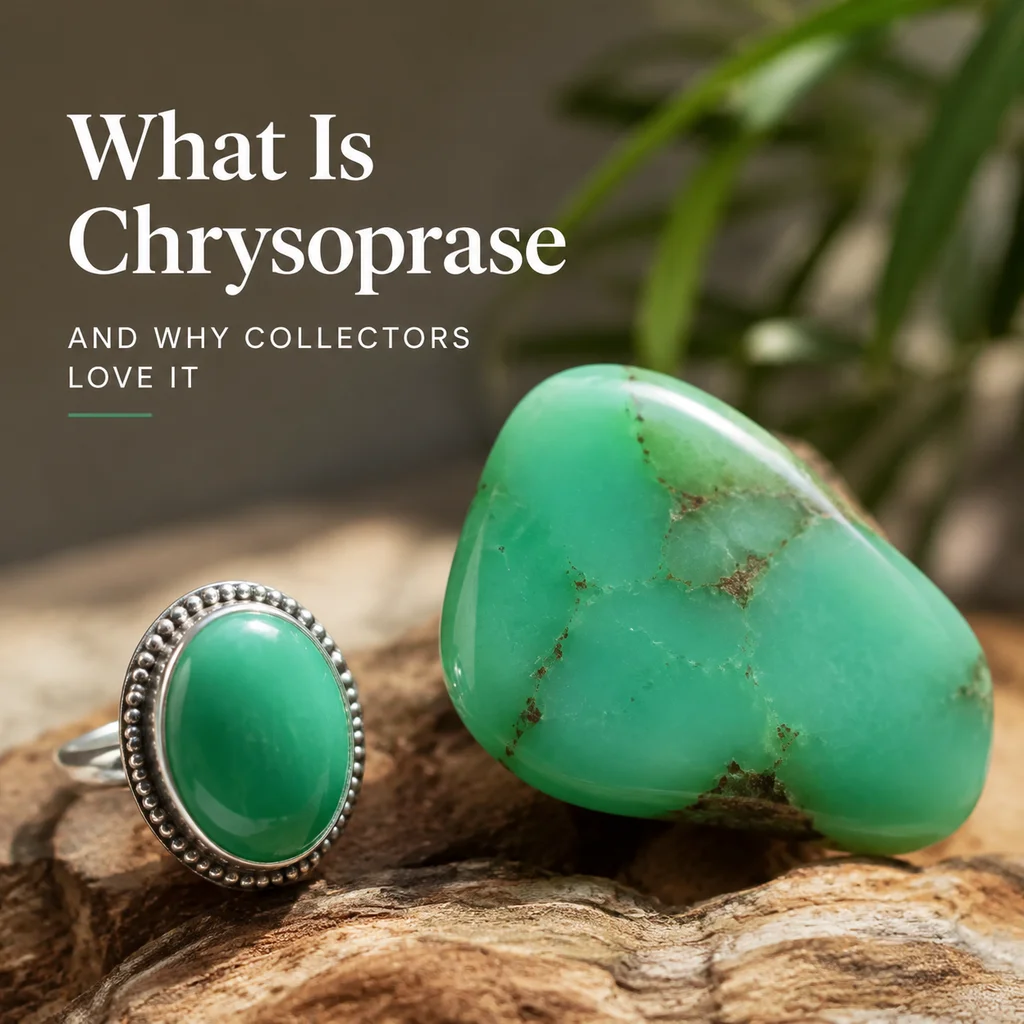
What Is Chrysoprase and Why Collectors Love It
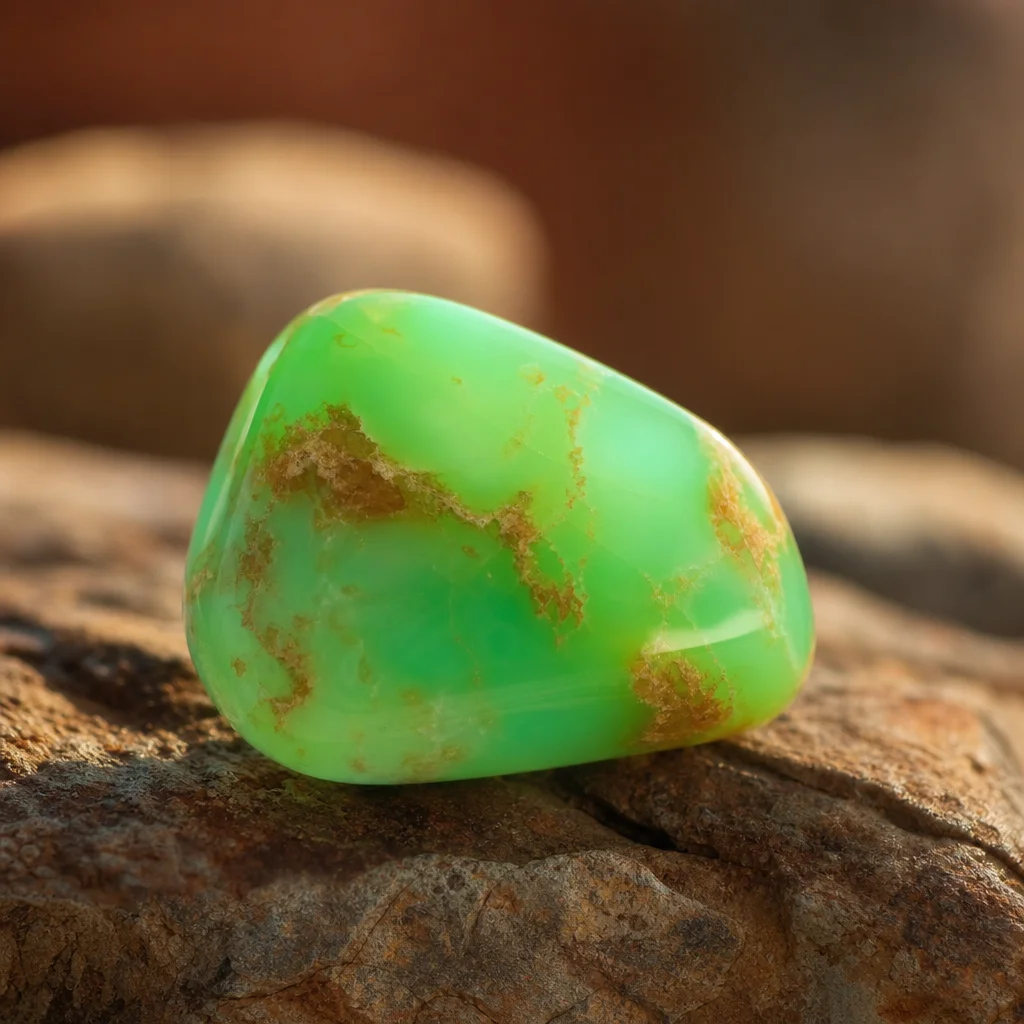
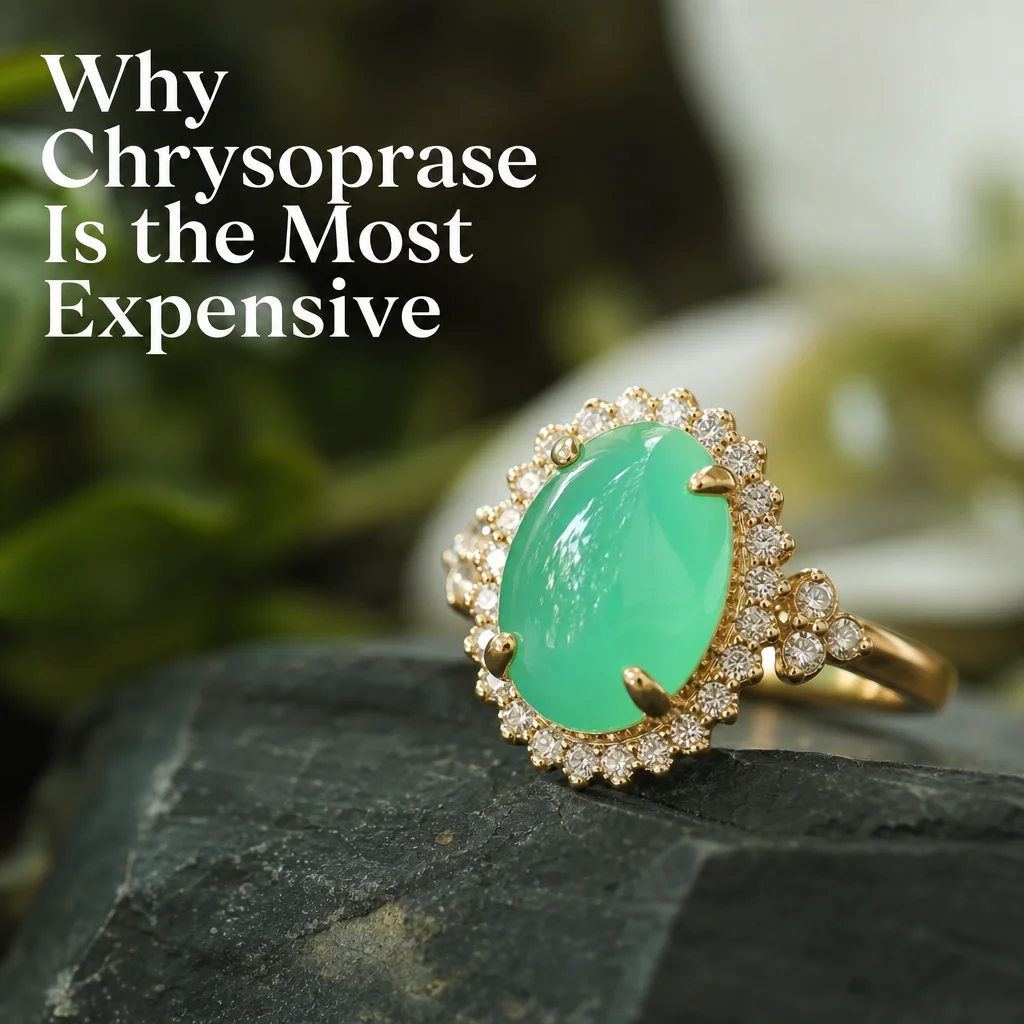
Chrysoprase is the apple-green variety of chalcedony, a microcrystalline form of quartz (SiO₂). It is the most valued variety of green chalcedony and has been used in jewelry and decorative objects since antiquity—the ancient Greeks, Romans, and Egyptians all prized chrysoprase for its vivid green color. The name comes from the Greek words "chrysos" (gold) and "prason" (leek), a reference to its characteristic green-gold color that resembles the interior of a leek.
What sets chrysoprase apart from other green stones is its color mechanism. Unlike emerald (colored by chromium) or peridot (colored by iron), chrysoprase gets its distinctive green from nickel (Ni²⁺) ions substituting for silicon in the crystal lattice. This nickel-based coloration is unusual among gemstones and gives chrysoprase a distinctive, slightly yellowish-green tone that is immediately recognizable once you have seen good examples.
How Chrysoprase Forms
Chrysoprase forms in nickel-rich environments, typically in weathered serpentinite rocks and associated silica deposits. The process begins when silica-rich groundwater, carrying dissolved nickel from the breakdown of ultramafic rocks, percolates through cracks and cavities in the host rock. As the water evaporates or cools, the silica deposits as chalcedony with nickel ions incorporated into the crystal structure, producing the green color.
This geological formation process explains why chrysoprase is typically found in small, irregular nodules and veins rather than large crystal formations. The nickel source rocks (serpentinites) are themselves relatively rare and localized, which is why commercial chrysoprase deposits are limited to a handful of locations worldwide. The most famous source is the Marlborough district in Queensland, Australia, which produces the finest quality material with the most vivid color.
Other sources include Poland (the Szklary district has produced chrysoprase since the 14th century), Russia (the Ural Mountains), the United States (California and Arizona), Brazil, Tanzania, and India. Australian material is generally considered the finest due to its consistent, vivid color and good translucency. Polish material tends toward a slightly more muted, blue-green tone.
The Sunlight Problem: Chrysoprase Fades
This is the single most important thing to know about chrysoprase, and it is the reason so many collectors accidentally ruin their specimens: chrysoprase fades in sunlight. Prolonged exposure to ultraviolet light—even indirect daylight over weeks and months—causes the nickel-based color centers to break down, gradually shifting the color from vivid apple-green to a pale, washed-out yellowish-white. This fading is permanent and cannot be reversed.
The fading mechanism involves the oxidation of Ni²⁺ (nickel in the +2 oxidation state, which produces the green color) to higher oxidation states that do not contribute to green coloration. UV radiation provides the energy to drive this oxidation. Once the nickel ions have been oxidized, no amount of recharging, moonlight exposure, or any other treatment will restore the green color.
This means chrysoprase jewelry should be stored in a dark place when not being worn, and display specimens should be kept out of direct sunlight and ideally out of bright indirect light. If you want to photograph your chrysoprase, do it quickly—brief sun exposure for photography is fine, but leaving the stone on a sunny windowsill for display is a recipe for gradual color loss.
Chrysoprase vs. Jade vs. Prehnite vs. Aventurine
The green stone market is crowded, and chrysoprase is frequently confused with several other materials. Here is how to tell them apart:
Jade (nephrite or jadeite): Jade is significantly harder and tougher than chrysoprase. Nephrite jade (Ca₂(Mg,Fe)₅Si₈O₂₂(OH)₂) rates 6-6.5 on the Mohs scale but has remarkable toughness—it can be carved into thin, intricate pieces without chipping. Jadeite (NaAlSi₂O₆) is harder (6.5-7) but more brittle. Color-wise, fine jade can look similar to chrysoprase, but jade typically has a more muted, less vivid green and a characteristic "greasy" luster that chrysoprase lacks. Chrysoprase has a waxy to vitreous luster and is generally more translucent than nephrite.
Prehnite: Prehnite (Ca₂Al(AlSi₃O₁₀)(OH)₂) is typically a pale to medium green, sometimes with a yellowish cast that can resemble chrysoprase. However, prehnite often contains darker inclusions (usually epidote or other minerals) that create a mottled or textured appearance. Prehnite is slightly softer (6-6.5) and has a different crystal system (orthorhombic vs. chrysoprase's trigonal quartz structure). The easiest distinguishing feature is that prehnite often displays a characteristic "cat's eye" effect (chatoyancy) when cut as a cabochon, while chrysoprase does not.
Green Aventurine: Aventurine is a variety of chalcedony (like chrysoprase) that gets its green color from fuchsite mica inclusions. These tiny, flaky mica particles give aventurine a sparkly, aventurescent appearance—you can see tiny flashes of light when you tilt the stone. Chrysoprase does not have this sparkly quality; its green color is smooth and even. Aventurine is also generally darker and more blue-green than the apple-green of fine chrysoprase.
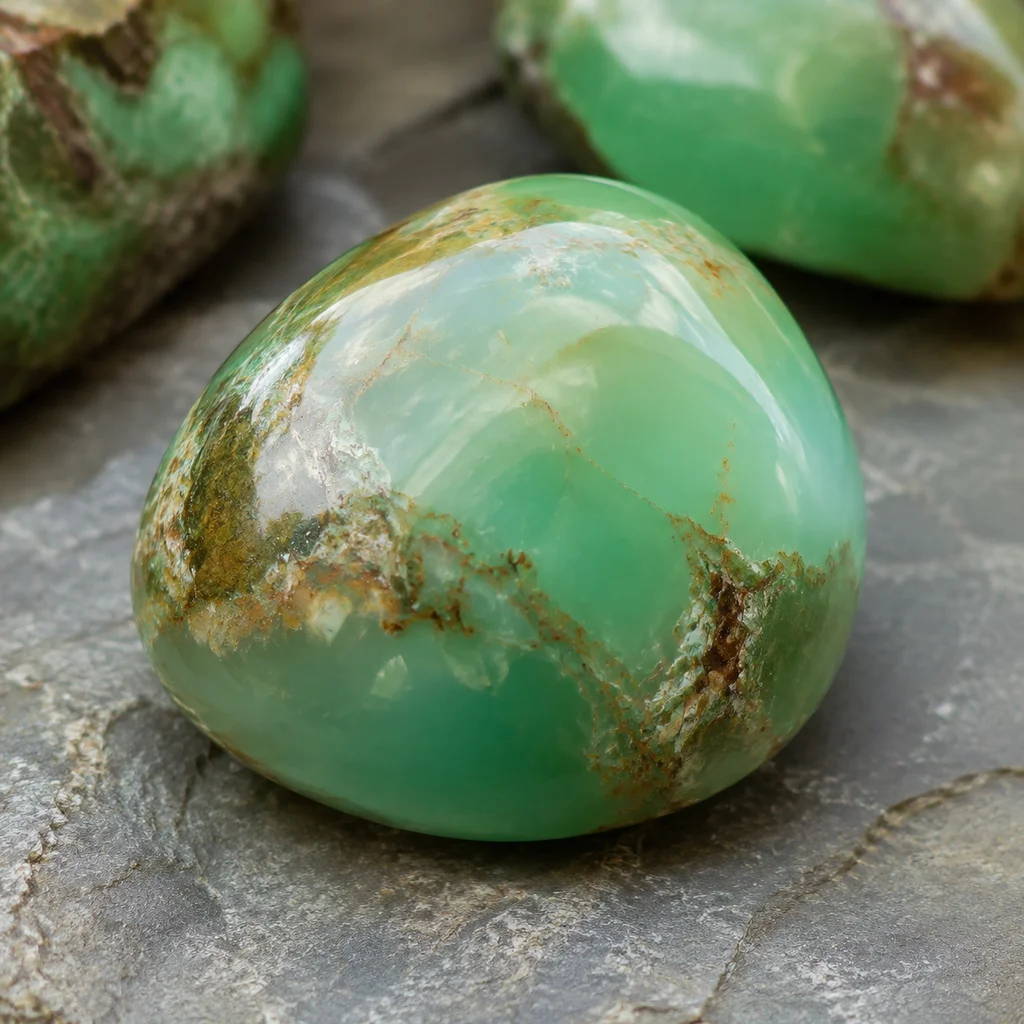
Dyed quartz and dyed chalcedony: Cheap, uniform green "chrysoprase" beads on the market are often dyed quartz or agate. The dye penetrates the surface and creates an unnaturally uniform color. Natural chrysoprase shows subtle color variation—some areas slightly darker, some slightly lighter—and the green is warmer (more yellow component) than most dyed materials, which tend toward a cooler, blue-green. If the price seems too good to be true (e.g., a full strand of vivid green 8mm beads for $5), it is almost certainly dyed.
Historical Significance
Chrysoprase has an impressive historical resume. Frederick the Great of Prussia was famously fond of chrysoprase and decorated his palace at Sanssouci with chrysoprase objects, including a large table inlaid with chrysoprase slabs. Cleopatra reportedly wore chrysoprase as a favorite gemstone, and Roman historians described the stone as being favored by women for its supposed skin-beautifying properties (this is myth, not science).
In Australian Aboriginal culture, chrysoprase from the Marlborough deposits has cultural significance, and there have been discussions about ethical sourcing from these areas. If you are purchasing Australian chrysoprase, ask the dealer about the sourcing and whether Indigenous communities were involved in or benefited from the mining operation.
Using Chrysoprase in Jewelry
Chrysoprase's hardness of 6.5-7 makes it suitable for all jewelry types, including rings. It is comparable to amethyst and citrine in terms of daily durability—expect good resistance to scratching and a lifespan of many years with reasonable care. The main consideration is the sunlight sensitivity: chrysoprase rings worn daily will inevitably see sunlight, which means gradual fading over months to years of regular wear.
If you want to preserve the color, reserve chrysoprase for evening jewelry, indoor occasions, or pieces that are stored in a jewelry box when not actively being worn. Alternatively, accept that the color will gradually mellow over time and enjoy the stone in its present vivid state. Some collectors actually prefer the softer, faded look that well-worn chrysoprase develops—think of it as the gemstone equivalent of worn-in denim.
Chrysoprase cabochons are particularly popular for pendants and earrings, where the translucent green material shows its best color when backlit. Large, well-colored cabochons (10mm+) can be quite expensive—expect to pay $50-200 for a fine specimen. Beads are more affordable, with natural-color chrysoprase strands starting around $20-40 for graduated 8-10mm rounds.
Care Guidelines
- Avoid sunlight: This cannot be overstated. Store in darkness when not wearing. Keep display pieces under LED or low-UV lighting.
- Clean with care: Warm soapy water and a soft cloth or brush. Ultrasonic cleaners are generally safe for clean stones but avoid if the piece has inclusions or is set in a delicate mounting.
- Oil treatment: Some commercial chrysoprase is treated with colorless oil or resin to enhance the color. This treatment is not permanent and will need periodic reapplication. Ask your dealer if the stone has been treated.
- Heat: Avoid sudden temperature changes and high heat. The nickel color centers can be affected by temperatures above 100°C, and thermal shock can cause fracturing.
Frequently Asked Questions
Can I wear chrysoprase every day?
You can, but be aware that daily sunlight exposure will gradually fade the color. If the color is important to you, consider saving chrysoprase for occasional wear or indoor use. If you do not mind gradual fading, daily wear is mechanically fine—the stone is hard enough for ring and bracelet use.
Is chrysoprase a good investment stone?
High-quality Australian chrysoprase from established deposits has held value well, particularly in larger cabochon sizes with vivid, even color. However, it is not a liquid market like diamonds or rubies—selling chrysoprase requires finding the right buyer, typically through mineral shows, specialist dealers, or auction houses that handle colored stones. Buy chrysoprase because you love the color, not primarily as an investment.
How can I tell if chrysoprase is natural or dyed?
Natural chrysoprase shows subtle color zoning and variations within each stone. Dyed material tends toward a flat, uniform green that looks "too good." Check the drill holes in beads—if the color concentrates at the surface and is noticeably paler inside the hole, the stone is dyed. Natural chrysoprase has consistent color through the full thickness of the material.
Frequently Asked Questions
How do you restore the color of faded chrysoprase?
Unfortunately, once chrysoprase fades due to prolonged UV exposure, the color change is permanent and cannot be reversed. The sunlight alters the hydrated silica and nickel compounds that give the stone its signature apple-green hue. Because our artisans hand-select each crystal for its vibrant color, we highly recommend storing your handcrafted jewelry in a dark, cool jewelry box when not being worn to preserve its natural beauty.
Can chrysoprase go in water?
While chrysoprase is a form of quartz (chalcedony) and generally safe to briefly rinse in plain water, you should never soak it. Prolonged exposure to moisture can dull its polish and affect its delicate trace minerals. To keep your artisan-crafted pieces looking their best, simply wipe your jewelry with a soft, damp, lint-free cloth after wearing it to gently remove any skin oils or daily dust.
Comments