7 Essential Chakra Stones for Beginners
May 31, 2026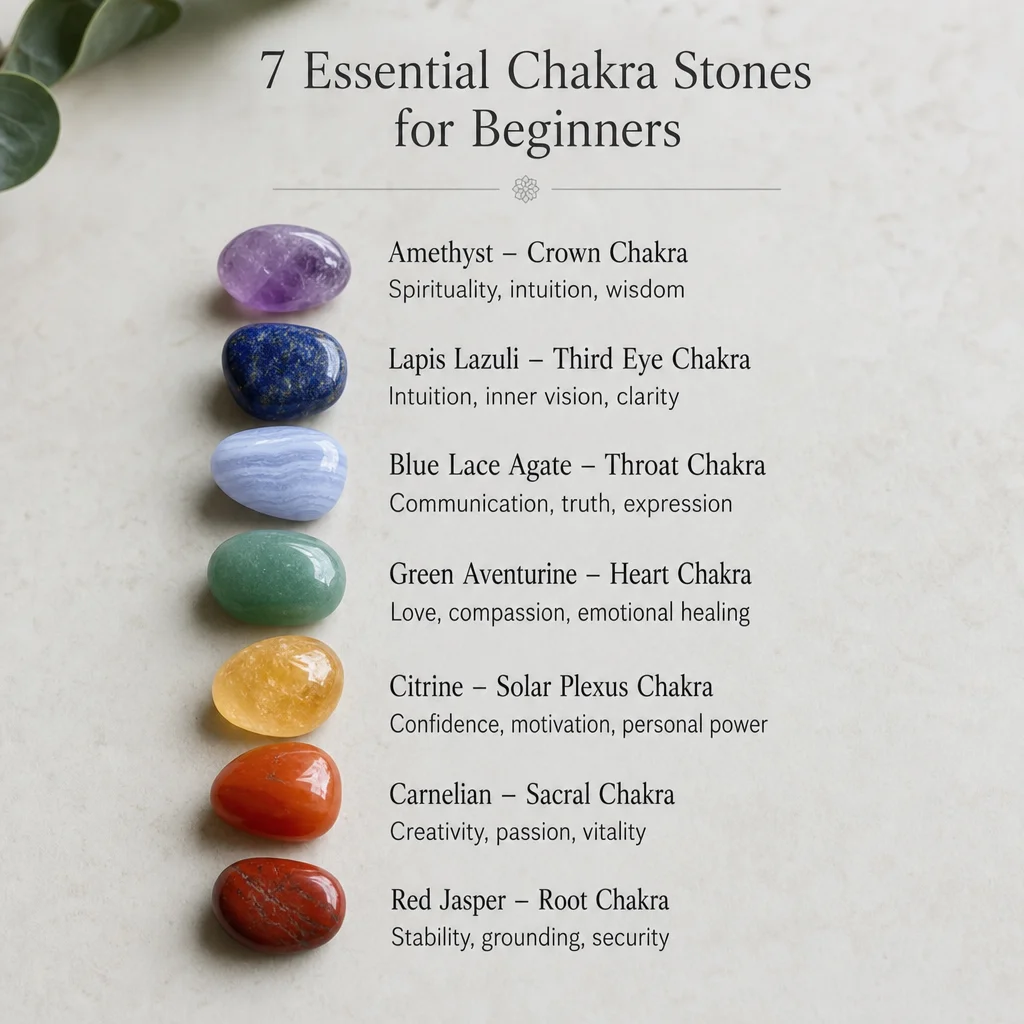
Start Simple: One Stone Per Chakra
The chakra system identifies seven energy centers along the body, each associated with specific colors, emotions, and life functions. For each chakra, there are dozens—sometimes hundreds—of stones that various traditions recommend. Amethyst alone has been suggested for the crown, third eye, and even the heart chakra in different sources. Green aventurine, jade, malachite, peridot, and rose quartz all claim the heart. It's overwhelming, and it paralyzes beginners.
Here's the approach that actually works: pick ONE stone per chakra and learn it thoroughly before expanding. These seven aren't the "only" options—they're the most accessible, affordable, and widely-recommended starting points. Once you're comfortable with these, you can explore alternatives with context and understanding rather than confusion.
Crystals are not a substitute for medical treatment. The chakra system is a framework from traditional Indian medicine and spiritual practice; it's not a scientific model. These stones are used as meditation aids, visual reminders, and personal comfort objects by people who find the system meaningful. If that resonates with you, this guide provides a practical starting point.
Root Chakra (Muladhara) — Red Jasper
The root chakra sits at the base of the spine and is associated with feelings of safety, stability, grounding, and basic survival needs. When people describe feeling "ungrounded," "anxious for no reason," or "disconnected from their body," they're often describing what chakra practitioners would call a root chakra imbalance.
Red jasper is a form of microcrystalline quartz (a type of chalcedony) colored by iron oxide impurities. It's opaque, deep brick-red to rust-red, and has been used in jewelry and decoration for thousands of years—Egyptians carved scarabs from it, and Vikings carried red jasper amulets.
Practically, red jasper is dense and heavy in the hand, which creates an immediate grounding sensation when you hold it. The deep red color is visually stabilizing. For beginners, a tumbled red jasper stone costs $2–$5 and is nearly indestructible—you can carry it in your pocket, drop it, and it won't chip or crack.
How to use it: Hold in your hand or place at the base of your spine during meditation. Carry in a pocket during stressful situations. Keep on your desk when you need to feel grounded and focused.
Sacral Chakra (Svadhisthana) — Carnelian
The sacral chakra (below the navel) connects to creativity, emotional expression, pleasure, and relationships. Imbalances are often described as feeling creatively blocked, emotionally numb, or unable to enjoy normally pleasurable activities.
Carnelian is another chalcedony variety, colored by iron oxide in a different oxidation state that produces the characteristic warm orange-to-amber color. It's been used since antiquity—Roman soldiers wore carnelian signet rings, and the ancient Egyptians associated it with the blood of the goddess Isis.
Carnelian's warm orange color is inherently energizing—studies in color psychology consistently show orange as a mood-elevating, creativity-stimulating color. Whether this comes from cultural conditioning or deeper neurological responses to the wavelength, the practical effect is the same: most people feel more creatively stimulated when looking at or holding carnelian.
How to use it: Place on your lower abdomen during creative visualization. Keep in your workspace when you need creative energy. Hold during journaling sessions about emotions or relationships. Carnelian is hardy (Mohs 6.5–7), water-safe, and affordable ($2–$6 for tumbled stones).
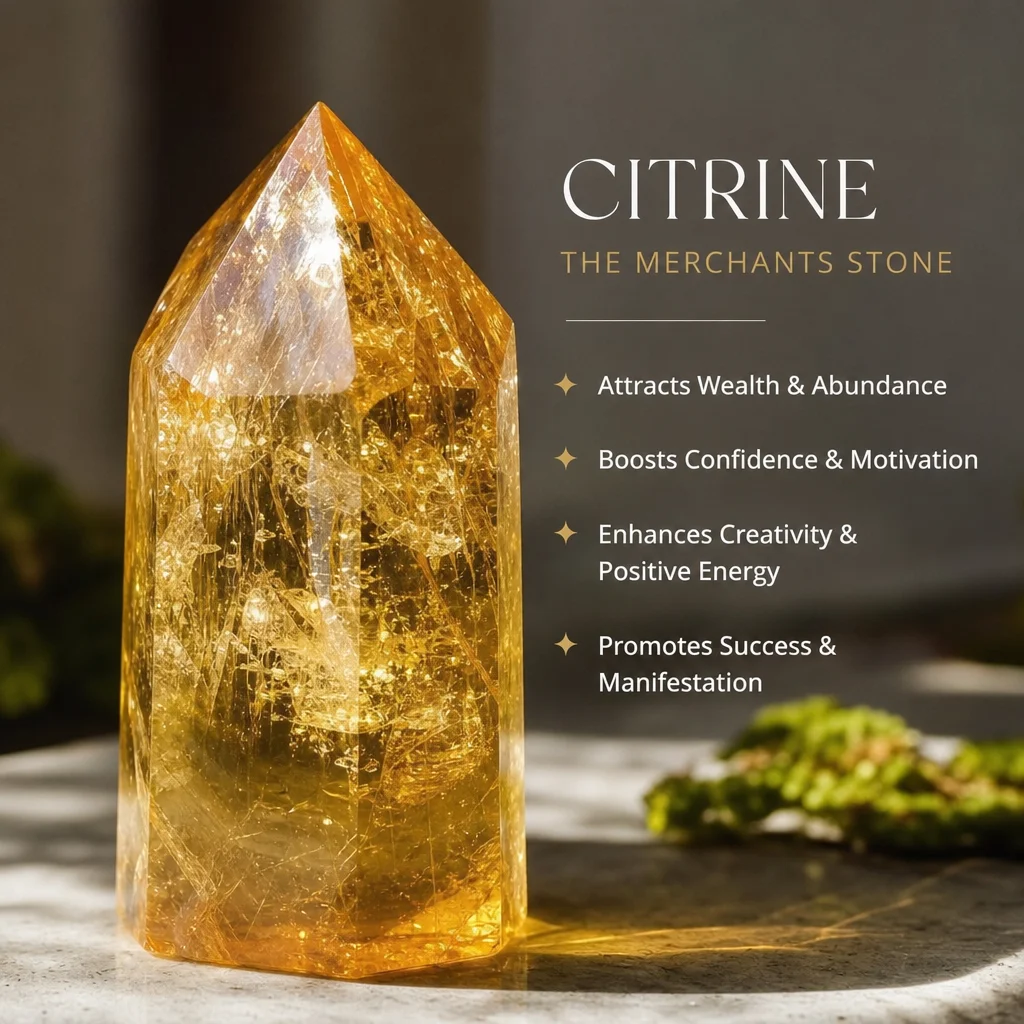
Solar Plexus Chakra (Manipura) — Citrine
The solar plexus chakra (upper abdomen) governs personal power, self-confidence, motivation, and willpower. People who describe feeling "powerless," unable to assert themselves, or chronically unmotivated might be describing a solar plexus imbalance in chakra terms.
Citrine is the yellow variety of quartz, getting its color from trace iron. Its warm, sunny color and the name's linguistic connection to "citrus" create an immediate association with energy and warmth. In crystal healing tradition, citrine is the quintessential solar plexus stone—sometimes the only one recommended for this chakra.
Practically, citrine is harder (Mohs 7) and more durable than many alternatives. Its yellow color is immediately associated with sun, warmth, and vitality across virtually all human cultures. A tumbled citrine stone costs $3–$8, making it an accessible entry point.
Note: Most commercially available citrine is heat-treated amethyst. For chakra practice purposes, this doesn't matter—the color and mineral are functionally identical. Natural citrine is more expensive and harder to find, but offers no practical advantage for a beginner.
How to use it: Hold at the solar plexus during confidence-building meditations. Place on your desk during challenging work. Carry before presentations, interviews, or difficult conversations.
Heart Chakra (Anahata) — Green Aventurine
The heart chakra (center of the chest) is associated with love, compassion, forgiveness, and emotional balance. Heart chakra imbalance is described as feeling closed off, unable to give or receive love, or experiencing chronic emotional numbness.
Green aventurine is a form of quartz characterized by tiny inclusions of fuchsite (a chromium-bearing mica) that give it its distinctive green color and a subtle shimmering effect called aventurescence. It's sometimes called the "Stone of Opportunity" in crystal tradition—not for the heart chakra specifically, but as a general luck-attracting stone.
Green aventurine is the most accessible heart chakra stone for beginners because it's inexpensive ($2–$5 for tumbled stones), durable (Mohs 6.5), widely available, and its green color is universally associated with the heart chakra. More expensive alternatives like emerald ($500+/carat) or jade ($100+/piece) are unnecessary for starting out.
How to use it: Place on your chest during self-compassion meditations. Hold when processing grief or emotional difficulty. Keep near your bed when working through relationship challenges. Green aventurine's soft, warm green color is calming without being sedating.
Throat Chakra (Vishuddha) — Lapis Lazuli
The throat chakra governs communication, self-expression, and speaking your truth. People who describe difficulty expressing themselves, fear of speaking up, or feeling misunderstood might relate to throat chakra imbalance concepts.
Lapis lazuli is a complex rock (not a single mineral) composed primarily of lazurite, with white calcite veins and golden pyrite inclusions. The deep blue color with gold flecks is one of the most distinctive and recognizable in the crystal world—it's been prized since Neolithic times and was ground into pigment for ultramarine paint during the Renaissance.
Lapis lazuli is the traditional throat chakra stone, and its deep blue color is directly associated with the throat chakra across virtually all chakra reference systems. The gold pyrite flecks add visual interest and a sense of "value" that enhances the stone's perceived significance during meditation.
Lapis is moderately hard (Mohs 5–6) but can be scratched by quartz. It's not water-safe (the calcite component can dissolve) and should be cleaned with a dry or barely-damp cloth only. Price ranges from $5–$15 for small tumbled stones to $30–$100 for larger display pieces.
How to use it: Wear as a pendant at throat level. Hold during public speaking preparation or before difficult conversations. Place on your throat during meditation focused on honest self-expression.
Third Eye Chakra (Ajna) — Amethyst
The third eye chakra (forehead, between the eyebrows) connects to intuition, insight, imagination, and spiritual awareness. In chakra practice, a balanced third eye is associated with clear thinking, strong intuition, and the ability to see situations from multiple perspectives.
Amethyst is the purple variety of quartz, colored by iron impurities affected by natural irradiation. It's the most popular crystal in the world and the one most commonly associated with spiritual practice across traditions. For the third eye, amethyst is the near-universal recommendation—most chakra guides list it as the primary or only third eye stone.
Amethyst is affordable ($3–$10 for tumbled stones), hard (Mohs 7), and available in a wide range of purple tones from pale lavender to deep violet. The color itself is psychologically calming (studies show purple/blue tones reduce heart rate and promote relaxation), making it functionally useful as a meditation aid regardless of any energy-based claims.
How to use it: Place on your forehead (between eyebrows) during meditation. Hold during journaling about intuitive insights or life decisions. Keep on your nightstand for sleep-related meditation. Amethyst is water-safe and easy to clean.
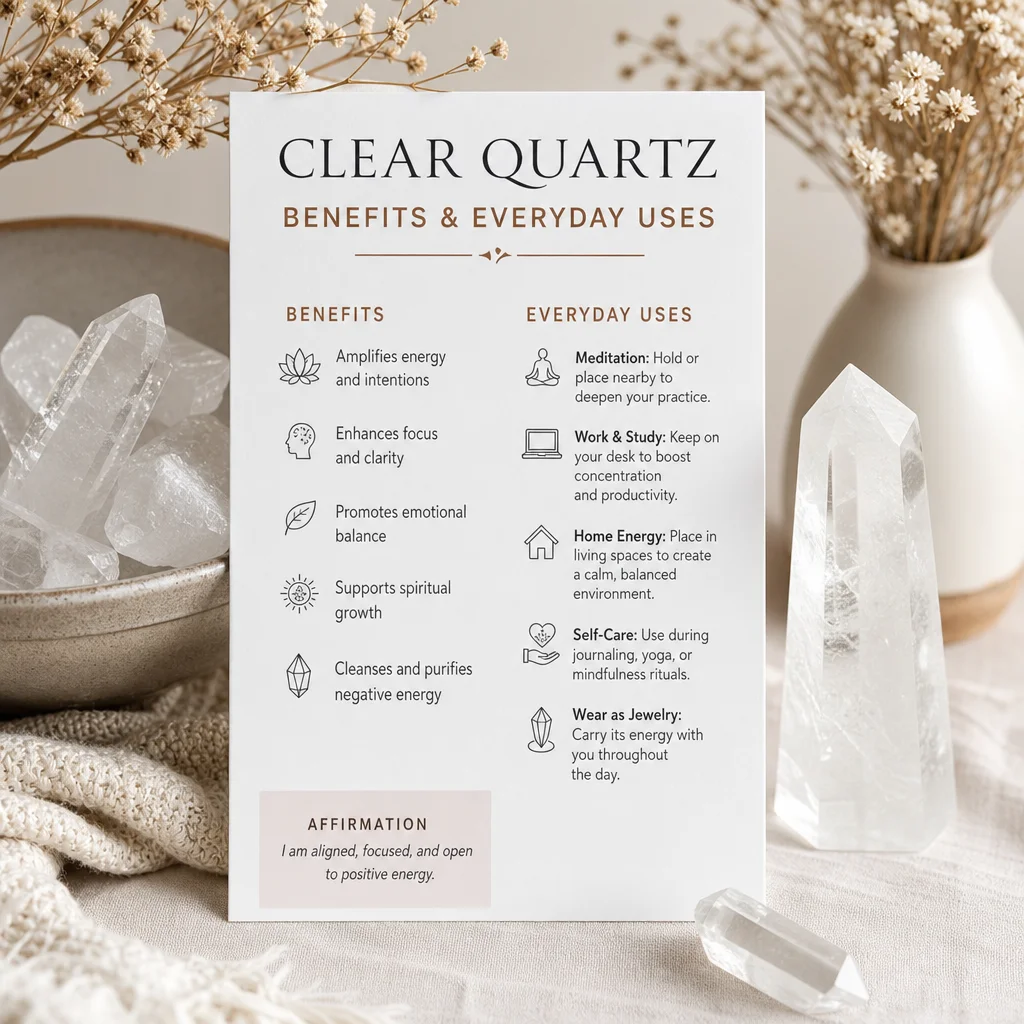
Crown Chakra (Sahasrara) — Clear Quartz
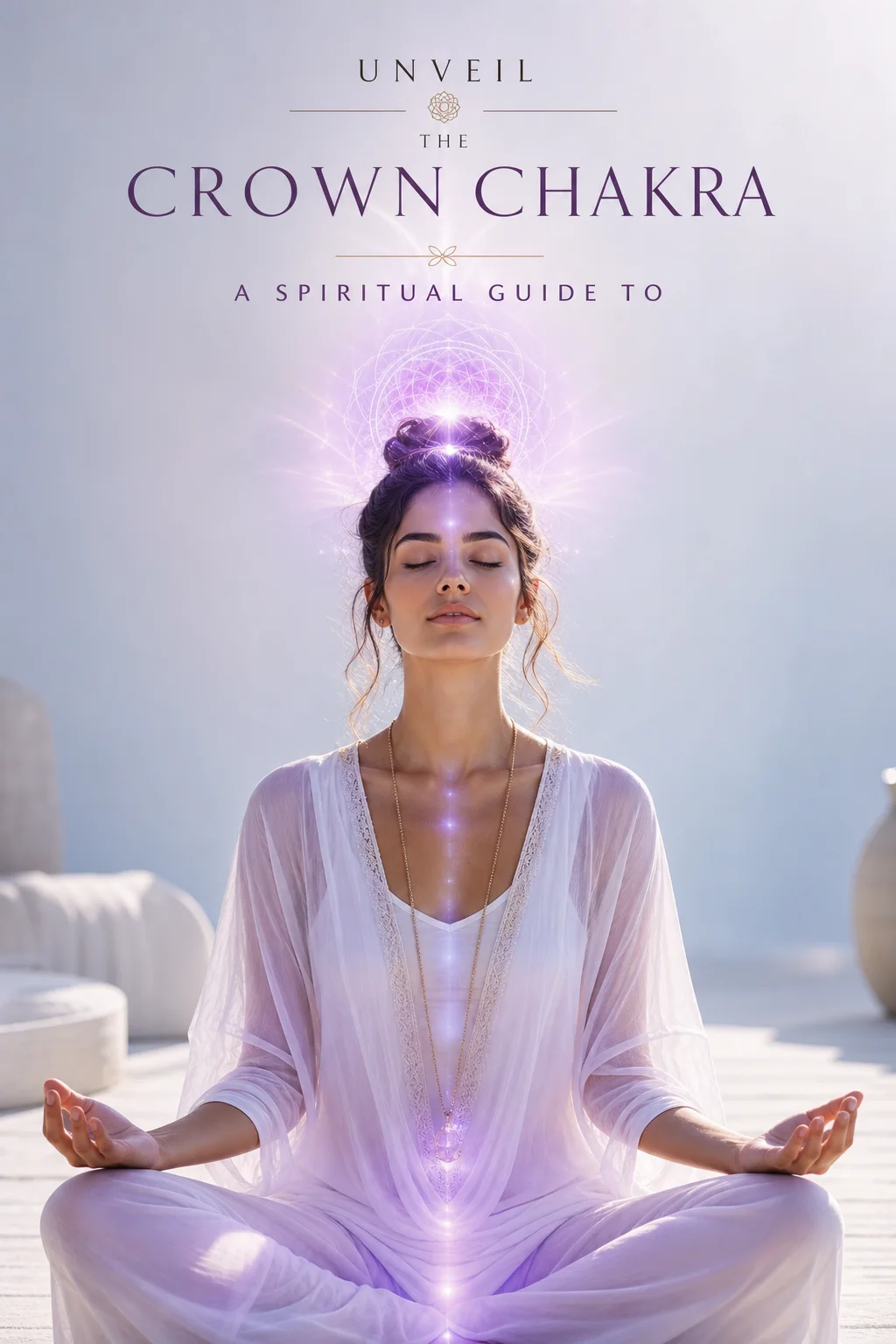
The crown chakra at the top of the head represents connection to higher consciousness, universal awareness, and spiritual transcendence. In chakra terms, it's the point where individual identity meets something larger—whether you conceive of that as nature, the universe, a higher power, or simply expanded awareness.
Clear quartz is pure silicon dioxide—the most abundant mineral on Earth's surface. It's called the "master healer" in crystal tradition and is sometimes the only stone recommended for the crown chakra because its clarity and transparency symbolize the openness and expansiveness that the crown represents.
Clear quartz has the practical advantage of being inexpensive ($2–$5 for tumbled stones), extremely hard (Mohs 7), and chemically inert. It can be used in water, exposed to sunlight without fading, and generally treated without special care. Its transparent clarity creates an immediate visual metaphor for mental clarity and openness.
How to use it: Place on the top of your head during meditation. Hold during moments when you seek clarity or a broader perspective. Keep in a central position on your chakra altar. Clear quartz is versatile enough to serve as a backup for any chakra when you're starting out.
Starter Kit Budget: $30–$50 for All Seven
You can purchase all seven stones as tumbled pieces for a total of $20–$40 from most crystal shops or online retailers. Here's a realistic breakdown:
| Stone | Tumbled Price | Source |
|---|---|---|
| Red Jasper | $2–$4 | India, Madagascar |
| Carnelian | $2–$5 | India, Brazil |
| Citrine | $3–$8 | Brazil, heat-treated |
| Green Aventurine | $2–$4 | India, Brazil |
| Lapis Lazuli | $5–$12 | Afghanistan, Chile |
| Amethyst | $3–$8 | Brazil, Uruguay |
| Clear Quartz | $2–$4 | Brazil, Arkansas |
| Total | $19–$45 |
This is a one-time investment. Unlike many self-care tools that need periodic replacement, these stones will last indefinitely with basic care. A small pouch to hold all seven adds another $5–$10.
Frequently Asked Questions
Do I need all seven stones to start?
No. You can begin with just one or two that address your most pressing concerns. Many people start with amethyst (third eye/crown) or black tourmaline (root/protection) and expand from there. The seven-stone set is the "complete" system, but partial use is perfectly valid and often more manageable for beginners.
What's the difference between tumbled and raw stones?
Tumbled stones are polished in a tumbling machine to create smooth, rounded shapes. Raw stones are in their natural crystal form. For chakra meditation, tumbled stones are more comfortable to hold and place on the body. Raw stones have more visual character but can have sharp edges. Start with tumbled for comfort; explore raw later for aesthetic preference.
How do I know which chakra needs attention?
A common approach: notice which areas of your life feel stuck. Creative blocks point to the sacral. Communication struggles point to the throat. Feeling ungrounded or anxious points to the root. Self-esteem issues point to the solar plexus. This is a self-assessment tool, not a diagnostic instrument—use it as a framework for self-reflection, not as a substitute for professional guidance.
Frequently Asked Questions
Can I wear chakra stones as jewelry instead of carrying loose stones?
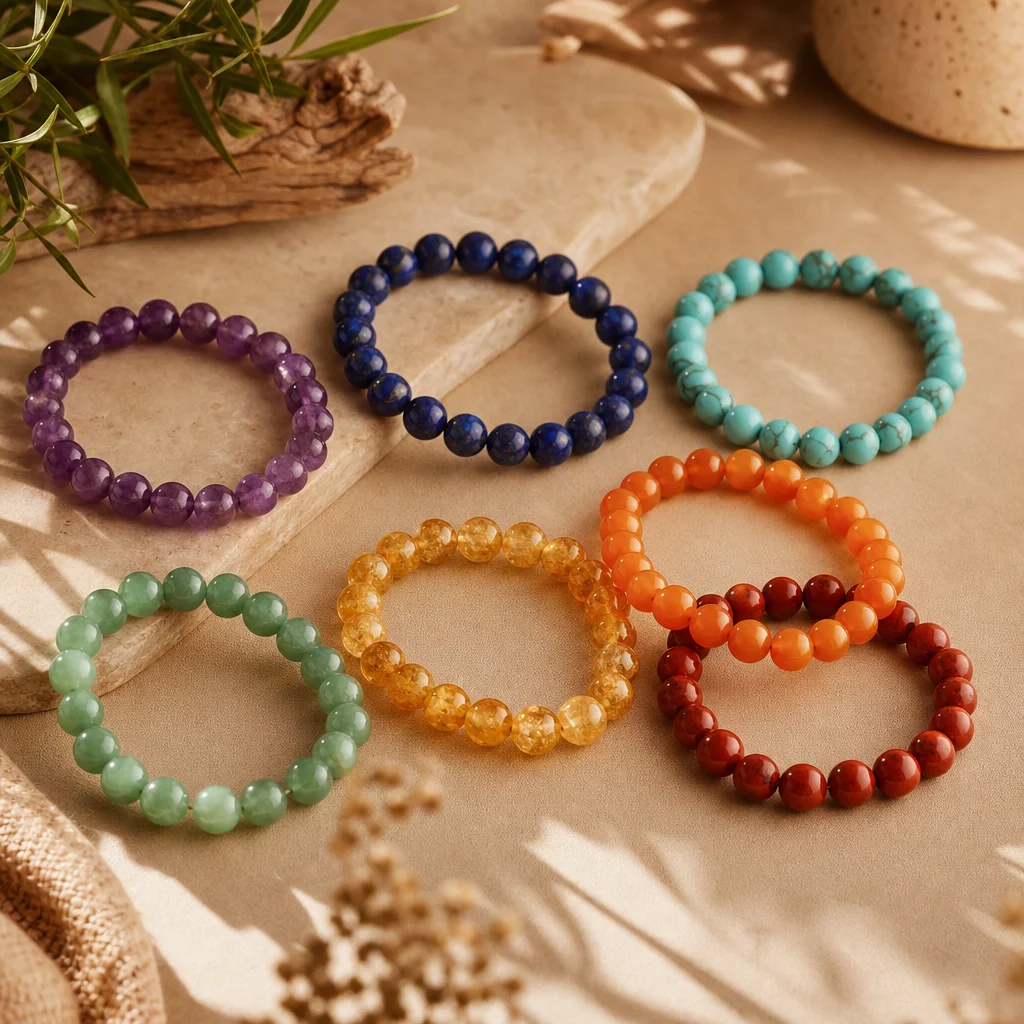
Absolutely! Wearing chakra stones as handcrafted jewelry is one of the most effective ways to balance your energy. When you wear a crystal pendant or beaded bracelet, the stone's vibrations remain in constant contact with your skin, seamlessly aligning your energy centers all day. It is a beautiful, wearable alternative to carrying loose stones in your pockets.
How do I cleanse and charge my new chakra stones?
Before using your new crystals, it is essential to clear any lingering energy. You can easily cleanse your stones by holding them under cool running water or smudging them with sage. To recharge their natural vibrations, leave them in direct moonlight overnight or place them on a piece of selenite. Regular cleansing ensures your gemstones vibrate at their highest healing potential.
Comments