Can Crystals Melt or Break in Heat? Temperatu...
June 5, 2026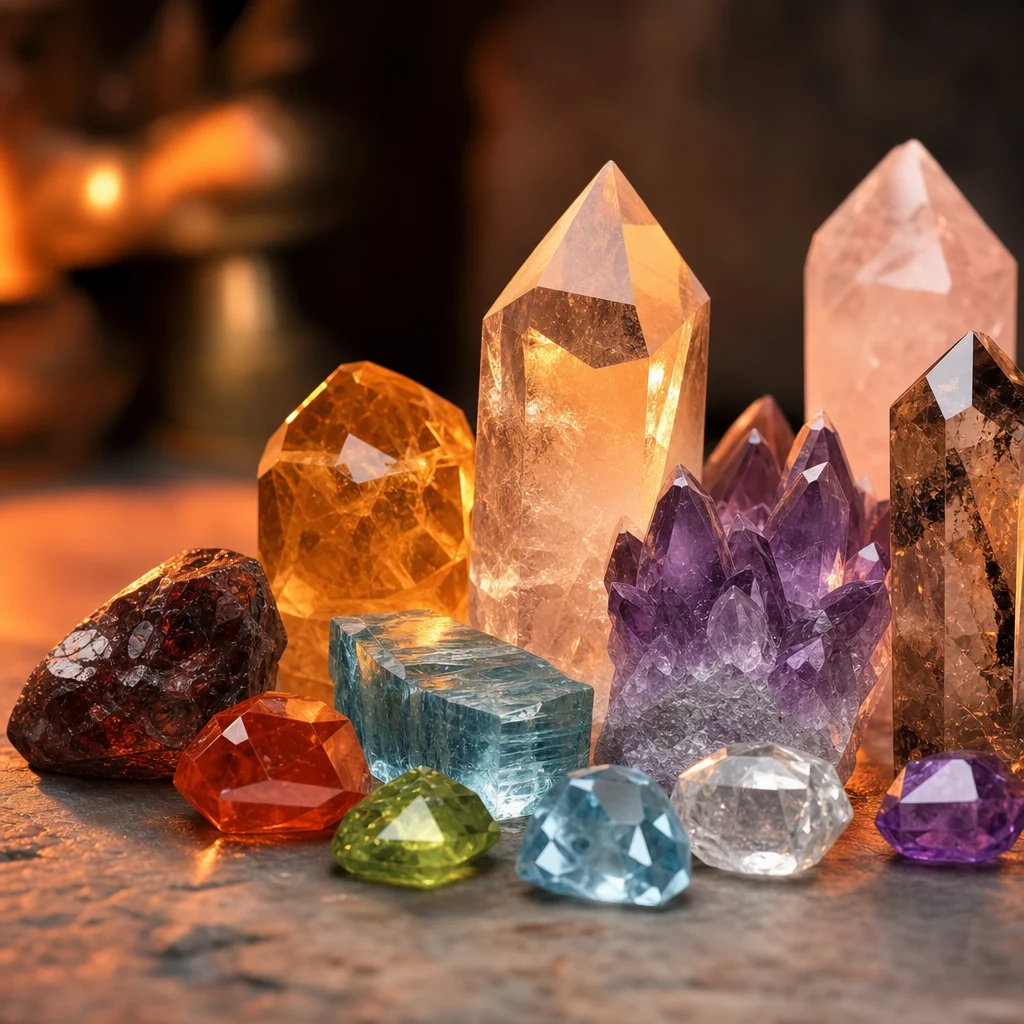
The Short Answer: It Depends Entirely on the Mineral
Crystals are minerals, and minerals respond to heat in dramatically different ways depending on their chemical composition and crystal structure. Some minerals can withstand temperatures above 1000°C without any change. Others begin to degrade at room temperature under prolonged sun exposure. There's no universal rule — you need to know which mineral you're dealing with.
For practical purposes, the heat scenarios most people encounter are: leaving crystals in a hot car, displaying them in direct sunlight, using them in the bathroom or sauna, and placing them near heat sources. Each of these scenarios creates different temperature ranges and exposure durations that affect minerals differently.
Heat-Sensitive Crystals: Handle with Care
Selenite (Breaks Down Around 150°C)
Selenite is one of the most heat-sensitive common crystals. It's a hydrated calcium sulfate (CaSO₄·2H₂O), meaning water molecules are part of its crystal structure. When heated above approximately 120-150°C, selenite begins losing this structural water, which causes the mineral to become brittle, chalky, and eventually crumble. Even at lower temperatures over extended periods, prolonged heat exposure causes gradual degradation.
Practical implication: never leave selenite in a hot car (car interiors can reach 70-80°C in summer), and don't display it where direct sun exposure creates sustained warmth through glass. A hot windowsill on a summer afternoon can reach temperatures that slowly damage selenite over weeks and months.
Opal (Dehydrates and Cracks)
Opal contains 3-21% water in its silica structure. When opal loses water — through heat, low humidity, or prolonged exposure to dry environments — it develops fine internal cracks called "crazing." This is irreversible damage that permanently compromises the stone's appearance and structural integrity.
Hot cars are particularly dangerous for opal. The combination of high temperature and potentially low humidity accelerates dehydration. Some opal experts recommend storing opals with a small moist cloth or in a humidified container to prevent slow water loss even at normal temperatures.
Amber (Softens Around 200°C, Can Melt)
Amber is fossilized tree resin, not a mineral crystal. It begins softening around 150-200°C and can melt at approximately 250-300°C, depending on the specific amber's chemical composition and age. While you won't encounter these temperatures in daily life (an oven at 200°C can soften amber over time, and a hot car at 80°C won't melt it), amber's relatively low glass transition temperature means it's more vulnerable than any mineral crystal.
Beyond melting concerns, amber can develop surface cracking (called "sun spalling") from prolonged UV exposure combined with heat. Direct sunlight for months can cause the surface to develop a network of fine cracks. Store amber in a dark, cool place for long-term preservation.
Kunzite (Color Fades, Not Melting)
Kunzite doesn't melt at everyday temperatures, but it's one of the most notorious crystals for heat-related color damage. Prolonged direct sunlight causes the manganese-induced pink color to fade — sometimes noticeably within hours of bright sun exposure. This is a photochemical reaction triggered by UV radiation, not thermal damage per se, but since sunlight carries both heat and UV, the two are often simultaneous.
Amethyst (Color Fades Under Heat and Light)
Amethyst's purple color comes from irradiated iron impurities in the quartz structure. Heat destabilizes this color center. Heating amethyst to around 300-400°C converts it to yellow, orange, or brown citrine — in fact, much of the commercial citrine on the market is actually heat-treated amethyst. At lower temperatures (hot car conditions, 60-80°C), the purple color fades gradually over months of exposure. Direct sunlight accelerates the process significantly.
Heat-Resistant Crystals: Safe for High Temperatures
Hematite (Withstands Extreme Heat)
Hematite is iron oxide (Fe₂O₃), a mineral that's stable up to approximately 1450°C. It doesn't melt, doesn't change color, doesn't crack, and doesn't lose structural integrity under any temperature you'll encounter in daily life. Hot cars, saunas, direct sun — hematite is indifferent to all of it. This makes hematite one of the most practical stones for jewelry that will be worn in all conditions.
Peridot (Olivine, Heat-Tolerant)
Peridot is the gemstone variety of olivine, a magnesium iron silicate that's stable at very high temperatures — olivine is one of the first minerals to crystallize from magma, so it literally forms in molten rock. Peridot is unaffected by any heat you'll encounter in normal use. You can wear it in saunas, leave it in cars, and display it in sun without concern.
The one caveat: thermal shock. Like many minerals, peridot can crack if subjected to sudden, extreme temperature changes (e.g., from a hot sauna directly into cold water). But this is a concern with virtually all minerals and isn't specific to peridot.
Quartz Family (Generally Heat-Tolerant)
Clear quartz, rose quartz, smoky quartz, and most other quartz varieties are stable at ordinary temperatures. Quartz melts at approximately 1670°C. The heat concerns with quartz relate to color stability (amethyst fading, citrine color shift) rather than structural damage. If you don't care about the color changing, quartz is structurally sound at any everyday temperature.
Corundum (Sapphire and Ruby)
Sapphire and ruby (both corundum) melt at approximately 2040°C and are among the most heat-resistant gemstones. They're structurally unaffected by any temperature encountered in daily life. This is why sapphire watch crystals are used in high-end timepieces — the material can handle significant thermal stress without failure.
Heat treatment of sapphire and ruby is a standard industry practice that changes or improves color at 1300-1800°C, so even industrial-level heat doesn't destroy the stone. For personal use, heat is a non-issue.
Garnet, Tourmaline, Topaz
These are all relatively heat-resistant at everyday temperatures. Garnet melts above 1200°C. Tourmaline is stable below about 400°C (above that, color may change). Topaz is heat-treated commercially around 400-500°C to create blue varieties from colorless material. Normal environmental heat doesn't affect any of them structurally.
Common Heat Scenarios Ranked by Risk
Hot Cars (60-80°C / 140-176°F)
This is the most common heat exposure scenario and the most dangerous for certain crystals. Car interiors in summer sun can reach 80°C in under an hour. At these temperatures, selenite begins slow dehydration, opal risks crazing, amber may develop surface cracks, and amethyst/kunzite start fading. Quartz, corundum, hematite, and garnet are unaffected.
Recommendation: remove all crystals from your car during summer months. If you must leave them, place them in the glove compartment or under a seat where temperatures are lower than on the dashboard or seats.
Saunas and Steam Rooms (70-100°C / 158-212°F)
Sauna temperatures are high enough to affect selenite and accelerate opal dehydration. The humidity actually helps opals (they prefer humid environments) but the heat works against them. Most other common crystals handle sauna conditions without structural issues, though amethyst and kunzite may slowly fade with repeated exposure.
Recommendation: wear quartz, garnet, tourmaline, or corundum jewelry in saunas. Avoid wearing opal, selenite, or amber. Don't bring crystal specimens into saunas as decorative items.
Direct Sunlight on Windowsills
The heat on a sunlit windowsill is moderate (30-50°C surface temperature), but the UV radiation is the real concern. UV causes color fading in amethyst, kunzite, rose quartz, citrine, and topaz. Through glass, UV-B is mostly blocked but UV-A passes through, and UV-A is sufficient to cause gradual color changes in sensitive minerals.
Recommendation: display heat-sensitive crystals away from windowsills. If you want crystals in a sunny window, use heat- and UV-resistant stones like hematite, quartz (clear), garnet, or obsidian.
Bathrooms (Warm, Humid)
Warm bathroom temperatures (25-35°C) and high humidity don't threaten most crystals structurally. The concern here is primarily chemical — exposure to soaps, shampoos, perfumes, and cleaning agents can damage softer minerals (malachite, turquoise, pearls) and corrode metal settings. Selenite dissolves slowly in water, so don't place it in the shower.
Thermal Shock: The Hidden Danger
Thermal shock — rapid temperature change — can crack virtually any crystal, including heat-resistant ones. The mechanism is differential thermal expansion: when one part of the stone heats or cools faster than another, internal stress builds up and exceeds the stone's fracture toughness.
Examples of thermal shock risk: moving a crystal from a hot car into air conditioning, taking a warm stone into a cold swimming pool, or placing a cool specimen near a hot oven. The temperature differential doesn't need to be extreme — a 30°C rapid change can crack some minerals, especially those with existing internal fractures or inclusions.
To prevent thermal shock: always allow crystals to acclimate gradually to temperature changes. Don't leave them in extreme temperature environments in the first place, which eliminates the need to transition them rapidly.
A Quick Reference Temperature Guide
Highly sensitive (avoid heat): Selenite, opal, amber, kunzite (color), amethyst (color), rose quartz (color), turquoise.
Moderately sensitive (prolonged heat affects color): Citrine, fluorite (color may shift), topaz (color may change at high temp), aquamarine (color fade possible with prolonged sun).
Heat-resistant (safe in most conditions): Clear quartz, hematite, peridot, garnet, tourmaline, corundum (sapphire/ruby), jade, jasper, agate, obsidian, labradorite.
Extremely heat-resistant: Diamond (melts at ~3550°C industrial pressures), corundum (2040°C), zircon (melts at ~2340°C).
Frequently Asked Questions
Can I put crystals in boiling water to cleanse them?
Boiling water (100°C) is safe for quartz, garnet, corundum, and similar hard minerals. It will damage selenite, opal, amber, and other heat-sensitive stones. Even for heat-resistant stones, rapid temperature change from room temp to boiling creates thermal shock risk. Warm water (40-50°C) is a safer choice for cleaning any crystal.
Do crystals melt in a house fire?
Most common crystals survive house fires structurally — the temperatures that destroy building materials (600-800°C at most in room-and-contents fires) are below the melting points of quartz (1670°C), corundum (2040°C), and most other silicate minerals. Glass may melt. Plastics, resins, and organic materials are destroyed. Recovered crystals after a fire may have surface discoloration from soot but are often structurally intact.
Is microwave heating safe for any crystals?
Never put crystals in a microwave. Microwaves heat by agitating water molecules — any mineral containing structural water (selenite, opal, turquoise) can crack or explode. Even anhydrous minerals can contain microscopic fluid inclusions that heat rapidly and crack the stone. Some minerals with iron content can even cause arcing and damage the microwave. This is dangerous and should be avoided entirely.
Frequently Asked Questions
Can I leave my crystal jewelry in a hot car?
It is best not to leave your handcrafted SagStone jewelry in a hot car. Vehicle interiors can exceed 150°F, causing heat-sensitive crystals to fracture from rapid temperature shifts. Extreme heat can also damage the delicate metal settings and artisan wire wrapping used in your pieces. To protect your natural crystal jewelry, always store it in a cool, shaded environment.
Can extreme heat change the color of my natural crystals?
Yes, prolonged exposure to high heat or intense sunlight can fade the color of natural crystals. Stones like amethyst, rose quartz, and citrine often lose their vibrant hues when subjected to excessive temperatures. Since SagStone uses authentic, natural crystals, their colors can be sensitive to heat damage. Keep your handcrafted jewelry out of harsh, direct heat to preserve its beautiful coloring.


Comments