Can Crystals Fade in Sunlight? The Truth About Light Damage to Your Stone Collection
Can Crystals Fade in Sunlight? The Truth About Light Damage to Your Stone Collection
Published: May 12, 2026 | Category: Crystal Care
I Left My Amethyst in the Sun... and It Changed Color
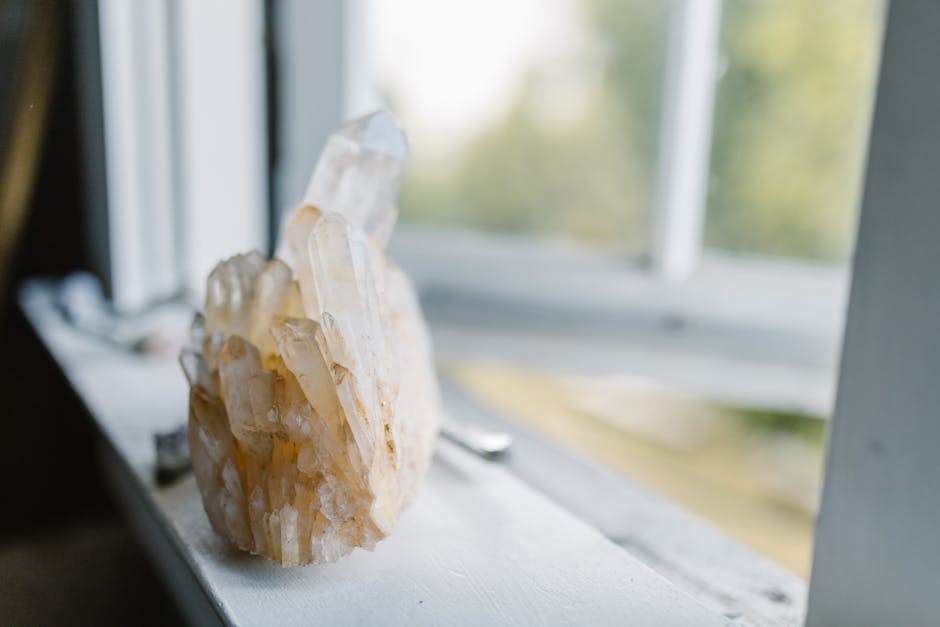
Last summer, I made a mistake that still haunts me. I'd just come back from a crystal show with this gorgeous deep purple amethyst geode—one of the best pieces I'd ever found. Naturally, I wanted to "charge it in the sunlight" (a tip I'd picked up from somewhere). I set it on my windowsill, bright and proud, and left it there for a few hours.
When I came back, something was wrong. That vibrant violet had washed out to a sad, washed-out lilac. It looked... tired. My heart sank. That's when I realized: not all crystals love the sun, and some absolutely hate it.
If you've ever wondered whether your precious stones are safe in sunlight, you're not alone. Let me share what I've learned from years of collecting, some hard-earned lessons, and the science behind why some crystals fade while others don't.
Why Do Some Crystals Fade in Sunlight?
The short answer: ultraviolet (UV) radiation breaks down color-causing impurities. When sunlight hits certain minerals, those UV photons start a chemical reaction that literally bleaches the color right out of your crystal. It's not just fading—it's permanent structural change at the molecular level.
Here's what's actually happening: Many colored crystals get their hue from trace elements or "color centers"—tiny imperfections in the crystal lattice that absorb certain wavelengths of light. UV radiation has enough energy to disrupt these color centers. The more UV exposure, the more damage. This isn't something you can reverse with energy work, moonlight, or visualization. The color is simply... gone.
I've noticed this damage tends to be cumulative. It's not just one sunny afternoon that ruins a piece—it's repeated exposure over months or years. But some crystals are shockingly sensitive. I've seen kunzite turn completely clear after just a few days of bright light.
The Most Sun-Sensitive Crystals (Handle with Care!)
Through trial and error (and some unfortunate losses), I've learned which stones need serious protection. Here's my personal blacklist:
- Amethyst — The classic victim. Even short exposure can turn deep purple into pale pinkish-purple. I've lost several beautiful pieces this way.
- Rose Quartz — That lovely peach-pink? Sunlight will bleach it to near-white. I learned this the hard way with a sphere I'd spent years collecting.
- Citrine — Natural yellow citrine (not heat-treated amethyst) is surprisingly sensitive. It can turn brown or completely colorless.
- Fluorite — All those gorgeous greens, purples, and blues? Sunlight will wash them out. Fluorite is structurally fragile anyway, but UV damage accelerates the deterioration.
- Kunzite — Possibly the most sun-sensitive crystal I know. That delicate pink-lilac can vanish completely. I've seen kunzite that looked like clear quartz after just a week in bright light.
- Celestite — The heavenly blue color isn't stable under UV. It fades to a dull grayish-white. Sad, really.
Crystals That Are Sunlight Safe (Finally, Good News!)
Not everything is fragile. Some crystals are basically sunlight-proof, and I display these with confidence:
- Clear Quartz — As tough as it is beautiful. Sunlight doesn't affect it at all.
- Amber — Actually, amber may darken slightly in sun, but it won't fade. Some collectors prefer the sun-darkened look.
- Tiger's Eye — Those chatoyant bands are incredibly stable. I've had pieces in windows for years.
- Black Obsidian — UV can't darken what's already black. Safe as safe can be.
- Jasper (most types) — Those earthy reds, greens, and yellows are remarkably stable.
- Agate — Most banded agates hold their color beautifully. I've seen century-old pieces that still look vibrant.
Does Hardness Matter? (The Mohs Connection)
You might wonder if harder crystals are more resistant to sun damage. Here's what I've observed: not really. Hardness (measured on the Mohs scale) tells you about scratch resistance, not light sensitivity.
Take amethyst (Mohs 7) and kunzite (Mohs 6.5-7). Both are relatively hard, yet both are incredibly sun-sensitive. Meanwhile, softer stones like amber (Mohs 2-2.5) are perfectly fine in sunlight. The real factor is chemical composition and how stable those color-causing impurities are under UV radiation.
That said, softer crystals often have other issues. Fluorite (Mohs 4) fades in sun AND scratches easily. It's double trouble. So while hardness isn't a perfect predictor of sun sensitivity, very soft stones do tend to be more fragile overall.
Synthetic vs Natural: Does Origin Matter?
This is something I get asked a lot. Does lab-grown crystal handle sunlight better than natural stone? In my experience: it depends on how it was made.
Some synthetic crystals are actually more color-stable because their color comes from more consistent, controlled doping. But others—especially synthetic amethyst—can be just as sun-sensitive as natural material. The real test is always the specific stone, not its origin.
I've had both natural and synthetic pieces fade, and I've had both hold their color perfectly. If you're uncertain about a piece's light sensitivity, the safest approach is always to treat it as fragile until you know for sure.
Quick Reference: Sunlight Sensitivity Guide
Here's a handy table I've put together based on my collection and research:
| Crystal | Original Color | What Happens in Sun | How Long It Takes |
|---|---|---|---|
| Amethyst | Deep purple to lavender | Fades to pale lilac or gray | Hours to months |
| Rose Quartz | Pink to peach-pink | Bleaches to near-white | Weeks to months |
| Citrine (natural) | Yellow to golden | Turns brown or colorless | Months to years |
| Fluorite | Green, purple, blue, multicolor | All colors wash out | Weeks to months |
| Kunzite | Pink-lilac to violet | Fades completely clear | Days to weeks |
| Celestite | Sky blue | Turns grayish-white | Weeks to months |
| Clear Quartz | Clear/colorless | No change | Indefinitely safe |
| Amber | Yellow to orange-brown | May darken slightly | Safe, may improve |
| Tiger's Eye | Golden-brown bands | No change | Indefinitely safe |
How to Protect Your Sun-Sensitive Crystals
Now that you know which crystals are at risk, here's how I protect my collection:
- Store them in darkness — Keep amethyst, rose quartz, fluorite, kunzite, and celestite in boxes, drawers, or dark cabinets when not in use. No windowsills, no glass display cases in bright rooms.
- Use UV-filtering glass — If you display sensitive pieces, use cases with UV-filtering glass. It reduces (though doesn't eliminate) UV exposure. I've had good luck with museum-quality display cases.
- Rotate your display — Keep pieces out for limited time, then store them away. I try to rotate my sun-sensitive collection every 2-3 months.
- Clean carefully — When you do clean your crystals, do it quickly and return them to storage. Don't leave them sitting out after cleaning.
- Document the original color — Take photos of new pieces in good lighting. If color does change, you'll have a record of what it looked like fresh.
- Consider location — North-facing windows get less direct sunlight. East/west windows are the most damaging. South-facing (in the Northern Hemisphere) is brutal for sensitive stones.
Can You "Fix" Sun-Damaged Crystals?
I wish I could tell you there's a magic fix. There isn't. Once that color is gone, it's gone permanently. No amount of moonlight, sage, or chanting will bring it back. The structural change is irreversible.
However, I've found some workarounds for pieces that have already faded:
- Accept the new look — Some faded crystals still have energy and beauty, even if the color isn't what it was. My washed-out amethyst still feels powerful to me.
- Use them for different purposes — A faded rose quartz might work beautifully for gentle, nurturing work, even if it's not the vibrant pink it once was.
- Learn from the loss — Each faded piece taught me something about care and respect for these natural wonders. Knowledge is the real treasure here.
Storage Solutions That Work
Proper storage is your best defense. Here's what I use:
- Velvet-lined boxes — Soft, dark, and protective. My amethyst collection lives in these.
- Wooden drawers — I've converted an old jewelry cabinet into crystal storage. It's dark, stable, and looks beautiful.
- Individual pouches — For smaller pieces, I use soft cloth pouches. Bonus: they prevent scratching.
- Label everything — I keep notes with each piece about its sensitivity and care needs. Future me is grateful.
The key is consistency. Don't leave sensitive pieces "just for a day." That day turns into a week, and suddenly you're looking at a faded crystal that used to be vibrant.
Frequently Asked Questions
Q: Can I charge my crystals in moonlight instead of sunlight?
A: Absolutely! Moonlight doesn't have the UV intensity that damages crystals. I actually prefer moonlight charging—it feels gentler and more attuned to feminine energy. Just remember: moonlight won't fix sun damage either.
Q: How can I tell if a crystal is synthetic or natural?
A: It's not always easy, but there are clues. Natural crystals often have inclusions, irregular growth patterns, and color variations. Synthetic pieces tend to be more uniform and "too perfect." If you're unsure, learning about the differences can help you make informed purchases.
Q: What about indirect sunlight—is that safe?
A: It's better than direct sun, but still risky for highly sensitive stones like kunzite and fluorite. UV reflects and penetrates through windows. If you're unsure, err on the side of caution and keep it dark.
Q: Do crystals fade in artificial light?
A: Most household lighting (LED, fluorescent) doesn't have enough UV to cause fading. However, some specialized grow lights and UV lamps can definitely damage crystals. When in doubt, keep sensitive pieces away from any bright, continuous light source.
Q: Should I avoid buying sun-sensitive crystals altogether?
A: Not at all! These stones are beautiful and energetically powerful. Just be prepared to store them properly and display them selectively. The extra care is worth it for the joy they bring. My faded amethyst taught me a lesson, but I still have—and love—amethyst in my collection. I'm just smarter about it now.
Final Thoughts
Losing a crystal's color to sunlight is heartbreaking, but it's also preventable. Knowing which stones are sensitive, understanding why it happens, and taking simple precautions will keep your collection vibrant for years to come.
I've learned to respect the fragile beauty of these natural wonders. They're not just decorative objects—they're geological treasures that deserve thoughtful care. Treat them well, store them properly, and they'll continue to bring you joy (and their unique energy) for a lifetime.
After all, a crystal collection isn't about perfection—it's about the connection you build with each piece, whether it's still brilliantly colored or has a story to tell about the lessons you've learned together.

Comments