Black Tourmaline Meaning: Protection, Grounding & Healing
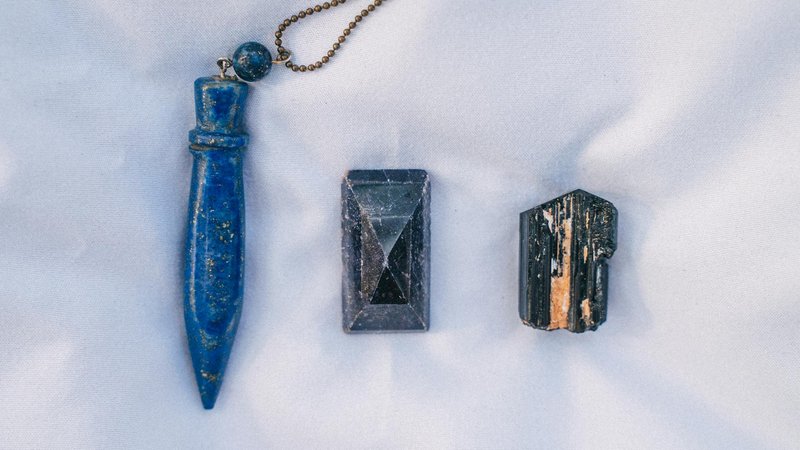
When I first moved into my new apartment, something felt off. Not in a dramatic horror-movie way — just a constant low-level unease that I couldn't shake. The space was fine, the neighborhood was decent, but every night I'd lie in bed feeling slightly on edge. My neighbor, an older woman who'd lived in the building for twenty years, noticed me carrying boxes one afternoon and said something I'll never forget: "Put a black stone by your front door, sweetheart. You'll feel better."
I half-laughed it off, but that evening I found myself googling "black stone for protection." That's how I discovered black tourmaline. I ordered a raw piece online — maybe $12 — and placed it right next to my apartment door. I can't explain what shifted, but within a few days, that background hum of anxiety started to quiet down. Was it the stone? Was it placebo? Did it matter? I felt better.
That was three years ago. Since then, black tourmaline has become the one crystal I recommend to literally everyone, whether they're into crystals or not. Here's everything I've learned about why this unassuming black rock has such a devoted following.
What Is Black Tourmaline, Exactly?
Black tourmaline belongs to the tourmaline group — a family of boron silicate minerals that comes in basically every color imaginable. The black variety (sometimes called schorl) gets its color from high iron content, and it's by far the most common and affordable type of tourmaline you'll find.
If you want to get technical, its chemical formula is Na(Al,Cr,Li,Mg,Mn,Fe)₃Al₆(Si₆O₁₈)(BO₃)₃(OH)₄. That messy collection of elements is part of why tourmaline exists in so many colors — swap out a few trace elements and you get pink, green, blue, or watermelon tourmaline instead.
What makes black tourmaline genuinely interesting from a geological standpoint is its hardness (7 to 7.5 on the Mohs scale — harder than glass, tougher than quartz) and its piezoelectric and pyroelectric properties. That second part means the stone actually develops an electrical charge when it's rubbed or heated. You can test this yourself: rub a piece of black tourmaline on a wool sweater and then hold it near small pieces of paper or dust. It'll pick them up, like a static-charged balloon. The ancient Greeks noticed this too — they called tourmaline elektron, which literally means "attracted to itself."
Major sources include Brazil (especially Minas Gerais), various African countries, Pakistan, Sri Lanka, and even Maine in the United States. If you're shopping for one, Brazilian pieces tend to have a nice glossy luster while African specimens often have a more matte, raw look.
Black Tourmaline Meaning and Symbolism
In the crystal world, black tourmaline is known as the ultimate protection stone. And I mean ultimate — go to any crystal shop, ask any healer, browse any crystal-focused Instagram account, and this stone will come up as the #1 recommendation for energetic protection.
Here's what black tourmaline is traditionally associated with:
Protection and Energy Shielding
This is the big one. Black tourmaline is believed to act as an energetic bodyguard, absorbing negative energy before it reaches you and creating a kind of force field around your personal space. Think of it as a bouncer at the door of your energy field — nothing gets past without being checked.
Grounding
If you've ever felt spaced out, anxious for no reason, or like your thoughts are racing in circles, black tourmaline's grounding properties are supposed to help anchor you back to the present moment. It's associated with the root chakra (more on that later), which is all about feeling stable, secure, and connected to the physical world.
EMF Protection
This one's gotten a lot of attention recently. Many people place black tourmaline near their WiFi routers, computers, or phones, believing it can help neutralize electromagnetic radiation. There's no scientific evidence supporting this, but the piezoelectric properties of tourmaline are real — the stone does interact with electrical fields, which is probably where this belief originated.
Purification
Unlike some crystals that are said to deflect negative energy, black tourmaline is thought to actually absorb and transmute it — take in the bad stuff and convert it into neutral or positive energy. This is why people often describe it as feeling "heavy" after extended use.
Healing Properties of Black Tourmaline
Before diving in, I want to be upfront: there is no scientific evidence that crystals have healing properties. The benefits people experience may be real to them, but they likely come from psychological mechanisms like the placebo effect, mindfulness practices, and the comfort of having a ritual or focal point. If you're dealing with a mental health condition, please talk to a professional.
That said, here's what crystal practitioners and enthusiasts commonly attribute to black tourmaline:
Root Chakra Grounding
The root chakra (Muladhara) sits at the base of your spine and is associated with survival, security, and your connection to the physical world. When this chakra is "blocked" or "unbalanced," people report feeling anxious, ungrounded, or disconnected. Black tourmaline, with its deep black color and heavy, dense feel, is considered one of the best stones for root chakra work. Many people place it at their feet during meditation or hold it while doing grounding exercises.
Stress and Anxiety Relief
This is probably the most commonly reported benefit, and honestly, the one I noticed most myself. Whether it's the stone's energy, the ritual of holding something, or just the act of pausing and breathing while you grip a smooth stone — a lot of people find that black tourmaline helps them feel calmer. I keep a tumbled piece on my desk, and when work gets overwhelming, just holding it for a minute genuinely helps me reset.
Auric Field Protection
In energy healing, your aura is the electromagnetic field that surrounds your body. Black tourmaline is said to strengthen and protect this field, making you less susceptible to the moods and energy of people around you. If you're an empath or someone who absorbs other people's emotions easily, practitioners often recommend black tourmaline as a daily carry stone.
Physical Energy Flow
Some crystal therapists suggest that black tourmaline can help unblock stagnant energy in the body, promoting better circulation and vitality. Again, no science here — but many people report feeling more energized and physically present when they use it regularly.
How to Use Black Tourmaline: 6 Practical Methods
One of the things I love about black tourmaline is that it's incredibly versatile. You don't need any special training or elaborate rituals. Here are the most popular ways people use it:
1. By Your Front Door or Windowsill
This is the most common use, and the one my neighbor originally suggested. Place a piece of black tourmaline near your front door, on a windowsill, or at the four corners of your home. The idea is that it acts as an energetic filter — positive energy and good vibes come in, negative energy gets blocked or absorbed. I have one by my front door and one on my bedroom windowsill, and yes, I do feel like my apartment has a calmer atmosphere than it used to. Whether that's the stone or just the psychological comfort of having a "protector" in place, I genuinely don't care.
2. On Your Work Desk
If you spend hours in front of a computer (and who doesn't these days), placing black tourmaline on your desk is said to help with both EMF exposure and work-related stress. I have a raw chunk sitting next to my keyboard right now. When deadlines pile up, I grab it and take a few deep breaths. It's become a grounding anchor in my workday.
3. Under Your Pillow or Bed
A lot of people swear by placing black tourmaline under their pillow or beside their bed for better sleep and nightmare protection. I tried the under-pillow thing for a week and... I actually slept pretty well. Was it the stone? Was it the fact that I was paying more attention to my sleep routine? Probably the latter. But it's a low-effort thing to try if you struggle with restless nights.
4. Carry It as a Pocket Stone
Tumbled black tourmaline (the smooth, polished pieces) are perfect for carrying in your pocket or purse. The idea is that you always have protection on hand, and you can pull it out and hold it whenever you're feeling anxious or overwhelmed. I keep one in my jacket pocket and have definitely reached for it during stressful meetings and crowded commutes.
5. During Meditation
Hold a piece of black tourmaline in your hand or place it at your feet (near the root chakra) during meditation. Many people find that its weight and texture help them stay present and focused. It's especially useful if you tend to get distracted or "floaty" during meditation — the physical sensation of the stone keeps you anchored to your body.
6. Near Electronic Devices
This one's straightforward: put black tourmaline next to your router, laptop, TV, or phone. People who believe in EMF protection say this helps neutralize some of the electromagnetic radiation these devices emit. Even if you're skeptical, having a beautiful black crystal next to your tech setup looks pretty cool.
Crystal Combinations: What Pairs Well with Black Tourmaline?
Black tourmaline plays well with almost everything. Here are some of the most popular combinations and what they're used for:
Black Tourmaline + Smoky Quartz
This is the double-grounding combo. Both stones are dark, earthy, and associated with protection and purification. Together, they create what crystal enthusiasts call a "deep cleanse" — great for clearing out really stubborn negative energy. I use this combo when I'm going through a particularly stressful period.
Black Tourmaline + Amethyst
Protection meets spiritual growth. Black tourmaline handles the grounding and shielding while amethyst supports intuition, calm, and higher awareness. This is a popular combination for meditation spaces. The contrast between the black and purple is also visually stunning.
Black Tourmaline + Hematite
If you need serious grounding, this is the heavy-duty combination. Hematite is dense, metallic, and intensely anchoring. Together with black tourmaline, it's like having your feet bolted to the earth. Good for people who feel chronically scattered or disconnected.
Black Tourmaline + Selenite
This pairing is popular for cleansing and charging. Selenite is known as a purification stone that can supposedly "charge" other crystals by clearing away accumulated negative energy. Many people place their black tourmaline on a selenite charging plate overnight. Since black tourmaline absorbs a lot of negative energy, giving it regular selenite baths makes sense within the crystal framework.
Cleansing and Caring for Black Tourmaline
Here's the good news: black tourmaline is one of the toughest, most forgiving crystals you can own. You don't need to be precious with it.
Running Water
Hold it under cool running water for a minute or two. This is the simplest method and works great for black tourmaline because of its hardness — water won't damage it. Some people add a pinch of sea salt, but honestly, plain water is fine.
Smoke Cleansing
Pass your black tourmaline through the smoke of sage, palo santo, or cedar. This is a traditional purification method used across many cultures. Even if you don't believe in the energetic aspect, the ritual itself can be meditative and intentional.
Sunlight or Moonlight
Black tourmaline can handle sunlight without fading (unlike amethyst or rose quartz, which can lose their color). Leave it in direct sun for a few hours, or place it outside overnight during a full moon for a gentler cleanse. Both methods are widely recommended.
Selenite Charging
As mentioned above, placing black tourmaline on or near selenite is said to clear and recharge it. No effort required — just set it and forget it overnight.
One important thing: because black tourmaline is believed to absorb negative energy, most practitioners recommend cleansing it more frequently than other stones. If you use it daily, weekly cleansing is a good habit. If it starts feeling "heavy" or you notice it looks duller than usual, that's usually a sign it's time for a cleanse.
How to Choose a Good Piece
You don't need to spend a fortune. Black tourmaline is one of the most affordable crystals available. Here's what to look for:
Color: Pure, deep black with no green, brown, or gray streaks is ideal. Some inclusions are normal, but the darker the better within the crystal community.
Luster: A slight sheen or glossiness is generally preferred over a completely dull, chalky surface. That said, some people specifically prefer raw, natural-looking pieces with a matte finish.
Size: Bigger isn't always better for your wallet, but larger pieces are often described as having "stronger energy" — probably because they have more mass and presence. For a desk or entryway, a piece the size of your palm is a good starting point. For pocket carry, tumbled stones about an inch long work well.
Form: Natural crystal formations (pointed, columnar shapes) are prized by collectors, but tumbled stones are just as effective for everyday use and more comfortable to carry. Raw chunks are great for home placement.
Price: Expect to pay anywhere from $3 for a small tumbled stone to $30 for a large, high-quality raw piece. Anything beyond that and you're paying for rarity or aesthetic appeal rather than any functional difference. Don't let anyone convince you that a $200 piece of black tourmaline is "more powerful" than a $10 one.
Black Tourmaline vs. Black Obsidian vs. Smoky Quartz
This is probably the most common question I get from people new to crystals. All three are black stones associated with protection, but they're quite different:
Black Tourmaline has a Mohs hardness of 7-7.5, displays piezoelectric properties (it can hold an electrical charge), and has a slightly resinous to vitreous luster. It's the most durable of the three and the most versatile for daily use. Its energy is described as protective but also grounding — it doesn't just block negativity, it helps you feel stable and centered.
Black Obsidian is volcanic glass with a hardness of only 5-5.5. It's formed when lava cools rapidly without crystallizing. Obsidian is sharper than tourmaline (literally — ancient civilizations used it for blades and arrowheads) and its energy is often described as more intense and direct. It's great for cutting through illusions and facing hard truths, but it can feel harsh for sensitive people. Because it's glass, it can chip or break if dropped.
Smoky Quartz is a variety of quartz with a hardness of 7. Its brown-to-black color comes from natural irradiation of aluminum impurities. Unlike the other two, smoky quartz typically shows uneven coloration — you'll often see lighter and darker bands or a translucent brownish quality. Its energy is gentler and more nurturing than black tourmaline or obsidian, making it a good choice if you want protection without intensity.
My honest recommendation? Start with black tourmaline. It's the most beginner-friendly, the most durable, and the most widely recommended by crystal practitioners. You can always add obsidian and smoky quartz to your collection later.
Final Thoughts
I'm not going to tell you black tourmaline will change your life. What I will say is that this unassuming black stone has been used across cultures for centuries, it's backed by genuinely interesting geological properties, and in my personal experience, it's a comforting, grounding presence that costs less than a takeout dinner.
Whether you believe in crystal energy or not, there's something to be said for having a physical object that reminds you to breathe, to ground yourself, to feel protected. If a $12 piece of black tourmaline does that for you — as it did for me — that's worth something.

Comments