I Drove 14 Hours to Mine My Own Crystals in
May 16, 2026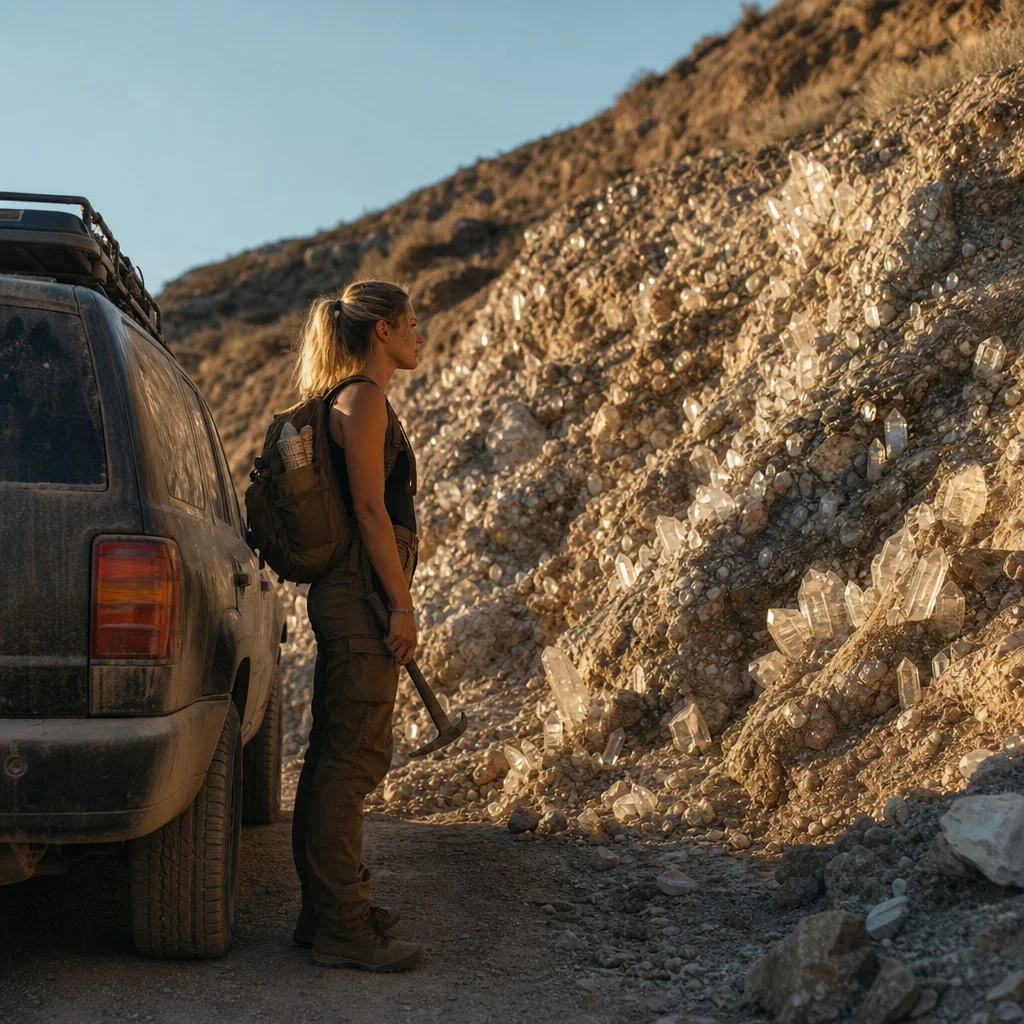
The GPS Said 14 Hours. My Car Said 186,000 Miles. I Went Anyway.
It was a Tuesday night in March when I started googling "crystal mining Arkansas" for the third time that week. I'd been scrolling through photos of people holding these massive, milky quartz clusters they'd pulled out of the Ouachita Mountains, and something in me just snapped. Not in a bad way — more like the kind of snap where you suddenly realize you've been talking yourself out of something for months and you're tired of your own excuses.
I live in Chicago. The crystal mines near Hot Springs, Arkansas are roughly 650 miles south. That's about 10 hours if you don't stop, but I always stop. A lot. So I budgeted 14 hours each way and told myself that was reasonable for a long weekend.
My car is a 2012 Honda Civic with 186,000 miles on it. The check engine light has been on since September. I packed a sleeping bag, a change of clothes, two gallons of water, and every piece of advice I'd scraped from rockhounding forums over the past year.
The thing nobody tells you about crystal mining is that it's not glamorous. You will get muddy. You will get frustrated. You will spend an hour chipping at dirt that yields absolutely nothing. But then — and this is the part that hooks you — you'll flip over a rock and see a six-inch clear quartz point staring back at you like it's been waiting a hundred million years for you to show up.
I'd been collecting crystals for three years. Mostly bought from shops and Etsy sellers. Nice specimens, but always someone else's finds. I wanted the story of pulling something out of the ground myself. Arkansas, specifically the area around Mount Ida, sits on top of some of the finest quartz deposits on the planet.
So at 5 AM on a Thursday morning, I loaded up the Civic, set my GPS to Mount Ida, Arkansas, and drove out of the city while it was still dark.
Planning the Trip (Or: How I Tried to Spend as Little as Possible)
I'm not a planner by nature. But a 14-hour drive to go dig holes in the ground requires at least some logistics. Here's what I figured out in the week between "I should do this" and "I'm actually doing this."
Research: I spent about three nights on Reddit's r/rockhounding, reading trip reports from people who'd been to the Mount Ida area. The two names that kept coming up were Wegner Quartz Crystal Mine and Coleman Quartz Mine. Both are pay-to-dig operations — you pay an entry fee, they point you at a digging area, and you keep what you find. No permits needed beyond paying the entry fee.
Equipment: This is where I saved money. I already had a garden trowel, a small pick, and a bucket. I bought a pair of work gloves from Home Depot ($12) and a cheap hand rake ($8). That was it. Some people bring full-on shovels and screens. I didn't bother, and honestly, I didn't need them.
Accommodation: I slept in my car at a truck stop the first night. Not ideal, but free. The second night I got a motel room in Mount Ida for $55. It was exactly as mediocre as you'd expect, but it had hot water and a bed, which after a day of digging in clay felt like the Ritz.
Budget breakdown:
- Gas (round trip): $89
- Wegner mine entry: $25
- Coleman mine entry: $20
- Motel (1 night): $55
- Food and snacks: $48
- Gloves and rake: $20
- Tolls: $18
- Total: $275
I'd budgeted $340. Came in under, which honestly never happens. The key was the car camping — skipping a second hotel night saved me at least $60.
The Drive: Illinois → Missouri → Arkansas
Fourteen hours is a long time to sit in a Honda Civic. My playlist was a chaotic mix of Americana road trip songs, a six-part podcast about the geology of the Ozarks (which turned out to be genuinely interesting), and long stretches of silence when the cell signal dropped somewhere past Springfield, Missouri.
The drive south through Missouri is honestly pretty. Rolling hills, farmland, the occasional small town with a giant fiberglass statue of something weird. I stopped at a gas station in Lebanon, Missouri that had the best beef jerky I've ever had. I wish I remembered the name of the place. I don't.
By the time I crossed into Arkansas, the landscape started changing. The hills got bigger, the trees got denser, and I started seeing rock shops along the highway. That's when it hit me that I was actually doing this — I was about to go dig crystals out of the ground. The last hour from Hot Springs to Mount Ida is winding roads through dense forest, and it feels like driving into another world.
First Stop: Wegner Quartz Crystal Mine
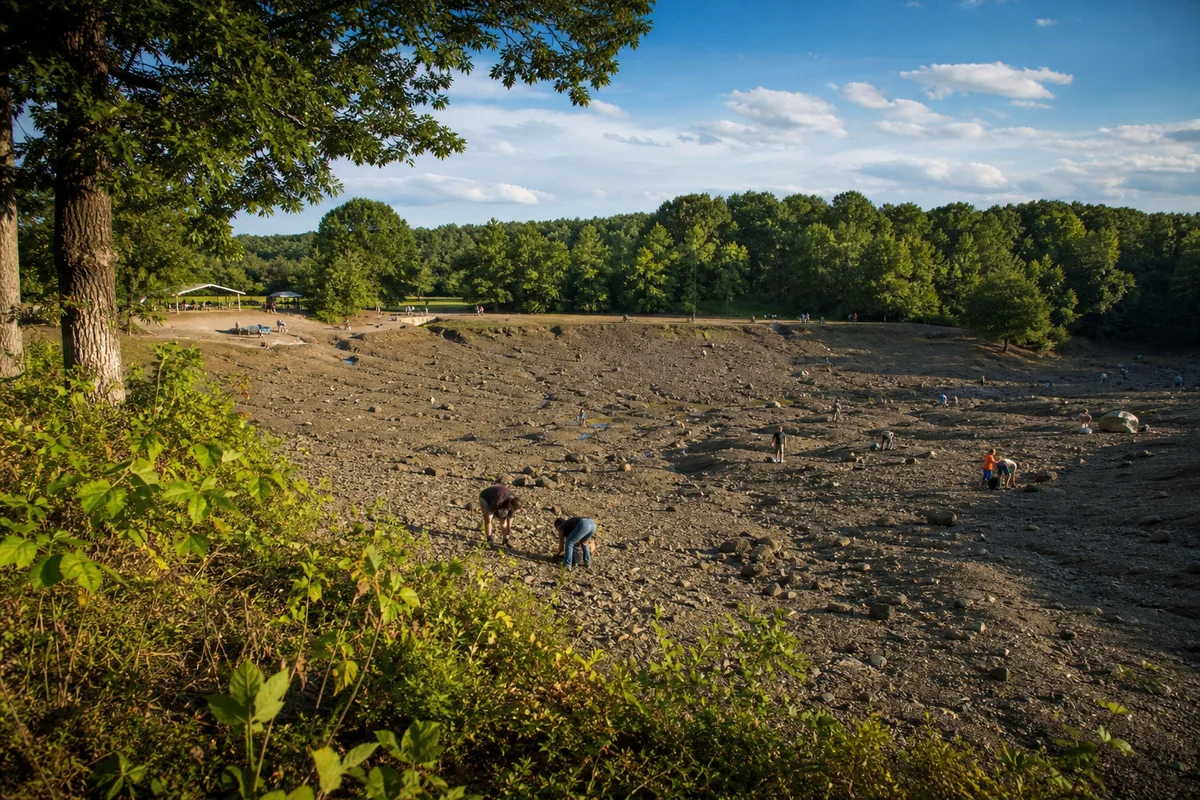
I got to Wegner's at 8:30 AM on a Friday. The Wegner property is a family-run operation about 15 minutes outside Mount Ida. They've been at it for decades, and the place has a laid-back, no-nonsense vibe. You sign a waiver, hand over $25 per adult, and they drive you out to the digging area in a modified truck.
The digging area is an exposed hillside of red clay and loose rock. It doesn't look like much at first. But here's the thing about quartz in Arkansas — it's everywhere. Within five minutes of scratching at the surface, I found my first crystal. Small, maybe two inches, slightly cloudy, with a decent termination point. Not museum quality, but I'd pulled it out of the ground with my own hands, and that felt incredible.
Technique #1: Follow the clay. The best crystals I found at Wegner's were in the clay layers, not in the loose rubble on top. I'd dig down about six to eight inches, feel for hard spots with my trowel, and carefully clear the dirt around them. Quartz has a different texture than regular rock — smoother, slightly greasy feel even when dirty.
Technique #2: Look for the sparkle. Even covered in red clay, quartz catches light differently than the surrounding rock. I started scanning the ground before digging, looking for that slight glassy reflection. Found several decent pieces this way just lying on the surface where rain had washed away the topsoil.
By midday I had about 20 crystals in my bucket. Most were small — one to three inches. But I'd found three pieces I was really happy with: a clear double-terminated point about four inches long, a cluster of five smaller crystals growing together, and a slightly smoky point with really sharp edges.
The $25 entry fee at Wegner's lets you keep everything you find, and they don't weigh or measure your haul. Some people walk out with buckets full. I was selective — I only kept pieces that had decent clarity or interesting formations. No point dragging home gravel.
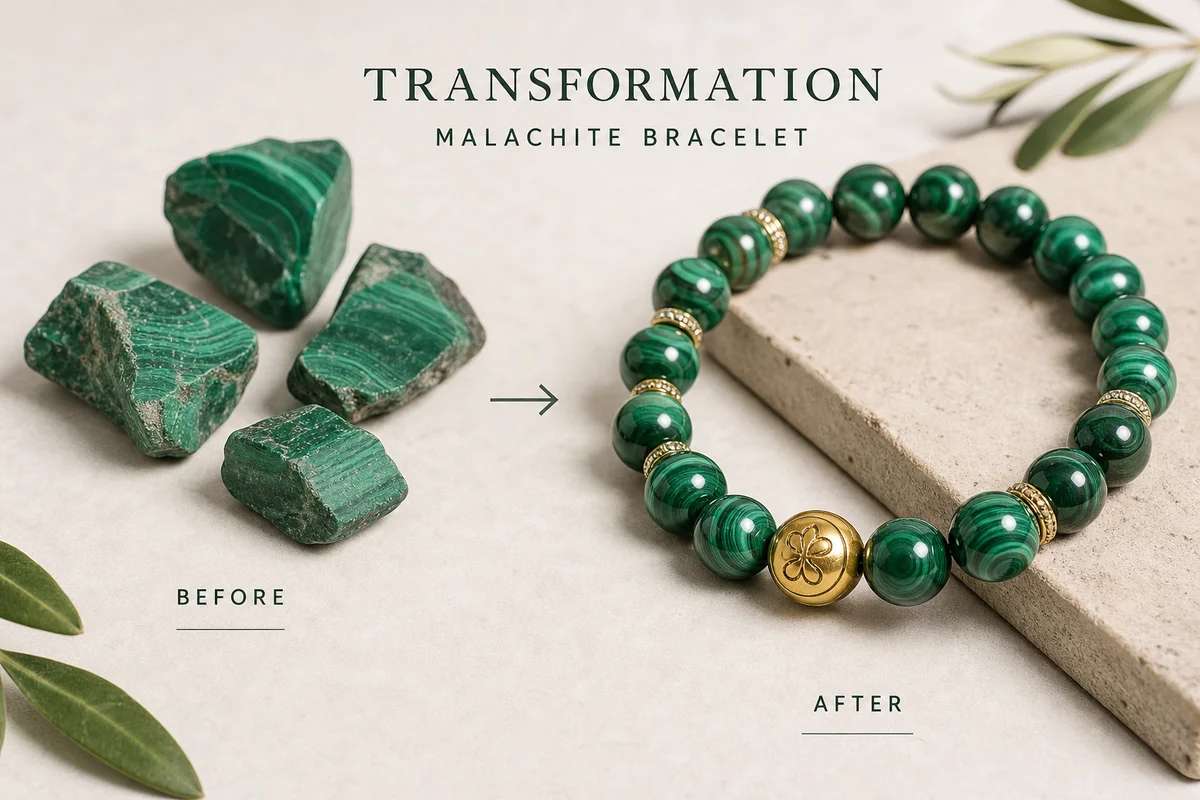
They also have a shop on-site with already-cleaned specimens for sale. I browsed but didn't buy anything. The whole point of this trip was to find my own. But if you're curious, their prices ranged from $5 for small points to $200+ for large display clusters. If you want to compare raw versus tumbled specimens, this is a good place to see both side by side.
After about five hours at Wegner's, I was exhausted, covered in red clay from head to boots, and completely hooked. I headed back to Mount Ida, checked into the motel, and spent an hour in the shower trying to get the clay out from under my fingernails.
Second Stop: Coleman Quartz Mine
Saturday morning. Day two. I drove out to Coleman Quartz, which is a different operation with a different feel. Coleman's is known for larger specimens — big clusters and points. The entry was $20, and they give you access to a different part of the mountain.
The Coleman digging area was more open than Wegner's — less tree cover, more exposed rock face. The terrain was steeper, and the crystals were bigger. I mean noticeably bigger. Within an hour, I'd found a quartz point that was almost six inches long, slightly milky but with a clean termination. That alone would have been worth the drive.
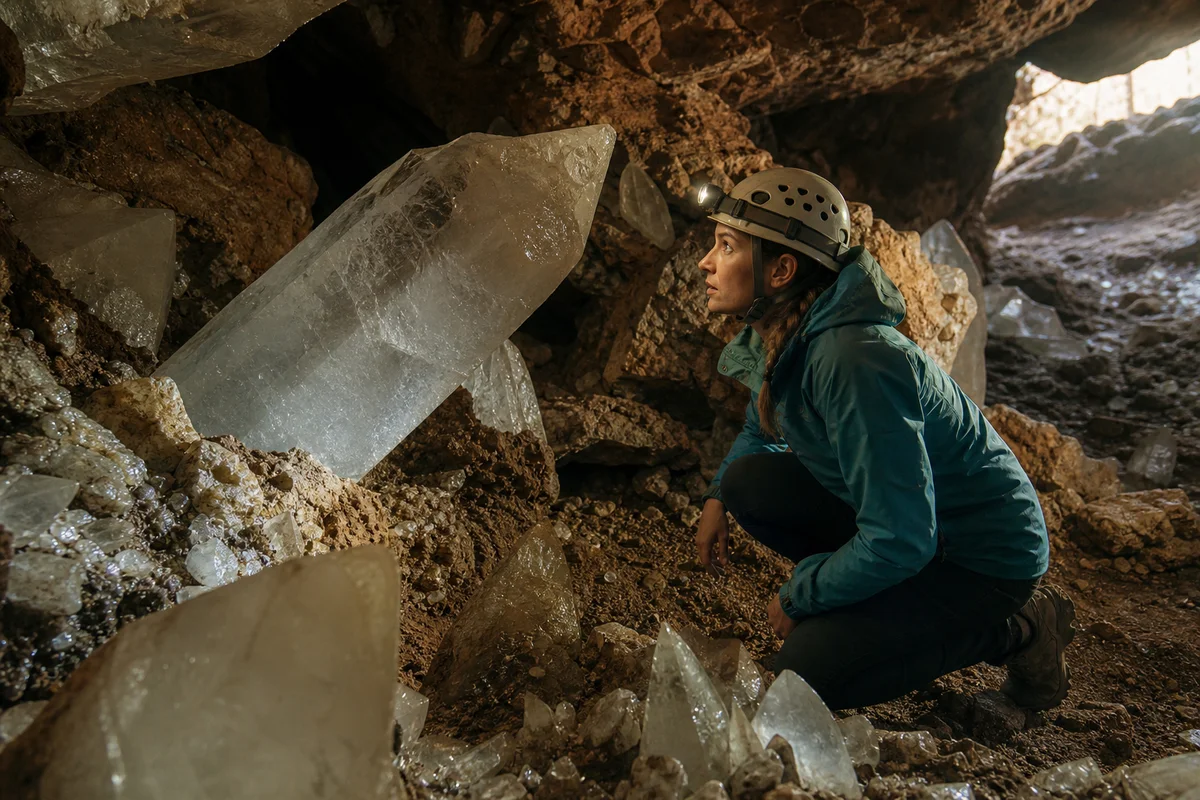
But the "wow" moment came around 2 PM. I'd been working a spot near the base of a small embankment, pulling out decent two-to-three-inch points every few minutes, when my trowel hit something solid and smooth. I cleared the dirt away with my hands — the clay was softer here, almost like working with wet pottery. A cluster started emerging. Four large points radiating out from a common base, the biggest about seven inches, all with decent clarity.
I sat there for probably 20 minutes, carefully removing dirt from around it, afraid I'd crack it. When I finally pulled it free, it was heavy — maybe three pounds. Not perfectly clear, some internal fractures and inclusions, but the formation was beautiful. Four distinct points growing together in slightly different directions. I wrapped it in my spare t-shirt and set it in the bucket like it was a newborn.
Coleman's also has a retail shop, and I talked to the guy running it for a while. He told me the Ouachita Mountains produce some of the clearest quartz in the world because of the specific geological conditions — pressure, temperature, and the right mineral solutions percolating through cracks in the sandstone over millions of years. If you're into the science behind how crystals actually form, Arkansas is a living textbook.
I spent about four hours at Coleman's and left with another 15-20 crystals, plus the big cluster. My bucket was getting heavy. My back was killing me. And I was having the time of my life.
What I Actually Brought Home
Here's the full inventory from both mines, spread out on my motel room bed:
Wegner's haul (Day 1):
- 1 double-terminated clear quartz point, 4 inches
- 1 five-crystal cluster, about 3 inches across
- 1 smoky quartz point with sharp edges, 3.5 inches
- 17 smaller points and fragments, 1-3 inches each
Coleman's haul (Day 2):
- 1 large four-point cluster, 7 inches tallest point, ~3 lbs
- 1 clear quartz point, 6 inches, slight milkiness
- 1 twin crystal (two points growing parallel), 4 inches
- 12 smaller points and clusters, 2-4 inches each
Total: 47 crystals. 36 smaller points and fragments, 7 medium specimens (3-5 inches), and 4 larger pieces (5+ inches).
After cleaning them — which is a whole process involving dish soap, a soft toothbrush, and patience — the quality was better than I expected. The big cluster from Coleman's needed some clay removal from the crevices, but once clean, it's genuinely display-worthy. I looked up comparable specimens online: similar clusters retail for $60 to $150 depending on clarity.
The six-inch clear point from Coleman's would probably sell for $35-50. The double-terminated piece from Wegner's maybe $25-40. The smaller stuff varies — some of the one-inch points are basically worth a few dollars each, but a few had really nice clarity that would put them in the $10-15 range.
Rough retail estimate of my finds: $300-450. On a $275 trip. That's... actually not bad?
But here's the honest truth: if I'd bought these same crystals online or at a gem show, I wouldn't have the stories. The six-inch point wouldn't have the memory of my hands shaking when I realized how big it was. The cluster wouldn't remind me of sitting in the red clay for 20 minutes, afraid to breathe too hard. You're not just paying for rocks. You're paying for the experience, and that's harder to put a number on. For more context on why raw specimens have such a range of value, this guide on natural stone versus synthetic crystal breaks it down well.
So… Was It Worth It?
Financially? It's close to a wash. I spent $275, and the retail value of what I found is probably $300-450. But I also used my own gas, my own car, my own labor. If I were running a business, the hourly rate would be terrible. But I'm not running a business. I'm a person who wanted to go dig crystals out of the ground, and I did that.
Experientially? Absolutely, 100%, no question. This was one of the best weekends I've had in years. There's something primal about pulling a crystal out of the earth that you just can't replicate by clicking "add to cart." The drive was long, the motel was bad, my back still hurts, and I would do it again next month if I could.
The biggest surprise was how meditative the actual digging is. Hours pass like minutes. You're focused on this small patch of dirt, feeling for shapes, listening to the trowel scrape against rock. My phone had no signal most of the time. I didn't miss it.
If you're on the fence about making a trip like this, I wrote about crystal hunting for beginners with more general advice. But the short version: do it. The worst case is you spend a day outside and come home empty-handed. The best case is you come home with a cluster you'll keep on your desk for the rest of your life.
And if you want to see what other crystal destinations are out there, this roundup of crystal travel destinations is where I got my initial inspiration.
Tips for First-Time Crystal Miners in Arkansas
After two days of trial and error (emphasis on error), here's what I wish someone had told me before I went:
- Go in spring or fall. Summer in Arkansas is brutally hot and humid. Winter is fine but the clay can freeze solid. March-April and October-November are the sweet spots.
- Bring more water than you think you need. I brought two gallons and ran out halfway through day two. The digging areas have no shade and no facilities.
- Wear boots you don't care about. My running shoes are still stained orange from the red clay. Work boots or old hiking shoes are the move.
- Start early. Both mines open around 8 AM. The morning light is better for spotting crystals, and the temperature is tolerable. By 2 PM in direct sun, you'll be done.
- Be selective. It's tempting to grab every shiny rock. Don't. Your bucket gets heavy fast, and most small fragments aren't worth keeping. Focus on pieces with good clarity, interesting formations, or decent size.
- Talk to the staff. The people running these mines know where the good stuff is. At both Wegner's and Coleman's, the staff were happy to point me toward productive spots when I asked. Don't be shy.
- Bring newspaper or bubble wrap. Your best finds will bang around in the bucket on the drive home. I lost the tip off a nice point because I didn't pack it well enough.
For more on the practical side of handling and transporting your finds, this guide on traveling with crystals and jewelry has some overlap. And if you're curious about the full range of US mining sites beyond Arkansas, this list of 7 real crystal mining sites covers the country.
FAQ
Do I need any permits or special equipment to mine crystals in Arkansas?
No permits needed. Both Wegner's and Coleman's are commercial pay-to-dig operations. You pay the entry fee, they provide the access. As for equipment, a small trowel, gloves, and a bucket are the basics. Some people bring full digging kits with screens and shovels, but I got by with less than $30 worth of gear.
What's the best time of year to visit the Arkansas crystal mines?
Spring (March-May) and fall (September-November). The weather is mild, the clay is workable, and the digging areas aren't as crowded. Summer temperatures regularly hit 95°F+ with high humidity, which makes physical labor in direct sun pretty miserable.
Can I actually make money from crystal mining?
Possibly, but don't count on it. My $275 trip yielded an estimated $300-450 in crystals at retail prices, but selling them requires time, platforms, and buyers. For most people, this is a hobby that might pay for itself — not a business venture. The real value is the experience.
How do I clean the crystals I find?
Start with warm water and dish soap. Use a soft toothbrush to gently scrub away clay and dirt. For stubborn mineral deposits, a diluted oxalic acid soak works well — but do your research first, as some crystals can be damaged by acid. The shape and structure of your specimen will determine how careful you need to be during cleaning.
Frequently Asked Questions
What kind of crystals can I find at the Arkansas crystal mines?
Arkansas is famous for its clear quartz crystals — some of the finest in the world — but you might also uncover smoky quartz, milky quartz, phantom quartz, and occasionally small points of amethyst. The Ouachita Mountains sit on one of the richest quartz vein systems on the planet, so even beginners regularly walk away with stunning natural specimens straight from the earth.



Comments