Andalusite: The Chiastolite Cross Stone Compl...
June 5, 2026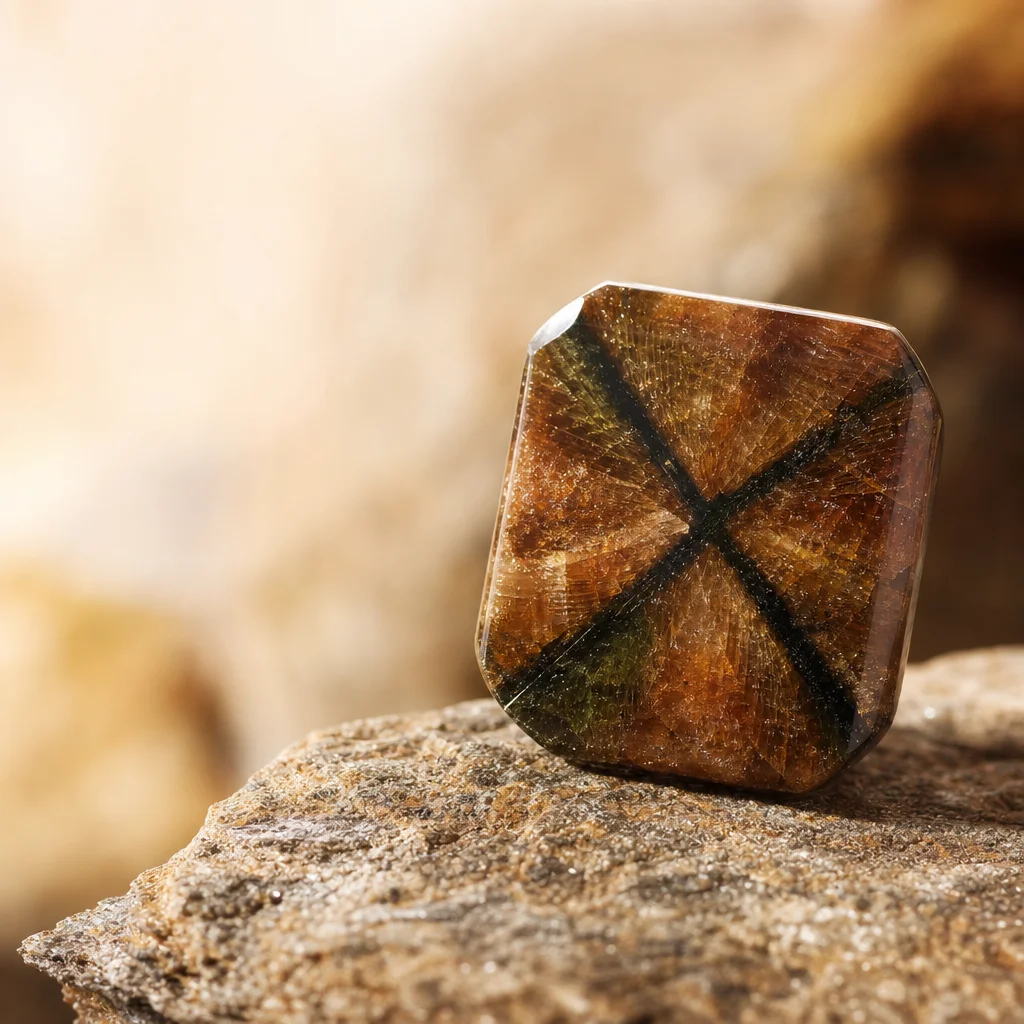
What Is Andalusite?
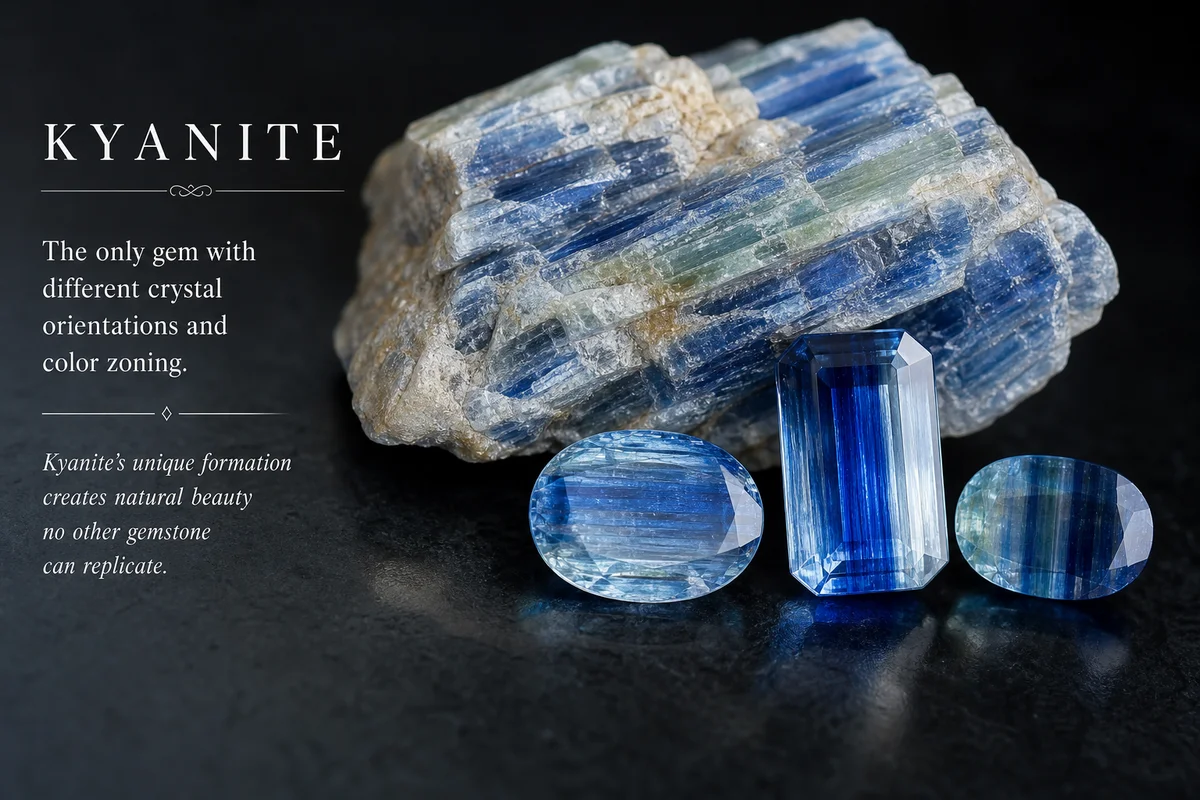
Andalusite is an aluminum nesosilicate mineral with the formula Al₂SiO₅. Along with kyanite and sillimanite, it's one of three polymorphs — minerals that share the same chemical composition but crystallize in different structures depending on the temperature and pressure conditions during formation. Andalusite forms under low-pressure, moderate-temperature metamorphic conditions, typically in schists, slates, and contact metamorphic aureoles around igneous intrusions.
The mineral was named after Andalusia, the southern region of Spain where it was first identified in the late 18th century. Spanish deposits, particularly in the province of Córdoba, produced the first documented specimens, and the name has stuck in mineralogical literature ever since. Today, significant andalusite deposits exist in Brazil, Sri Lanka, Spain, South Africa, Russia, the United States (California, Massachusetts), and Australia.
On the Mohs hardness scale, andalusite registers 7 to 7.5, making it one of the harder gemstone minerals available. This places it in the same durability class as aquamarine and garnet — tough enough for all jewelry applications including rings worn daily. Combined with good toughness and no cleavage, andalusite is actually one of the most practical gemstones for everyday wear, though its relatively low profile in the jewelry market means most consumers have never heard of it.
The Cross Stone: Understanding Chiastolite
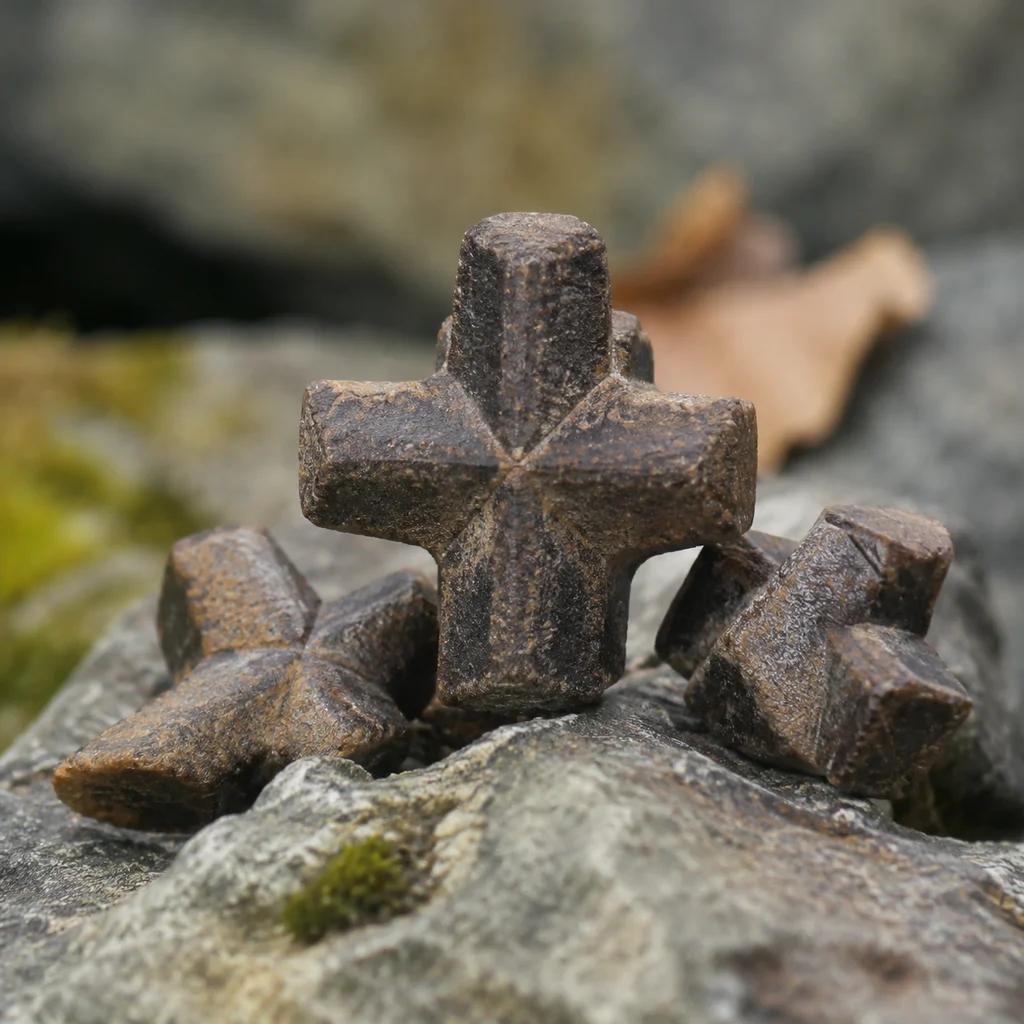
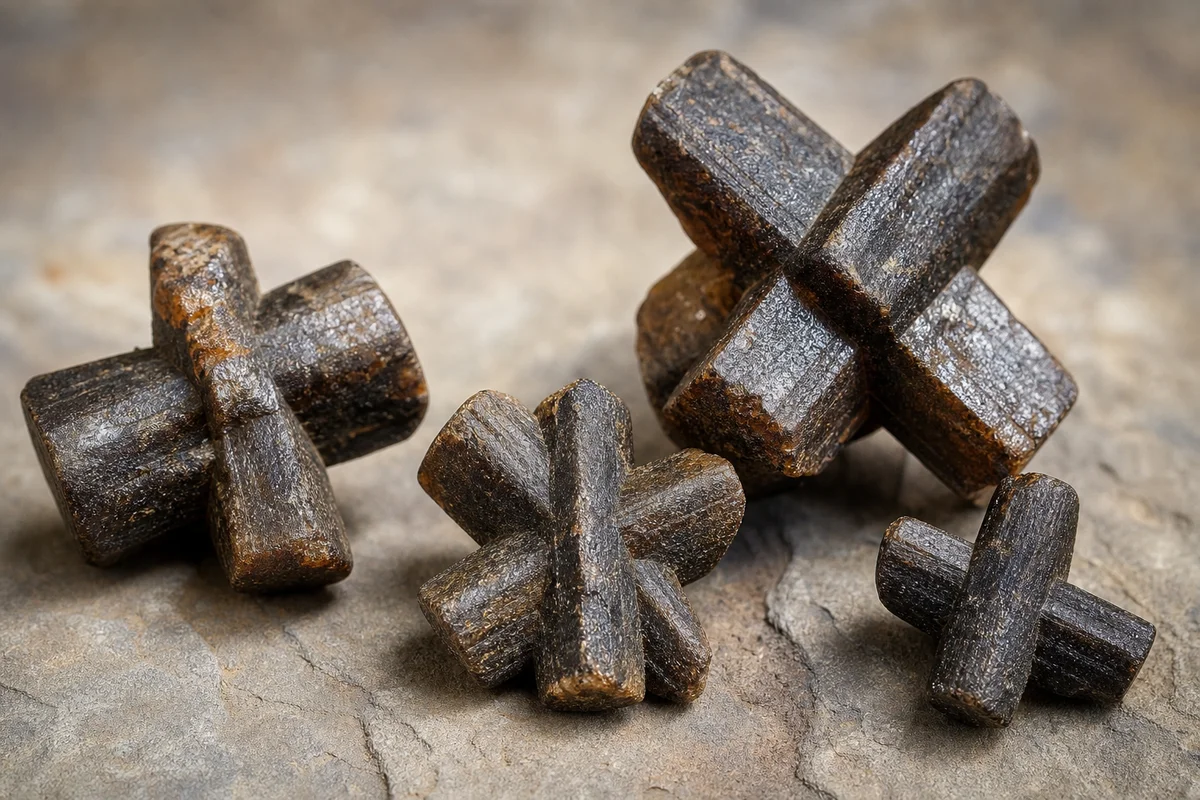
Chiastolite is the most famous variety of andalusite, distinguished by dark, carbonaceous inclusions that form a symmetrical cross pattern when the crystal is cut perpendicular to its long axis. These cross patterns appear in the center of each crystal as dark brown to black markings arranged in a precise X or + shape, creating one of nature's most striking geological curiosities.
The cross forms because andalusite crystals grow by pushing impurities ahead of the crystal face as it extends. Carbon-rich impurities (organic material from the original sedimentary rock) are rejected from the growing crystal lattice and concentrate along specific crystallographic directions. When the growing conditions are stable, these impurities accumulate in four symmetric zones, creating the cross pattern. It's a natural illustration of crystallographic growth processes frozen in stone.
Historically, chiastolite carried enormous symbolic weight. In 16th-century Spain, chiastolite crosses were worn as protective amulets and religious symbols. The natural cross formation was interpreted as divine intervention — a sign from God embedded directly in stone. Spanish priests carried chiastolite crosses, and the stones were believed to ward off evil, protect travelers, and provide spiritual comfort during difficult times. The connection between the natural cross pattern and Christian symbolism was so strong that chiastolite was sometimes called "lapis crucifer" (cross stone) in medieval lapidaries.
Andalusite's Dramatic Pleochroism
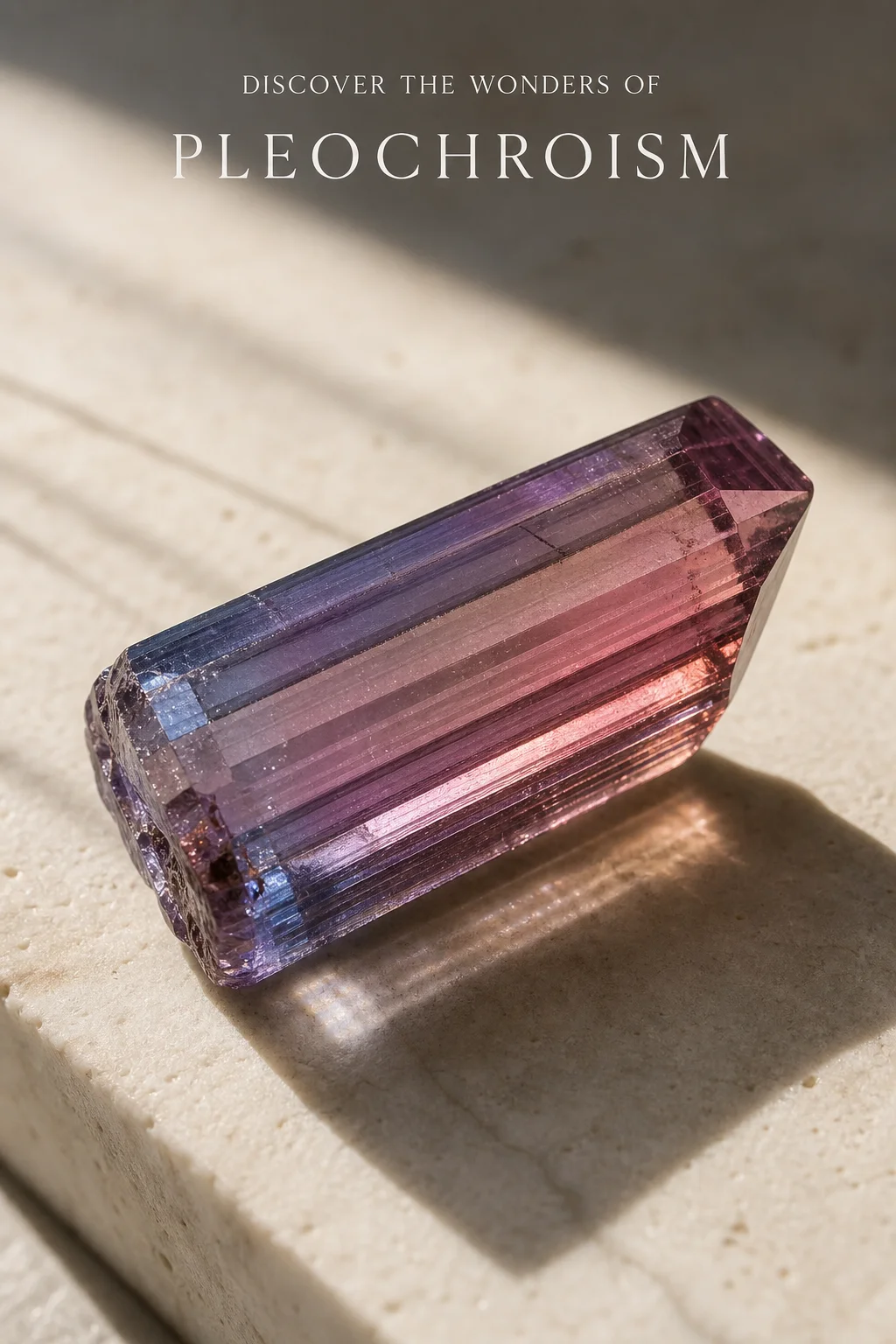
If chiastolite is andalusite's claim to fame in the historical and symbolic sense, its pleochroism is its most impressive gemological feature. Andalusite is strongly pleochroic, displaying distinctly different colors when viewed from different crystallographic directions. In most specimens, the colors are green (down one axis), brownish-yellow to red (down another), and colorless to pale yellow (down the third).
This trichroic behavior is remarkable even among pleochroic gemstones. While many stones show two colors (dichroism), andalusite routinely shows three, and the contrast between them can be dramatic. A well-cut andalusite gemstone can flash from forest green to warm honey-brown to reddish-brown as you tilt it under a light source. This color-changing behavior is sometimes compared to alexandrite (which changes color under different light sources), but andalusite's change is viewing-angle-dependent rather than light-source-dependent.
The intensity of pleochroism varies by specimen. Brazilian material typically shows green to brownish-yellow colors with good contrast. Sri Lankan stones may show stronger red and brown tones. Some specimens are less pleochroic, appearing predominantly brown with subtle green undertones. The finest gem-quality andalusite displays vivid, clearly distinct colors that make the stone genuinely fascinating to observe.
How Cutters Handle Andalusite's Pleochroism
Cutting andalusite is an exercise in orientation. A skilled cutter examines the rough crystal carefully under strong light, rotating it to observe the pleochroic behavior from every angle, before deciding how to orient the finished gem. The goal is usually to show the most attractive two or three colors simultaneously in the face-up position.
There are two main cutting philosophies for andalusite. The first aims to show the maximum pleochroic contrast — the finished stone displays green and brown-red in the same face-up view, creating a distinctive two-tone appearance that's immediately recognizable. The second approach orients the stone to show primarily one color face-up, usually the green, with the secondary color visible when the stone is tilted. Both approaches are valid, and collectors have preferences for each.
Andalusite is typically cut in oval, cushion, or emerald-cut shapes that maximize the pleochroic display. Round cuts are less common because the round proportions don't take full advantage of the directional color variation. Large stones (over 5 carats) are rare and particularly valuable when they show strong, distinct pleochroism with good clarity.
Andalusite vs. Other Color-Changing Stones
Andalusite is sometimes confused with alexandrite (the color-change chrysoberyl variety) because both stones appear to change color. The mechanisms are completely different, however:
Alexandrite: Changes color based on light source — green in daylight, red under incandescent light. This is caused by selective absorption of different wavelengths by chromium impurities. The change happens without tilting the stone.
Andalusite: Changes color based on viewing angle (pleochroism) under the same light source. The change happens when you tilt or rotate the stone. The colors (green, brown, red) are present simultaneously in different crystallographic directions.
Color-change garnet is another potential lookalike. Some garnets shift between greenish-blue and purplish-red depending on light source, similar to alexandrite. Again, the mechanism differs from andalusite's pleochroism. For collectors, having examples of each type of color behavior provides a fascinating study in mineral optics.
Geological Formation and Occurrence
Andalusite forms during regional and contact metamorphism of clay-rich sedimentary rocks. When these rocks are heated to moderate temperatures (roughly 400-600°C) under relatively low pressure, the clay minerals (kaolinite, illite) recrystallize into andalusite. The process is part of the broader metamorphic progression that can also produce kyanite (at higher pressure) or sillimanite (at higher temperature).
In contact metamorphic settings, andalusite develops around plutonic intrusions where magma heats the surrounding rock. The aureole of metamorphism can extend hundreds of meters from the intrusion, with andalusite forming in the outer to middle zones and sillimanite appearing closer to the heat source. These geological relationships make andalusite useful as a metamorphic index mineral — its presence tells geologists something about the temperature and pressure history of the rock.
Chiastolite specifically forms in carbonaceous argillaceous rocks — mudstones and shales that contain significant organic carbon. The carbon is what creates the cross pattern, so chiastolite is only found in rocks that had enough organic material during metamorphism. This is why chiastolite occurrences are more restricted than general andalusite deposits.
Andalusite in Crystal Healing and Metaphysics
In crystal healing traditions, andalusite is associated with balance, protection, and grounded spiritual growth. The cross pattern of chiastolite connects it to themes of divine connection, faith, and spiritual protection. Andalusite's pleochroic nature — showing multiple faces from different angles — is metaphorically linked to the ability to see situations from multiple perspectives, making it a recommended stone for decision-making and conflict resolution.
Practitioners use andalusite for memory enhancement and problem-solving. Its association with the third eye and crown chakras connects to mental clarity and the ability to access deeper levels of understanding. For people who feel stuck in rigid thinking patterns or who see situations only from one angle, andalusite's multi-colored nature serves as a physical reminder that reality has more dimensions than any single viewpoint reveals.
Chiastolite specifically is used as a protective stone. Its natural cross pattern is believed to create a shield of spiritual protection, warding off negative energy and psychic interference. Some practitioners place chiastolite at the four corners of a room to create a protective grid, drawing on the cross pattern's directional symbolism.
Jewelry Applications and Market Value
Andalusite is an excellent jewelry stone that's significantly undervalued in the market. Its 7-7.5 hardness, good toughness, and lack of cleavage make it suitable for all types of jewelry. The main barrier to wider adoption is simply awareness — most jewelry buyers don't know andalusite exists, and it's rarely featured in mainstream jewelry collections.
Chiastolite is most commonly sold as cabochons that preserve the cross pattern, used in pendants, earrings, and occasionally rings. These cabochons appeal strongly to collectors and people interested in geological curiosities. Faceted andalusite gemstones are rarer in the market but offer a unique two-tone appearance that stands out from more common gemstones. A well-cut andalusite ring is a genuine conversation starter.
Price-wise, andalusite is very affordable. Tumbled chiastolite specimens cost a few dollars each. Faceted gem-quality andalusite typically ranges from $15-60 per carat for stones under 3 carats, with exceptional pieces reaching $100-200 per carat. This represents remarkable value for a 7.5-Mohs gemstone with such distinctive optical properties.
Frequently Asked Questions
Is the cross in chiastolite natural?
Yes, the cross pattern is entirely natural. It forms during crystal growth as carbonaceous impurities are pushed to specific crystallographic directions. No human intervention creates or enhances the pattern. The cross is visible when the crystal is cut perpendicular to its c-axis, and lapidaries take care to orient the cut correctly.
Is andalusite expensive?
No, andalusite is one of the most affordable gemstone-quality minerals. Rough specimens and tumbled stones cost just a few dollars. Faceted gems are typically $15-60 per carat. Chiastolite cabochons with well-defined crosses are more valuable but still very reasonable compared to most semi-precious gemstones.
Can andalusite change color like alexandrite?
Andalusite changes color based on viewing angle (pleochroism), not based on light source like alexandrite. Tilt the stone and you'll see green, brown, and red from different directions. Alexandrite changes between green and red based on whether you're viewing it in daylight or incandescent light. The mechanisms are different, but both effects are visually striking.
Frequently Asked Questions
How durable is andalusite for everyday jewelry?
Andalusite ranks at 6.5 to 7.5 on the Mohs scale of hardness, making it reasonably durable for daily wear. At SagStone, we love setting this unique crystal in protective artisan designs like bezels or pendants. To keep your handcrafted andalusite jewelry looking its best, simply remove it during heavy manual work or strenuous activities to prevent accidental scratches to the stone's surface.
What is the spiritual meaning of andalusite?
In the realm of crystal healing, andalusite is highly revered as a stone of balance, grounding, and protection. It is believed to help center your energy, dispel anxiety, and promote logical thinking during stressful transitions. The chiastolite variety, with its natural cross pattern, is traditionally used as a powerful talisman to ward off negative energy, making it a deeply meaningful stone.
Comments