<h2>14 Minerals You Probably Think Are Crystals But Actually Aren't</h2>
Walk into any crystal shop and you'll see hundreds of polished stones labeled as crystals. The word gets thrown around so freely that most people assume "crystal" is just a casual term for any shiny rock. But in geology, crystal has a very specific meaning, and a lot of the most popular stones in the crystal community don't meet that definition at all.
Let's clear up the confusion and look at what a crystal actually is, followed by 14 examples of popular stones that aren't what most people think they are.
What Makes Something a Crystal, Anyway
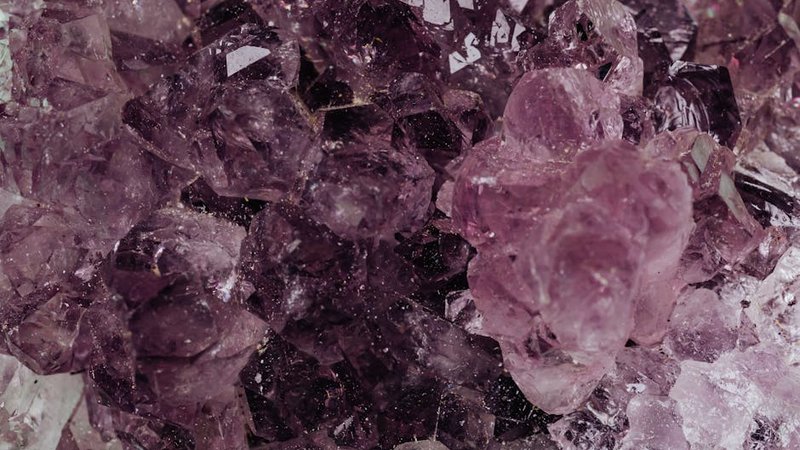
In mineralogy, a crystal is defined by its internal structure: a regular, repeating, three-dimensional arrangement of atoms called a crystal lattice. Think of it like a microscopic scaffolding where every atom sits in a predictable, orderly pattern that extends throughout the entire stone. This orderly structure is what gives crystals their flat faces, sharp edges, and geometric shapes.
A mineral, on the other hand, is any naturally occurring inorganic solid with a defined chemical composition. Minerals can be crystalline, meaning they have that orderly internal lattice, or they can be amorphous, meaning their atoms are arranged randomly with no repeating pattern. All crystals are minerals (or can be), but not all minerals are crystals.
There's also a third category called mineraloids. These are naturally occurring substances that don't meet the strict definition of a mineral. They might be organic, or they might lack a consistent chemical composition, or they might be amorphous. Many of the stones on this list fall into the mineraloid category.
With that foundation, here are 14 popular "crystals" that aren't actually crystals.
1. Obsidian
Obsidian is volcanic glass, formed when lava cools so rapidly that mineral crystals don't have time to form. The result is a smooth, glassy stone with no crystal lattice whatsoever. Its atoms are locked in a random, disordered arrangement, which is the definition of an amorphous solid.
Obsidian is a mineraloid. It's mostly silicon dioxide, same as quartz, but without the crystalline structure that makes quartz a true crystal. If you've ever broken a piece of obsidian and noticed the razor-sharp, conchoidal fracture, that's a property of glass, not of crystals. Ancient people used it for cutting tools and weapons precisely because it breaks into sharp edges, unlike most crystalline minerals.
2. Amber
Amber isn't a mineral at all. It's fossilized tree resin, which makes it an organic substance. Minerals, by definition, must be inorganic. Amber forms when resin from ancient trees (mostly conifers) gets buried under sediment and undergoes polymerization over millions of years. The result is a hard, golden material that can preserve insects and plant material inside it.
Amber's composition varies depending on the tree species and the conditions it formed under. Unlike quartz or calcite, which have a fixed chemical formula, amber's chemistry is inconsistent. It's typically a complex mixture of organic compounds including terpenes, acids, and alcohols. No crystal lattice, no fixed composition, and it's organic. Three strikes against being a crystal.
3. Jet
Jet is a type of lignite, which is a precursor to coal. It forms from decomposed wood that has been compressed under high pressure over millions of years. Like amber, it's organic in origin, which immediately disqualifies it from being a mineral or a crystal.
Jet has been used in jewelry for thousands of years, most famously in Victorian mourning jewelry. It's lightweight, can be polished to a high shine, and takes a fine detail when carved. But structurally, it's just compressed carbon-based plant material. No crystal lattice, no defined mineral composition.
4. Pearl
Pearls form inside mollusks when an irritant (like a grain of sand or a parasite) gets trapped between the mollusk's shell and its mantle tissue. The mollusk coats the irritant in layers of nacre, a combination of calcium carbonate (aragonite) and a protein called conchiolin. Over years, these layers build up to form a pearl.
Pearls are organic. They're produced by living creatures, which makes them biological products rather than minerals. While the aragonite in nacre is technically a crystalline mineral, the pearl as a whole is a composite organic structure. A pearl is closer to a seashell or a bone than to a quartz crystal.
5. Coral
The coral used in jewelry comes from the calcium carbonate skeletons of marine cnidarians, specifically from species like Corallium rubrum (red coral). These tiny animals build hard exoskeletons by secreting calcium carbonate over their lifetimes. When they die, the skeleton remains and can be harvested for jewelry and ornaments.
Like pearls, coral is organic and biologically produced. It has no crystal lattice in the traditional sense, though the calcium carbonate it's made from does have a crystalline structure at the microscopic level. The coral organism arranges the calcium carbonate in a way that serves biological function, not crystallographic order.
6. Opal
This one surprises a lot of people. Opal is classified as a mineraloid, not a true mineral, because it lacks a crystal lattice. Opal is hydrated silicon dioxide, meaning it's mostly silica (same as quartz) mixed with water, typically between 3% and 21% water content.
Instead of a regular crystal lattice, opal has a structure of tiny silica spheres packed together in a semi-ordered arrangement. The spaces between these spheres create diffraction grating, which is what produces opal's famous play of color. The spheres are arranged in a somewhat regular pattern, but not in the rigid, repeating atomic lattice that defines a true crystal. Geologists call this structure "amorphous with short-range order."
The play of color in precious opal is purely an optical phenomenon caused by light diffraction through these silica spheres. Different sizes of spheres produce different colors, which is why some opals flash blue while others flash red or green.
7. Mother-of-Pearl (Nacre)
Mother-of-pearl, also known as nacre, is the iridescent inner layer of mollusk shells. It's the same material that coats a pearl. Like pearls, nacre is an organic-inorganic composite made of layered aragonite plates held together by the protein conchiolin.
The iridescence of mother-of-pearl comes from the way light interacts with these thin, stacked layers. The layers are thin enough to cause interference, similar to the way oil on water creates rainbow colors. While the individual aragonite crystals in nacre are crystalline, the overall structure is an organic composite material, not a single crystal.
8. Moldavite
Moldavite is a type of tektite, which is glass formed by the heat and pressure of a meteorite impact. When a large meteorite strikes the Earth, it melts rock and soil at the impact site and hurls the molten material into the atmosphere. As it falls back to earth, it cools into glassy, often oddly shaped pieces.
Moldavite specifically comes from the Ries crater in Germany, formed about 15 million years ago. It's mostly found in the Czech Republic. Like obsidian, it's an amorphous glass with no crystal structure. It's a mineraloid, not a crystal, despite often being sold as one.
The green color of moldavite comes from trace amounts of iron and other elements present in the material that was melted during the impact. Its distinctive sculpted, wrinkled surface texture is a result of its rapid flight through the atmosphere while still partially molten.
9. Tektites (General)
While moldavite is the most famous tektite, there are others. Libyan desert glass, found in the Sahara, is a tektite (or possibly impact glass) formed around 29 million years ago. Australites are tektites found in Australia and Southeast Asia. Bediasites come from Texas.
All tektites share the same fundamental characteristic: they are natural glass formed by meteorite impacts. None of them have a crystal lattice. They're amorphous, chemically variable, and classified as mineraloids. They can be beautiful and fascinating, but they aren't crystals.
10. Ivory and Bone
Ivory comes from the tusks and teeth of animals, primarily elephants, walruses, and narwhals. Bone is the structural material of vertebrate skeletons. Both are organic, biologically produced, and have no crystal lattice.
Both materials do contain hydroxyapatite, a calcium phosphate mineral that is crystalline at the microscopic level. But ivory and bone as materials are organic composites: hydroxyapatite crystals embedded in a protein matrix (mostly collagen). The overall structure serves a biological function and doesn't have the uniform, repeating lattice that defines a crystal.
The use of ivory in jewelry has declined significantly due to ethical concerns and legal restrictions, but it's worth noting that even when it was popular, it was never a crystal.
11. Charoite
Charoite is a genuine mineral with a defined chemical composition (K(Ca,Na)₂Si₄O₁₀(OH,F)·H₂O). It's found almost exclusively in the Sakha Republic of Siberia, Russia. But here's the catch: while charoite is a mineral, it almost never forms visible crystals.
Charoite grows in what geologists call a "massive habit," meaning it forms as solid, intergrown masses rather than individual crystal faces. The swirling purple patterns that make charoite distinctive are the result of fibrous mineral intergrowths, not crystal faces. Under a microscope, the individual fibers have crystalline structure, but the stone as a whole doesn't display the crystallographic features that most people associate with crystals.
This is a subtle distinction. Charoite is crystalline at the atomic level but doesn't form the shaped crystals that quartz, beryl, or tourmaline do. Whether you call it a crystal depends on how strict your definition is.
12. Turquoise
Turquoise is another mineral that rarely forms visible crystals. Its chemical formula is CuAl₆(PO₄)₄(OH)₈·4H₂O, and it has been valued as a gemstone for thousands of years, particularly in Native American, Persian, and Egyptian cultures.
Geologically, turquoise typically forms in what's called a "cryptocrystalline" or "microcrystalline" habit. The individual crystals are so small that they're invisible to the naked eye and can only be seen with an electron microscope. The turquoise you see in jewelry appears as solid masses, nodules, or veins in host rock, not as shaped crystals.
Like charoite, turquoise is crystalline at the atomic level but doesn't display crystal faces in its natural form. It's technically a crystal mineral, but the polished stones sold in shops are massive cryptocrystalline material, not individual crystals.
13. Shells
Seashells are the exoskeletons of mollusks, made primarily of calcium carbonate in the form of either calcite or aragonite. While both of these minerals are crystalline, the shell as a whole is a biological structure, not a crystal.
Mollusks build their shells by secreting calcium carbonate in a controlled, protein-mediated process. The resulting structure is layered, with organic proteins between the mineral layers. The shell's strength comes from this composite structure, not from crystallographic order. Using shells as decorative objects is an ancient practice, but shells are organic composites, not crystals.
14. Polished Hematite
Here's a tricky one. Hematite (Fe₂O₃) is absolutely a mineral, and it can form crystals. In fact, hematite crystals can be quite striking, forming metallic gray tabular shapes and even the kidney ore and botryoidal (grape-like) masses popular in mineral collections.
But the smooth, gunmetal-gray, highly polished hematite stones you see in bead shops and crystal stores are almost always the massive or granular form of hematite. These pieces have no visible crystal faces. They're cut and polished from larger hematite masses where the individual crystals grew together in an interlocking pattern, erasing any visible crystallographic features.
So while hematite as a species is a crystalline mineral, the specific polished stones sold as "hematite crystals" in most shops are massive aggregate material. They're crystalline at the atomic level, but they aren't individual crystals in the way that a quartz point or an amethyst geode is.
Does Any of This Matter
If you're a geologist or a mineralogist, yes, these distinctions matter a lot. They affect how these materials are classified, studied, and understood. If you're someone who collects and enjoys these stones for their beauty, history, or personal meaning, the scientific classification might matter less to you.
But knowing the difference is still worthwhile. When a shop labels amber or obsidian as a "crystal," that's marketing language, not scientific accuracy. Understanding what these materials actually are, how they formed, and what their real properties are adds depth to any collection. A piece of obsidian becomes more interesting when you know it was born in a volcanic eruption, not grown in a crystal lattice. Amber is more fascinating when you understand it's a time capsule of ancient tree resin that trapped living things millions of years ago.
The stones don't need to be crystals to be remarkable. They just need to be understood for what they actually are.
Comments