What Jewelry to Wear to a Job Interview: The Complete Guide for 2026

You've picked out your outfit. You've rehearsed your answers. But then you catch yourself wondering: should I wear this necklace to the interview? Is this bracelet too much? Does jewelry even matter when you're trying to land a job?
Here's the honest answer: yes, it matters. Not because interviewers are judging your taste in accessories, but because the wrong jewelry can be distracting, noisy, or send the wrong signal about your judgment. The right jewelry, on the other hand, subtly reinforces that you're polished, professional, and detail-oriented.
This guide covers what to wear, what to skip, and how to make smart jewelry choices for any type of interview.
The Golden Rules of Interview Jewelry
Before we get into specific scenarios, here are the principles that apply across the board:
Less is more. This isn't the time to show off your entire collection. One or two well-chosen pieces are far better than armfuls of bracelets and layered necklaces. The goal is for your interviewer to remember your qualifications, not your accessories.
No noise. If your jewelry clinks, jingles, or rattles when you move, leave it at home. Stacked bangles, charm bracelets, and long dangling earrings that brush against your collar are all noise risks. During an interview, you want the only sound in the room to be your voice.
Nothing distracting. If a piece of jewelry catches light and creates reflections, draws the eye away from your face, or requires constant adjustment, skip it. You should be fully focused on the conversation, not fidgeting with a slipping ring or a tangled necklace.
Consider the industry. A tech startup interview allows for more personal expression than a law firm interview. A creative agency expects more personality than an accounting firm. Match your jewelry to the industry's culture, not your personal style.
Make sure it works with your outfit. Your jewelry should complement your clothes, not compete with them. If your outfit already has a lot going on — patterns, bold colors, statement details — keep your jewelry simple.
Corporate and Formal Interviews
This covers law firms, finance, banking, consulting, government, and any traditional corporate environment. The standard is conservative and professional.
For women: small stud earrings (pearls, diamonds, or plain metal), a delicate necklace that sits close to the neck, one simple ring (engagement or wedding ring is fine), a classic watch. Avoid anything oversized, brightly colored, or attention-grabbing.
For men: a professional watch is the single best piece of jewelry for a corporate interview. If you wear a wedding ring, that's fine. Cufflinks if you're wearing a French cuff shirt — but keep them understated. A tie clip is optional but can look polished.
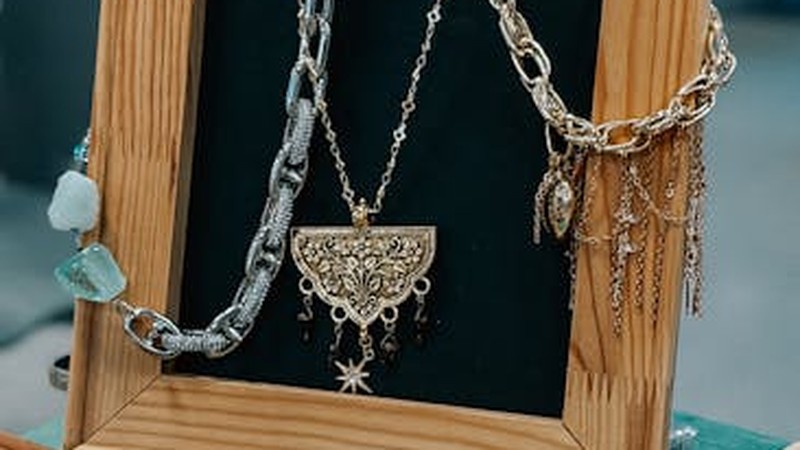
Specific pieces to avoid: chandelier earrings, stacked bracelets, large statement necklaces, anything with visible logos or brand names, religious or political jewelry (not because there's anything wrong with it, but because it can trigger unconscious bias), and anything that could be interpreted as flashy or ostentatious.
Tech and Startup Interviews
Tech companies, startups, and modern offices tend to be more relaxed about personal style. But "relaxed" doesn't mean "anything goes" — it means you have more room to show personality while still being appropriate.
This is the one interview type where you can safely wear slightly more expressive pieces. A simple pendant necklace, small hoop earrings (not enormous ones), or a subtle bracelet are all fine. The key word is "subtle."
If you're interviewing at a very casual tech company where the interviewer is wearing a hoodie and sneakers, you still want to look put-together. Your jewelry should say "I care about how I present myself" rather than "I didn't think about it."
Good options for tech interviews: a leather or canvas watch, small geometric earrings, a thin chain bracelet, a simple ring. The aesthetic should be clean and modern.
Creative Industry Interviews
Fashion, design, advertising, media, and arts organizations actually want to see your personal style. In these fields, your appearance is part of your portfolio. But there's a difference between stylish and costume-like.
This is where you can be more adventurous. A statement ring, an interesting cuff bracelet, or distinctive earrings can work well. Choose pieces that feel intentional and curated rather than random and excessive.
The trick is to pick one or two pieces that feel like "you" and let them shine. If your jewelry tells a story — a ring you made yourself, a vintage piece from a flea market, a necklace from a trip abroad — even better. Creative interviewers appreciate authenticity and interesting backstories.
Healthcare and Education Interviews
Hospitals, clinics, schools, and universities have practical considerations that affect jewelry choices.
For healthcare: minimal jewelry is essential. Many healthcare settings require you to remove rings, bracelets, and watches for hygiene reasons. Stud earrings are safest — nothing dangling that could get caught in equipment or scratch a patient. If you're not sure about the specific facility's policy, err on the side of less.
For education: think approachable and practical. You'll be moving around, writing on boards, and interacting with students or colleagues. Avoid anything that could snag on clothing, make noise when you gesture, or look intimidating to younger students. Small studs, a watch, and maybe a simple necklace are plenty.
Virtual Interview Jewelry
Zoom interviews have their own rules. The camera crops you from roughly the chest up, which means your jewelry choices are more visible than they would be in person.
What works on camera: stud earrings (they frame your face nicely), a short pendant necklace, small hoops. What doesn't: anything that catches the light from your screen and creates glare, long necklaces that create visual lines across your chest, heavy earrings that pull your earlobes down.
Also consider your background. If your home office has a lot going on visually, simpler jewelry helps keep you as the focal point. If your background is clean and minimal, you have slightly more room for interesting pieces.
Test your setup beforehand. Do a practice video call and look at yourself critically. Is your jewelry distracting? Does it create weird shadows or reflections? Better to find out in practice than during the actual interview.
Specific Pieces: Do's and Don'ts
Earrings: Studs are always safe. Small hoops are fine for most interviews. Dangling earrings are risky — they can be noisy and distracting. Multiple piercings with multiple earrings are generally too much for formal interviews.
Necklaces: A thin chain with a small pendant is ideal. Chokers can work depending on the neckline of your top. Long layered necklaces are usually too busy. If your top already has a high neckline or collar detail, skip the necklace entirely.
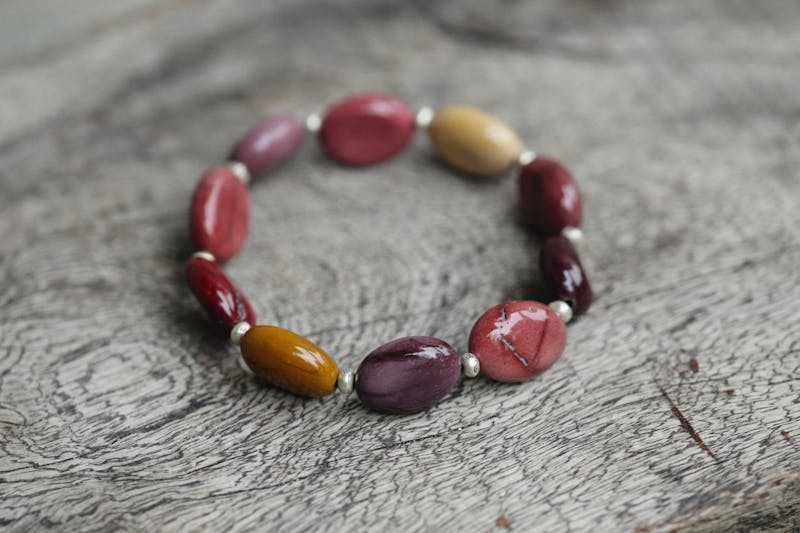
Bracelets: A single thin bracelet or watch is fine. Stacked bracelets are too casual and noisy. Bangles are almost always a bad idea for interviews — the clinking sound is unavoidable.
Rings: Your wedding or engagement ring is always appropriate. One additional ring is okay if it's simple. Multiple rings on multiple fingers start to look like a statement, which isn't ideal for most interviews. Avoid rings with large stones that could catch on things.
Watches: A clean, professional watch is one of the best accessories for any interview. It subtly communicates punctuality and attention to time. If you don't own a watch, this is actually a good investment. Smartwatches are technically fine, but a traditional watch looks slightly more intentional for interviews.
What Your Jewelry Says About You
Like it or not, people form impressions quickly. Your jewelry choices communicate things about you before you say a word:
Minimal and classic jewelry says you're organized, detail-oriented, and respectful of the setting. It suggests you prepared for this interview and understand the environment.
Thoughtful, slightly unique pieces suggest creativity and confidence — good for creative industries but potentially risky in conservative ones.
Excessive or flashy jewelry can be perceived as trying too hard, lacking self-awareness, or not understanding professional norms. Even if that's not your intention, perception matters in interviews.
Common Mistakes
Wearing new jewelry you haven't tested. If a piece is new, wear it around the house for a day first. Does it irritate your skin? Does it catch on your clothes? Does it make noise? You don't want to discover any of these things during an interview.
Not removing your watch when shaking hands. A bulky watch can make a handshake awkward. If your watch is large, consider taking it off or wearing it on your non-dominant hand.
Forgetting to check the dress code. Some interviews specify business formal, business casual, or casual. Your jewelry should match the stated dress code. When in doubt, go one level more conservative than the dress code suggests.
Wearing perfume with your jewelry. This isn't about the jewelry itself, but strong perfume combined with the close proximity of an interview room can be overwhelming. Go unscented or very light.
Quick Reference by Industry
Corporate, finance, law: Studs, watch, thin necklace. Nothing else.
Tech, startup: Small hoops, watch, simple bracelet. Slightly more personality allowed.
Creative, fashion, media: One statement piece plus simple basics. Show your style.
Healthcare: Studs only. Nothing on hands or wrists if possible.
Education: Studs, watch. Approachable and practical.
Retail, hospitality: Match the brand's aesthetic. If you're not sure, visit a store first and observe what employees wear.
Government, military: Most conservative. Studs and watch. Nothing flashy.
Final Thoughts
The right interview jewelry is the kind nobody notices — not because it's boring, but because it fits so naturally with your overall presentation that it feels effortless. When your jewelry, clothes, grooming, and body language all work together, the interviewer sees a polished professional who clearly prepared for this moment.
When in doubt, take one piece off. It's better to be slightly under-accessorized than slightly over-accessorized. You can always add more for your second interview once you've read the room.

Comments