What Did Ancient People Actually Believe About Crystals and Stones?
It's tempting to project modern New Age beliefs backward—to assume that because crystal shops today sell rose quartz for love and amethyst for calm, ancient civilizations must have thought the same things. They didn't. The actual beliefs ancient people held about stones and crystals were more varied, more specific to their own religious and medical systems, and in many cases more interesting than the generic "crystal energy" framework popular today.
Here's what the archaeological and textual evidence actually tells us, civilization by civilization.
Did the Sumerians Use Crystals for Healing?
The Sumerians, who built one of the world's earliest civilizations in southern Mesopotamia (roughly 4500–1900 BC), left behind thousands of clay tablets, many of which deal with medical treatments. Their healing system was based on a combination of herbal medicine, incantations, and ritual practices. Stones do appear in these texts—but not in the way modern crystal healing enthusiasts might expect.
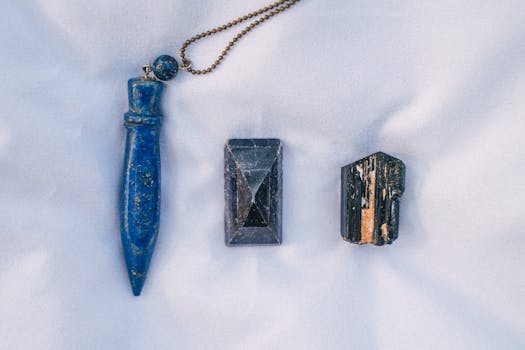
Lapis lazuli is the most frequently mentioned stone in Sumerian texts. The Sumerian word for it, za-gin, literally means "stone of the sky," reflecting its deep blue color. But lapis wasn't used as a healing stone in the modern sense. It was primarily valued as a luxury material for jewelry, cylinder seals, and decorative inlays. When it does appear in medical or ritual contexts, it's typically as an offering to a deity or as a component in ritual objects, not as something applied to the body for therapeutic effect.
The Sumerians did believe that certain stones had protective properties, but these were framed within their religious worldview. Cylinder seals made from specific stones were thought to carry the protection of the gods whose images were carved on them. The power was in the image and the ritual context, not in the stone's inherent properties.
Archaeological evidence supports this interpretation. Excavations at the Royal Cemetery of Ur (dating to roughly 2600 BC) uncovered elaborate jewelry and headdresses incorporating lapis lazuli, carnelian, and gold. These were clearly status objects, not medical tools. The famous "Standard of Ur," a wooden box inlaid with lapis, shell, and red stone, depicts scenes of war and peace—it's a political artwork, not a spiritual instrument.
What About Ancient Egypt? Was Everything a Protective Amulet?
Egypt is where things get more complex—and more interesting. The Egyptians absolutely did believe that stones had specific powers, but those powers were tied to an elaborate theological system that doesn't map neatly onto modern crystal beliefs.
The Egyptian approach to stones was rooted in the concept of heka, usually translated as "magic" but better understood as a fundamental force of the universe that could be channeled through words, objects, and rituals. Stones were one medium for heka, but they weren't powerful on their own—they needed the correct words, images, and ritual context to activate.
Specific stones were associated with specific deities, and those associations determined their use. Lapis lazuli was linked to the sky goddess Nut and was believed to contain the hair of the gods. It was commonly used in amulets placed on the throat of the deceased during mummification—the "Opening of the Mouth" ceremony involved a lapis lazuli adze used to restore the senses of the dead. Turquoise was associated with Hathor, the goddess of love and joy, and was mined in the Sinai Peninsula specifically for use in her temples. Carnelian was linked to blood and vitality and was placed on the chest of mummies as a heart amulet substitute.
The Ebers Papyrus, one of the oldest and most complete medical texts from ancient Egypt (dating to roughly 1550 BC), does mention stones in some treatments. One prescription involves grinding malachite to a powder and applying it to eye infections—not because malachite was thought to have "energy" but because its green color was symbolically associated with health and the god Thoth, who was believed to have healing knowledge. This is sympathetic magic: like treats like, and green stones are associated with green, healthy things.
The Egyptian use of stones was also deeply practical in ways we sometimes overlook. The craftsmen who worked at the village of Deir el-Medina (the settlement that housed the workers who built the royal tombs in the Valley of the Kings) kept detailed records of stone shipments, tool inventories, and production quotas. They were artisans running a workshop, not mystics communing with mineral spirits. The sacred and the practical coexisted without apparent conflict.
What Did the Ancient Greeks Believe?
The Greek approach to stones is where we start to see something closer to a proto-scientific system, though it's still deeply intertwined with mythology and folk belief.
The Greeks were serious about stones. Theophrastus, a student of Aristotle, wrote On Stones (Greek: Peri Lithon) around 315 BC, making it one of the earliest surviving works of mineralogy. Theophrastus described roughly 70 types of stones, including their appearance, where they were found, and—in some cases—their supposed properties. He noted that certain stones could cut other stones, that some changed color when heated, and that others could be used as touchstones to test the purity of gold. These are empirical observations, not mystical claims.
However, the Greeks also maintained a rich tradition of stones with symbolic and supposedly magical properties. The amethyst myth is the most famous: Dionysus, angry at a mortal, threatened to feed her to tigers. The goddess Artemis turned her into a white quartz crystal. Dionysus, remorseful, poured wine over the crystal, turning it purple. The name amethystos literally means "not intoxicated," and the stone was worn as a drinking talisman—Greek revelers reportedly wore amethyst rings or cups to prevent drunkenness. This is a long way from "amethyst calms the mind," but it shows the same basic pattern: a stone associated with a specific, practical benefit based on its mythological origin story.
Pliny the Elder's Natural History (1st century AD) compiled much of the Greek and Roman knowledge about stones into a single reference work. Pliny described the origins of stones (some from living creatures, some from mineral deposits), their medical applications (ground lapis for eye problems, hematite for bleeding), and their ornamental uses. His approach was notably skeptical—he explicitly called out fraudulent gem sellers who dyed inferior stones to pass them off as more valuable varieties. Pliny was writing natural history, not crystal magic, and he expected his readers to be discerning consumers of information.
The medical use of stones in the Greek and Roman tradition was primarily through ingestion. Stones were ground into powders and mixed with other ingredients to create medicines. Galen, the 2nd-century AD physician whose medical theories dominated European medicine for over a thousand years, prescribed mineral preparations including litharge (lead oxide) and various powdered stones. The logic was medical, not mystical: certain minerals had observable effects on the body (some of them harmful, by modern standards), and physicians categorized them accordingly.
What About Ancient China?
Chinese beliefs about stones are the most different from Western frameworks, and the most commonly misunderstood by modern crystal enthusiasts.
Jade (specifically nephrite, and later jadeite) occupies a position in Chinese culture that has no real equivalent in the West. It's not simply a precious stone—it's a moral and philosophical symbol. Confucius (551–479 BC) compared the qualities of jade to the qualities of a virtuous person: its smoothness represented benevolence, its translucency represented honesty, its hardness represented wisdom, and its sharp edges (which would cut but not injure) represented justice. This isn't "jade energy"—it's a systematic metaphor linking physical properties to ethical ideals.
The Zhou Li (Rites of Zhou), a text compiled between the 3rd and 2nd centuries BC, describes six types of jade ritual objects (the liu qi or "six jades") used in specific ceremonies: the bi (a flat disc with a hole) for heaven, the cong (a hollow cylinder) for earth, the gui (a pointed tablet) for the east, the zhang (a blade-like tablet) for the south, the hu (a tiger-shaped tablet) for the west, and the huang (a semi-circular arc) for the north. Each was associated with a direction, a season, and a cosmological principle. The stones weren't believed to have inherent power—they were ritual instruments that encoded cosmological knowledge.
Chinese medical texts do mention stones, but within the framework of traditional Chinese medicine (TCM). The Bencao Gangmu (Compendium of Materia Medica), compiled by Li Shizhen in 1578, catalogs hundreds of mineral substances used in medicine. These include minerals like realgar (arsenic sulfide) for treating skin conditions and cinnabar (mercury sulfide) for various ailments. The logic was pharmacological: minerals had specific properties (hot, cold, toxic, etc.) that could be used to correct imbalances in the body. This is a medical system, not a spiritual one, and it operated on principles that are internally consistent even when they don't align with modern biochemistry.
What Did the Maya Believe?
The Maya civilization of Mesoamerica had one of the most visually distinctive uses of stone in the ancient world, centered almost entirely on jade and obsidian.
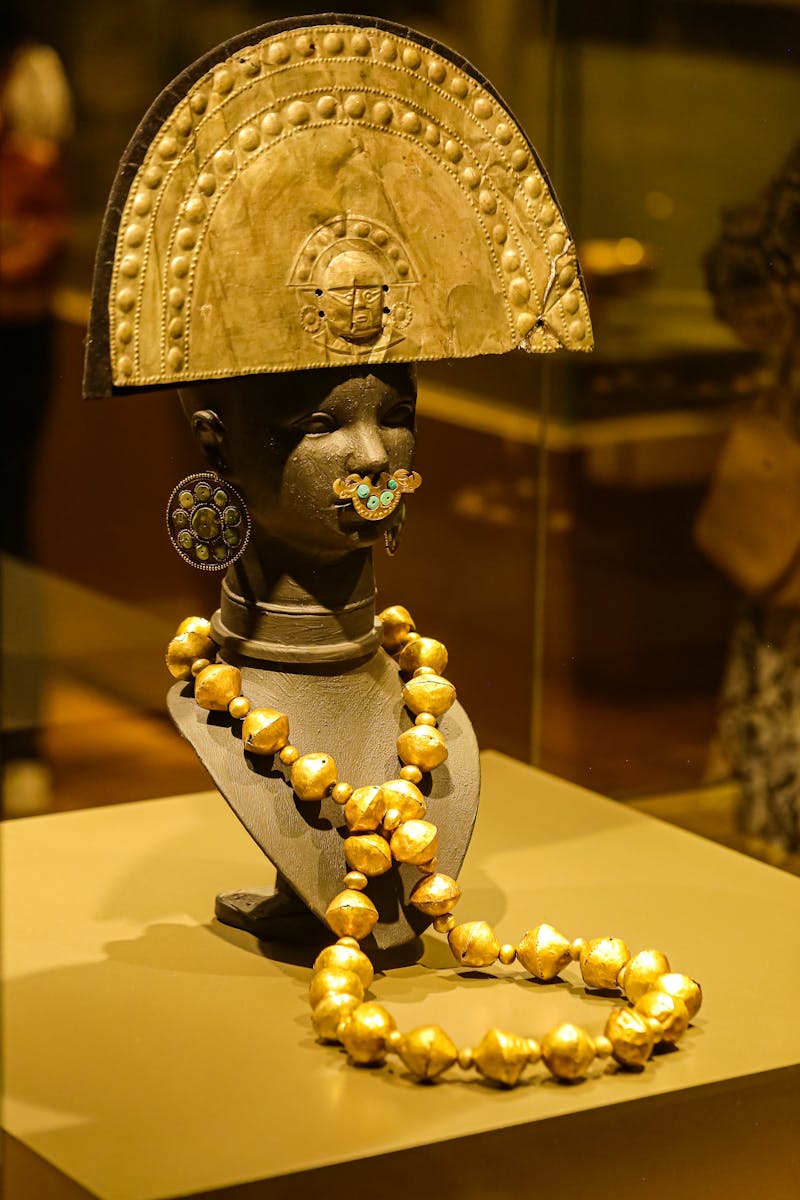
Jade held a position in Maya culture similar to gold in European cultures—it was the most precious material, reserved for royalty and the most important rituals. But the Maya valued jade not primarily for its beauty but for what it represented: water, life, and agricultural fertility. The green color of jade connected it to maize (the Maya staple crop), to young plants, and to the life-giving properties of water. Jade was, in effect, petrified life.
Maya kings were buried with jade masks, jade pectorals, and jade beads covering their bodies. The most famous example is the tomb of K'inich Janaab Pakal, the 7th-century AD ruler of Palenque, whose burial mask is made of over 200 pieces of jade mosaic. The mask wasn't decorative—it was designed to transform the dead king into the Maize God, ensuring his rebirth in the underworld. The jade wasn't a talisman; it was the material substrate of resurrection.
Obsidian had a different set of associations. The Maya associated its black, reflective surface with mirrors, and mirrors were connected to divination and prophecy. Maya shamans used obsidian mirrors to see into other realms—a practice recorded in both archaeological evidence (polished obsidian discs found in ritual contexts) and Colonial-period ethnographic accounts. The association of reflective surfaces with supernatural vision appears in multiple Mesoamerican cultures and persists in indigenous communities to this day.
The Maya also practiced a form of dental decoration that's directly relevant: they inlaid small pieces of jade, pyrite, or hematite into their teeth. This wasn't for dental health—it was purely decorative and, likely, a marker of social status. The procedure involved drilling small holes in the tooth enamel and cementing the stone inlays with a plant-based adhesive. It's one of the earliest known examples of elective body modification involving mineral materials.
What About the Vikings?
Norse beliefs about stones are less documented than those of the Mediterranean or Asian civilizations, partly because the Vikings had a primarily oral culture and left relatively few written records. What we know comes from archaeological finds, runic inscriptions, and later medieval Icelandic texts.
Amber was widely used in Viking-age Scandinavia, primarily for jewelry—beads, pendants, and gaming pieces. The Vikings controlled significant amber trade routes from the Baltic coast, and amber artifacts are among the most common finds at Viking settlement sites. There's little evidence that the Vikings attributed specific spiritual properties to amber itself; its value was primarily economic and aesthetic, though its electrostatic properties (the ability to attract light objects when rubbed) may have contributed to a sense of mystery.
Runestones—the large, inscribed standing stones that dot the Scandinavian landscape—are the most significant stone-related practice in Norse culture. These weren't jewelry, but they represent a complex belief about the power of carved words. Runestones served as memorials, territorial markers, and declarations of inheritance. The runic inscription itself was believed to carry power; in Norse mythology, the god Odin sacrificed himself to gain knowledge of the runes, and runes were associated with magic and fate. The stone was the medium, but the runes were the message.
Viking jewelry commonly incorporated stones like rock crystal, garnet, and carnelian—often imported through trade networks that reached as far as the Byzantine Empire and the Islamic world. These appear to have been valued primarily as decorative elements in brooches, arm rings, and pendants rather than as spiritually significant materials. The Norse approach to stones was generally more pragmatic than mystical, though the boundary between the two was probably blurrier than the archaeological record can capture.
So What's the Real Story?
The pattern that emerges from this survey is that ancient beliefs about stones were far more diverse, more culturally specific, and more intellectually sophisticated than the generic "crystals have energy" narrative suggests. Each civilization developed its own framework for understanding why stones mattered, and those frameworks were tightly integrated with the civilization's broader religious, medical, and philosophical systems.
The Sumerians saw stones as divine materials suitable for offerings and royal display. The Egyptians saw them as vessels for heka that needed ritual activation. The Greeks approached them with a mixture of empirical observation and mythological storytelling. The Chinese used jade as a moral metaphor and minerals as medical ingredients. The Maya treated jade as the substance of life itself. The Vikings valued amber and imported gemstones primarily for trade and decoration, while their most spiritually charged stone practice involved carved words rather than the stones themselves.
None of these traditions match modern crystal healing. Some share superficial similarities—a belief that certain stones connect to certain outcomes—but the underlying logic, the cultural context, and the specific applications are completely different. Ancient people weren't primitive crystal healers. They were sophisticated thinkers who developed complex relationships with the mineral world, and those relationships deserve to be understood on their own terms.
Comments