Vintage crystal jewelry: how to shop, spot, and style estate pieces
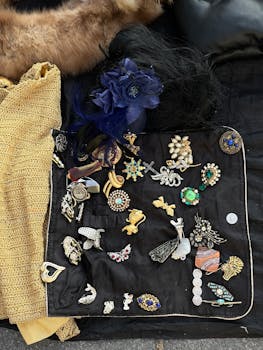
Why vintage crystal jewelry is worth your time
New crystal jewelry is fine. It is well-made, widely available, and you know exactly what you are getting. But vintage crystal jewelry has something new pieces do not: history. Someone else chose it, wore it, kept it. It survived decades of trends, moves, garage sales, and estate liquidations. Every scratch and patina mark is a record of a life lived alongside it.
There is also the design factor. Jewelry design from the 1920s through the 1970s produced some genuinely remarkable crystal pieces. Art deco geometry, mid-century organic forms, the chunky statement styles of the 1970s. These eras had distinct aesthetics that modern mass production rarely replicates with any authenticity. When you buy vintage, you are buying design that has already proven it can last.
And there is the practical angle. Vintage crystal jewelry is often better value than new pieces at the same price point. Older pieces frequently use better materials, particularly in the metalwork. A 1960s crystal brooch with a genuine rhinestone or quartz set in heavy gold-plated brass is probably going to outlast a 2024 crystal pendant set in thin gold-plate over copper. The manufacturing standards were simply different.
The downside is that shopping for vintage requires more knowledge, more patience, and more willingness to deal with imperfections. This guide covers what you need to know to do it well.
Understanding jewelry eras
Knowing roughly when a piece was made tells you a lot about its value, its construction quality, and what to look for when evaluating it. Here are the main eras you will encounter when shopping for vintage crystal jewelry.
Victorian and Edwardian (1837-1910)
Victorian jewelry is ornate, sentimental, and often features mourning motifs. Jet (a black fossilized wood), onyx, and garnet were popular stones. Crystal pieces from this era tend to be small, detailed, and set in gold or silver with elaborate filigree. Edwardian jewelry (1901-1910) is lighter and more delicate, with lots of lace-like metalwork and garland designs.
If you find genuine Victorian or Edwardian crystal jewelry, it is probably expensive. These pieces are 100-plus years old and increasingly scarce. The most common crystal stones from this period are rock crystal (clear quartz), rose quartz, amethyst, and garnet. Moonstone was also popular in late Victorian and Edwardian pieces.
Authenticity is a concern. There is a lot of reproduction Victorian jewelry on the market. Look for signs of age: uneven stone setting, slight asymmetry in the metalwork, worn edges on the setting. Perfectly uniform construction is actually a red flag for a genuine antique.
Art Deco (1920-1935)
Art deco is probably the most recognizable vintage jewelry style. Bold geometric shapes. Symmetry. Clean lines. Black and white contrasts (onyx and rock crystal were popular combinations). The aesthetic was influenced by Cubism, Egyptian art (after the 1922 discovery of King Tut's tomb), and the machine age.
Crystal pieces from this era often feature step-cut stones (emerald cut and baguette cut are the most common), geometric settings, and strong color contrasts. Rock crystal (clear quartz) was enormously popular, often carved into geometric shapes or used as a contrasting element with onyx or black enamel. Amethyst, citrine, and jade were also widely used.
Art deco crystal jewelry is collectible and can be pricey, but there is also a lot of it on the market, which means deals exist if you are patient. Brooches, dress clips, and long pendant necklaces are the most common piece types you will find.
Retro (1935-1950)
The retro era overlaps with World War II and reflects the restrictions of the time. Platinum was reserved for military use, so jewelers switched to gold (often rose gold). Stone supplies were disrupted, which led to more creative use of less expensive materials. Larger, bolder designs replaced the delicate geometry of art deco.
Crystal pieces from this era tend to be chunky and sculptural. Think big cocktail rings with large cabochon-cut stones, wide bracelets, and statement brooches. Rose quartz and citrine were popular because they were available and affordable. Rock crystal was carved into figurals (flowers, birds, animals) and used as a diamond substitute in cocktail jewelry.
Retro pieces are often undervalued because they do not have the sleek cool factor of art deco. But the craftsmanship is generally excellent, and the bold designs are actually very wearable with modern fashion.
Mid-century modern (1950-1965)
Post-war prosperity brought a return to elegance and glamour. Crystal jewelry from this period often features smaller, more delicate stones than retro pieces, with an emphasis on sparkle and femininity. Rhinestones (which are often made from glass or crystal) were at their peak popularity.
This era produced a lot of "costume" jewelry using crystal and glass stones, much of it unsigned. The quality varies wildly. High-end makers like Schiaparelli, Miriam Haskell, and Trifari produced exceptional crystal pieces. Unsigned drugstore pieces are usually not worth much, unless the design is particularly striking.
For crystal specifically, this era is known for aurora borealis finishes (a rainbow iridescent coating on crystal stones, patented by Swarovski in 1955), colored crystal beads strung into elaborate necklaces, and crystal-encrusted floral brooches.
1970s-1980s
The 1970s brought a shift toward naturalism and self-expression. Large raw crystal pendants, chunky stone rings, and layered bead necklaces were everywhere. This is the era that most closely resembles modern "boho" crystal jewelry, and a lot of pieces from this period look completely current today.
Amethyst geode slices set as pendants, rough quartz crystal points wrapped in wire, and heavy stone bead necklaces are all hallmarks of 1970s crystal jewelry. The metalwork is often heavy and somewhat crude, which actually works to the advantage of the raw stone aesthetic. Sterling silver and brass are the most common metals.
1980s crystal jewelry is bigger, bolder, and more colorful. Think oversized costume pieces with large crystal stones in vivid colors. This era is less collectible than the others, but individual pieces can be striking if they suit your style.
Where to shop for vintage crystal jewelry
Estate sales and auctions are the traditional sources, and they still offer the best selection if you have access to them. Local estate sales, particularly in areas with older populations, often have jewelry tables where you can find crystal pieces for surprisingly low prices. The catch is you need to be there early and know what you are looking at, because the good stuff goes fast.
Online marketplaces have made vintage jewelry much more accessible. Etsy has thousands of vintage crystal listings, though the quality and accuracy of descriptions varies enormously. eBay is another major source, with the advantage of auction pricing that can sometimes land you a deal. Ruby Lane is a curated marketplace for antiques and vintage, with generally higher-quality listings and higher prices to match.
Vintage jewelry shops, both physical and online, are another option. The advantage is that a knowledgeable dealer has already evaluated the piece. The disadvantage is the markup. You are paying for their expertise, which is fair, but it means the prices are higher than what you might find at an estate sale or auction.
Thrift stores and flea markets are the wildcards. Most of what you find will be junk, but occasionally a genuine piece shows up. The pricing is usually the lowest of any source. The risk is that you need enough knowledge to spot the real thing among the costume reproductions and modern "vintage-style" pieces.
How to spot real vintage from reproductions
This is the skill that separates casual vintage shoppers from serious collectors. Reproduction vintage jewelry is a massive market, and some of it is very convincing. Here is what to look for.
Patina and wear. Genuine vintage pieces show age. The metal has oxidized, the plating has worn in spots, the stone might have tiny scratches. A piece that looks brand new is either remarkably well-preserved (possible but unlikely) or a reproduction (much more likely). Look specifically at the back of the piece and the clasp area. These are the spots that wear first, and they are the hardest areas for reproducers to fake convincingly.
Construction quality. Older pieces were generally made with more substantial metalwork. The settings are thicker, the joints are soldered properly, and the findings (clasps, pin backs, ear posts) are well-constructed. Modern reproductions often cut corners on the parts that are not immediately visible. A thin, flimsy pin back or a wobbly clasp is a sign of modern manufacture.
Stone quality. Vintage crystal stones were often hand-cut or hand-faceted, which means they have slight irregularities. Modern machine-cut stones are perfectly uniform. Look at the facets under good light. If every facet is identical in size and angle, the stone is probably modern. If there is slight variation, it is more likely vintage. This is not foolproof, but it is a useful indicator.
Maker's marks. Many vintage pieces have hallmarks or maker's marks on the back. These can include the manufacturer's name or initials, a metal purity stamp (925 for sterling, 14K or 585 for gold), and sometimes a patent number. Research any marks you find. The absence of a mark does not mean a piece is fake (many unsigned pieces exist), but the presence of a verifiable mark is strong evidence of authenticity.
Screw-back earrings instead of push-back posts suggest pre-1950s manufacture. Clip-on earrings with a patented mechanism can sometimes be dated by the patent number. Fold-over clasps on necklaces are generally post-1950s. Spring-ring clasps are modern. These hardware details are small but useful dating clues.
Styling vintage crystal pieces today
The biggest mistake people make with vintage jewelry is treating it like a museum piece. They buy something beautiful, put it in a box, and save it for "somewhere special." Then somewhere special never comes, and the piece sits there for years. Wear your vintage. That is what it is for.
The key to styling vintage crystal jewelry with modern clothes is contrast. A 1920s art deco crystal brooch pinned to a modern denim jacket. A 1970s raw amethyst pendant with a simple white t-shirt. A 1950s crystal bead necklace over a turtleneck sweater. The vintage piece adds visual interest and personality to an otherwise simple outfit.
Do not try to match the era of your jewelry to the era of your clothes. 1920s jewelry does not need a flapper dress. It looks incredible with a sharp blazer and jeans. 1970s crystal pendants do not require bell-bottoms. They work with slim trousers and a fitted top. The juxtaposition is what makes it look intentional and stylish rather than costumey.
One vintage statement piece per outfit is a good rule. A bold crystal brooch OR a statement necklace OR dramatic earrings, not all three at once. The vintage piece should be the focal point. Everything else should support it, not compete with it.
Layering vintage with modern pieces works well if you keep the metals consistent. A vintage crystal pendant on a modern thin gold chain. A vintage crystal bracelet stacked with a simple modern bangle. The mix of old and new adds depth without visual chaos, as long as the metal tones align.
For formal occasions, vintage crystal jewelry is hard to beat. An art deco crystal clip on a little black dress is a timeless combination. A vintage crystal drop earring with an updo is elegant in a way that new pieces rarely achieve. There is a reason red carpet stylists regularly pull vintage pieces for their clients.
What to pay
Pricing for vintage crystal jewelry varies enormously based on the era, the maker, the materials, and the condition. Here are very rough guidelines based on current market conditions.
Signed designer pieces from major makers (Schiaparelli, Haskell, Trifari, Chanel) in good condition can range from $100 to $500 or more for crystal items. Unsigned but well-made Art Deco pieces in good condition typically sell for $50 to $200. 1970s raw crystal pendants and simple stone bead necklaces are often the most affordable, frequently under $50.
Condition affects price significantly. A piece with damage (missing stones, broken clasp, heavily worn plating) should be priced well below a comparable piece in good condition. Factor in the cost of restoration if you are considering a damaged piece. Simple repairs (replacing a clasp, restringing beads) are usually affordable. Complex repairs (resetting stones, replating metal) can cost more than the piece is worth.
Always compare prices across multiple sources before buying. The same type of piece can sell for very different prices on Etsy versus eBay versus a local antique shop. Patience pays off. The vintage market is large, and another example of the piece you want will come along if you miss the first one.
The best vintage crystal jewelry purchase is the one you actually wear. A $30 unsigned 1970s amethyst pendant that you reach for every week is a better investment than a $300 signed Art Deco brooch that sits in a drawer. Buy what you love, not what you think you should love, and everything else falls into place.
Comments