Victorian Jewelry History
I'll never forget the afternoon I wandered into a dusty antique shop on a side street in Bath, England. Tucked between a stack of tarnished silver spoons and a porcelain figurine with a chipped nose sat a brooch that stopped me mid-step. It was an oval piece, maybe two inches across, crammed with tiny woven hair under glass, surrounded by a border of black enamel and seed pearls. A snake curled around the edge, its emerald eyes catching the dim light from the shop window. I had no idea what I was looking at. The shop owner, a white-haired woman named Margaret, told me it was early Victorian, probably mourning jewelry. "Everything told a story back then," she said. "People wore their hearts on their sleeves — literally."
That brooch lit something in me. I started reading, visiting museums, and talking to collectors. What I found was a whole world of Victorian jewelry history that most people walk right past. So if you've ever stared at a piece of antique Victorian jewelry and wondered what all those snakes, flowers, and hidden compartments were about, this one's for you.
The Victorian Era: A Quick Setup (1837–1901)
Queen Victoria took the throne in 1837 at the age of 18 and ruled for over 63 years. That's a long stretch, and it matters because Victorian era jewelry didn't stay the same — it shifted dramatically across those decades, driven by the Queen's own tastes, industrial advances, and the cultural mood of the time.
Before Victoria, fine jewelry belonged mostly to royalty. But the Industrial Revolution changed that. New manufacturing techniques made production faster and cheaper, and a rising middle class in England and America suddenly wanted beautiful things. By the 1850s, jewelry wasn't just for duchesses anymore.
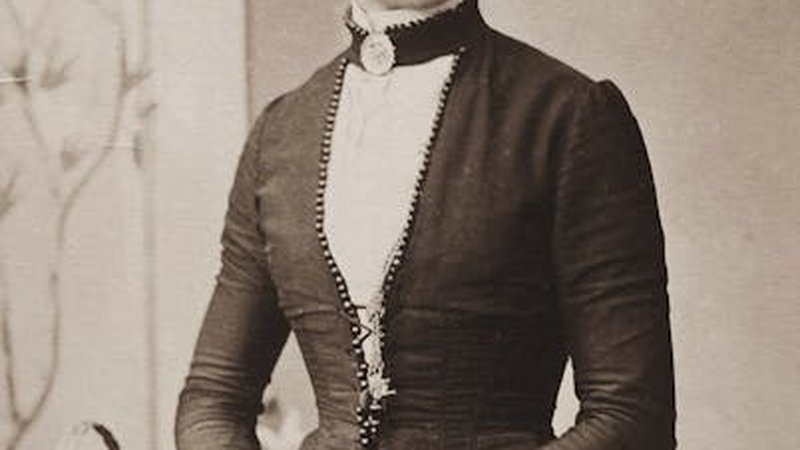
Victoria herself was a massive trendsetter. When she wore something, the whole western world wanted it. Her engagement ring from Prince Albert? A snake with an emerald head (symbolizing eternal love). Within a year, snake motifs were everywhere. When she went into deep mourning after Albert's death in 1861, the entire empire followed her into black. That's the kind of influence we're dealing with.
Three Acts: Early, Mid, and Late Victorian Jewelry
Early Victorian (1837–1860): The Romantic Period
The early years were all about romance and nature. Victoria and Albert were deeply in love, and the culture reflected it. Jewelry from this period is lush with botanical motifs — flowers, leaves, and vines rendered in gold with colorful gemstone accents.
Serpent designs were wildly popular, thanks to Victoria's engagement ring. Snakes symbolized eternity and wisdom, coiled around fingers with ruby or emerald eyes. Lockets became a staple — people kept locks of hair, tiny portraits, or handwritten notes inside. Giving someone your locket was incredibly intimate.
Color was everywhere. Yellow gold dominated, combined with garnets, turquoise, coral, and amethysts. Enamel in vivid blues, greens, and reds added depth. The overall feel was warm, optimistic, and deeply personal.
Mid Victorian (1860–1885): The Grand Period
Prince Albert died in December 1861, and the mood shifted overnight. Victoria wore black for the rest of her life, and the country followed. Mourning jewelry became the single biggest trend of the era — black enamel, jet, onyx, and gutta-percha replaced the bright colors. Lockets incorporated braided hair from the deceased. Skulls, crosses, and urns appeared in mainstream fashion.
But the Grand Period wasn't all gloom. Jewelry got bigger and bolder — heavy gold with engraved patterns, revivalist designs inspired by Egyptian and Etruscan archaeology, and elaborate matching sets. Italian micro-mosaics (tiny glass tile pictures set into brooches) peaked here too, depicting Roman ruins and classical scenes. They remain some of the most collectible Victorian pieces today.
Late Victorian (1885–1901): The Aesthetic Period
By the late 1880s, the culture was ready to lighten up. Mourning rituals loosened (Victoria herself started appearing in public again), and jewelry became more delicate, whimsical, and fun. Think smaller pieces, softer colors, and a return to nature — but in a more refined, less heavy-handed way than the early period.
Diamonds gained popularity as new South African mines increased supply. Diamond-studded "dog collar" chokers became must-have accessories. Stars, crescents, and bows replaced the heavier Gothic motifs. Pearls had their moment too — natural pearl necklaces and earrings set in white gold or silver. Even sporty jewelry appeared for the new generation of cycling and tennis-playing women. Cufflinks and stickpins came into their own as men's accessories, with ornate gold designs and gemstone centers.
Materials: What Victorian Jewelry Was Actually Made From
The materials shifted as much as the styles, and understanding what was used when is key to dating a piece.
Gold was the foundation. Early pieces used 18-karat almost exclusively; 15-karat and 9-karat became common later. A "15ct" stamp is a strong Victorian indicator — 15-karat was discontinued after 1932. Silver became prominent in the late period, especially "silver-topped gold" for diamond pieces.
Diamonds started as rare accents and became abundant by the 1880s. Old mine cut and old European cut were standard — slightly irregular, with a high crown and more fire than modern brilliants. Pearls were all natural (cultured pearls weren't viable until the 1900s). Seed pearls — tiny 2-3mm pearls — were wildly popular for borders.
Garnets, especially deep red Bohemian garnets, were a mid-century favorite, often rose-cut with foil backing. Jet, a black fossilized material from Whitby, Yorkshire, became THE mourning material. It's lightweight and warm to the touch. Beware of "French jet" — that's actually black glass.
The Secret Language: What Victorian Symbols Actually Mean
Here's where Victorian jewelry gets really interesting. Almost every design element carried a specific meaning, and people used jewelry to communicate things they couldn't say out loud.
Lockets: The Original Private Message
A locket wasn't just decorative — it was a secret keeper. Inside, you might find a lock of a lover's or child's hair, a miniature portrait, a dried flower, or a scrap of fabric. Giving someone your locket was an incredibly intimate gesture. Some lockets were designed to be opened, showing a hidden compartment visible only to the wearer. Others had glass fronts, displaying the contents to the world as a statement of devotion.
Snakes: Not Creepy, Eternal
Before Victoria made them trendy, snakes already symbolized eternity (the ouroboros — a snake eating its tail — dates back to ancient Egypt). In Victorian jewelry, coiled snakes represented everlasting love. You'll see them on rings (often wrapping around the finger twice), bracelets, and brooches. The quality of the carving matters — fine scales, detailed heads, and gem-set eyes indicate a higher-end piece.
The Language of Flowers
Floriography — the Victorian language of flowers — was a whole system where specific flowers carried specific meanings. Forget-me-nots symbolized true love (obviously). Ivy meant fidelity. Lily of the valley represented purity and the return of happiness. Acorns stood for strength and independence. Oak leaves were for endurance. If you received a brooch with a specific flower, you were meant to decode the message. A man might give a woman a forget-me-not brooch as a declaration of love, or a widow might wear ivy to show she remained faithful to her husband's memory.
Mourning Jewelry: The Dark Side
The Victorians had an elaborate mourning code. Black jewelry (jet, onyx, black enamel) meant deep mourning — typically worn for a close family member. "Half mourning" pieces incorporated white elements like pearls or ivory, signaling that the initial grieving period had passed. Hair jewelry was its own art form — human hair was woven into chains, braided into watch fobs, and set under glass in rings and brooches. It sounds macabre to modern sensibilities, but to Victorians, keeping a piece of a loved one close was the ultimate act of remembrance.
Some pieces explicitly referenced death: skulls, skeletons, hourglasses, and weeping willows. These "memento mori" designs reminded the wearer that life is fleeting. Others were more subtle — a pearl border might represent tears, or a broken column might symbolize a life cut short.
How to Spot Genuine Victorian Jewelry (and Avoid Fakes)
The antique market is full of reproduction pieces, and telling the real thing from a good fake takes practice. Here's what to look for:
Check the construction. Genuine Victorian pieces were mostly hand-finished. Look for slight asymmetries, irregular stone settings, and hand-engraved details. Machine-perfect uniformity is a red flag. The backs of brooches should show evidence of hand work — tiny tool marks, slightly uneven solder joints, or hand-filed edges.
Look at the findings. The clasp style can help date a piece. "C-clasps" (a simple C-shaped hook) were standard on Victorian brooches. "Tube hinges" — where the pin rotates on a cylindrical tube — are another strong indicator. Safety clasps (the little rotating catch that locks the pin) became common after 1900, so their absence suggests an earlier piece.
Examine the stones. Foil-backed stones (visible as a slightly discolored metallic surface behind the gem under magnification) are a good sign. Old mine cut diamonds have a distinctive look — they're slightly irregular, with a high crown and small table. Rose-cut stones (flat bottom, faceted dome top) were extremely common in the mid-Victorian period.
Check for hallmarks. British pieces from 1854 onward should have hallmarks indicating gold content, the assay office, and the date letter. A "15ct" mark is particularly telling, as mentioned. But many genuine Victorian pieces are unmarked, especially earlier ones or those made in America, where hallmarking wasn't standardized.
Feel the weight. Victorian jewelry tends to be substantial. Even small brooches have a satisfying heft to them. If a piece feels unusually light for its size, it may be a later reproduction or made from base metal with a gold wash.
Starting a Victorian Jewelry Collection: Practical Advice
If you're thinking about collecting Victorian jewelry, here are some things I wish someone had told me starting out:
Start with what you love. The Victorian era produced enormous variety. If mourning jewelry speaks to you, chase that. If botanical pieces are your thing, go there. Passion beats investment strategy every time.
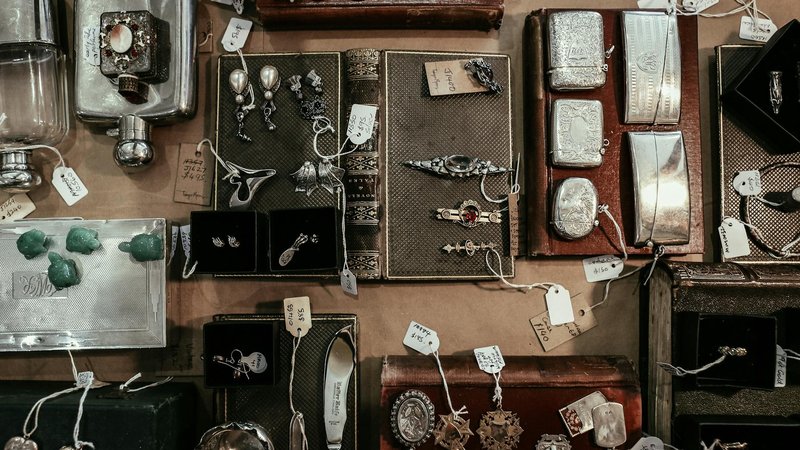
Buy from reputable dealers. The reproduction market is sophisticated. Established dealers with return policies and documentation are worth the premium. Museums like the V&A in London have incredible collections worth studying before you buy anything.
Handle everything you can. You need to develop a feel for the weight, craftsmanship, and patina of authentic Victorian work. Go to antique shows, handle genuine pieces, and train your eye.
Don't worry about perfection. These pieces are 120 to 180 years old. Minor enamel wear or a replaced pin stem is normal. Significant repairs or missing stones should affect the price, but small imperfections are part of the story.
Get a loupe and a hallmark reference. A 10x magnifier and the ability to read construction details will save you from expensive mistakes.
Why Victorian Jewelry Still Matters
I still think about that brooch in Margaret's shop. I didn't buy it — I couldn't afford it at the time, and honestly, I didn't know enough to appreciate what I was holding. But it started me down a path that's given me enormous pleasure.
Victorian jewelry matters because every piece tells a story — of love, loss, loyalty, or status. A locket with a hidden portrait. A ring with a snake promising forever. A black brooch with a widow's tears set in pearls. In an age where we communicate through texts and emojis, there's something powerful about a physical object designed to carry meaning.
These pieces connect us to people who lived 150 years ago and expressed their deepest feelings through the most intimate art form possible — something worn against their skin, close to their heart. If you're curious, start looking. Visit antique shops, browse online collections, learn the marks. Once you start seeing the symbols and hidden meanings, you won't be able to stop.
Comments