Variscite vs Turquoise: The Complete Comparison
June 3, 2026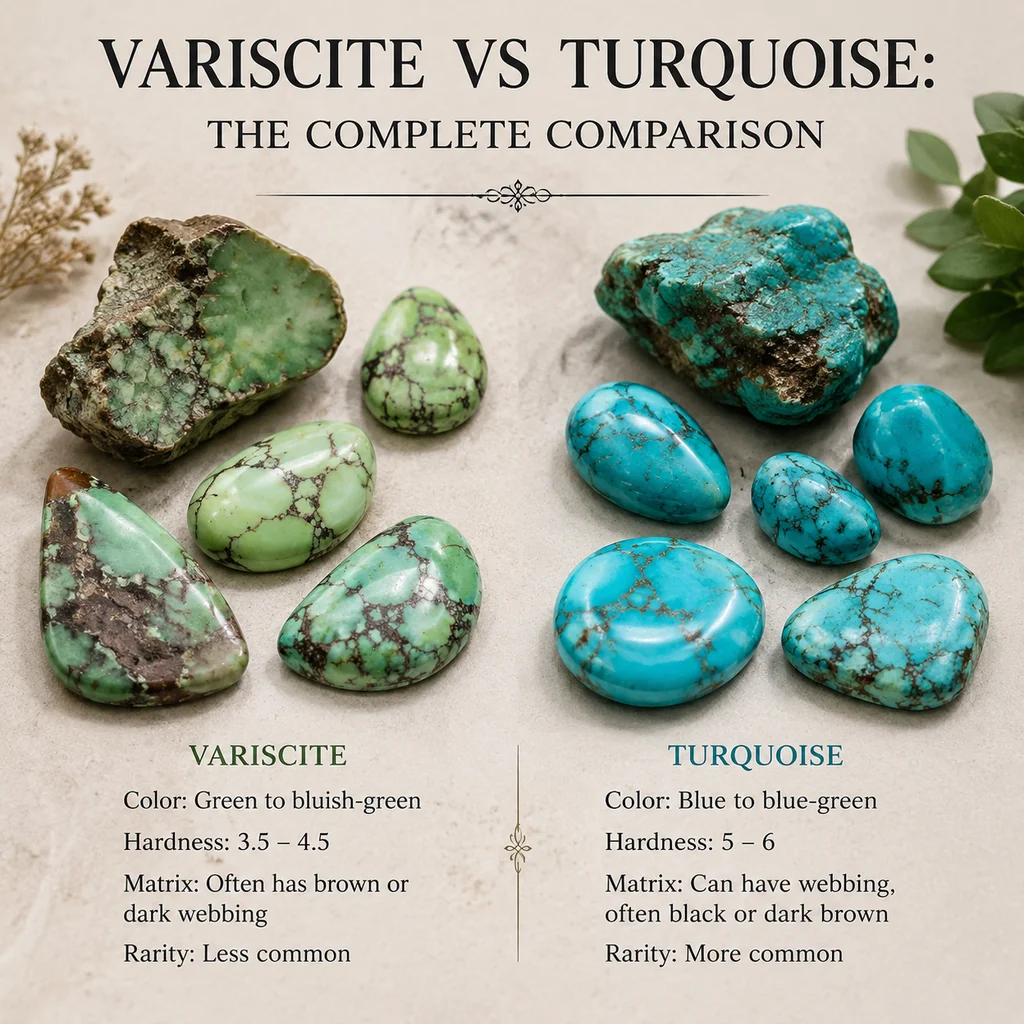
Why People Confuse Variscite and Turquoise
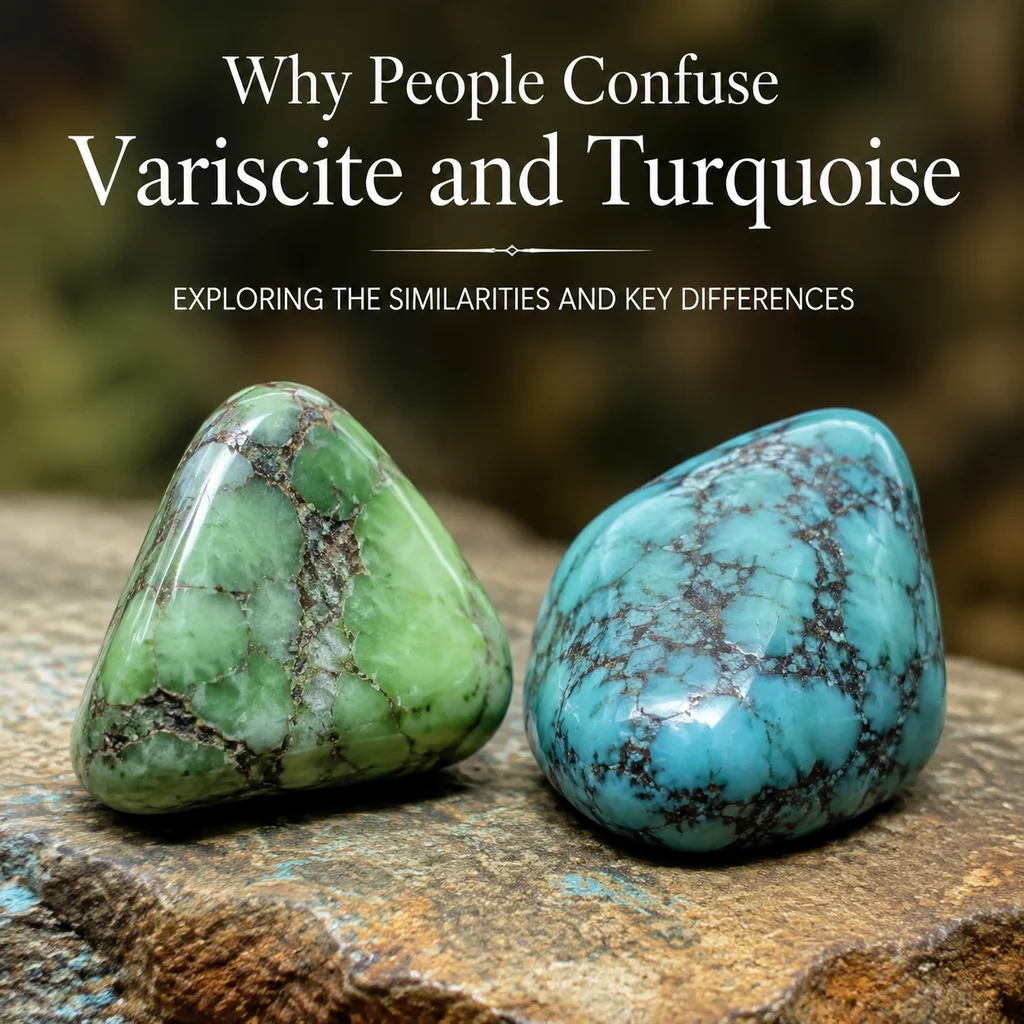
It is easy to see why variscite and turquoise get mixed up. Both are phosphate minerals that form in similar geological environments. Both range from green to blue-green. Both have been used in Native American jewelry for over a century. At a glance, an untreated variscite cabochon can look nearly identical to a turquoise one.
The confusion is so widespread that many jewelry pieces sold as "turquoise" actually contain variscite—or a mix of both minerals in the same stone. Understanding the differences matters whether you are buying jewelry, collecting specimens, or simply curious about the green stone you found.
The Chemical Difference
Despite their similar appearance, variscite and turquoise have distinct chemical formulas:
- Turquoise: CuAl₆(PO₄)₄(OH)₈·4H₂O — a hydrated copper aluminum phosphate. The copper is what gives turquoise its characteristic blue to blue-green color.
- Variscite: AlPO₄·2H₂O — a hydrated aluminum phosphate. With no copper in its structure, variscite never achieves true blue; it stays firmly in the green range.
This is the fundamental difference: the presence or absence of copper. Turquoise's blue component comes entirely from copper ions substituting into the crystal lattice. Remove the copper, and you get variscite—a mineral that is green and only green.
Color: The Easiest Way to Tell Them Apart
Color is the most reliable visual cue, though it is not foolproof on its own:
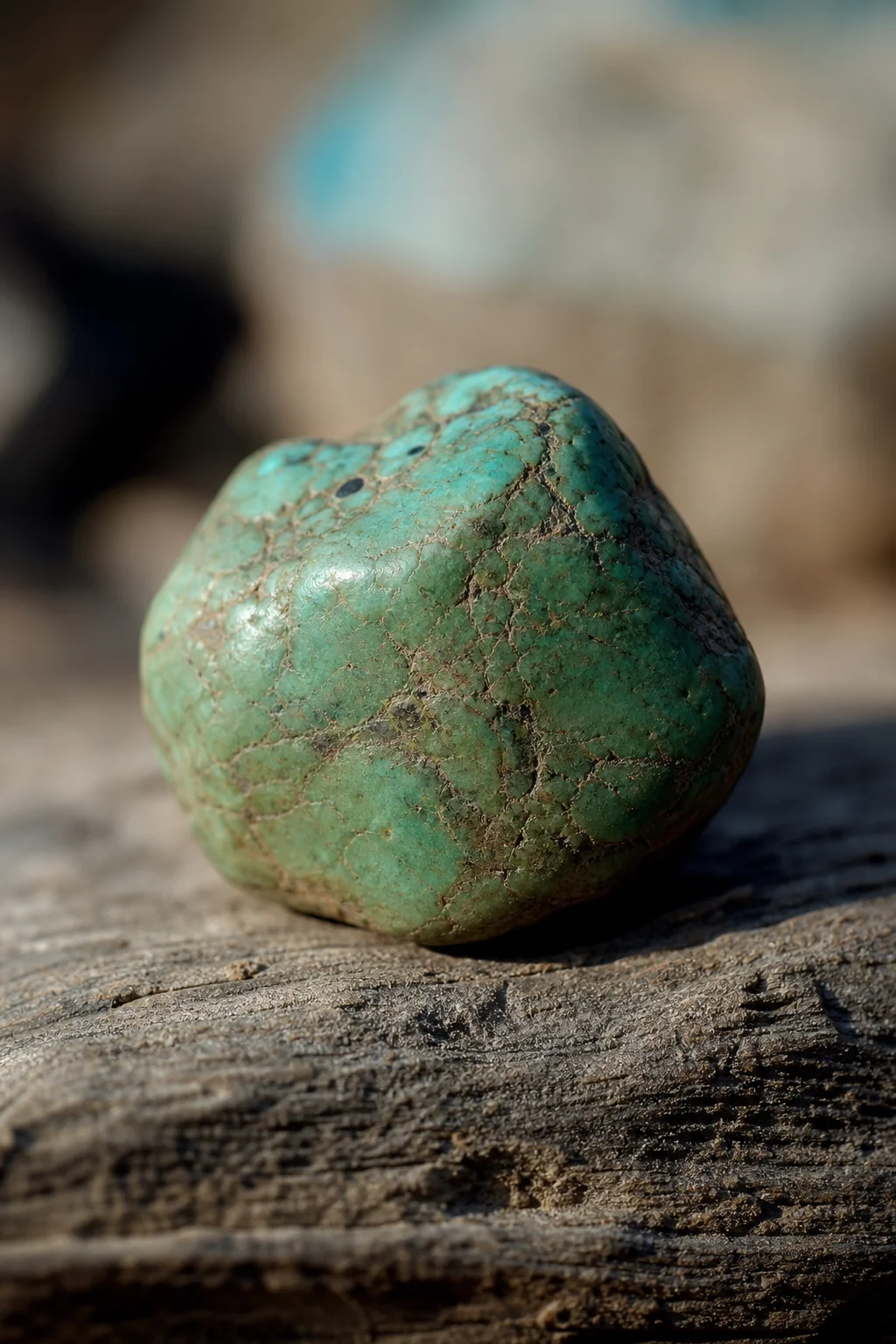
- Turquoise: Ranges from sky blue to blue-green to green. The most valued color is "robin's egg blue" with no green undertone. Greener turquoise typically has less copper or more iron replacing it.
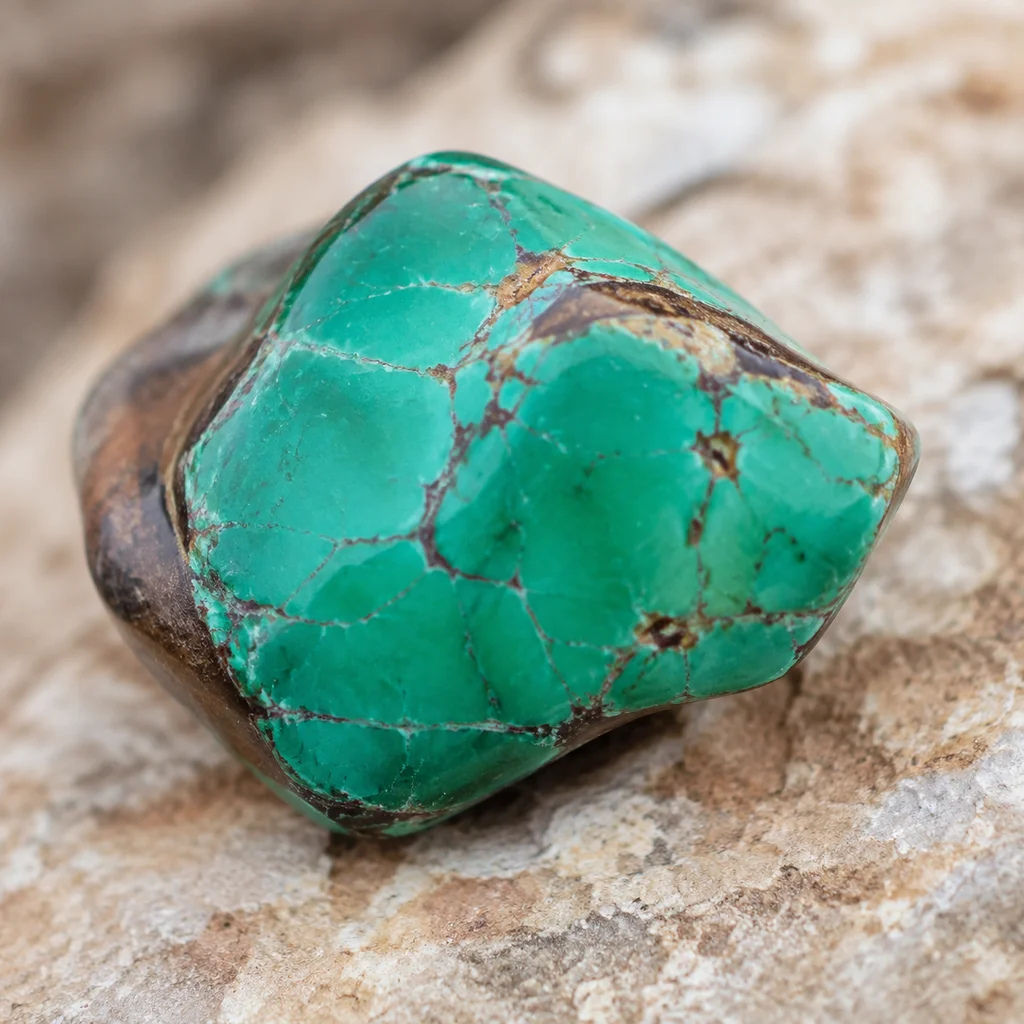
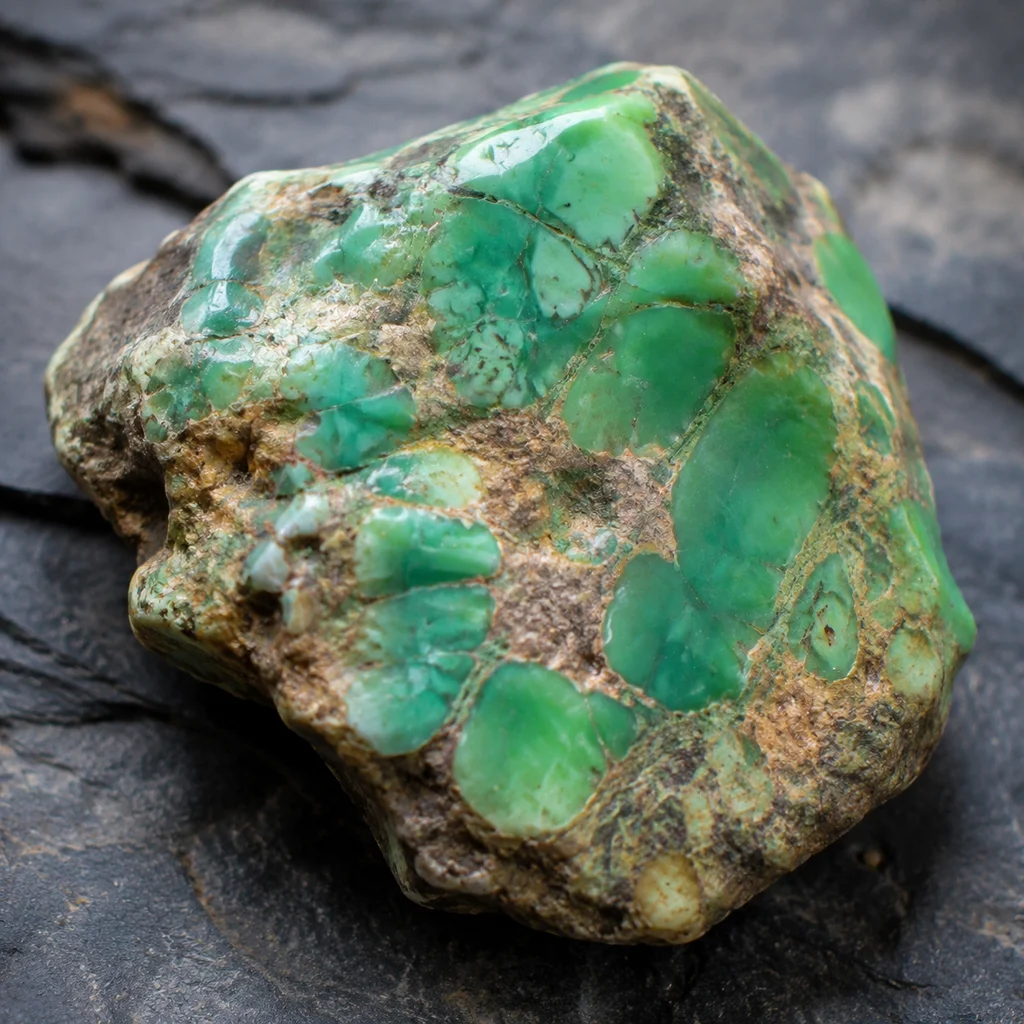
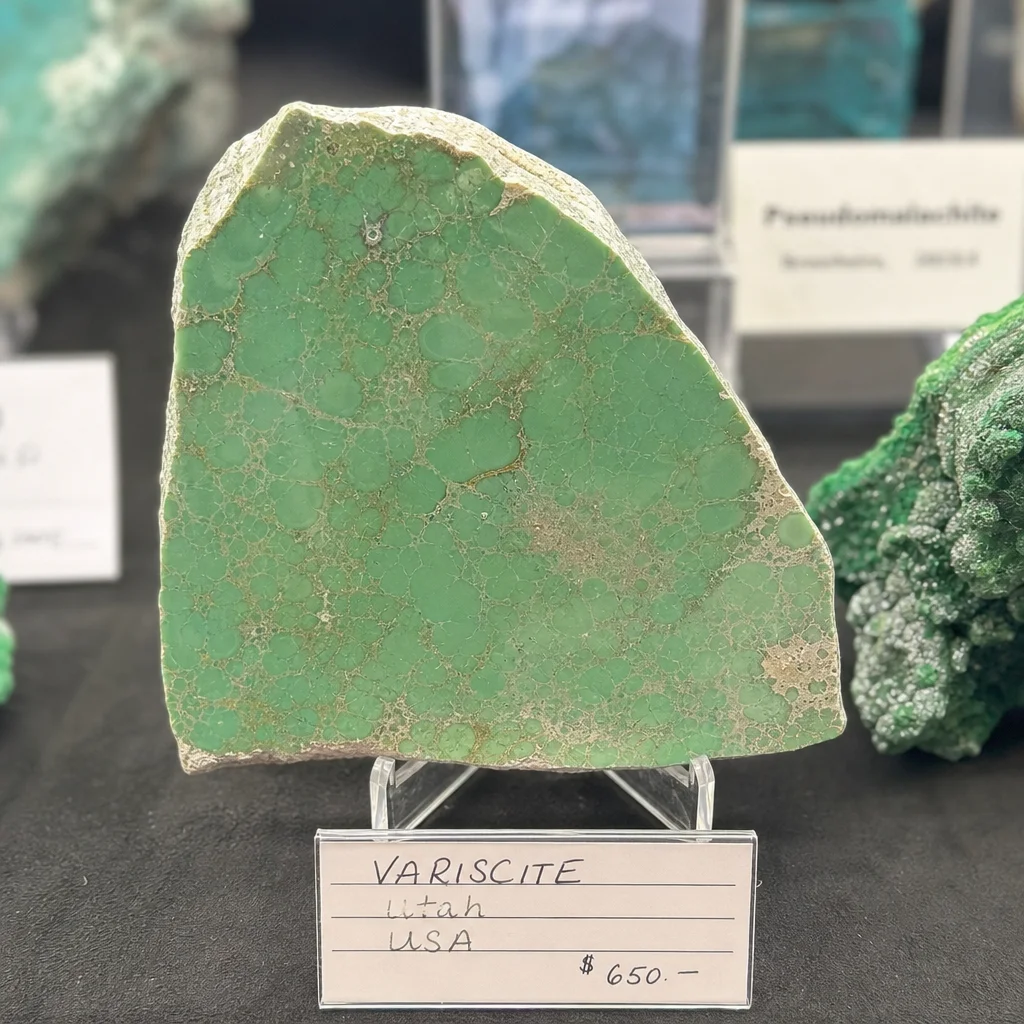
- Variscite: Always green—from pale apple green to deep, rich green to yellowish green. It never shows true blue. The green comes from trace amounts of chromium or vanadium, not copper.
If a stone shows any blue tone at all, it is turquoise (or a turquoise-impregnated material). If it is unambiguously green with no blue whatsoever, it is likely variscite. The tricky cases fall in the blue-green middle ground where both minerals can overlap.
Hardness and Durability
Hardness is another practical differentiator, especially for jewelry use:
- Turquoise: 5-6 on the Mohs scale. Moderately durable. Suitable for cabochon jewelry with protective settings. Can be scratched by harder materials like quartz but holds up reasonably well in necklaces and earrings.
- Variscite: 3.5-4.5 on the Mohs scale. Significantly softer and more porous. More susceptible to scratching, chipping, and chemical damage. Requires stabilization for most jewelry applications.
The lower hardness of variscite means it is less practical for everyday wear. Rings and bracelets made from natural variscite will show wear quickly. Most commercial variscite jewelry uses stabilized material (impregnated with resin or plastic) to improve durability.
Matrix and Inclusions
Both minerals commonly occur with matrix—the surrounding rock material that becomes part of the polished stone:
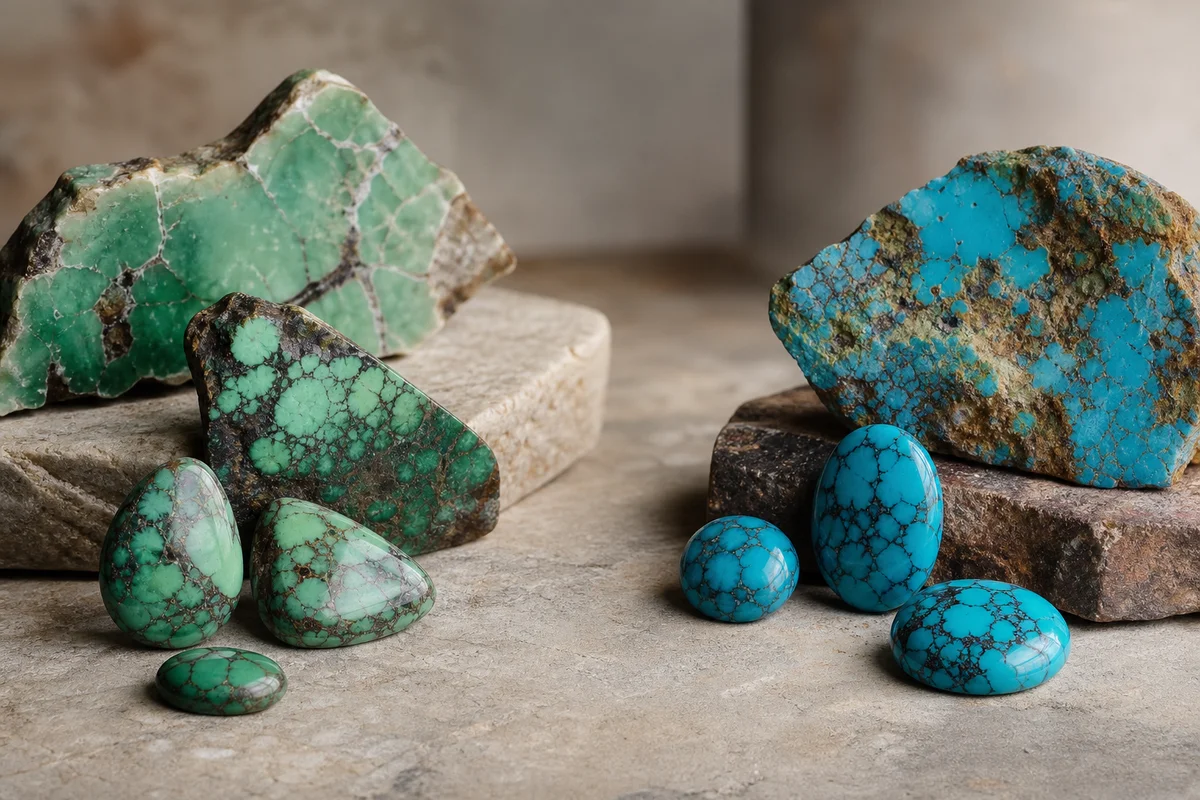
- Turquoise matrix: Often shows web-like patterns of dark brown or black veining (called "spider web turquoise," which is highly valued). The matrix is typically limonite, sandstone, or other host rock.
- Variscite matrix: Usually white, light gray, or yellowish. Less dramatic veining than turquoise. Sometimes shows a mottled or granular texture rather than sharp web patterns.
The absence of spider web veining in a green stone is a clue pointing toward variscite rather than turquoise. However, some turquoise also occurs without matrix, so this test alone is not definitive.
Where Each Is Mined
The geographic origins differ, though there is some overlap:
Turquoise Sources
- Sleeping Beauty mine (Arizona, USA): Famous for clean, sky-blue turquoise with no matrix. Closed since 2012, making specimens increasingly valuable.
- Kingman mine (Arizona, USA): Known for high-grade blue turquoise with pyrite inclusions.
- Nishapur (Iran): Historically the source of the finest turquoise in the world. Persian turquoise has been prized since antiquity.
- Hubei (China): Currently the world's largest producer. Quality ranges from excellent to low-grade stabilized material.
- Cerro Candelaria (Chile): Produces blue-green turquoise with interesting matrix patterns.
Variscite Sources
- Utah, USA: The most famous source, particularly the Lucin and Fairburn deposits. "Utah variscite" has a distinctive bright green color and is prized by collectors.
- Nevada, USA: Several deposits produce variscite alongside turquoise in the same geological formations.
- Germany: The type locality where variscite was first identified (named after Variscia, the historical name for the Vogtland region).
- Australia: Smaller deposits producing material used primarily for lapidary work.
- Brazil: Emerging source of variscite used in both specimen collecting and jewelry.
Price Comparison
Turquoise generally commands higher prices than variscite, though there is significant overlap depending on quality:
- Natural, untreated turquoise (Sleeping Beauty grade): $50-200 per carat for gem quality. Specimen-grade material can exceed this significantly.
- Stabilized turquoise: $5-30 per carat, depending on color and pattern quality.
- High-grade variscite (Utah material): $10-50 per carat for collector-grade cabochons.
- Stabilized or treated variscite: $3-15 per carat for commercial jewelry-grade material.
The price gap reflects market demand and cultural significance. Turquoise has been valued for millennia across cultures—from Egyptian pharaohs to Tibetan monks to Navajo silversmiths. Variscite, while appreciated by collectors and lapidary artists, lacks this deep cultural pedigree.
Treatment and Stabilization
Both minerals are frequently treated, and understanding these treatments is important for buyers:
- Natural (untreated): The stone is polished and set as-is. This is the most valuable form of either mineral. Most natural turquoise and variscite is too porous for jewelry without some form of treatment.
- Stabilized: The stone is impregnated with clear resin, epoxy, or plastic under pressure. This fills pores, hardens the surface, and improves durability. Stabilized material is legitimate and widely used—it just sells for less than natural material.
- Reconstituted: Crushed mineral powder is mixed with resin and formed into a solid piece. This is the lowest tier and should always be disclosed. Reconstituted turquoise is sometimes misleadingly called "block turquoise."
- Dyed: Low-grade material is dyed to enhance color. This is generally considered deceptive unless clearly disclosed. Howlite dyed blue is sometimes sold as "turquoise."
To test for stabilization, touch the surface with a hot needle. Resin or plastic will soften; natural stone will not. A UV flashlight can also help—stabilized material often fluoresces differently than natural stone.
Which Is Better for Jewelry?
The answer depends on how you plan to wear it:
- Everyday rings and bracelets: Stabilized turquoise is the better choice. Higher hardness and wider availability of quality material make it more practical for pieces that take daily wear.
- Necklaces, pendants, and earrings: Either mineral works well, as these pieces experience less contact and abrasion.
- Collector or display pieces: Natural, high-grade specimens of either mineral are equally desirable. Choose based on color preference and provenance.
- Budget-conscious buyers: Stabilized variscite offers green color at a lower price point than turquoise of comparable visual quality.
For wire-wrapping artists, both minerals work well in protective settings. Variscite's softer nature actually makes it slightly easier to shape and bezel-set, though it requires gentler handling.
How to Identify Each Mineral
A combination of visual and physical tests can distinguish these minerals:
- Color check: Any trace of blue = turquoise. Pure green only = more likely variscite.
- Hardness test: Can you scratch it with a copper coin? If yes (hardness <3.5), it is too soft for either mineral and might be a different stone entirely. Can you scratch it with a steel knife? If yes (hardness <5.5), it is likely variscite rather than turquoise.
- Matrix pattern: Spider web veining = turquoise. White mottled matrix = variscite.
- Specific gravity: Turquoise (2.6-2.8) is denser than variscite (2.0-2.5). If you have a precision scale, weigh the stone and calculate. A noticeable density difference points toward identification.
- Hot needle test: A hot needle applied to an inconspicuous spot will not affect natural stone but will melt resin in stabilized material.
For definitive identification, a gemological laboratory can perform X-ray diffraction or spectroscopic analysis. This is overkill for most collectors but necessary for high-value specimens or legal documentation.
Frequently Asked Questions
Is variscite just low-quality turquoise?
No. Variscite is a completely different mineral. It is not a lesser form of turquoise. Calling variscite "low-grade turquoise" is like calling emerald "low-grade beryl"—technically correct in terms of mineral family but misleading about quality and value.
Can variscite and turquoise form together?
Yes. In some deposits (particularly in Nevada and Utah), both minerals occur in the same host rock. Stones containing both turquoise and variscite in the same cabochon exist and are sometimes marketed as "varquoise," a trade name that should not be confused with a formal mineral species.
Is variscite a good investment?
High-grade Utah variscite has appreciated steadily as supply dwindles. It is not as liquid an investment as fine turquoise, but collector-quality pieces have doubled in price over the past decade.
Does variscite change color over time?
Natural variscite can darken slightly with exposure to skin oils and moisture, similar to turquoise. This is a slow process and is considered part of the stone's natural patina rather than damage.
Frequently Asked Questions
Which is more rare, variscite or turquoise?
While turquoise is highly sought after, high-quality variscite is actually considered much rarer in the grand scheme of the gem market. Because variscite is found in fewer locations globally and often occurs in smaller, thinner veins, finding large, pristine pieces suitable for cutting into exquisite, handcrafted SagStone jewelry is a true challenge. Its scarcity makes it a highly prized, unique addition to any artisan crystal collection.
Comments