Understanding Jewelry Hallmarks and Stamps
What a hallmark actually is
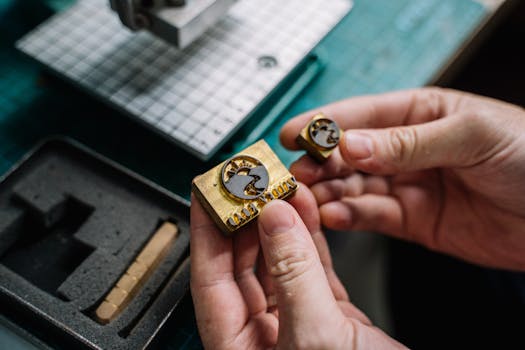
A hallmark is a tiny stamp pressed into a piece of metal jewelry. It tells you something verifiable about the piece — what metal it's made of, who made it, where it was made, and sometimes when. Think of it as a miniature birth certificate pressed into gold, silver, or platinum.
The word comes from Goldsmiths' Hall in London, where the practice started in the 1300s. King Edward I ordered that all silver items be assayed (tested for purity) and stamped at this hall before being sold. The idea caught on across Europe, and today most countries with significant jewelry industries have some form of hallmarking system.
Not every stamp you see on jewelry is a hallmark in the strict sense. A "hallmark" technically refers to an official, government-regulated stamp applied by an assay office. A "stamp" or "mark" is the broader category that includes manufacturer logos, designer initials, and purity numbers that might not carry official weight. In practice, people use the terms interchangeably, but the distinction matters if you're trying to authenticate a piece.
Purity stamps: the numbers you'll see most often
Purity stamps are the most useful marks to understand. They tell you exactly how much precious metal is in the alloy. Here are the common ones:
Gold purity marks: 24k (or 999), 22k (916 or 917), 18k (750), 14k (585 or 583), 10k (417 or 420). The three-digit numbers represent parts per thousand — so 750 means 750 parts gold per 1000, which is 75% or 18 karats.
Silver purity marks: 925 (sterling silver, 92.5% pure), 999 (fine silver, essentially pure), 800 (common in European vintage pieces, 80% silver). Sterling silver is by far the most common silver alloy in modern jewelry. Fine silver is too soft for most applications — it bends and scratches like 24k gold.
Platinum purity marks: 950 (95% platinum, the most common grade), 900 (90%), 850 (85%). Platinum is usually alloyed with other platinum-group metals like iridium, ruthenium, or palladium rather than with base metals.
Palladium marks: 950 (95% palladium, the industry standard), 500 (50%, less common). Palladium has become more popular in white jewelry since platinum prices spiked in the early 2000s.
These numbers are your first line of defense against counterfeit or misrepresented jewelry. If someone sells you a "solid gold" chain and the only mark on it is "GF" (gold filled) or "GP" (gold plated), they lied. If there's no mark at all, that doesn't mean it's fake — many handmade pieces and older jewelry lack stamps — but it does mean you'll need an acid test or XRF analysis to know for sure.
Gold plated vs. gold filled vs. solid gold: what the stamps mean
This is where people get ripped off regularly. Here's the breakdown:
GP or GEP (gold plated / gold electroplated): A thin layer of gold — often less than 1 micron thick — bonded to a base metal like brass or copper. It wears off quickly. A GP ring might show brass at the edges within months of daily wear. It has real gold on it, but functionally it's costume jewelry. The stamp might say "14K GP" which means the plating layer is 14k gold, not that the whole piece is 14k.
GF or RGP (gold filled / rolled gold plate): A much thicker layer of gold mechanically bonded to a base metal core. The gold layer must be at least 5% of the total weight by US law, and it's usually 50-100 times thicker than plating. Gold filled jewelry can last decades with reasonable care. The stamp typically reads "1/20 14K GF" meaning 1/20th of the total weight is 14k gold.
Vermeil (ver-may): Sterling silver with a thick gold plating — at least 2.5 microns of gold over 925 silver. This is a legitimate middle ground: you get the look and some of the durability of gold over a silver base. The stamp is usually "925" with additional plating information.
Solid gold: Marked with just the karat number — 14k, 18k, etc. No additional letters. If you see "14K" alone, it should mean the entire piece is 14k gold alloy.
I'd be cautious buying gold plated anything as a "gift" or "investment." Gold filled is a genuinely good option for budget-conscious buyers who still want durability. Vermeil is solid if you like the silver weight and the gold color. Solid gold is what it is — the most durable and the most expensive.
Maker's marks and designer stamps
Beyond purity, many pieces carry a maker's mark. This is the manufacturer's or designer's registered symbol — could be initials, a logo, a name, or an icon. Tiffany & Co. uses "T&Co." Cartier uses their full name. David Yurman uses "DY."
Maker's marks are useful for two reasons. First, they help you authenticate a piece. If a ring claims to be by a major designer but the maker's mark is wrong or missing, something is off. Second, they help with identification and valuation if you're buying or selling vintage jewelry. A piece with a known maker's mark is worth more than an identical unmarked piece, all else being equal.
Smaller or independent jewelers often have unique maker's marks that aren't widely documented. If you're trying to identify an obscure mark, your best bet is searching online hallmark databases or posting in jewelry identification forums. There are thousands of registered marks, and no single database covers them all.
Country of origin and assay marks
Some countries require assay office marks in addition to purity stamps. These tell you where the piece was tested and certified:
UK hallmarks are the most detailed in the world. A fully hallmarked British piece carries up to 5 marks: the sponsor's mark (maker), the standard mark (purity), the assay office mark (a symbol like a leopard's head for London, an anchor for Birmingham), the date letter (a letter corresponding to the year), and sometimes a commemorative mark. The date letter system is particularly useful for dating vintage and antique pieces — you can look up the letter in a chart and narrow down the year of manufacture.
French hallmarks include the eagle's head for 18k gold and the minerva head for silver. France has strict hallmarking laws and most genuine French pieces will carry these marks.
Italian marks often include a star-shaped maker's mark and a two-digit number representing the region of manufacture. Italian gold jewelry is usually 18k, which is the national standard.
US jewelry has no mandatory hallmarking system. The Federal Trade Commission (FTC) sets guidelines for how jewelry can be marketed, but there's no requirement that pieces carry purity stamps. This means a lot of US-made jewelry — especially older pieces and handmade items — might not have any marks at all. When marks are present, they're typically just the karat number and possibly a maker's mark.
How to check a hallmark
Most hallmarks are tiny. You'll need a jeweler's loupe (10x magnification) or at least a decent magnifying glass to read them clearly. The stamps are usually on the inside of a ring band, near the clasp of a necklace or bracelet, or on the back of a pendant.
Good lighting matters. Hold the piece under a bright desk lamp or use a small flashlight at an angle. The stamp is pressed into the metal, so the contrast between the indentation and the surrounding surface is what you're reading. Sometimes the stamp is shallow or worn, making it hard to decipher. That's normal on older pieces.
If you can't find a stamp, don't panic. Many genuine pieces are unmarked, especially antique jewelry, custom work, and pieces from countries without mandatory hallmarking. The absence of a stamp is suspicious on a "brand new" piece that claims to be solid gold, but it's not proof of fakery on its own.
For definitive answers, jewelers use acid testing (scratching a tiny hidden area and applying nitric acid — different karats react differently) or XRF (X-ray fluorescence) analysis, which reads the metal composition without damaging the piece. XRF machines cost several thousand dollars, so you'll typically pay a jeweler $20-$50 for a test.
Red flags when reading stamps
A few things should make you suspicious:
Impossible combinations: "24K GP" is nonsense. 24k gold is too soft to plate with effectively. "925 18K" is contradictory — a piece can't be both sterling silver and 18k gold (unless it's a two-tone piece, which would usually have separate marks for each metal section).
Stamps on suspicious materials: If a heavy "gold" chain has a 14K stamp but feels unusually light for its size, it might be gold-filled or plated brass with a fake stamp. Gold has a specific gravity of 19.3 — it's dense. A real 14k chain should feel heavier than a steel chain of the same size.
Perfect stamps on rough surfaces: Real hallmarks are stamped with a die press, which leaves slightly irregular impressions. A perfectly uniform, laser-perfect "14K" on a supposedly handcrafted ring might indicate a cast fake with applied marks.
Missing stamps on "new" expensive pieces: A brand new $2,000 gold ring with no purity mark whatsoever is unusual enough to warrant asking questions. Most reputable manufacturers stamp their work.
Why hallmarks matter for you as a buyer
Understanding hallmarks won't make you an expert overnight, but it will protect you from the most common scams. The basics are straightforward: know your purity numbers, understand the difference between solid, filled, and plated, and learn to read the abbreviations.
When you're shopping, always check the stamp. Ask questions if something doesn't add up. A reputable seller will explain the marks without getting defensive. A shady one will change the subject.
The best jewelry buyers I know carry a 10x loupe and aren't afraid to use it. It takes about 30 seconds to check a hallmark, and it could save you hundreds of dollars. That's a good return on thirty seconds.

Comments