Types of Pearls: Complete Guide to Every Pearl Variety
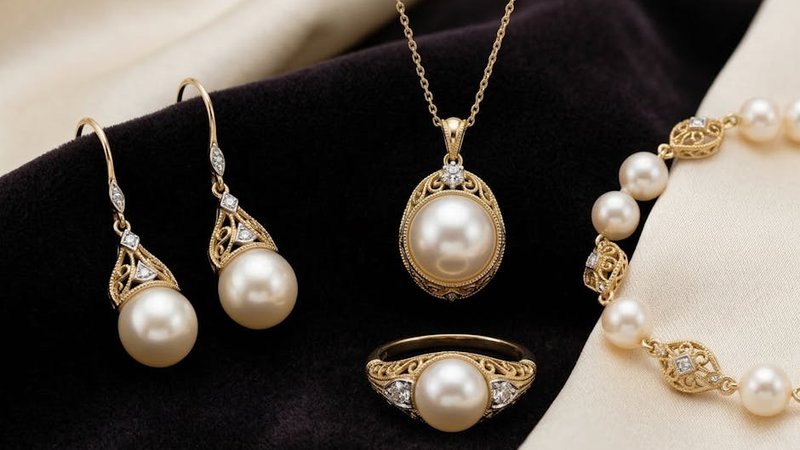
I used to think all pearls were basically the same: white, round, slightly iridescent, and the kind of thing your grandmother wore to church. That changed when I walked into a pearl shop in Hong Kong on a work trip and saw a strand of Tahitian pearls that looked like someone had captured a stormy twilight sky and turned it into jewelry. Dark silver-green, with overtones of purple and peacock blue. They were nothing like what I expected, and I've been fascinated by pearls ever since.
The pearl world is way more diverse than most people realize. Different types of pearls come from different mollusks, different environments, and different parts of the world — and they vary wildly in price, size, color, and quality. Whether you're shopping for your first pearl necklace or you're building a collection, understanding the different types of pearls will help you make smarter decisions and avoid overpaying for something that isn't what you think it is.
The Big Five: Types of Pearls You Should Know
There are five major categories of pearls that dominate the market. Each one has distinct characteristics, price points, and ideal uses.
Akoya Pearls
Origin: Japan (primarily), China, Vietnam
Mollusk: Pinctada fucata (Akoya oyster)
Size range: 2mm – 10mm (most common: 6mm – 8mm)
Colors: White, cream, with rose, silver, or blue overtones. Rarely, they produce blue or yellow-gold Akoya pearls.
Price range: $100 – $5,000+ for a necklace (depending on size and quality)
Akoya pearls are the classic pearls most people picture when they think "pearl necklace." They're the ones you see in department stores, in old Hollywood photos, and in basically every jewelry ad from the 1950s. They're known for their perfectly round shape and exceptional luster — Akoya pearls tend to have a mirror-like shine that's hard to match.
The tradeoff is size. Akoya oysters are small, so the pearls they produce are small too. Anything over 8mm is considered large for Akoya, and anything over 9mm is rare and expensive. If you want big, bold pearls, Akoya isn't your best bet.
Japan used to dominate Akoya production completely, but over the past two decades, Chinese Akoya farms have caught up significantly in quality. Some of the best-value Akoya pearls on the market right now come from Chinese farms. Don't dismiss them based on origin alone — look at the actual pearl.
Freshwater Pearls
Origin: China (over 90% of global supply), Japan, USA
Mollusk: Hyriopsis cumingii (triangle shell mussel)
Size range: 4mm – 14mm (most common: 7mm – 9mm)
Colors: White, pink, peach, lavender, and sometimes metallic or multicolored
Price range: $30 – $500+ for a necklace
Freshwater pearls are the workhorse of the pearl world. They're the most affordable type, the most widely available, and — here's the thing that surprises a lot of people — they've gotten dramatically better in quality over the past 15 years. Modern freshwater pearls from top Chinese farms can rival Akoya in luster and roundness.
The big advantage of freshwater pearls (besides price) is variety. Because freshwater mussels can produce dozens of pearls at once (unlike saltwater oysters, which typically produce one or two), farmers can experiment more. This is where you get the fun colors — lavender, peach, metallic copper — that you don't see in other pearl types.
Freshwater pearls also tend to be more durable than saltwater pearls. Their nacre (the iridescent coating) is thicker because they're cultured for longer periods. This means they're less likely to chip or wear down over time.
For everyday jewelry, freshwater pearls are honestly the best value on the market. You can get a beautiful strand for under $100 that looks like it costs five times that.
South Sea Pearls
Origin: Australia, Indonesia, Philippines, Myanmar
Mollusk: Pinctada maxima (gold-lip or silver-lip oyster)
Size range: 8mm – 20mm (most common: 10mm – 14mm)
Colors: White, silver, golden, champagne
Price range: $500 – $30,000+ for a necklace
South Sea pearls are the luxury tier. They're the largest of all commercially cultured pearls, and they have a distinctively thick, satiny luster that's different from the mirror-shine of Akoya. Think "soft glow" rather than "sharp reflection."
The golden South Sea pearls from the Philippines and Indonesia are particularly coveted. A deep, rich gold color is rare and commands premium prices. Australian South Sea pearls tend to be white or silver and are known for their clean surfaces and large sizes.
Why are they so expensive? The oysters are enormous (the size of a dinner plate), they're sensitive to their environment, the culturing process takes 2-4 years per pearl, and each oyster typically produces only one pearl. The mortality rate for the oysters is high. A lot of time, effort, and resources go into every strand.
South Sea pearls are investment-level jewelry. A high-quality strand holds its value well and can appreciate over time. They're the kind of thing you buy once and pass down.
Tahitian Pearls
Origin: French Polynesia (primarily Tahiti)
Mollusk: Pinctada margaritifera (black-lip oyster)
Size range: 8mm – 16mm (most common: 9mm – 12mm)
Colors: Black, dark gray, green, blue, peacock (green-purple), brown, and occasionally white
Price range: $200 – $10,000+ for a necklace
Tahitian pearls are famous for their dark, dramatic colors, but here's a misconception that drives pearl experts crazy: they're almost never actually black. The "black pearl" is usually dark gray, dark green, or dark blue with colorful overtones. The most valuable and sought-after color is "peacock" — a dark base color with green, purple, and blue overtones that shift as the pearl moves.
Tahitian pearls have a unique, almost metallic luster that sets them apart from every other pearl type. They photograph beautifully, and they make a statement that white pearls just can't match.
Like South Sea pearls, they're expensive because the culturing process is long (18-24 months) and the oysters produce only one or two pearls each. But compared to South Sea pearls of the same size, Tahitian pearls are often more affordable — which makes them an excellent entry point into "fine" pearls if you want something dramatic without South Sea prices.
Mabe Pearls
Origin: Japan, Australia, Indonesia
Mollusk: Pteria penguin (winged oyster) or Pinctada maxima
Size range: 10mm – 25mm (dome height: usually 4mm – 10mm)
Colors: White, cream, blue, green, peacock
Price range: $50 – $2,000+ per piece
Mabe (pronounced "mah-bay") pearls are different from all the others on this list because they're not round. They're half-pearls — dome-shaped with a flat back. They're formed when a nucleus is attached to the inside of the shell rather than being implanted in the mantle tissue.
Mabe pearls give you the appearance of a very large pearl at a fraction of the cost. A 15mm round South Sea pearl might cost thousands, but a 15mm Mabe pearl could be under $200. They're commonly used in earrings, pendants, and rings where the flat back is hidden by the setting.
The downside is durability. Mabe pearls are more fragile than round pearls because the nacre layer on the dome is thinner, and they're backed with a mother-of-pearl disc. They can delaminate or crack if knocked against a hard surface. They're gorgeous, but treat them gently.
Freshwater vs. Saltwater Pearls: What's the Difference?
This is one of the most common questions people ask, and it's a useful distinction to understand.
Freshwater pearls grow in mussels in lakes and rivers. Saltwater pearls grow in oysters in oceans and seas. The environmental difference leads to several practical differences:
Nacre thickness: Freshwater pearls are almost entirely nacre (the pearlescent material). Most saltwater pearls have a nacre coating over a bead nucleus. This makes freshwater pearls more durable in some ways, but saltwater pearls can achieve a more precise round shape because the bead nucleus acts as a template.
Price: Freshwater is significantly cheaper. A strand of high-quality 8mm freshwater pearls might cost $150, while equivalent Akoya pearls could run $400-800.
Size consistency: Saltwater pearls tend to be more uniform in size and shape because the bead nucleus controls the dimensions. Freshwater pearls are more variable — which some people actually prefer, as it gives them a more organic, unique look.
Luster: This one's close. Top-grade freshwater pearls can match Akoya luster, but the average freshwater pearl is still a step below the average Akoya. South Sea and Tahitian pearls have their own distinctive luster that doesn't directly compare.
My take? For everyday wear, freshwater pearls are the smartest buy. For special occasions or investment, go saltwater.
How to Tell Real Pearls from Fake Pearls
The market is flooded with fake pearls, and some of them are convincing. Here's how to spot the difference without any special equipment:
The tooth test: Gently rub the pearl against the edge of your front tooth. Real pearls feel slightly gritty or sandy — like rubbing fine sandpaper. Fake pearls feel smooth and slippery, like rubbing glass or plastic. This is the single most reliable at-home test.
The temperature test: Real pearls feel cool to the touch for a few seconds before warming up. Fake pearls (especially plastic ones) start at room temperature and don't change.
The weight test: Real pearls are heavier than fake ones of the same size. If a pearl feels suspiciously light, it's probably glass or plastic.
The flaw test: Real pearls are rarely perfect. If every pearl in a strand is identical in size, shape, and color with zero visible imperfections, they're likely fake (or very, very expensive). Natural variation is actually a good sign.
Drill holes: Look at the drill holes with a magnifying glass. Real pearls have clean, sharp-edged holes. Fake pearls often have chipped or rough edges around the hole, and you might see paint or coating flaking away from the hole's edge.
How to Care for Pearls
Pearls are organic gemstones, which means they're more delicate than diamonds, rubies, or sapphires. They need specific care to maintain their luster and avoid damage.
Put them on last. Pearls should be the last thing you put on and the first thing you take off. Perfume, hairspray, lotion, and makeup can all damage the nacre. Let everything dry completely before putting on pearl jewelry.
Wipe them after wearing. A soft, damp cloth is all you need. This removes body oils and residues that can dull the surface over time. Don't use commercial jewelry cleaners — most of them are too harsh for pearls.
Store them properly. Don't toss pearls into a jewelry box where they'll get scratched by harder gems. Store them in a soft cloth pouch or a silk-lined compartment. Avoid plastic bags — they can trap moisture.
Keep them away from heat and humidity. Pearls contain a small percentage of water (2-4%). Extreme dryness can cause them to crack. Excessive humidity can damage the silk thread in necklaces. A stable, moderate environment is ideal.
Restring pearl necklaces every 1-2 years. The silk thread weakens with wear, and if it breaks, you'll lose pearls. Most jewelers recommend restringing annually if you wear the necklace regularly. Knots between each pearl are standard — they prevent all the pearls from falling off if the string breaks.
Styling Tips: How to Wear Pearls Without Looking Like Your Grandmother
Pearls have an unfair reputation as "old lady jewelry." That's changing fast, but if you want to wear pearls in a modern, stylish way, here are some ideas:
Mix pearl sizes. A strand of identical pearls looks classic and traditional. A strand with graduated or randomly mixed sizes looks contemporary and intentional. Baroque (irregularly shaped) freshwater pearls are especially popular in modern designs.
Pair pearls with unexpected materials. Pearls + leather. Pearls + oxidized silver. Pearls + chain links. The contrast between the organic softness of pearls and harder, edgier materials is what's driving pearl jewelry trends right now.
Wear single statement pieces, not full sets. A pearl choker paired with pearl earrings and a pearl bracelet is a lot. One great pearl piece — a pair of Tahitian drop earrings, a single South Sea pendant, a bold freshwater pearl ring — makes more of an impact than a matched set.
Try colored pearls. Lavender freshwater pearls, golden South Sea pearls, or peacock Tahitian pearls can complement your skin tone and wardrobe in ways that white pearls can't. Colored pearls also feel more modern and less "bridal."
Buying Guide: What to Look For
When you're shopping for pearls, quality is determined by five factors (often called the "5 Gs" of pearl grading, though honestly most people just use the standard criteria):
Luster: This is the most important factor. A pearl with great luster looks like it's glowing from within. A pearl with poor luster looks chalky or flat. Always prioritize luster over size — a small, lustrous pearl looks better than a large, dull one.
Surface quality: Fewer blemishes = higher value. Tiny spots, wrinkles, and scratches are normal (and prove the pearl is real), but deep cracks, large discolored areas, or missing nacre are defects.
Shape: Round is the most valuable shape, followed by near-round, oval, button, drop, baroque, and circled. But baroque and circled pearls are having a moment in fashion right now, and they're often the best value.
Color: Color preference is subjective, but the depth and evenness of color matters. Rich, saturated colors with visible overtones are more valuable than pale or washed-out ones.
Size: Bigger is generally more expensive, all else being equal. But don't buy bigger at the expense of luster or surface quality. A perfect 7mm pearl is worth more than a mediocre 10mm one.
My advice? Set a budget first, then buy the best luster you can afford in that budget. Luster is the soul of a pearl — everything else is secondary.
Comments