The First Decision Every Crystal Beginner Faces
The First Decision Every Crystal Beginner Faces
Walk into any crystal shop or browse an online crystal store, and you'll immediately run into the question: tumbled or raw? The same stone — amethyst, rose quartz, citrine, whatever you're looking for — is available in both forms, often at very different prices. Raw crystals tend to cost more. Tumbled stones are cheaper and smoother. Which one should you start with?
The answer, like most things in the crystal world, depends on what you're trying to do. But there are real, practical differences between tumbled vs raw crystals that go beyond aesthetics, and understanding those differences will save you money and frustration as you build your collection.
What Tumbled Crystals Actually Are
Tumbled crystals are raw crystals that have been placed in a tumbling machine — basically a rotating barrel filled with grit and water — for days or weeks. The process gradually smooths and polishes the stone, removing rough edges, fractures, and surface imperfections. The result is a smooth, rounded stone that feels pleasant to hold and looks uniform and clean.
The tumbling process is the same one used to polish sea glass and make those pretty stones you see in decorative bowls at home goods stores. It's mechanical, not chemical, and it doesn't change the mineral composition of the stone. A tumbled amethyst is still amethyst — it's just been through a rock polisher.
Tumbling typically reduces the size of the original stone by 10-20%, depending on how rough it was to start with and how long it was tumbled. This means the tumbled stone you're buying started out as a larger raw piece. The cost of tumbling (equipment, grit, electricity, labor) is factored into the price, which is why tumbled stones aren't always as cheap as you'd expect relative to raw ones.
What Raw Crystals Offer That Tumbled Ones Don't
Natural crystal structure
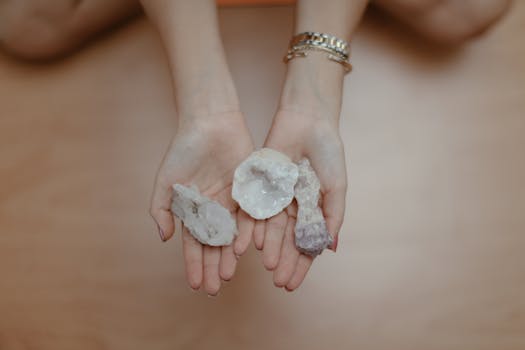
This is the biggest difference, and the one that matters most if you're interested in geology or crystallography. Raw crystals retain their natural crystal faces — the flat, geometric surfaces where the mineral grew. These faces have specific angles determined by the atomic structure of the mineral, and they're often quite beautiful in their own right.
A raw quartz point with its hexagonal cross-section and pointed termination shows you exactly how quartz grows in nature. A tumbled quartz stone is smooth and rounded and tells you nothing about how it formed. If you're interested in crystals as natural objects — as products of geological processes — raw specimens are far more interesting and educational.
Uniqueness
No two raw crystals are exactly alike. The growth patterns, inclusions, color variations, and crystal formations are different on every specimen. A raw amethyst cluster from Brazil will look different from one from Uruguay, which will look different from one from Morocco. The variation is part of the appeal.
Tumbled stones, by contrast, are intentionally uniform. The whole point of tumbling is to smooth away the unique features and create a consistent, polished product. If you buy ten tumbled rose quartz stones, they'll look almost identical. If you buy ten raw rose quartz specimens, each one will be noticeably different.
Display value
Raw crystals, especially clusters and larger specimens, make better display pieces. A geode split open with amethyst crystals lining the interior, a chunk of raw pyrite with its metallic cube formations, a piece of raw tourmaline with its striated sides — these are objects that look impressive on a shelf, a desk, or a coffee table.
Tumbled stones work better in bowls, grids, or as pocket stones. They're less visually dramatic individually but look nice in quantity. A jar of mixed tumbled stones on a windowsill catches light beautifully. A single tumbled stone sitting alone on a table looks like, well, a rock.
The Practical Advantages of Tumbled Stones
They're cheaper per piece
If you want to build a crystal collection quickly without spending a fortune, tumbled stones are the way to go. You can often buy a set of 10-20 tumbled stones for $20-40, covering a wide range of minerals. The same minerals in raw form would cost significantly more and take up more space.
For beginners who are still figuring out which crystals they're drawn to, tumbled stones are a low-cost way to explore. Buy a mixed bag, spend time with each one, figure out which ones you like, and then invest in larger raw specimens of your favorites later.
They're more durable and portable
Raw crystals have sharp edges, fragile terminations, and breakable points. Drop a raw quartz point on a tile floor and there's a good chance the tip snaps off. Put one in your pocket and it might scratch your phone, snag your clothes, or stab you when you sit down.
Tumbled stones are smooth, rounded, and tough. You can carry them in a pocket, a purse, or a bag without worrying about damage to the stone or anything else. They're better for crystal grids (where you need stable, flat-bottomed stones), better for meditation (where you might hold them for extended periods), and better for gifting (where presentation matters and a smooth, polished stone looks more "finished").
Easier to identify for beginners
Raw crystals can be hard to identify, especially when you're starting out. A rough piece of smoky quartz looks a lot like a rough piece of citrine to an untrained eye. An unremarkable chunk of calcite could be mistaken for a dozen other white minerals. Raw specimens often don't look like the photos in crystal identification guides because those photos typically show the best examples, not average specimens.
Tumbled stones are easier because they're usually labeled when you buy them, and the polishing process often reveals the true color of the stone more clearly. Raw amethyst can look brownish or grayish on the outside. Tumbled amethyst is unmistakably purple.
Cost Comparison: What Do You Actually Get for Your Money?
Let's use amethyst as an example, since it's one of the most popular crystals and available in both forms:
A tumbled amethyst stone (1-2cm, polished) typically costs $1-3. A small raw amethyst point (3-5cm, natural termination) typically costs $5-15. A raw amethyst cluster (10-15cm, multiple crystal points) typically costs $25-80, depending on quality and origin.
Per gram, tumbled stones are usually the most economical option. But per visual impact and per educational value, raw specimens offer more. It depends on what you're optimizing for.
One thing to watch out for: some sellers charge premium prices for raw crystals that are actually low-quality specimens with broken terminations, poor color, or significant damage. A raw crystal isn't automatically better than a tumbled one just because it's raw. Learn to evaluate quality in both forms before spending significant money.
What Works Best for Specific Uses
For meditation and mindfulness practices, tumbled stones are generally better — they're comfortable to hold, smooth against the skin, and the repetitive tactile sensation of a polished stone can be grounding. A raw crystal with sharp edges is distracting when you're trying to focus inward.
For home decor and display, raw crystals win. A large geode, a dramatic crystal cluster, or a well-formed single point makes a statement that tumbled stones simply can't match. Raw specimens become conversation pieces; tumbled stones become background elements.
For crystal grids (arranging stones in specific patterns), tumbled stones are more practical because they sit flat and stable. Raw crystals with uneven bottoms are frustrating to work with in grid layouts. Some people use raw points as the center stone of a grid and tumbled stones for the surrounding positions, which is a good compromise.
For gifting, consider the recipient. An experienced crystal collector will probably appreciate a raw specimen more. A complete beginner might feel overwhelmed by a raw crystal and prefer the accessible, friendly feel of a tumbled stone. Children should always get tumbled stones — raw crystals can have sharp edges and small, detachable pieces that are a choking hazard.
The Honest Answer for Beginners
If you're just getting started with crystals, buy tumbled stones first. Start with a small set of 5-10 stones covering the minerals you're most curious about. Learn what you like — the colors, the textures, the way different stones feel in your hand. Use them, carry them, put them on your desk, give them as small gifts.
Once you've developed preferences — and you will — invest in a few raw specimens of the stones you're most drawn to. A good raw specimen is a long-term purchase that you'll keep for years, maybe decades. There's no rush. Crystal collecting is a slow, enjoyable process, and starting with tumbled stones lets you figure out your taste without spending hundreds of dollars on raw specimens you might not end up caring about.
The debate between tumbled vs raw crystals isn't really a debate. Both have their place, and most collectors end up with both. The question isn't which is better — it's which is better for what you're doing right now. Start with what works for your budget and your experience level, and let your collection grow from there.
Comments