Tiger's Eye Stone Meaning, Properties, and Uses
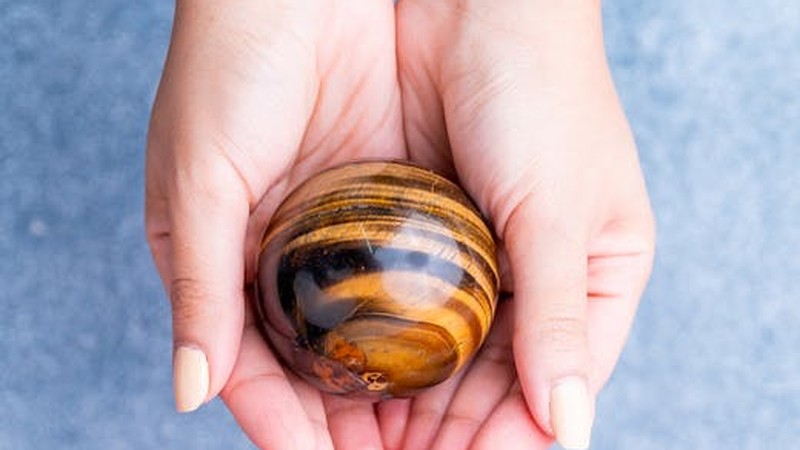
I wasn't even looking for crystals that day. A friend dragged me to a gem and mineral show on a rainy Saturday afternoon, and I was mostly just trying to avoid stepping on people's feet in the crowded aisles. Then I saw it — a polished stone about the size of a golf ball, golden brown with bands of lighter amber running through it. I picked it up and tilted it under the display light, and something shifted inside. The bands seemed to move. Not literally, of course, but there was this silky, living quality to the light playing across the surface, like a cat's eye following you. I bought it for $8 and carried it home in my jacket pocket like a treasure.
That was my first tiger's eye stone. Since then, I've learned a lot about what it is, what it's said to do, and how people around the world have used it for centuries. Here's everything I've picked up along the way.
What Is Tiger's Eye, Exactly?
Tiger's eye is a member of the quartz family, which means it's fundamentally silicon dioxide — the same stuff that makes up regular quartz, amethyst, and citrine. But it has a secret origin story that gives it that incredible chatoyant effect (that's the gemological term for the "cat's eye" shimmer).
Millions of years ago, crocidolite — a blue asbestos mineral — formed thin fibrous veins inside quartz. Over geological time, those asbestos fibers were gradually replaced by quartz and iron oxides while maintaining their fibrous structure. The iron is what gives tiger's eye its golden-brown color. When you cut and polish the stone parallel to those fibers, light bounces off them in a concentrated band, creating that signature silky glow that seems to float just below the surface.
The main sources of tiger's eye are South Africa (especially the Northern Cape province) and Western Australia, though smaller deposits exist in India, Brazil, and the United States. South African tiger's eye tends to have richer, more saturated golden tones, while Australian material often shows more muted, earthy browns. Both are beautiful — they just have different personalities.
There's also a blue variety called hawk's eye, which forms when the crocidolite fibers aren't fully replaced by iron oxides, keeping some of the original blue color. And pietersite — sometimes called "the tempest stone" — is a rarer cousin with swirling, chaotic patterns of both blue and gold.
Meaning and Symbolism: Why People Have Loved This Stone for Centuries
Tiger's eye has been valued across cultures for a very long time. Roman soldiers carried it into battle, believing the stone would give them courage and protect them from harm. The golden bands were thought to resemble a tiger's stare — fierce, focused, and unblinking. In ancient Egypt, it was associated with the all-seeing eye of Ra and was often placed in statues of deities.
The common thread across most traditions is courage and confidence. Tiger's eye is almost universally described as a stone of personal power. Not aggressive, dominating power — more like the quiet, steady kind of confidence that lets you walk into a difficult situation without flinching. Think of it as the difference between shouting and speaking calmly in a room full of noise. That calm assurance is the energy tiger's eye is associated with.
It's also connected to balance and grounding. The interplay of golden and brown tones represents a harmony between solar energy (action, drive, warmth) and earth energy (stability, patience, practicality). People who work with crystals often describe tiger's eye as a bridge between the lower chakras (root and sacral) and the solar plexus chakra, helping you stay connected to your goals while staying rooted in reality.
Healing Properties: What Crystal Practitioners Say
Before diving in, I want to be straightforward: there is no scientific evidence that crystals have healing properties. The benefits people report are largely attributed to the placebo effect, mindfulness practices, and the psychological comfort of having a focused ritual. That said, the traditional associations of tiger's eye in crystal healing are well-documented and consistently described across different traditions.
Confidence and Self-Worth
Tiger's eye is most commonly associated with boosting self-confidence. Practitioners recommend it for people going through transitions — starting a new job, ending a relationship, moving to a new city — anything that requires you to trust yourself in unfamiliar territory. The idea is that holding or wearing the stone serves as a physical reminder of your own inner strength.
Decision-Making and Mental Clarity
When you're stuck in analysis paralysis, tiger's eye is often suggested as a companion stone. It's said to help cut through mental fog and see situations clearly, including the parts you might be avoiding. Some practitioners describe it as helping you see "both sides" of a situation without getting emotionally pulled in either direction.
Fear and Anxiety Relief
The grounding quality of tiger's eye makes it a popular choice for people dealing with anxiety. Rather than eliminating fear (which isn't realistic), it's described as helping you sit with fear without being controlled by it. Think of it as a psychological anchor — something tangible to hold onto when your thoughts start spinning.
Prosperity and Motivation
In many crystal traditions, tiger's eye is considered a stone of abundance. Not in a "magic money" way, but in the sense of promoting the mindset that attracts opportunity: determination, persistence, and the willingness to take calculated risks. It's often recommended for entrepreneurs and freelancers who need sustained motivation over long projects.
How to Use Tiger's Eye in Daily Life
Wearing It
The most popular way to work with tiger's eye is wearing it as jewelry. Bracelets are probably the most common — they keep the stone in direct contact with your skin and your energy field throughout the day. Pendants worn at heart level are another favorite, especially for emotional balance. Rings are less common but striking, particularly with larger cabochons that show off the chatoyancy.
A common recommendation in crystal traditions is to wear tiger's eye on your left side (left wrist, left hand) to "receive" its energy. This comes from the idea that the left side of the body is the receiving side and the right is the giving side. If that framework doesn't resonate with you, wear it wherever it feels comfortable — there are no rules here.
Meditation
For meditation, tiger's eye can be held in your hands or placed on your body. The traditional placement is on the solar plexus — the area just above your navel — since this is the energy center associated with personal power and confidence. Some people like to hold one in each hand for a sense of balance, or place one at the solar plexus and another at the root (base of the spine) for grounding.
A simple practice: sit quietly, hold the stone, and set an intention. Something like "I trust my judgment" or "I act with clarity and courage." Let the weight and texture of the stone keep you anchored in the present moment. Even five minutes of this can be surprisingly centering.
At Your Desk or Workspace
Placing a tiger's eye stone on your desk is a popular practice among people who work in high-pressure environments. The idea is that it promotes focus, helps with decision-making under pressure, and provides a subtle boost of confidence during meetings or presentations. I keep a small polished piece next to my monitor, and honestly, even if it's just psychological, having a physical object to glance at during a stressful moment does help me reset.
Crystal Grids and Altars
If you work with crystal grids, tiger's eye is a versatile addition. Its energy is considered both protective and activating, so it works well in grids focused on goals, motivation, or protection. On a personal altar, a tiger's eye stone can serve as a focal point for confidence-related intentions or as a grounding anchor when you're working with more intense or emotional stones.
Crystal Pairings: What Works Well With Tiger's Eye
One of the fun things about working with crystals is experimenting with combinations. Here are some pairings that practitioners commonly recommend:
Tiger's Eye + Black Obsidian
This is a powerful grounding combination. Black obsidian is strongly protective and can help absorb negative energy, while tiger's eye provides confidence and direction. Together, they're often recommended for people going through challenging transitions or dealing with difficult people. Obsidian handles the protection; tiger's eye handles the forward momentum.
Tiger's Eye + Citrine
Citrine is known as the "merchant's stone" and is associated with abundance, creativity, and joy. Paired with tiger's eye, it's said to amplify prosperity energy and motivation. This combination is popular with small business owners and creatives who need both the drive to keep going and the optimism to believe it'll work out.
Tiger's Eye + Rose Quartz
This is a beautiful balance pairing. Tiger's eye brings strength and action; rose quartz brings softness and emotional openness. Together, they create an energy of "strong but kind" — confidence that isn't aggressive, boundaries that aren't harsh. It's a good combination for relationships, parenting, or any situation where you need to be assertive without losing your warmth.
Tiger's Eye + Clear Quartz
Clear quartz is considered an amplifier in crystal work — it's said to enhance the properties of any stone it's paired with. Combining it with tiger's eye can intensify the confidence and clarity effects. Some people use this pairing when they need an extra boost for a big presentation, interview, or difficult conversation.
Cleaning and Caring for Your Tiger's Eye
Tiger's eye is relatively durable (6.5–7 on the Mohs hardness scale), but it still needs proper care to keep looking its best.
Water cleansing is the simplest method. Hold your stone under running water — tap water is fine — for about 30 seconds while visualizing any accumulated negativity washing away. Pat it dry with a soft cloth.
Moonlight cleansing is gentler and preferred by many crystal enthusiasts. Place your stone on a windowsill or outside during a full moon and leave it overnight. No direct sunlight needed — just the ambient moonlight. This method is especially popular for stones used in emotional or spiritual work.
What to avoid: Don't use ultrasonic cleaners on tiger's eye. The internal fibrous structure can be damaged by intense ultrasonic vibrations. Avoid prolonged exposure to direct sunlight, which can fade the golden color over time. And don't use harsh chemicals or household cleaners — warm water and mild soap are all you need if the stone gets dirty.
For polishing, a soft jewelry cloth is usually sufficient. If the stone has become dull over time, a quick buff with a jewelry polishing compound made for quartz can restore the shine. Store it separately from harder stones like diamond or sapphire to prevent scratching.
How to Choose a Quality Tiger's Eye Stone
If you're shopping for tiger's eye, whether for collection, jewelry, or metaphysical use, here's what to look for:
Chatoyancy quality. This is the whole point of tiger's eye. Tilt the stone under a single light source and watch for that silky band of light moving across the surface. The sharper and more defined the band, the higher the quality. In premium stones, the effect is almost three-dimensional — it looks like a real eye following you. In lower quality pieces, the effect is faint or blurry.
Color consistency. Look for rich, even golden-brown tones. Stones with muddy, grey, or uneven coloration are lower quality. That said, some natural color variation is normal and can be beautiful — just make sure it looks intentional rather than muddled.
Polish quality. A well-polished tiger's eye should be smooth and glossy with no visible scratches, pits, or dull spots. The chatoyancy effect is dramatically better on a well-polished surface, so this matters more than you'd think.
Size and shape. For meditation, I recommend something that fits comfortably in your palm — roughly 1.5 to 2.5 inches. For jewelry, cabochons between 8mm and 20mm work well depending on the piece. Tumbled stones are great for beginners since they're affordable and durable.
Trust your gut. This sounds woo-woo, but in the crystal world, people consistently say to choose the stone that "calls" to you. If you're looking at five tiger's eye pieces and one keeps drawing your eye back, that's probably the one. Even from a purely aesthetic standpoint, you'll enjoy wearing or displaying a stone you genuinely find beautiful more than one you bought because it scored highest on some quality checklist.
Final Thoughts
That $8 stone I bought at the gem show is still sitting on my desk. It's not the most valuable piece in my collection, not by a long shot. But it's the one that started everything — the first time I felt that pull toward a stone that seemed alive in my hands. If you've never held a good piece of tiger's eye, find one and tilt it under the light. Watch the golden band drift across the surface like something breathing just beneath the stone's skin. Whether you're into crystal healing or just appreciate beautiful natural objects, it's hard not to be moved by it.
And if you're shopping for tiger's eye jewelry, skip the mass-produced mall stuff and find a handmade seller who actually knows what they're working with. The difference in stone quality and chatoyancy is night and day, and you'll end up with something worth keeping for years.

Comments