<h2>The Surprising History of Lapis Lazuli, from Egyptian Pharaohs to Renaissance Painters</h2>
What Lapis Lazuli Actually Is
Before diving into the history, a quick geological note that matters: lapis lazuli is not a single mineral. It's a rock, a mixture of several minerals compressed together over millions of years. The primary component is lazurite, which gives lapis its characteristic blue color. Calcite (white) and pyrite (gold-colored metallic flecks) are the other main ingredients, which is why most lapis has white streaks and gold specks running through it. The finest grade, called "Afghan lapis" or "lapis lazuli AAA," has minimal calcite and a deep, uniform blue with just enough pyrite to catch the light.
This matters historically because the quality of lapis varies significantly by source, and the best material has always come from one place: Afghanistan.
Ancient Egypt: The Stone of the Gods
The ancient Egyptians were obsessed with lapis lazuli, and for good reason. In a desert landscape dominated by sand, ochre, and limestone, a stone this blue was extraordinary. Blue was associated with the Nile, the sky, and the divine. Lapis wasn't just decorative; it was sacred.
Chemical analysis of cosmetic jars found in Egyptian tombs has confirmed that Cleopatra used finely ground lapis lazuli as eye shadow. The deep blue pigment, known to the Egyptians as "khesbed," was applied around the eyes not just for beauty but as a cultural and spiritual practice. The practice was widespread among Egyptian elites, not unique to Cleopatra, though her association with it has made it one of the more famous examples.
Scarab amulets carved from lapis were common in Egyptian burials. The scarab beetle held deep cultural significance as a symbol of rebirth and transformation, and carving these amulets from lapis linked that symbolism to the stone's associations with the night sky and the afterlife. Tutankhamun's famous burial mask contains lapis lazuli inlays around the eyes and eyebrows, set into strips of gold. The contrast between the deep blue stone and the polished gold is still striking after three thousand years.
Egyptian artisans used lapis for jewelry, amulets, inlays in furniture and statues, and pigments. But they didn't mine it themselves. The nearest source of lapis lazuli was thousands of miles away, in the mountains of what is now northeastern Afghanistan. The stone made its way to Egypt through complex trade networks that spanned the ancient Near East, which tells you something about how valuable it was: people were moving heavy rock across deserts and mountains thousands of years before the Silk Road was formally established.
Mesopotamia: Lapis and the Gods
The Sumerians, who built one of the world's earliest civilizations in what is now southern Iraq, considered lapis lazuli the stone of the gods. The Epic of Gilgamesh, one of the oldest surviving works of literature (dating to roughly 2100 BCE), references lapis lazuli in descriptions of divine objects and sacred spaces. In the Sumerian worldview, the gods' possessions were made from the finest materials, and lapis was near the top of that list.
Lapis lazuli was used extensively in Mesopotamian art and ritual objects. Cylinder seals, which were used to roll impressions onto clay tablets as a form of signature and document authentication, were carved from lapis. These small, intricately detailed cylinders are some of the finest examples of ancient miniature carving. Having your seal made from lapis was a status statement: it said you were wealthy, connected to trade networks, and important enough to warrant the expense.
The Standard of Ur, a famous Sumerian artifact from around 2500 BCE, incorporates lapis lazuli in its mosaic inlays. The stone was clearly reserved for objects of the highest cultural and political significance.
The Silk Road and the Price of Blue
For most of human history, virtually all of the world's lapis lazuli came from a single mine in the Kokcha River valley of Badakhshan province, Afghanistan. This mine, known as Sar-e-Sang, has been in continuous operation for approximately 6,000 years. That's not a typo. The same geological deposit that supplied ancient Egypt and Mesopotamia is still producing lapis today, and it still accounts for the vast majority of the world's supply.
Getting lapis from Afghanistan to Europe was an enormous undertaking before modern transportation. The stone traveled along the Silk Road, passing through Persia, across Central Asia, through the Byzantine Empire, and eventually into Mediterranean trading ports. Every middleman along the way took a cut, and by the time lapis reached European markets, its price had multiplied many times over.
This wasn't just a matter of commerce. The difficulty of obtaining lapis contributed to its mystique. The fact that the stone came from a remote, dangerous location and passed through so many hands before arriving made it feel rare and precious in a way that locally available materials couldn't match.
Ultramarine: The Most Expensive Paint in History
Here's where the lapis lazuli story takes a turn that most people don't know about. The most valuable use of lapis in European history wasn't for jewelry or decoration at all. It was for paint.
Starting around the 12th century, European artists began grinding high-quality lapis lazuli into a pigment called ultramarine. The process was labor-intensive: the rock had to be crushed, ground to a fine powder, and then repeatedly washed with a lye solution to separate the blue lazurite particles from the white calcite and other impurities. The pure blue fraction that remained was mixed with a binding medium (usually linseed oil or egg tempera) to create the paint.
The yield was terrible. It took roughly 2 to 4 ounces of high-quality lapis lazuli to produce 1 ounce of pure ultramarine pigment. Given the cost of the raw material and the labor involved, ultramarine was, by weight, more expensive than gold during the late Middle Ages and Renaissance. In 14th-century Europe, ultramarine sold for around $100 per gram (in modern equivalent purchasing power), while gold was roughly $30 per gram.
This had real consequences for art. Ultramarine was so expensive that it was typically specified separately in painting contracts. A patron commissioning an altarpiece would stipulate in the contract exactly how much ultramarine the artist was allowed to use and where it could be applied. The Virgin Mary's robes were the standard use, because the deep, saturated blue of ultramarine was considered the most appropriate color for depicting her.
Michelangelo couldn't afford ultramarine for some of his early works. He used azurite instead, a copper-based mineral that produces a similar but less intense blue. Azurite was cheaper but had drawbacks: it tended to shift toward green over time and was less lightfast. Many Renaissance paintings that were originally bright blue have turned greenish because of azurite degradation.
Johannes Vermeer, working in the Dutch Republic in the 17th century, used ultramarine lavishly. His painting "Girl with a Pearl Earring" features a blue turban that was almost certainly painted with ultramarine. Vermeer's patron, Pieter van Ruijven, was wealthy enough to supply him with expensive pigments, and Vermeer used ultramarine not just for clothing but as an underpainting layer that gives his work a subtle luminosity that's hard to replicate with cheaper blues.
The End of Natural Ultramarine
In 1828, a French chemist named Jean-Baptiste Guimet synthesized ultramarine pigment in his laboratory. He wasn't the only one working on it (the German chemist Christian Gmelin produced a similar synthetic version around the same time), but Guimet's process was more commercially viable, and his name became associated with the invention.
Synthetic ultramarine, sometimes called "French ultramarine," is chemically identical to the natural pigment derived from lapis lazuli. It produces the same deep blue color, it's completely stable and lightfast, and it costs a fraction of the price. Within a few decades of its introduction, synthetic ultramarine had almost entirely replaced the natural version in painting.
This was devastating for the natural lapis pigment trade. For centuries, the entire economic rationale for mining the finest grades of lapis lazuli was the pigment market. When synthetic ultramarine made that market irrelevant, the mining operations in Afghanistan lost their primary customer. The industry survived by pivoting to the gemstone and ornamental stone markets, which it still serves today.
Lapis Lazuli Today
The Sar-e-Sang mine in Afghanistan still produces an estimated 95% of the world's lapis lazuli. The political situation in the region has periodically disrupted mining operations, and the stone is sometimes cited as a conflict mineral, though the situation is complex and not directly comparable to diamonds or coltan. Other sources exist (Chile, Russia, and a few smaller deposits), but Afghan lapis remains the standard for quality.
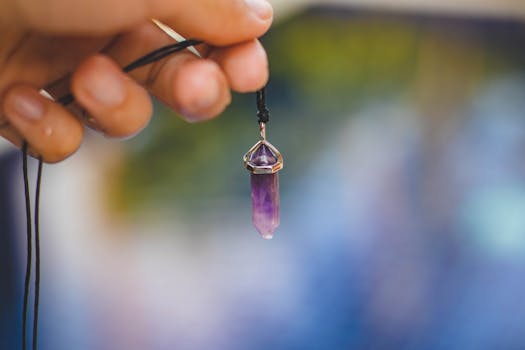
In the gemstone market, lapis lazuli is used for cabochons, beads, carvings, and inlay work. The finest specimens, with deep uniform blue and minimal calcite veining, command high prices. Lower grades with more white calcite or duller blue are used for decorative objects and affordable jewelry. Lapis is relatively soft (5-6 on the Mohs scale), so it's better suited for earrings, pendants, and occasional-wear rings than for everyday pieces that take a lot of abuse.
The story of lapis lazuli is, in some ways, the story of how humans assign value to beautiful things. It started as a sacred stone in ancient burial chambers, became a status symbol for Mesopotamian scribes, turned into the most expensive paint material in European history, and ended up as a gemstone you can buy online. The rock itself hasn't changed in 6,000 years. Only our relationship to it has.
Why This Stone Still Captures People
Part of lapis lazuli's enduring appeal is simply the color. Deep blue with flecks of gold is a combination that doesn't occur naturally in many materials, and it catches the eye in a way that's hard to ignore. But there's also something compelling about the continuity: the same stone that Cleopatra ground for eye shadow, that Vermeer painted with, that Sumerian scribes pressed into clay tablets, is the same stone sitting on a jeweler's display table today. That kind of continuity across millennia is rare, and it gives lapis a weight of history that most gemstones simply don't have.

Comments