The Ring That Started My Obsession
The Ring That Started My Obsession
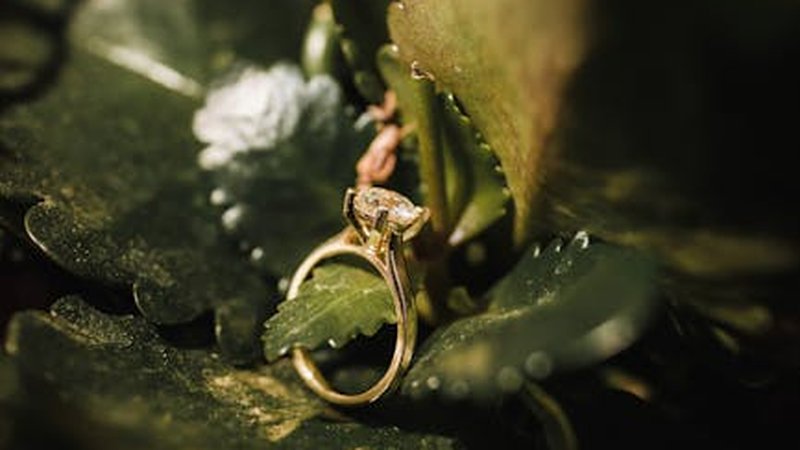
Last summer, my grandmother handed me a small velvet box I'd never seen before. Inside sat a delicate gold band with a tiny sapphire flanked by two chips of diamond — the engagement ring my grandfather gave her in 1953. She told me the story of how he'd saved for six months working double shifts at a steel mill, how her mother almost fainted when she saw it, and how the sapphire was chosen because diamonds were "too showy" for their working-class neighborhood in Pittsburgh.
I couldn't stop thinking about it. Not just the romance of the story, but the question underneath: why do we give rings at all? Who decided a circle of metal meant "I want to marry you"? And how did diamonds — those tiny compressed carbon crystals — become the universal symbol of love and commitment?
What I found sent me down a rabbit hole spanning two thousand years, multiple continents, and one of the most brilliant marketing campaigns in human history. Here's what I learned about the history of engagement rings.
Ancient Rome: Iron Rings and the Vow of Ownership
The earliest recorded tradition of giving rings to symbolize a marriage commitment comes from ancient Rome, around the 2nd century BC. But these weren't the sparkly symbols of eternal love you'd imagine. Roman men gave their betrothed women fede rings — simple bands made of iron, not gold or silver.
The word "fede" comes from the Latin phrase "mani in fede," which roughly translates to "hands in faith" or "hands in pledge." The ring was less about love and more about a legal contract. By accepting the ring, a woman was publicly acknowledging that she was promised to a man. In many ways, it functioned as a visible marker of ownership — a symbol that she was spoken for.
Iron was chosen deliberately. It was durable, practical, and symbolized strength and permanence — qualities the Romans valued in a marriage contract. Some Roman rings featured two hands clasped together (the dextarum junctio motif), which directly represented the joining of two lives in agreement. This imagery would echo through ring designs for centuries to come.
The Middle Ages: Gemstones Enter the Picture
As the Roman Empire gave way to the medieval period, engagement ring traditions evolved along with everything else. By the 13th and 14th centuries, the Church had formalized marriage as a sacrament, and the rituals around betrothal became more elaborate.
Posy rings became enormously popular throughout Europe during this time. These were simple gold or silver bands inscribed with short poetic phrases — "posies" — on the inside. A typical inscription might read something like "Love conquers all" or "I have found the one my soul loves." The idea was that only the wearer and her beloved would know the words pressed against her skin, making the ring a private, intimate promise.
Gemstones started making their way into engagement rings during the medieval period, though not in the way we think of today. Colored stones were the norm — rubies symbolized passion, sapphires represented the heavens and divine favor, and emeralds stood for hope and fertility. Diamonds existed, but they were incredibly rare and mostly valued for their supposed mystical properties rather than their beauty. Medieval people believed diamonds could ward off evil, cure illness, and even grant strength in battle.
1477: The First Diamond Engagement Ring
Everything changed in 1477, and it all started with an Austrian archduke who was absolutely desperate to impress a woman.
Archduke Maximilian of Austria wanted to marry Mary of Burgundy, and he needed to make his proposal unforgettable. Mary was one of the most eligible women in Europe — young, wealthy, and heir to the powerful Duchy of Burgundy. Maximilian's advisors suggested something unprecedented: instead of a traditional gemstone ring, he should present her with a ring featuring diamonds arranged in the shape of the letter "M."
The ring cost Maximilian a small fortune. Diamonds were extraordinarily difficult to cut and polish with the tools available in the 15th century, and the craftsmanship required to set them in an "M" shape was cutting-edge for the era. But the gamble paid off. Mary accepted the proposal, and the diamond engagement ring was born.
What's interesting is that this didn't immediately start a global trend. For the next several hundred years, diamonds remained the choice of royalty and the ultra-wealthy. Ordinary people still gave simpler rings with colored stones, plain bands, or nothing at all. The diamond engagement ring was a luxury status symbol, not a universal expectation.
The 1870s: Diamonds From South Africa Change Everything
The real turning point was geological, not romantic. In the 1870s, massive diamond deposits were discovered near the Orange River in South Africa, flooding the market. A young British businessman named Cecil Rhodes saw an opportunity: control the supply, control the price. He bought up mines across South Africa and in 1888 founded De Beers Consolidated Mines, which by the early 1900s controlled roughly 90% of global diamond production.
But controlling supply was only half the battle. The real challenge was creating demand — convincing ordinary people they needed diamond engagement rings.
1947: "A Diamond Is Forever" — The Marketing Campaign That Rewrote Human Tradition
In the 1930s, diamond sales were struggling. The Great Depression had crushed demand, and De Beers needed a way to convince ordinary Americans that diamonds were an essential purchase — not just a luxury for the wealthy.
They hired a Philadelphia advertising agency called N.W. Ayer & Son, and the team there came up with what many marketing scholars consider the most successful advertising campaign of the 20th century. The copywriter was a woman named Frances Gerety, and in 1947, she wrote four words that would reshape global culture: "A Diamond Is Forever."
The genius of this slogan was multi-layered. First, it positioned diamonds as the only acceptable symbol of eternal love — because diamonds, unlike other stones, were "forever." Second, it implicitly discouraged the resale of diamonds. If a diamond is forever, you don't sell it, you pass it down. This kept secondary market diamonds out of circulation, protecting De Beers' control over supply and pricing.
The campaign was relentless. De Beers placed diamond engagement rings in movies, had Hollywood actresses wear them in photographs, wrote articles for women's magazines about "how to choose a diamond," and even developed the "two months' salary" guideline that suggested a man should spend the equivalent of two months of his income on a ring. (That guideline wasn't based on any tradition or research — it was pure marketing fiction.)
The results were staggering. In 1939, only about 10% of engagement rings in America contained diamonds. By the end of the 1950s, that number had risen to over 80%. By the 1990s, it was virtually universal. De Beers didn't just sell diamonds — they invented a tradition and convinced billions of people that it was ancient and unbreakable.
Engagement Ring Traditions Around the World
While the diamond engagement ring became the dominant tradition in Western countries, engagement ring customs around the world tell a much richer and more diverse story.
Asia: Rubies, Sapphires, and Red Gold
In many Asian cultures, diamonds aren't the default choice. In India, where some of the world's earliest diamond mining occurred, colored gemstones have historically been preferred for engagement and wedding jewelry. Rubies are especially popular because red symbolizes prosperity, passion, and good fortune. Many Indian brides receive rings or other jewelry featuring rubies, emeralds, or a combination of precious stones based on astrological recommendations.
In China, gold has traditionally been the metal of choice — the character for gold (金) sounds similar to the character for stability. While younger couples increasingly choose diamond rings influenced by global media, gold remains deeply significant, especially for the groom's family, who traditionally gift gold to the bride.
Nordic Countries: Silver and History
Scandinavian countries have their own rich engagement ring traditions. In Norway and Sweden, it's historically been common for both the bride and groom to wear engagement rings — a practice that predates the modern "his and hers" trend by centuries. Silver was often the metal of choice, and many traditional Nordic engagement rings featured intricate filigree work inspired by Viking-age jewelry designs.
Ireland: The Claddagh Ring
Perhaps the most distinctive engagement ring tradition comes from Ireland in the form of the Claddagh ring. This ring features two hands clasping a heart, topped with a crown. Each element carries meaning: the hands represent friendship, the heart represents love, and the crown represents loyalty.
The Claddagh ring originated in Galway, Ireland, in the 17th century. Legend credits goldsmith Richard Joyce with creating it after being captured by pirates, sold into slavery, and trained as a goldsmith. When freed years later, he returned to Galway and created the ring as a tribute to the love he'd carried during his captivity.
How you wear a Claddagh communicates your status: right hand, heart outward = single; right hand, heart inward = in a relationship; left hand, heart outward = engaged; left hand, heart inward = married. It's one of the few rings that functions as a built-in status indicator.
Modern Trends: Breaking the Diamond Mold
In the 21st century, the engagement ring landscape is changing rapidly, and the changes are driven by a mix of economics, ethics, and shifting values.
Lab-Grown Diamonds
Lab-grown diamonds — chemically and physically identical to mined diamonds — have gone from niche to mainstream. They cost 30-70% less and sidestep concerns about mining practices and conflict diamonds. For most couples, there's no visible difference, even to most jewelers without specialized equipment.
Colored Gemstones and Alternative Stones
Colored gemstones are experiencing a major renaissance. Sapphires have always had devotees — Princess Diana's ring helped keep them in the public eye — but moissanite (brilliance that exceeds diamonds at a fraction of the cost) and morganite (warm peach-pink) are gaining fast. Some couples choose stones with personal meaning: sea glass from where they met, a rough crystal, or a shared birthstone.
Non-Traditional Rings
Perhaps the most radical shift: some couples opt for simple engraved bands, wooden rings, silicone rings, tattooed rings, or no ring at all. The idea that an engagement "must" involve a diamond is losing its grip, replaced by a more personal approach to symbolizing commitment.
What Really Matters
After months of reading about engagement ring history, I have a much deeper appreciation for my grandmother's little sapphire ring. It's not worth much by market standards — the sapphire is small, the diamonds are chips, the gold is thin from decades of daily wear. But it represents something that no marketing campaign could manufacture: a real promise made by a real person to another real person.
The history of engagement rings is fascinating because it reveals how much of what we consider "tradition" is actually the result of specific historical accidents, economic forces, and advertising genius. The Romans used iron. Medieval Europeans exchanged poetic inscriptions. Maximilian used diamonds to impress a duchess. De Beers convinced the world that diamonds equal love. And now, in 2026, couples are free to choose whatever feels right — whether that's a diamond, a sapphire, a wooden band, or no ring at all.
There's no wrong answer. The only thing that's always been true, across two thousand years and countless cultures, is that the ring is a symbol. The love it represents is the real thing. Everything else is just metal and stone.
Comments