Sunstone: the gem with actual glitter inside it
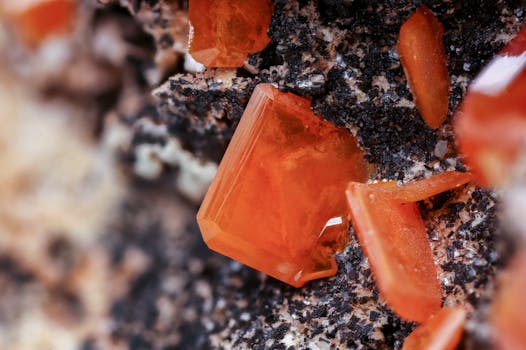
Most gemstones are valued for their color. Ruby is red, emerald is green, sapphire is blue. You pick the color you like, you find a stone with that color in a quality you can afford, done. Sunstone breaks that pattern. Yes, it has color — warm oranges, reds, and sometimes greens — but the real selling point is what happens when you move it under a light. Tiny metallic inclusions inside the stone catch the light and flash, creating a glittering, sparkling effect that is built into the gem itself. No coatings, no treatments, no tricks. The stone literally has glitter growing inside it.
What sunstone actually is
Sunstone belongs to the feldspar family, which makes it a close relative of moonstone, labradorite, and amazonite. Feldspars are the most abundant minerals in the Earth's crust, making up roughly 41% of the continental crust by weight. Most feldspar is industrial — it goes into ceramics, glassmaking, and construction materials. But a small fraction of feldspar has the right combination of clarity, color, and internal inclusions to be cut into gemstones.
The glittery effect in sunstone has a proper gemological name: aventurescence. It is caused by tiny, flat, reflective inclusions of a metallic mineral — usually copper, hematite, or goethite — that are distributed throughout the feldspar crystal. When light enters the stone, these plate-like inclusions reflect it back in a sparkling pattern. Move the stone, and the sparkles shift. Tilt it, and different inclusions catch the light. The effect is dynamic and eye-catching in a way that static color alone cannot match.
The word "aventurescence" comes from the Italian "a ventura," meaning "by chance," which refers to the accidental discovery of aventurine glass (a man-made material with a similar effect) by Venetian glassmakers in the 17th century. The natural version in sunstone predates that by, well, forever, but the name stuck. Sunstone is the gemological poster child for aventurescence, even though aventurine quartz and a few other materials also display the effect.
Oregon sunstone vs Indian sunstone
Not all sunstone is created equal. The two most important sources are Oregon in the United States and southern India, and the material from each location is noticeably different.
Oregon sunstone is the one that gets gemologists excited. The inclusions in Oregon material are native copper, and the copper does something interesting beyond just creating sparkle — it also colors the stone. Oregon sunstone ranges from colorless and transparent (with just copper sparkle) through pale yellow, peach, and orange, to deep red and occasionally green. Some stones are bicolored, showing both red and green in the same crystal. The transparent to translucent material is hard enough and clean enough that it can be faceted into brilliant-cut gems, which is unusual for feldspar. A well-cut Oregon sunstone with strong copper aventurescence and good color is a genuinely impressive gemstone that can hold its own against much more expensive stones.
The primary mining area in Oregon is in the Lake County region of south-central Oregon, specifically around Plush, Oregon. There are several commercial operations and also public collecting areas where rockhounds can dig for sunstone themselves. The US Bureau of Land Management has designated a specific sunstone collection area, and for a modest fee, anyone can go dig. Most of what amateur collectors find is small and included, but occasionally someone pulls out a real beauty. The commercial mines produce larger volumes of higher-quality material, including the transparent red and green stones that are most valuable.
Indian sunstone is a different animal entirely. The inclusions are hematite or goethite rather than copper, which gives the aventurescence a different character — more of a warm, reddish-orange flash rather than the sharper, more metallic sparkle of copper-bearing sunstone. Indian sunstone is typically opaque to translucent, often a deep orange-brown body color, and it almost always gets cut as cabochons or carved into beads rather than faceted. The quality range is wide, and the price is generally much lower than Oregon material. Indian sunstone is the stuff you see in affordable bead jewelry and mass-market gemstone products.
There are other sources — sunstone also comes from Norway, Tanzania, Russia, and a few other locations — but Oregon and India dominate the commercial market. Norwegian sunstone is interesting because some of it shows both aventurescence and a subtle color-change effect, but the supply is limited and not widely available in the retail market.
The color range explained
The colors in sunstone come from two sources: the feldspar itself and the inclusions. In Oregon sunstone, copper inclusions are responsible for both the color and the sparkle. More copper means deeper color. Trace amounts give you colorless stones with sparkle. A bit more gives you pale yellow or champagne. More still gives you orange. High concentrations produce deep red, and under very specific conditions, the same copper inclusions can produce green through a quirk of light absorption. The green Oregon sunstones are particularly prized because they are uncommon and the color is unusual for feldspar.
In Indian sunstone, the body color is mostly from iron in the feldspar itself, and the inclusions (hematite and goethite) provide the sparkle but contribute less to the overall color. That is why Indian material tends to cluster in the orange-brown range rather than spanning the full spectrum that Oregon material does.
Practical properties for jewelry
Sunstone has a hardness of 6 to 6.5 on the Mohs scale. That puts it in the same general neighborhood as opal (5.5-6.5) and tanzanite (6-7), and well below the 7+ hardness that jewelers consider ideal for everyday wear. What this means in practice: sunstone jewelry will hold up reasonably well if treated with normal care, but it is not the best choice for a ring that you wear every day while doing manual work.
The cleavage of feldspar is another consideration. Feldspar has two directions of perfect cleavage, which means it can split along specific crystal planes if struck hard enough. This is not usually a problem with well-set jewelry, but it is something to be aware of if you are planning to wear a sunstone ring during activities that involve impacts. Pendants and earrings are safer choices, as usual.
Transparency is a big differentiator for Oregon sunstone. The transparent material can be faceted, which opens up design possibilities that opaque stones do not offer. A faceted Oregon sunstone with good copper schiller (the technical term for the aventurescent effect) is genuinely striking — it has the brilliance of a faceted gem combined with the internal sparkle of aventurescence. These faceted stones are the most expensive form of sunstone and the most sought after by collectors.
Cabochons are the standard cut for opaque and translucent material, and this includes most Indian sunstone and the more included Oregon material. A well-cut cabochon with strong aventurescence can be very attractive, especially in larger sizes where the sparkle effect is more dramatic. Beads are common for the lower grades and for Indian material, and sunstone beads have a warm, friendly look that works well in casual and bohemian jewelry designs.
What sunstone costs
Sunstone is, in general, an affordable gemstone. This is one of its most appealing qualities. You do not need to spend hundreds of dollars per carat to get something nice.
Indian sunstone cabochons and beads are the least expensive option. Small cabochons (under 5 carats) in standard orange-brown colors typically sell for $3 to $10 per carat. Bead strands are similarly affordable. This is the material for budget-conscious buyers who want the sunstone look without spending much.
Mid-range Oregon sunstone — translucent orange or peach material with moderate aventurescence — usually runs $15 to $50 per carat for cabochons and $30 to $80 per carat for faceted stones, depending on size, color intensity, and sparkle quality. This is the sweet spot for most buyers: genuine Oregon material with visible copper schiller and attractive color at a price that is not unreasonable.
Top-grade Oregon sunstone — transparent red or green stones with strong aventurescence, cut as faceted gems — is where prices get serious. Fine red Oregon sunstone can sell for $100 to $300 per carat, with exceptional stones going higher. The green material, because it is rarer, can command even higher prices. A 5-carat faceted red Oregon sunstone with strong schiller could easily cost $500 to $1,500, and the very best specimens have sold for significantly more. These are collector-grade gems, not everyday jewelry material.
Why sunstone deserves more attention
Here is the thing about sunstone: it has everything going for it and yet remains relatively obscure outside of gem-collecting circles. It is hard enough for most jewelry. It has a unique optical effect that no other major gemstone replicates. The best material from Oregon is genuinely beautiful and can compete with stones that cost ten times as much. And even the mid-range material is affordable enough that you can build a nice collection without going broke.
I think part of the problem is the name. "Sunstone" sounds generic, almost like a description rather than a proper gemstone name. It does not have the romance of "tanzanite" or the prestige of "alexandrite." But the stone itself is far more interesting than its name suggests. If you have never handled a piece of good Oregon sunstone with copper schiller, you are missing out on one of the more visually distinctive gemstones on the planet.
The other issue is marketing. Sunstone has not had the push from major jewelry brands or mining companies that elevated tanzanite from obscurity to mainstream popularity in the 1990s. There is no "Sunstone Council" running ads in fashion magazines. The Oregon mining operations are relatively small compared to the operations behind tanzanite or even most colored sapphire. The stone sells on its merits to people who discover it, rather than being pushed on consumers who did not know they wanted it.
That might change. As tanzanite supplies diminish and prices climb, buyers and designers are looking for alternatives in the warm color range. Oregon sunstone fills that niche well, and it has the added appeal of being a domestic American gemstone, which matters to some buyers. Whether it ever achieves mainstream recognition is an open question, but the stone itself does not need popular approval to be worth owning. If you like warm colors, if you appreciate unique optical effects, and if you value getting something genuinely special for a reasonable price, sunstone is worth a close look.
Comments