7 Reasons Sugilite Costs More Than Other Gems
May 7, 2026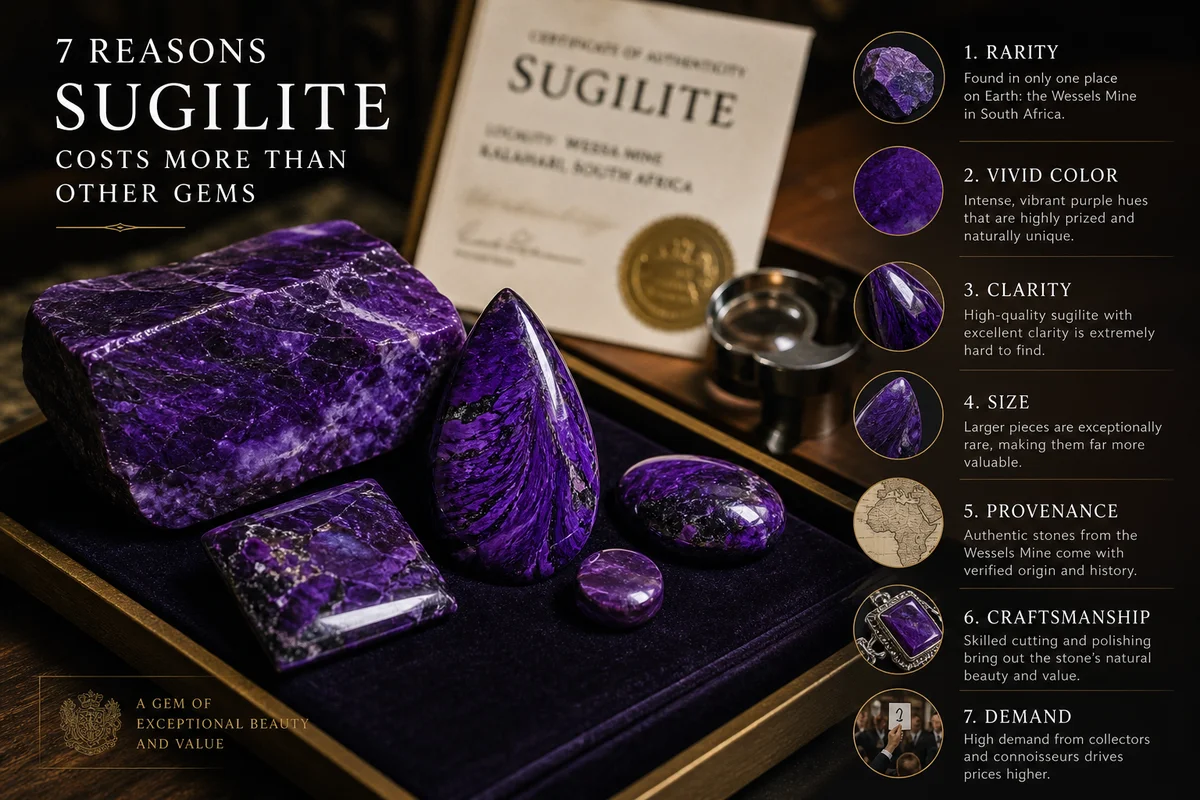
I remember the exact moment I first looked at a price tag for gem-quality sugilite and laughed out loud. Two hundred dollars per carat — for a purple stone I'd barely heard of. Then I saw the next listing: four hundred. Then five hundred. At that point I stopped laughing and started reading. What in the world made this chunky purple mineral more expensive per carat than a lot of commercial diamonds on the market?
That curiosity sent me down a rabbit hole that took weeks to climb out of. What I found changed how I think about crystals, rarity, and the weird economics of the gem world entirely. So here's the full story — how a mineral discovered in a Japanese lava flow ended up being called the "purple gold" of the crystal community, and why that label might actually be underselling it.
The Accidental Discovery Nobody Wanted
Sugilite has one of the strangest origin stories in mineralogy. In 1944, a Japanese petrologist named Ken-ichi Sugi found a tiny amount of a strange pinkish mineral embedded in a limestone deposit on Iwagi Island. He published a paper about it. Nobody cared. The samples were small, opaque, and frankly not much to look at.
For the next three decades, sugilite sat in mineralogy textbooks as a geological footnote — interesting to academics, irrelevant to everyone else. The Iwagi Island deposit produced material that was too low-grade and too small to cut into anything wearable. If the story had ended there, sugilite would have remained exactly what it was: a curiosity for rock nerds with a Japanese name.
But in 1976, a manganese prospector working in the Kalahari Desert of South Africa noticed something unusual in the ore he was pulling out of the ground. Purple. Deep, saturated, almost electric purple. He sent samples to a geologist, who identified them as sugilite — but not like anything found in Japan. This material was different. It was translucent. It was vivid. It could be cut and polished into something genuinely beautiful.
The Wessels mine in the Northern Cape Province of South Africa had accidentally stumbled onto the only significant deposit of gem-quality sugilite the world has ever known.
What Exactly Is Sugilite?
On a technical level, sugilite is a cyclosilicate mineral with the chemical formula KNa₂(Fe,Mn,Al)₂Li₃Si₁₂O₃₀. That's a mouthful, but what it means in plain language is that sugilite is a complex silicate that forms in manganese-rich geological environments under specific conditions of heat and pressure. The lithium content is part of what gives it that distinctive purple coloring, though manganese plays a role too.
It rates about 6 to 6.5 on the Mohs hardness scale, which puts it roughly in the same neighborhood as feldspar or tanzanite. It's hard enough to hold up in jewelry with reasonable care, but you wouldn't want to wear it in a ring you bash against door frames every day. Pendants and earrings are safer bets.
The crystal system is hexagonal, though well-formed crystals are essentially never found. Almost all gem-quality sugilite occurs in massive form — meaning it forms as large, irregular chunks rather than the nice pointy crystals you see with quartz or tourmaline. This massiveness is actually part of what makes it good for cutting. Lapidaries can work with large pieces and get good yields from a single block of rough.
The Color Spectrum: From Mud to Magic
Not all sugilite is created equal. Far from it. The color range spans from a pale lavender that borders on grey, through various shades of mauve and orchid, all the way to that deep, juicy purple that makes collectors lose their minds.
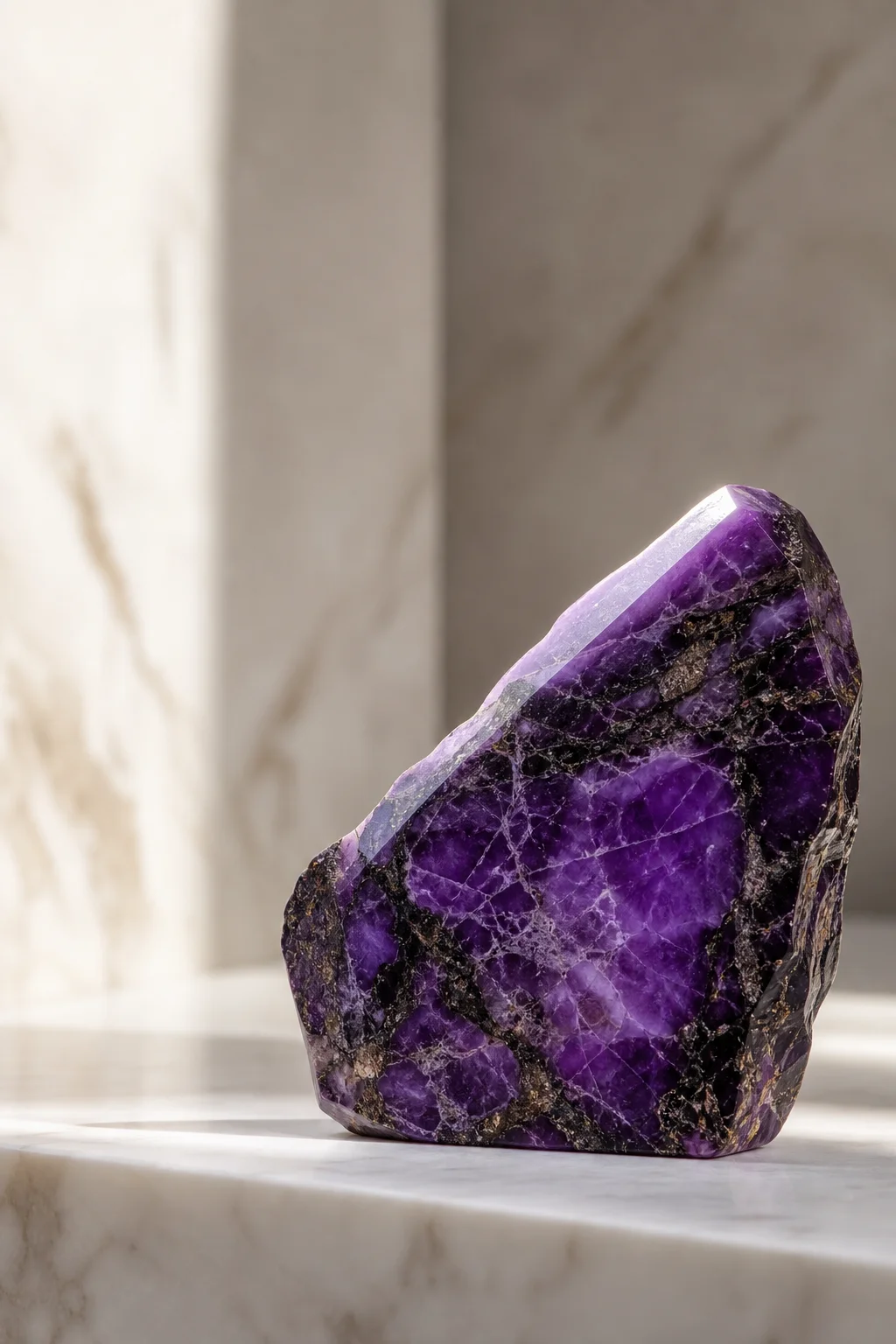
The pinkish material from the original Japanese find is at one extreme — pastel, almost whispery. The most sought-after color is what dealers call "gel sugilite": a rich, saturated purple with a slightly translucent, almost jelly-like quality when you hold it up to light. The best gel material has a depth of color that seems to glow from within, similar to the way high-quality amethyst can look luminous but kicked up several notches.
There's also a rarer variety with black manganese matrix running through it, creating patterns that some people find more interesting than the pure purple stones. These banded or mottled pieces can be quite beautiful in their own way, though they fall into a different price category entirely.
What Makes Gel Grade Special
The "gel" in gel sugilite refers to the material's translucency and texture. Unlike opaque lower-grade pieces, gel sugilite lets light pass through it, giving it a wet, almost succulent appearance. Think of the difference between a cheap purple crayon and a piece of fine amethyst — that's roughly the gap between low-grade and gel sugilite, except the price difference is even more extreme.
Gel grade also tends to have a more uniform color without the brownish or greyish veining that plagues lower grades. It's the purple that sugilite is famous for, distilled to its essence. This uniformity is what makes it suitable for fine jewelry and what drives those eye-watering per-carat prices.
Price Tiers: What You're Actually Paying
Let me break down what sugilite actually costs in the current market, because the range is enormous and confusing if you don't understand the grading system.
Low Grade: $5 to $30 per Carat
This is opaque material with visible matrix — the brown, black, or grey mineral inclusions that interrupt the purple color. It might be 30% to 70% purple with the rest being host rock. You'll find this carved into beads, cabochons, and decorative objects. It's still genuinely sugilite, and it can look quite attractive in the right setting, but it's a long way from gem quality. If you're buying a sugilite bracelet from a market stall for thirty dollars, this is almost certainly what you're getting.
Mid Grade: $30 to $100 per Carat
Mid-grade sugilite has better color saturation and more translucency, though it still shows some inclusions or slight cloudiness. The purple is clearly dominant and attractive, and a skilled cutter can produce cabochons that look genuinely appealing. This is the sweet spot for collectors who want real sugilite with decent color without spending thousands. A nice mid-grade cabochon might run you a few hundred dollars for a finished stone — pricey, but not absurd.
Gel Grade: $200 to $500+ per Carat
Here's where things get serious. True gel sugilite — that deep, translucent, vividly purple material — commands prices that rival colored diamonds, fine sapphires, and top-tier tourmaline. A five-carat gel sugilite cabochon could easily cost between one thousand and twenty-five hundred dollars. Larger stones of exceptional quality have sold for considerably more.
For comparison, a commercial-grade diamond — the kind you find in most mall jewelry stores — might run fifty to a hundred dollars per carat. A one-carat round brilliant in the J color, SI2 clarity range (which is what most people actually buy) typically retails for around two to three thousand dollars total. So a five-carat gel sugilite cabochon at twenty-five hundred dollars is actually in the same per-carat ballpark as the diamonds most consumers are familiar with. The difference is that sugilite is getting more expensive over time, while commercial diamonds are largely flat or declining.
Why the Price Keeps Climbing
Here's the thing that really got my attention when I started researching this: sugilite's pricing isn't driven by marketing hype or celebrity endorsements or any of the usual factors that inflate gem prices. It's driven by a brutal supply-and-demand equation that shows no sign of improving.
The Wessels mine in South Africa's Kalahari manganese field is the only place on Earth that has ever produced gem-quality sugilite in meaningful quantities. The Japanese material was low-grade. A few tiny deposits have been found elsewhere — in Canada, India, and Italy — but nothing approaching what came out of Wessels.
And Wessels is essentially done. The mine was never primarily a sugilite operation — it was a manganese mine that happened to have sugilite as a byproduct. As the manganese operations have wound down and eventually ceased active mining, the sugilite supply has dried up with it. Most of the gem-quality material that exists in the market today was pulled out of the ground years or even decades ago.
New finds are vanishingly rare. When a pocket of decent material surfaces, it gets bought up almost immediately by established dealers and collectors. The total amount of gem-quality sugilite that has ever been extracted is a tiny fraction of what gets produced in a single year from any major colored gemstone mine. We're talking about an entire gem market built on what amounts to a geological accident that happened once in one specific place on Earth.
Demand, meanwhile, has only grown. The crystal healing community discovered sugilite in the 1980s and never looked back. Japanese collectors have always valued it highly because of its national origin. And as general awareness of rare minerals has increased through social media and online marketplaces, more buyers are competing for a shrinking pool of available material.
What the Crystal Community Believes
I should talk about the metaphysical side, because whether or not you personally believe in crystal healing, it's the reason a lot of people are buying this stone and it directly affects the market dynamics.
In crystal healing traditions, sugilite is considered one of the most powerful protective stones available. It's often described as a "shield" against negative energy, psychic attacks, and emotional vampirism. Melody, in her influential reference book "Love Is in the Earth," called sugilite the "stone of the New Age" and attributed an extraordinarily long list of healing properties to it.
The most commonly cited uses include opening and activating the third eye chakra, facilitating deep emotional healing (particularly around grief and trauma), supporting spiritual growth and meditation practice, and providing a sense of calm during periods of intense change. Some practitioners recommend placing sugilite under your pillow for better sleep or carrying it as a worry stone during stressful periods.
Whether these claims hold any water is a question I'll leave to individual judgment. But from a purely market perspective, the spiritual reputation of sugilite is a major driver of demand. People aren't just buying a purple rock — they're buying what they believe is a spiritual tool, and that belief system creates demand that's far more resilient than simple aesthetic preference.
Spotting Fakes and Misrepresentations
One piece of good news: true synthetic sugilite doesn't exist in the marketplace. The mineral is too complex to grow in a lab at a cost that would make it profitable. If someone is selling "lab-created sugilite," they're lying. Full stop.
What does exist, unfortunately, is a steady stream of misidentified or deliberately misrepresented material. The most common scam involves purple glass or purple plastic being sold as low-grade sugilite to buyers who don't know the difference. At the low end of the market, where opaque sugilite with heavy matrix can look somewhat similar to purple slag glass, this is a real problem.
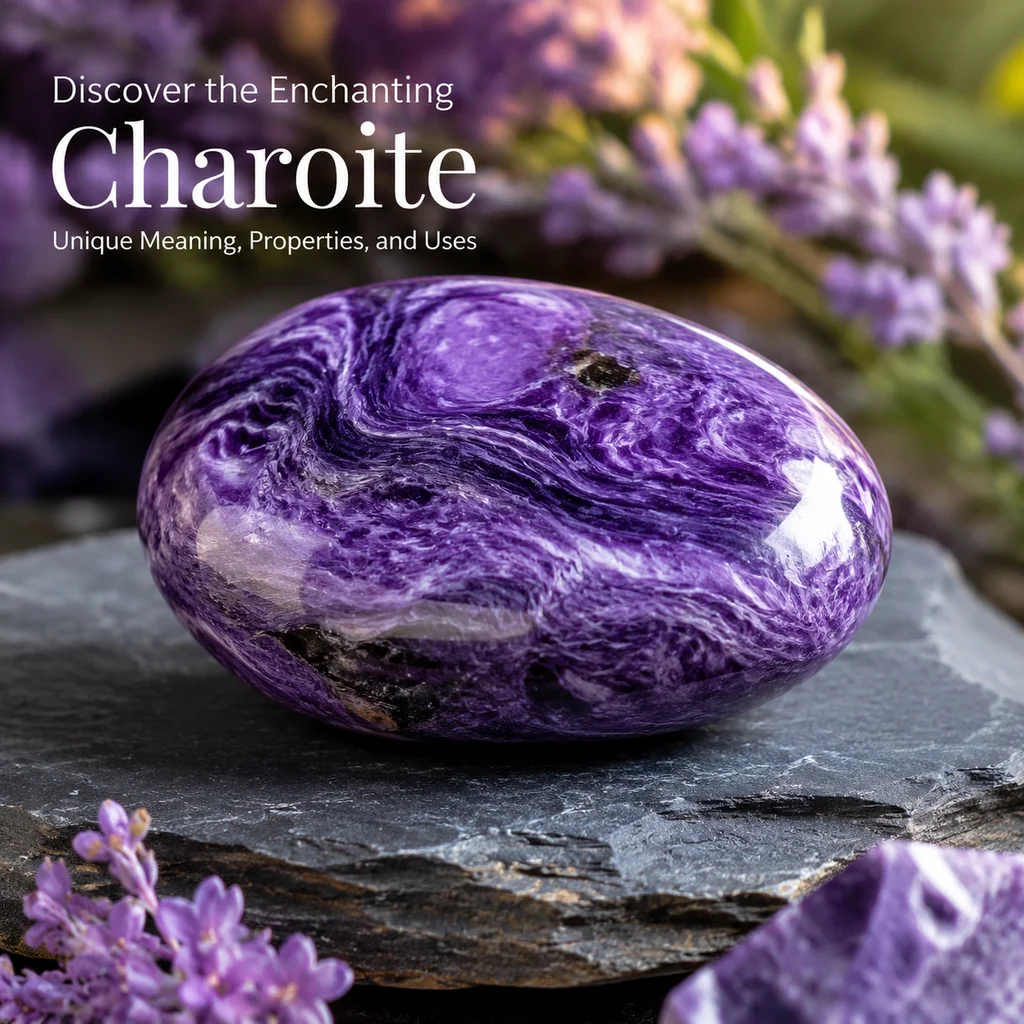
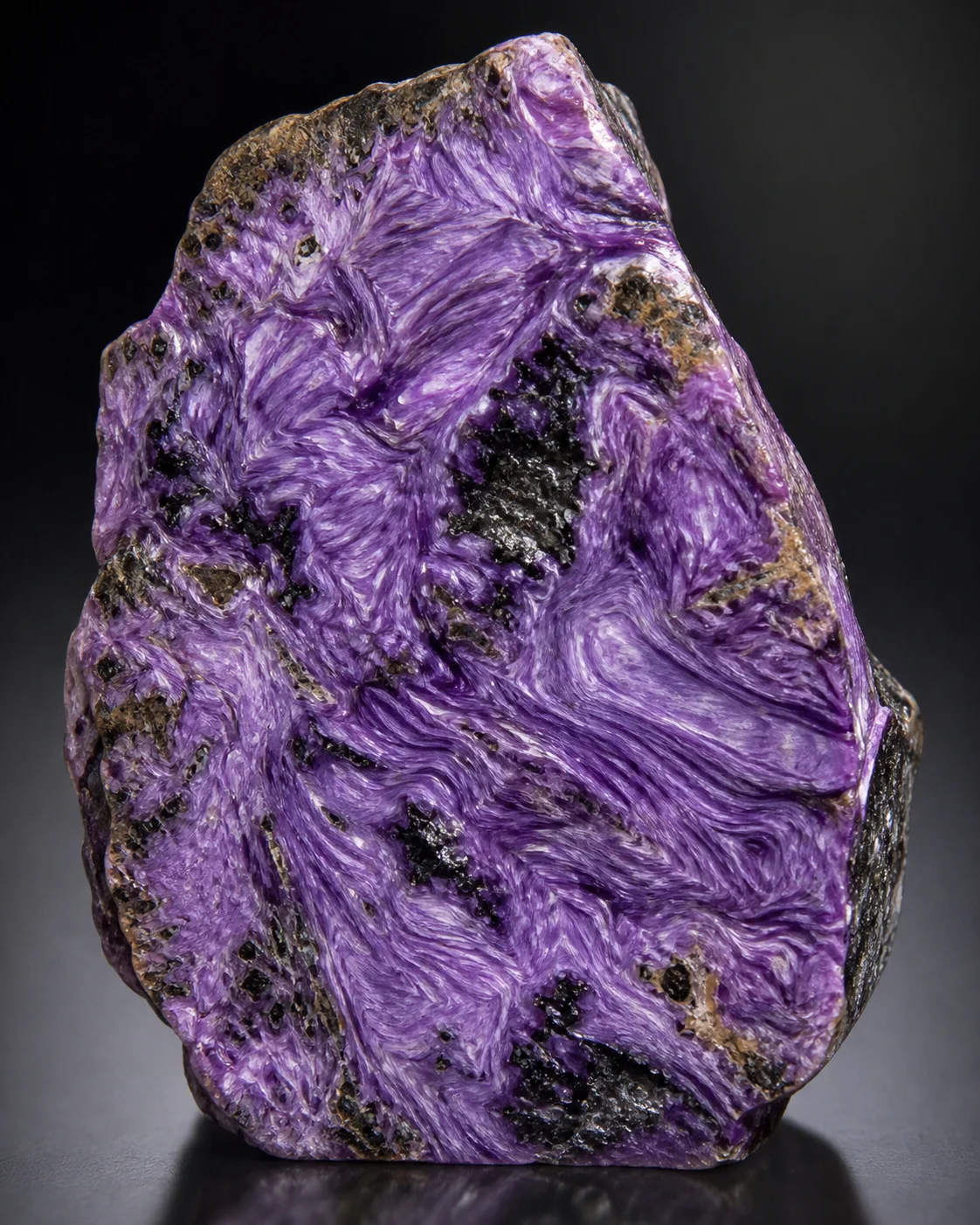
There are also cases of other purple minerals being sold as sugilite — charoite is probably the most common substitute, since it has a similar purple color and can look somewhat alike to an untrained eye. But charoite has a very different texture (it typically shows swirling, fibrous patterns) and is considerably softer on the Mohs scale.
For buyers trying to avoid getting fleeced, a few basic rules apply. Buy from reputable dealers who specialize in minerals and crystals. Ask about the source — legitimate sugilite dealers will be able to tell you whether their material came from South Africa. Look at the price — if someone is selling "gel sugilite" for twenty dollars a carat, it's almost certainly not gel sugilite. And if you're spending serious money, get a lab certification from a recognized gemological laboratory.
Is Sugilite Actually a Good Investment?
This is the question I kept coming back to, and the honest answer is: it depends on what you mean by "investment."
If you're looking for something you can buy today and flip next month for a profit, sugilite is probably not it. The market is illiquid — finding a buyer for a specific stone can take time, and there's no established commodities exchange where you can quickly move product. Pricing is also somewhat opaque, since each piece is unique and there's no universal grading standard like the 4Cs for diamonds.
But if you're thinking in terms of a five to ten year horizon, the fundamentals look surprisingly strong. The supply situation is not going to improve — nobody is going to discover a new major deposit of gem-quality sugilite, because the geological conditions that created it are exceptionally rare. What exists is what exists, and most of it is already in collections or has been cut into finished pieces.
Demand trends are moving in sugilite's favor. The broader crystal and mineral collecting market has grown substantially over the past decade, and rare minerals in particular have seen significant price appreciation. Sugilite benefits from having a compelling story (the "purple gold" narrative), genuine geological rarity, and an active community of collectors and healers who create consistent demand.
I've seen mid-grade material increase in price by roughly 30% to 50% over the past three to four years based on what comparable pieces are selling for now versus what they were listed at a few years ago. Gel grade has appreciated even more sharply, though the sample size is small because so little of it trades hands.
The risk, as with any alternative investment, is liquidity and authentication. You need to know what you're buying, and you need to be patient when it comes time to sell. This isn't a stock you can dump on a bad day.
My Take: The Purple Gold Label Earned
After spending way too many hours reading mineralogy papers, scrolling through dealer listings at two in the morning, and pestering gemologists with questions, I've come around to thinking the "purple gold" label for sugilite is actually pretty fair.
Think about it. Gold is valuable because it's rare, because there's a finite amount of it, because it has cultural significance that spans thousands of years, and because new supply is limited and expensive to extract. Sugilite checks most of those same boxes. It's genuinely rare — rarer than gold, in terms of gem-quality material. The supply is effectively capped. It has a passionate community of enthusiasts who ascribe meaning to it beyond its physical properties. And unlike gold, which can theoretically be mined in larger quantities if the price justifies it, there's no more gem-quality sugilite waiting to be found.
I'm not saying everyone should rush out and buy sugilite. The market is small, the barrier to entry (in terms of knowledge) is real, and you absolutely can overpay if you don't know what you're doing. But I do think sugilite deserves more attention than it gets outside of crystal enthusiast circles. It's a genuinely fascinating mineral with a supply story that's almost unprecedented in the gem world.
That two-hundred-dollar-per-carat price tag doesn't seem so crazy anymore once you understand what's behind it. If anything, it might be a bargain compared to where prices are heading. The Kalahari gave us this mineral by accident, and as far as gem-quality sugilite goes, it's not giving us any more. What's out there is what we've got. And in the world of rare minerals, that kind of finality has a way of making things expensive.
More About Sugilite
If this deep dive into sugilite pricing caught your attention, these related guides go even further:
- Sugilite: The Purple Stone That Costs More Than You'd Expect — our original overview covering color grades and market history
- Sugilite Is the Most Overpriced Crystal in the World (And I Still Kind of Want It) — an honest take on whether the premium is justified
- Sugilite vs Amethyst: I Bought Both and Here's Why Sugilite Won My Heart — a side-by-side comparison of two iconic purple stones
- Sugilite Is the Rarest Purple Gem You've Never Heard Of — why the best material is almost gone
Related Rare and Purple Crystals
- Charoite: The Purple Stone Discovered by Accident — another rare purple gem with only one source on Earth
- Kunzite: The $20 Stone That Can Cost $20,000 — a pricing story that rivals sugilite's wild range
- Crystal Pricing: 7 Tricks Shops Use to Make You Overpay — essential reading before your next crystal purchase
- 5 Practical Tests to Tell Real Crystals From Fakes — because sugilite fakes are more common than you think
- Amethyst vs Kunzite: Two Purple Stones With Very Different Personalities
Continue Exploring
- Thunder Eggs Hide Beautiful Agates Inside Ugly Rock Shells
- The Inca Rose Is Made of Manganese and Legend (And It Is Stunning)
- 7 Types of Opal (And Why One of Them Costs More Than a House)
- Amber vs Beeswax: How to Tell Real From Fake
Frequently Asked Questions
Why is sugilite so expensive compared to other purple stones?
Sugilite contains manganese, which gives it its rare deep purple color. The original mine in South Africa (Kuruman) is largely depleted, and high-quality specimens with strong color saturation are increasingly scarce. Unlike amethyst, which is widely available, gem-grade sugilite with the prized "gel" translucency commands premium prices per carat.
How can I tell real sugilite from fake sugilite?
Real sugilite has a waxy to vitreous luster and typically shows color zoning — areas of lighter lavender blending into deep purple. Hold it under strong light: genuine sugilite shows slight translucency in thin areas, while glass or plastic imitations appear uniformly opaque. Also, sugilite registers 5.5-6.5 on the Mohs scale, so it cannot be scratched by a copper coin but will be scratched by quartz.
Does sugilite fade in sunlight like amethyst?
No, sugilite is remarkably light-stable compared to amethyst. Prolonged direct sunlight may cause very slight fading in lower-grade material, but high-quality sugilite with deep manganese-rich color holds up well. Still, storing your sugilite jewelry in a fabric-lined box away from windows is the safest practice.
Is sugilite suitable for everyday crystal bracelets?
Sugilite jewelry is best reserved for occasional wear. At 5.5-6.5 on the Mohs scale, it is softer than quartz and can accumulate scratches from daily activities. Pendants and earrings last longer than bracelets or rings. If you do wear a sugilite bracelet, remove it before housework, exercise, or swimming.
Frequently Asked Questions
What are the spiritual healing benefits of wearing sugilite?
In the crystal community, sugilite is highly revered as a protective shield against negative energy and electromagnetic stress. Wearing a handcrafted sugilite pendant or bracelet is believed to soothe emotional turmoil, inspire deep inner peace, and awaken the crown chakra. Its deeply nurturing vibrations make it a favorite for daily spiritual grounding and overall well-being.
Comments