Shamballa Bracelet — Meaning, History, and How to Make Your Own
This article was created with the help of AI writing tools. The information has been researched and reviewed for accuracy, but some details may vary. Think of it as a starting point for your own exploration of Shamballa bracelets.
There's a legend tucked into Tibetan Buddhist mythology about a hidden kingdom called Shambhala — a place of peace, enlightenment, and crystal-clear wisdom. For centuries, monks whispered about it. Pilgrims searched for it. Nobody found it on any map. But somewhere along the way, that myth sparked something real. Fast forward to the early 2010s, and a Danish jewelry brand called Shamballa Jewels took that ancient name and turned it into one of the most recognizable bracelet styles of the decade. Suddenly, celebrities were wearing them. Fashion magazines were featuring them. And a thousand-year-old spiritual concept became a mainstream accessory that you could spot on wrists from Copenhagen to California.
What Makes a Shamballa Bracelet a Shamballa Bracelet?
If you've seen one, you know the look. Round beads strung along a woven cord, usually with a sliding closure that lets you adjust the fit. The cord work is macramé — those square knots that sailors and crafters have used for centuries. Each bead sits in its own little pocket of knots, spaced evenly along the bracelet. Pull the cord ends, and the whole thing loosens or tightens. It's simple, clever, and surprisingly satisfying to fiddle with.
The design hasn't changed much since Shamballa Jewels popularized it. A single bracelet has that unmistakable silhouette — round, chunky beads against thin woven string. It reads as both casual and intentional, like you threw it on without trying but somehow nailed it.
The Materials Behind the Style
Part of what makes Shamballa bracelets so appealing is the range of materials you can find them in. The style stays the same, but the vibe shifts dramatically depending on what the beads are made of.
Natural Stone Beads
This is probably the most popular category. Black obsidian, clear quartz, rose quartz, tiger's eye — if it's a stone you'd find in a crystal shop, someone's made a Shamballa bracelet out of it. Natural stone beads carry that earthy, grounded feel. Prices typically land between $10 and $30, which makes them an easy entry point. A black obsidian Shamballa bracelet has that sleek, almost monochrome look that works with everything from a white t-shirt to a leather jacket.
Ceramic Beads
Ceramic beads are the OG Shamballa material. When Shamballa Jewels first launched, their signature pieces used ceramic beads with precious metals inlaid into the surface. That glossy, smooth finish with tiny gold or silver dots embedded in it — that's the classic look most people picture. Ceramic beads run $15 to $40, and they hit a sweet spot between casual and polished. If you're buying your first "real" Shamballa bracelet, ceramic with silver inlay is the move.
Metal Beads
Sterling silver, gold-plated, copper, brass — metal beads add weight and a more refined edge to the bracelet. They're heavier on the wrist, which some people actually prefer because it makes the piece feel more substantial. Expect to spend $20 to $60 for a solid metal bead version. A silver Shamballa bracelet catches light in a way that stone and ceramic just can't, making it a solid choice for evenings out or when you want something that reads a little more dressed up.
Glass Beads
On the budget end, glass beads get you the Shamballa shape and feel without the price tag. They're lightweight, come in pretty much every color imaginable, and usually cost between $5 and $15. Glass is perfect if you want to try the style first, or if you're building a stack and need a few colorful filler pieces. They won't have the depth that natural stone or ceramic offers, but they get the job done.
Diamond and Gemstone Beads
At the top of the food chain, this is where Shamballa bracelets cross into luxury territory. Think ceramic or metal beads studded with actual diamonds, sapphires, or other precious stones. These are the ones that show up in fashion editorials and auction catalogs. Prices start around $100 and can climb well past $1,000. Most people won't buy these as their everyday bracelet, but they exist as proof that the Shamballa design can hold its own at the highest end of the jewelry world.
What the Colors Actually Mean
Here's where the spiritual side of Shamballa bracelets comes back into play. Each color is tied to a specific meaning, and people often choose their bracelets based on what they want to attract or embody.
Black stands for power and protection. It's the most common choice for men's Shamballa bracelets — black obsidian with silver accents is practically the default uniform. White represents purity and cleansing. Clear quartz or white ceramic gives off that clean, minimal energy. Pink is all about love and compassion, which is why rose quartz Shamballa bracelets are so popular as gifts. Blue channels calm and tranquility — think lapis lazuli or blue glass beads when life gets loud. Gold ties to wisdom and inner clarity, and green represents growth and new beginnings, making it a go-to for anyone starting a new chapter.
You don't have to buy into the spiritual meanings to enjoy the bracelet. Plenty of people pick colors purely based on what matches their wardrobe. That's fine too. The meaning is there if you want it.
Making Your Own Shamballa Bracelet
Here's the thing that surprises most people: Shamballa bracelets are genuinely easy to make yourself. Like, "you could finish one during a Netflix episode" easy. The macramé knotting looks complicated, but it's really just the same square knot repeated over and over. Once you learn it, you've got it.
What You Need
Grab two pieces of 1mm waxed cord, each about 60cm long. You'll also need seven 10mm round beads — whatever material and color you like. That's it. The total material cost comes out to roughly $3 to $8, depending on your bead choice. Not bad for a bracelet that sells for $15 to $40 in stores.
Step-by-Step
Step 1: Set up the base. Take one cord and fold it in half. That folded loop becomes the center of your bracelet, and the two ends are your working cords. Hold the loop end — that's where your closure will eventually go.
Step 2: Start knotting. Take your second cord and tie a square knot around the folded first cord, right below the loop. This anchors everything in place. A square knot is just right-over-left, then left-over-right. Simple. Tie two or three of these to create a neat starting section.
Step 3: Add your first bead. Slide a bead onto the two center cords (the folded first cord). Then tie three square knots below it with the outer working cord. The bead gets locked in place between knots. That's the whole trick — bead, three knots, bead, three knots. Repeat this for all seven beads.
Step 4: Finish the other end. After your last bead, tie another cluster of square knots — same as the starting section. Then create a sliding closure. To do this, thread the outer working cords back through the starting knots in the opposite direction. This creates the pull mechanism. When you pull both ends, the bracelet tightens. When you pull the bracelet apart from the sides, it loosens.
Step 5: Trim and seal. Cut off the excess cord, leaving about an inch on each end for the pull strings. Melt the cut ends slightly with a lighter so they don't fray. Try it on, adjust the fit, and you're done.
The whole process takes about 20 to 30 minutes your first time. Once you've made a few, you can knock one out in 15 minutes flat. It's a genuinely fun little craft, and the result is something you'd actually wear.
Buying a Ready-Made Shamballa Bracelet
Not everyone wants to make their own jewelry, and that's perfectly fine. Pre-made Shamballa bracelets are easy to find online and in most jewelry or accessory shops. Expect to pay anywhere from $15 for a basic glass bead version up to $80 for a nice ceramic and silver combination. The sweet spot for most people is around $25 to $40 — that gets you a well-made bracelet with decent materials that'll hold up to daily wear.
When shopping, pay attention to the cord quality. Cheap Shamballa bracelets use thin, scratchy string that frays quickly. Look for waxed cotton cord or nylon — something with a bit of sheen and durability. The knots should be tight and even, with beads that don't slide around loosely. And if you're buying online, check whether the bead size is listed — 10mm is the standard Shamballa size, and anything smaller than 8mm might look a bit dainty on an adult wrist.
Who Are Shamballa Bracelets Actually For?
Short answer: pretty much everyone. That's part of why the style caught on so hard in the first place. Shamballa bracelets don't lean strongly masculine or feminine. They sit in that versatile middle ground where anyone can pull them off.
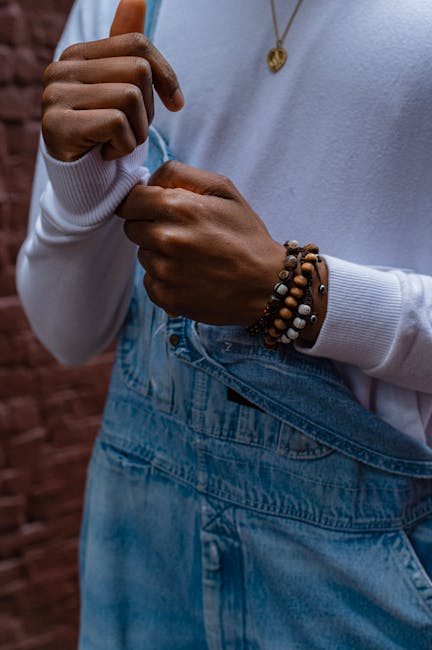
For men, the go-to combination is black beads with silver accents — usually black obsidian or black ceramic. It's understated, works with both casual and slightly dressed-up outfits, and doesn't read as flashy. A lot of guys pair a single black Shamballa bracelet with a watch for a layered wrist look that's put-together without trying too hard.
For women, the options open up significantly. Rose quartz with gold accents is a classic. Blue lapis with silver has a cool, bohemian energy. Multi-color bead stacks are popular too — mixing pink, white, and gold beads on one wrist, for example. Because the bracelet is adjustable, it works on any wrist size, which is one less thing to worry about when shopping.
The Bottom Line
Shamballa bracelets have been around for over a decade now, and they haven't really gone out of style. That's rare for any accessory trend. The reason is pretty straightforward: the design is simple enough to be timeless, customizable enough to feel personal, and accessible enough that anyone can own one without spending a fortune. Whether you buy a finished piece or spend a half hour making your own, a Shamballa bracelet is one of those rare things in fashion that genuinely works at every price point and for every type of person.
Maybe that's the real legacy of the Shambhala legend. Not a hidden kingdom, but something you can actually wear — something that carries a little bit of meaning and looks good doing it.
Comments