Septarian Nodule: The Dragon Stone Story
June 11, 2026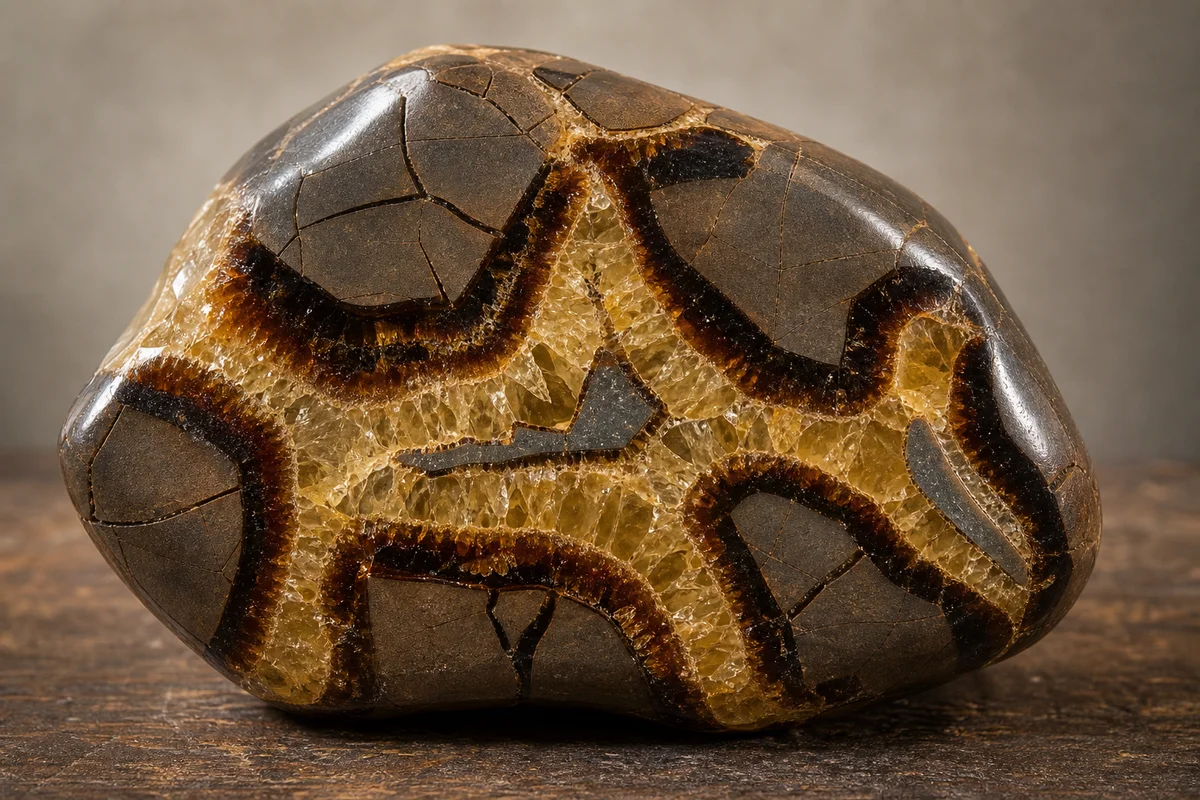
Septarian Nodule: The Dragon Stone Story
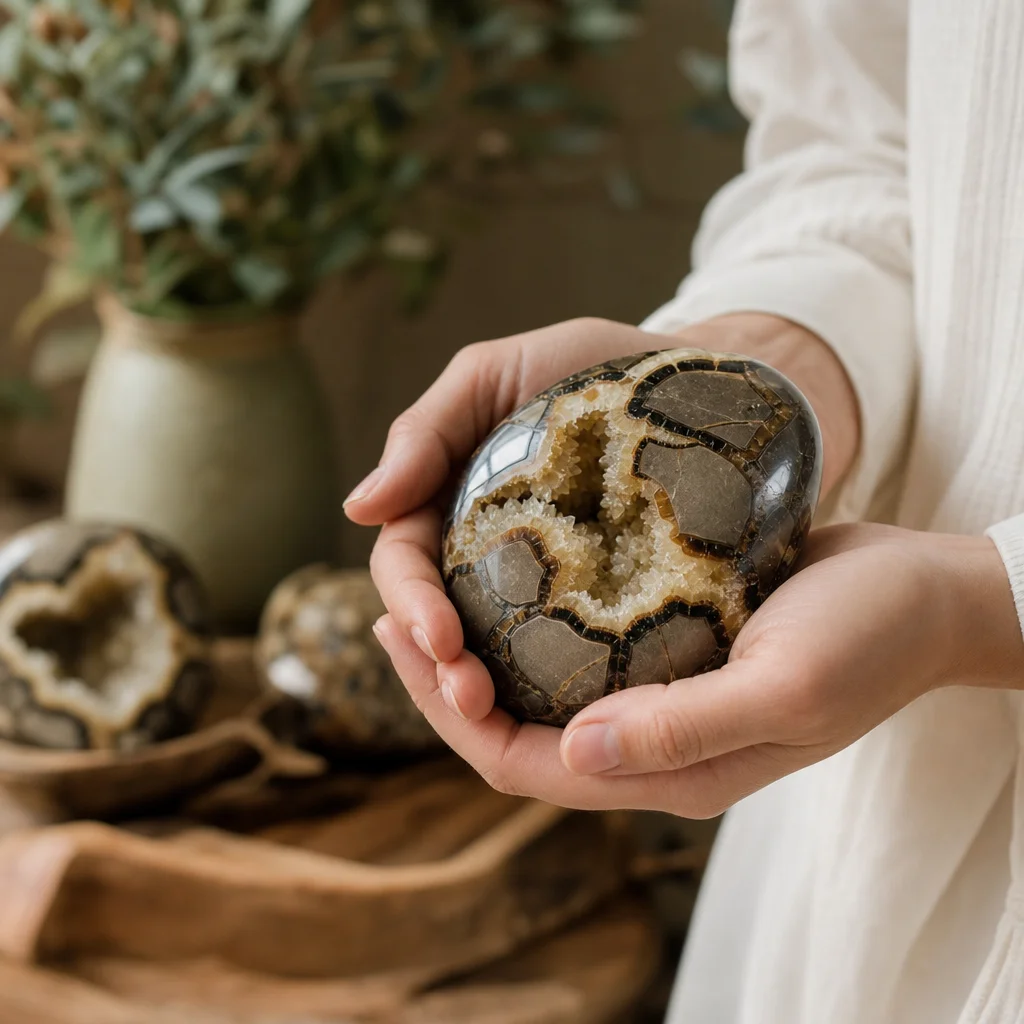
Ah, the septarian nodule, often referred to as the dragon stone, is a captivating piece of nature's art that has been captivating souls for centuries. Its unique patterns and earthy hues make it a favorite among crystal enthusiasts and collectors alike. Let me take you on a path through the formation of this mystical stone, its meanings, and why it's a must-have for anyone who appreciates the beauty of the natural world. **The Formation of the Dragon Stone** The septarian nodule is a sedimentary rock that forms from the hardening of calcareous sediments. It's a concretionary rock, meaning it's formed from materials that have precipitated from water. This process typically occurs in freshwater environments, such as lakes and rivers. The nodules are formed when calcium carbonate, often in the form of calcite, precipitates around a nucleus, which could be a piece of wood, shell, or even a fossil. The process takes millions of years, and as the layers of calcite accumulate, they create the intricate patterns that we see in septarian nodules. These patterns can vary widely, with some nodules displaying a swirling, snake-like appearance that gives them the nickname "dragon stone." **Where to Find the Dragon Stone** Septarian nodules are found in various locations around the world, but some of the most famous sources are in the USA, especially in the states of Texas and Oklahoma. The nodules are also found in Europe, particularly in Germany and Italy. The Italian nodules are particularly sought after for their rich, golden hues and complex patterns. **The Beauty of the Dragon Stone** The beauty of the septarian nodule lies in its unique patterns and earthy tones. The colors can range from shades of brown, gray, and black to vibrant greens, reds, and even gold. The patterns can be smooth and fluid or more angular and jagged, depending on the geological processes that shaped the stone. Each nodule is one-of-a-kind, and the variations in color and pattern make it a favorite among collectors. The size of the nodules can vary significantly, with some as small as a few inches in diameter and others reaching several feet across. **The Meaning of the Dragon Stone** The septarian nodule is believed to have several meanings and properties. It's often associated with protection and grounding, helping to shield its wearer from negative energy. It's also thought to be a powerful stone for transformation, encouraging personal growth and the ability to adapt to change. In addition, the dragon stone is said to enhance creativity and inspire a sense of wonder and awe. Its unique patterns are reminiscent of the scales of a dragon, symbolizing strength, courage, and wisdom. **Using the Dragon Stone in Jewelry** The dragon stone is a popular choice for jewelry due to its natural beauty and versatility. It can be cut into various shapes and sizes, from small cabochons to large, statement pieces. The stone is often paired with other crystals and gemstones to create unique and eye-catching pieces. One of my favorite ways to use the dragon stone is in pendants. The weight and texture of the stone add a sense of depth and grounding to the piece. I've also seen it used in bracelets and necklaces, where its earthy tones can complement a variety of styles. **Prices and Availability** The price of septarian nodules can vary widely depending on size, color, and pattern. Smaller, more common pieces can be found for as little as $10 to $20, while rarer, larger pieces can command prices of hundreds or even thousands of dollars. The availability of the stone can also fluctuate. Some areas, like Texas and Oklahoma, are known for their abundant supply, while others, like Italy, may have more limited availability. **Personal Experience** I remember the first time I held a septarian nodule in my hands. The weight and the smooth, cool texture were immediately soothing. I could feel the energy of the stone, a deep, grounding presence that seemed to resonate with the earth itself. Over the years, I've collected several pieces, each with its own unique story and character. One nodule, with its swirling patterns and rich, golden hues, reminds me of the beauty of nature and the endless possibilities of transformation. **FAQs**Frequently Asked Questions
Q?
A. What is the difference between a septarian nodule and calcite?
Septarian nodules are a type of sedimentary rock that often contains calcite, but they are not the same thing. While calcite is a mineral, septarian nodules are formed from the hardening of calcareous sediments, creating a unique rock with a variety of patterns and colors.Q?
A. Can septarian nodules be used for healing purposes?
Crystals are not a substitute for medical treatment. However, many people believe that septarian nodules can be used for healing purposes, such as grounding and protection. It's important to approach crystal healing with an open mind and consult with a healthcare professional for any medical concerns.Q?
A. How do I care for my septarian nodule jewelry?
To care for your septarian nodule jewelry, it's best to avoid exposing it to extreme temperatures and chemicals. Clean it gently with warm water and a soft cloth, and store it in a cool, dry place when not wearing it.Q?
A. Are all septarian nodules the same color?
No, all septarian nodules are not the same color. The colors can range from shades of brown, gray, and black to vibrant greens, reds, and even gold, depending on the geological processes that shaped the stone.Q?
A. Can I use septarian nodules in my garden?
Yes, you can use septarian nodules in your garden. They can be placed in the soil to help with water retention and to add a touch of natural beauty. Just be sure to choose a location where they won't be disturbed or damaged by weather or animals.Geological Formation
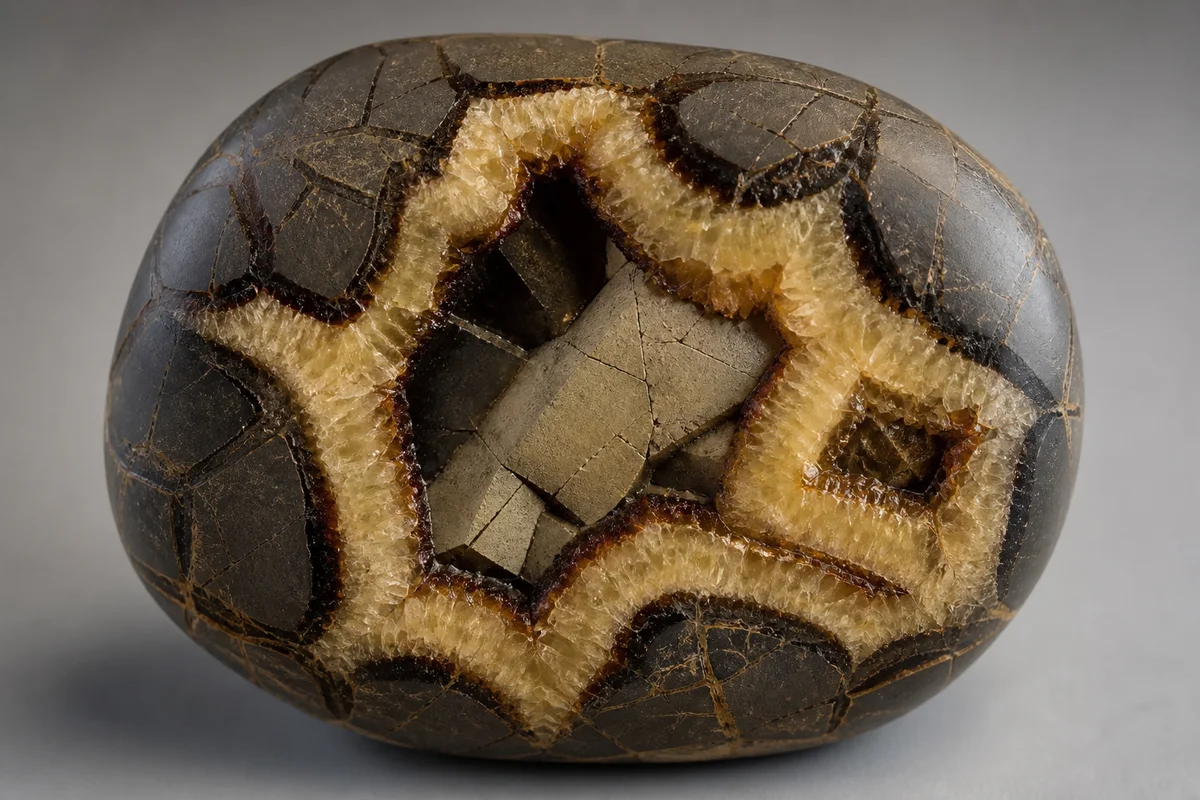
The geological formation of Septarian nodules is a fascinating process that combines both volcanic and sedimentary activity. These nodules are primarily composed of calcite and dolomite, which are formed from the precipitation of calcium and magnesium carbonates. The crystal system of Septarian nodules is typically trigonal, with calcite exhibiting a perfect rhombohedral crystal form. The formation of Septarian nodules begins with the volcanic activity, where acidic lava is ejected from the Earth's interior. As this lava cools and solidifies, it creates a matrix of volcanic ash and rock. Over time, minerals like calcite and dolomite start to precipitate within this matrix, forming cavities and voids. These cavities are then often filled with other minerals, leading to the unique patterns and colors that define Septarian nodules. The process of nodule formation can take millions of years, and it is often influenced by the surrounding environmental conditions, such as water flow, temperature, and pressure. The result is a complex interplay of mineral deposits, creating a stone that is not only beautiful but also rich in geological history.Color Varieties and Origins
Septarian nodules are renowned for their diverse range of colors, which can include shades of brown, black, white, orange, red, and even green. The origins of these colors are varied and fascinating:- Brown and Black: These colors are typically associated with the iron minerals present in the nodule's matrix. Iron oxides can create a wide spectrum of colors, from muted browns to deep, rich blacks.
- White: The pure calcite found within Septarian nodules often appears white, providing a stark contrast to the other colors.
- Orange and Red: These vibrant hues are often the result of hematite or goethite, iron minerals that can impart a reddish or orange tint to the stone.
- Green: Green Septarian nodules are quite rare and are often the result of the presence of chlorite, a green mineral that can infiltrate the calcite matrix.
How to Identify Quality Specimens
When purchasing Septarian nodules, it's important to identify quality specimens. Here are some tips to help you make an informed decision:- Size and Shape: Larger, well-rounded nodules are often more desirable, as they have a greater presence and are less likely to have internal fissures or imperfections.
- Surface Texture: Look for a smooth, well-polished surface. Nodules with rough textures may have been subjected to harsh handling or environmental conditions, which can affect their overall quality.
- Color Consistency: While color variety is part of the stone's appeal, consistent colors throughout the nodule are typically indicative of a higher quality piece.
- Internal Clarity: Inspect the nodule for internal clarity. Avoid nodules with significant fissures, as these can weaken the stone and reduce its aesthetic appeal.
- Avoid Red Flags: Be wary of overly polished nodules that may have been artificially treated or colored. Also, be cautious of excessively large nodules, as they may be more likely to contain internal imperfections.
Care and Maintenance Guide
Caring for your Septarian nodule is essential to maintain its beauty and longevity. Here are some guidelines for cleaning, storage, and what to avoid:- Cleaning: Gently clean your nodule with warm water and a soft cloth. Avoid using harsh chemicals or abrasive cleaners, as these can damage the stone's surface and internal structure.
- Storage: Store your Septarian nodule in a cool, dry place. Avoid exposing it to direct sunlight or extreme temperatures, as these can cause the stone to crack or fade.
- Avoid Exposure: Be mindful of the environments your nodule is exposed to. Avoid contact with water, oils, and chemicals, as these can cause discoloration or etching on the stone's surface.
- Handling: When handling your nodule, use clean hands or gloves to prevent oils from your skin from accumulating on the surface.
- Avoid Heat: Never expose your Septarian nodule to heat sources, such as ovens or radiators, as heat can cause the stone to expand and potentially crack.
Frequently Asked Questions
Q: Are Septarian nodules rare?
A: While Septarian nodules are not as rare as some other types of gemstones, they are still considered somewhat uncommon and can be quite sought after for their unique beauty and geological significance.
Q: Can Septarian nodules be used in jewelry?
A: Yes, Septarian nodules can be used in jewelry. However, due to their hardness and potential for internal fissures, they may require careful handling and mounting to ensure durability and longevity.
Q: How do I know if a Septarian nodule is authentic?
A: Authenticity can be determined by examining the stone's geological features, such as the presence of calcite and dolomite, and the unique patterns and colors. Consulting with a reputable gemologist can also provide reassurance of the stone's authenticity.
Q: Can Septarian nodules be polished?
A: Yes, Septarian nodules can be polished, but it is important to use a gentle polishing method to avoid damaging the stone's surface or internal fissures. Professional polishing is often recommended for the best results.
Q: How can I display my Septarian nodule?
A: Septarian nodules can be beautifully displayed in a variety of ways, including placing them on a bookshelf, desk, or in a cabinet. They can also be incorporated into home decor pieces like vases or candle holders, as long as they are handled with care.
Related Crystals
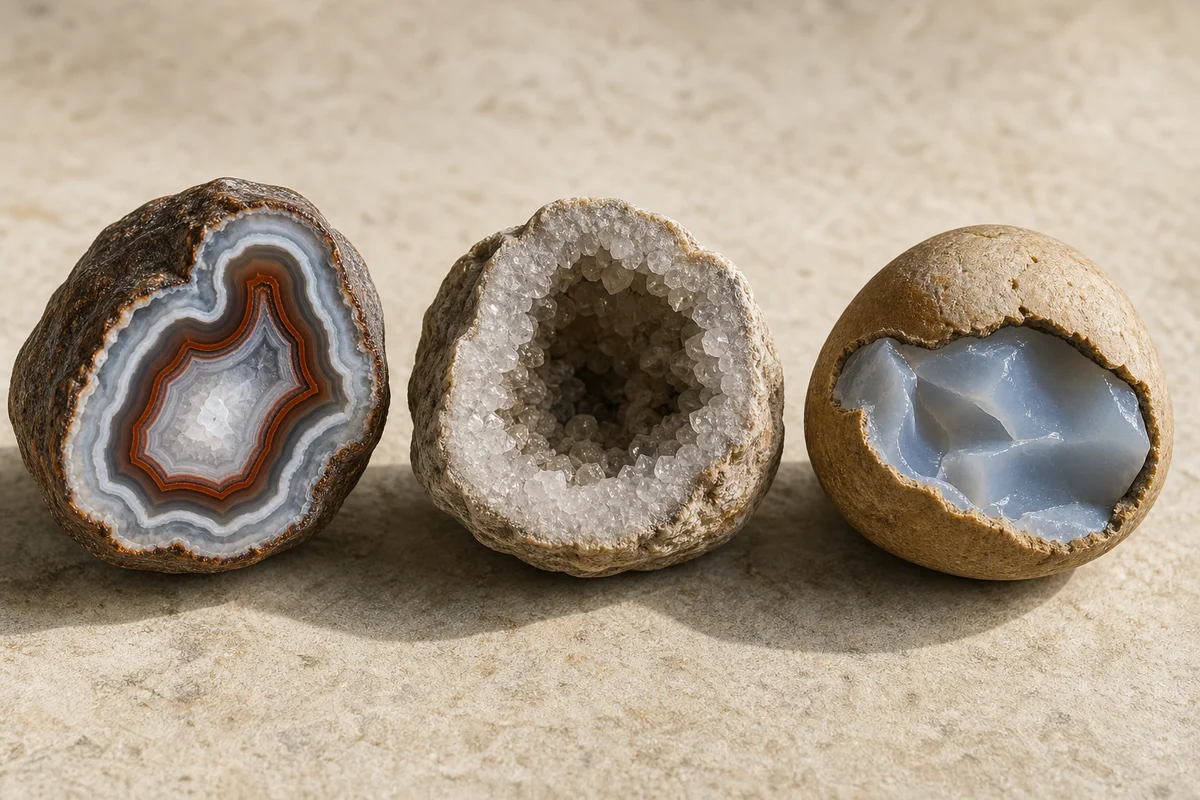
Several crystals share similarities with Septarian nodules in terms of composition and appearance, making them interesting companions or counterparts:- Dolomite: Similar to Septarian nodules, Dolomite is a carbonate mineral that can be found in a variety of colors and patterns. It shares the same crystal system and is often found in sedimentary rock formations.
- Calcite: Pure calcite, another common component of Septarian nodules, is a carbonate mineral known for its transparent to translucent nature. It can come in a variety of colors and is often used in the creation of decorative objects.
- Siderite: This iron carbonate mineral can often be found within Septarian nodules and is known for its reddish-brown color. Siderite is a significant source of iron and is sometimes used in the steel-making process.
- Aragonite: A polymorph of calcite, aragonite is less common but shares similar properties. It can be found in a variety of colors and is often associated with the same types of geological formations as calcite and dolomite.
Comments