The Kitchen Table Start
The Kitchen Table Start
It started because I was bored. I'd seen a video about wire wrapping and thought it looked meditative. I bought a pair of round-nose pliers, some copper wire, and a handful of tumbled stones from a craft store. Total investment: maybe $40. I figured I'd make a few things for myself and move on to the next hobby.
Three weeks later, my dining table was covered in wire, beads, half-finished pendants, and tiny metal scraps that embedded themselves in the carpet. I'd made maybe 30 pieces. Most of them were rough — uneven wraps, crooked loops, the kind of stuff you look at later and cringe. But a few of them actually looked decent. A friend saw one and asked if I could make her something similar. She offered to pay me.
I said $15. She handed me cash. That was my first sale.
I didn't have a business plan. I didn't have an Instagram account for my jewelry. I didn't even have a name for what I was doing. I just kept making things and people kept asking to buy them. The first $1,000 came faster than I expected, but it wasn't smooth. Here's what actually happened.
The Pricing Problem
For the first month, I priced everything between $10 and $20. Earrings, pendants, simple wire-wrapped rings — all roughly the same. This was stupid, and I knew it even then. A pair of earrings that took me 20 minutes to make was the same price as a pendant that took two hours and used a stone that cost me $8 on its own.
My first real pricing lesson came from a stranger. She messaged me on Instagram (after I finally set up an account) and asked about a wire-wrapped pendant with a piece of amethyst. I quoted $18. She said, "That's it? For a handmade, one-of-a-kind piece?" I almost doubled the price on the spot to $35. She bought it without hesitation.
That interaction changed how I thought about pricing. The problem wasn't that my work wasn't worth more — it was that I was afraid to charge what it was worth. I was comparing my handmade pieces to mass-produced jewelry from fast fashion stores. That's the wrong comparison. When someone buys handmade, they're paying for uniqueness, craftsmanship, and a direct connection to the maker. Those things have value.
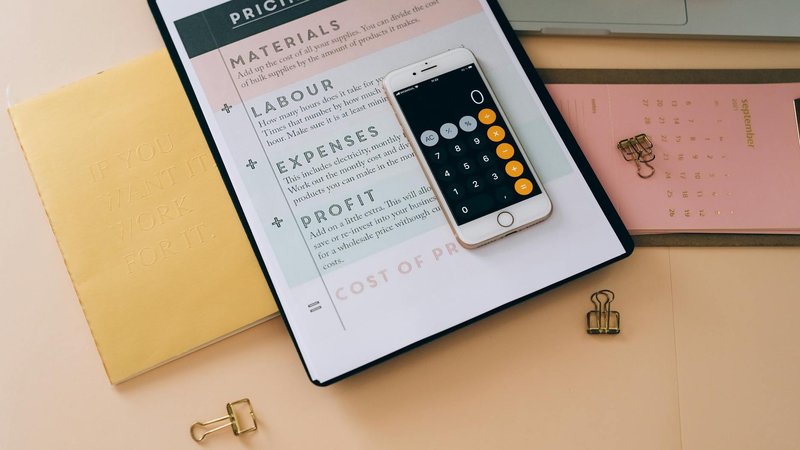
I eventually settled on a formula: materials cost × 3, plus an hourly rate for my time (I started at $15/hour, which felt reasonable for a beginner). If materials cost $5 and the piece took me an hour, the price would be $30. It's not a perfect system, but it gave me a floor to work from instead of just guessing.
What Actually Sold
Here's something nobody tells you: the pieces you're most proud of are not necessarily the ones that sell. My most elaborate wire-wrapped pendant — a complex tree of life design that took me four hours — sat unsold for weeks. Meanwhile, a simple pair of wire-wrapped drop earrings with cheap glass beads sold out three times.
The patterns that emerged from my first few months of sales:
Simple designs sold more often than complex ones. People shopping for handmade jewelry online want something they can understand at a glance. A clean wire-wrapped ring or a straightforward pendant photographs well and reads clearly on a small phone screen. Intricate designs that look beautiful in person often don't translate well to photos.
Neutral colors outsold bright ones consistently. Copper and gold-tone wire with clear quartz, white howlite, or light amethyst moved faster than the same designs with brightly colored stones. Not always — occasionally a piece with turquoise or lapis lazuli would catch someone's eye — but the overall trend was clear. Neutral fits more wardrobes, so it has a broader audience.
Gift-sized items sold better than statement pieces. The $15-$30 range was my sweet spot. People were more willing to take a chance on a small purchase from an unknown maker than commit to a $60+ statement necklace. Once they bought something small and liked it, they'd come back for bigger pieces. But getting that first purchase was the hurdle.
The Instagram Hustle (Minus the Glamour)
Everyone says you need social media to sell handmade jewelry, and they're not wrong. But the reality of running a small jewelry Instagram is less "aesthetic flat lays and morning coffee" and more "awkwardly holding your phone with one hand while trying to get decent lighting with the other."
I posted inconsistently at first — maybe twice a week, whenever I remembered. My photos were mediocre. I used my phone's default camera and a piece of white poster board as a background. No ring light, no fancy setup. Some of my best-selling photos were taken on my kitchen counter next to the coffee maker.
What worked better than perfect photos was showing the process. People loved watching a piece come together. A quick video of me wrapping wire around a stone, even filmed poorly, got more engagement than a polished product photo. I think it's because process content feels authentic. You can see that a real person made this thing, in their actual messy space, with their actual hands. That matters to handmade buyers.
I didn't pay for followers or run ads. I just posted consistently (eventually settling on 4-5 times per week), responded to every comment, and engaged with other small makers' accounts. Slow, organic growth. By the time I hit $1,000 in sales, I had maybe 400 followers. That's not a lot. But those 400 people were genuinely interested, and several of them bought multiple times.
The Local Market Gambit
Instagram brought in maybe 60% of my early sales. The other 40% came from a single local craft market. A friend told me about a small weekend market in my neighborhood — $30 for a table, no application process, just show up with your stuff. I signed up on a whim.
I was terrified. I'd never sold in person before. What if nobody bought anything? What if people looked at my work and laughed? (Spoiler: nobody laughed.) I packed everything I had — about 50 pieces — in a shoebox, brought a small tablecloth, and set up in the corner.
I sold $180 worth of jewelry that day. Not a fortune, but it covered my table fee ten times over and introduced me to customers I never would have reached online. Several of them followed me on Instagram afterward and became repeat buyers. One woman bought four pairs of earrings as gifts.
Local markets taught me something Instagram couldn't: how to talk about my work. When someone picks up a piece and asks about it, you need to be able to explain what it is, how you made it, and what makes it special — without being pushy or rehearsed. That skill translates to every other sales channel, including online product descriptions and DMs.
The Mistakes I'd Do Differently
If I were starting over, I'd do several things differently. The biggest one: I'd track my expenses from day one. For the first two months, I had no idea how much I was actually spending on materials, tools, and packaging. I just bought things when I needed them and didn't think about it. When I finally sat down and calculated, my profit margin was thinner than I'd assumed. Not terrible, but thinner. Knowing your numbers matters, even when the numbers are small.
I'd also invest in better photography sooner. Not professional — just better. A cheap lightbox ($25 on Amazon) and a basic understanding of natural lighting would have made my product photos significantly better. Good photos sell. Mediocre photos don't. It's that simple.
Packaging is another one. I shipped my first online orders in plain bubble mailers with no branding, no thank-you note, nothing. The jewelry arrived safely, but the unboxing experience was zero. Once I started including a small handwritten card and using nicer packaging (kraft paper envelopes with a custom sticker), my repeat purchase rate went up noticeably. People remember how something arrives.
And I'd start an email list immediately. Instagram can change its algorithm overnight. Your account could get hacked, suspended, or just lose reach. An email list is the only audience you truly own. Even with 400 followers, having 50 email subscribers gave me a direct line to people who had already bought from me or expressed interest. That's valuable.
How the $1,000 Broke Down
For transparency, because I think actual numbers are more useful than vague encouragement: my first $1,000 in revenue came over about three months. Roughly $600 from Instagram sales (mix of DM orders and link-in-bio purchases), $180 from one craft market, and $220 from friends and local contacts who heard about what I was doing by word of mouth.
My expenses during that period were approximately $350 for materials (wire, stones, findings, tools), $60 for craft market table fees, $30 for packaging supplies, and maybe $50 for random stuff I forgot about. So roughly $440 in expenses, leaving about $560 in profit. Not a living wage, but not nothing for something that started as a hobby.
The pace picked up after the first $1,000. Having a track record made me more confident in my pricing. Having photos of pieces on real people (friends who modeled for me) made my social media more effective. Having a small base of repeat customers meant I didn't have to find every sale from scratch.
The Unsexy Truth About Selling Handmade Jewelry
It's not romantic. It's not sitting in a sunlit studio, gently placing crystals into wire settings while listening to lo-fi beats. It's cramping fingers, wire ends that stab you under your fingernails, orders you forgot to ship, and the constant low-level anxiety of "is anyone going to buy anything this week?"
But it's also genuinely satisfying in a way that most jobs aren't. When someone sends you a photo of themselves wearing a piece you made — at their wedding, at their graduation, on a random Tuesday — that feeling is hard to replicate. You made a physical thing that exists in someone's real life. That matters.
The first $1,000 is the hardest. Not because of the work involved, but because you're doing everything for the first time with no template. Once you've done it once, you have a map. It won't be the same map for everyone — your materials, your style, your market will be different from mine. But the general shape of the journey is consistent: make good stuff, price it fairly, show it to people, be patient.
That's not a sexy conclusion. But it's an honest one. And honesty is more useful than inspiration when you're trying to turn a hobby into income.
Comments