Selenite Crystal Meaning, Properties, and How to Use It
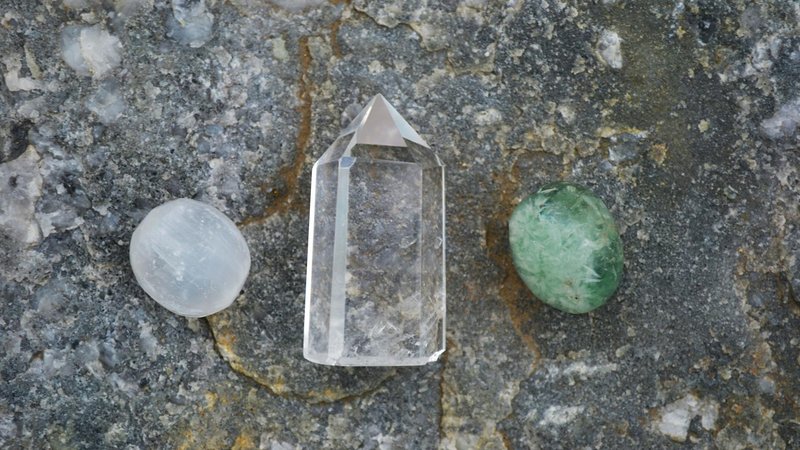
The first time I saw selenite, I had no idea what I was looking at. I was browsing a small crystal shop on a weekend trip, and there it was on a shelf — a long, white, semi-translucent "stick" that seemed to glow from the inside. It looked like frozen moonlight, if that makes any sense. The shop owner noticed me staring and said, "That's selenite. It's the ultimate cleanser — it cleans everything else, including itself." I bought it on the spot, and honestly, it's become one of the most-used pieces in my entire crystal collection. If you've been curious about this weird, glowy mineral, here's everything I've learned about selenite crystal meaning, properties, and how to actually use it.
What Exactly Is Selenite?
Despite looking like some kind of mystical ice, selenite is a completely natural mineral. It's a form of gypsum — specifically, the transparent or translucent variety of calcium sulfate. The name comes from the Greek word "selene," meaning moon, which makes total sense when you see how it catches light. Under direct light, it has this gorgeous pearlescent, almost silky sheen that earned it the nickname "liquid light."
Here's what you need to know about its physical properties:
- Composition: Hydrous calcium sulfate (CaSO₄·2H₂O) — yes, it literally contains water in its crystal structure
- Hardness: Only 2 on the Mohs scale. That's extremely soft — your fingernail is about 2.5. You can literally scratch selenite with your nail
- Major sources: Mexico (by far the largest producer), Morocco, and the United States (especially Oklahoma and New Mexico)
- Appearance: White to colorless, often with a fibrous or satiny look. Higher-quality pieces can be nearly transparent
That low hardness is worth emphasizing because it's the reason selenite needs special care — but more on that later.
Why Is Selenite Called a "Cleansing Crystal"?
In crystal healing traditions, selenite has earned a reputation as the go-to purification stone. The belief is that it has the ability to cleanse the energy of other crystals, spaces, and even people — without ever needing to be cleansed itself. This "self-cleansing" property is pretty unique in the crystal world and is one of the main reasons selenite is so popular.
The traditional thinking goes something like this: selenite carries a very high, pure vibration that essentially "resets" the energy of anything it comes into contact with. Think of it like a factory reset button, but for energy. Other crystals absorb and hold onto energy over time (which is why people cleanse them in moonlight, smoke, or salt), but selenite supposedly never holds onto negative energy. It just keeps doing its thing.
Whether or not you buy into the metaphysical side, there's something undeniably calming about having selenite around. Its soft white glow, its smooth texture, the way it seems to catch and hold light — it creates a peaceful atmosphere that's hard to argue with, regardless of your beliefs about energy work.
How to Use Selenite: Five Practical Methods
1. Cleansing Other Crystals
This is by far the most common use. If you have a collection of crystals that you feel need refreshing, simply place them on or near a piece of selenite and leave them overnight. Many people use selenite charging plates or towers for this — you just set your other stones on top and let them "reset." I keep a selenite plate on my nightstand and drop my daily-wear crystals onto it at the end of the day. No moonlight, no smoke, no hassle. It's the lowest-effort cleansing method I've found.
2. Space Clearing and Energy Grids
Some people place selenite pieces in the four corners of a room to create what's called an "energy grid." The idea is that the four pieces create a protective, purified zone in the center. I tried this in my meditation space and, whether it was the selenite or the placebo effect, the room did feel different — lighter, somehow. At minimum, four glowing white crystal towers in the corners of a room look beautiful and create a serene atmosphere.
3. Meditation Aid
Holding a piece of selenite during meditation is a common practice. The stone is smooth, cool to the touch, and lightweight — very pleasant to hold for extended periods. Many practitioners say it helps quiet mental chatter and creates a sense of mental clarity. I can't speak to the energy claims, but I will say that having a smooth, glowing object to focus on during meditation does help me stay present. It's like a physical anchor for your attention.
4. Crystal Grids
If you build crystal grids (geometric arrangements of crystals for specific intentions), selenite is often used as the "connecting" material. People place selenite wands or sticks between the other crystals in the grid, believing that the selenite amplifies and connects the energy of the surrounding stones. Even from a purely aesthetic perspective, a selenite wand running through the center of a crystal grid looks stunning.
5. Bedroom Placement for Better Sleep
A lot of people keep selenite on their nightstand or under their pillow. The claim is that it promotes peaceful sleep and "lucid" or clear dreams. I've been sleeping with a small selenite wand on my nightstand for about six months now, and I've noticed my dreams have been more vivid — though I couldn't tell you if that's the crystal or just that I'm thinking about it before bed. Either way, it's a risk-free experiment. Worst case, you have a pretty glowing stone next to your bed.
Crucial Care Tips: What You Must NOT Do
Selenite is beautiful, but it's also fragile and chemically sensitive. If you're going to own it, you need to know its limits:
Keep It Away from Water
This is the number one rule. Remember how selenite is a hydrous mineral — it contains water in its crystal structure? That means prolonged contact with water will actually dissolve it. Not "damage it a little" — dissolve it. I've seen photos of selenite towers that were left out in the rain and turned into lumpy, cloudy, misshapen blobs. Even brief exposure to moisture can make the surface cloudy or rough. Never wear selenite in the shower, never cleanse it with water, and if it gets wet accidentally, dry it immediately with a soft cloth.
Avoid Prolonged Sunlight
Direct sunlight for extended periods can cause selenite to become brittle or develop surface cracks. This doesn't mean you can't ever let sunlight touch it — a brief photo in natural light is fine. But don't leave it on a sunny windowsill as a permanent display piece. Indirect light is ideal.
Handle with Care
At Mohs 2, selenite is one of the softer gemmy minerals you can own. It will scratch if you rub it against anything harder — and almost everything is harder than Mohs 2. It can also chip or break if dropped. Keep it somewhere stable, away from edges, and ideally on a soft surface like a cloth or felt pad. If you're transporting it, wrap it in tissue or bubble wrap.
Don't Confuse Selenite with These Lookalikes
Crystal shops can be confusing, and there are a few minerals that look similar enough to selenite to cause mix-ups:
Selenite vs. Moonstone: Moonstone is a feldspar mineral with a distinctive blue-white sheen called "adularescence." It's much harder (Mohs 6-6.5) and has a totally different crystal structure. Moonstone is opaque to translucent with a pearly blue flash, while selenite is typically white and more uniformly translucent.
Selenite vs. Clear Gypsum: These are actually the same mineral species, but "selenite" specifically refers to the transparent to translucent, crystalline form. Masses of fine-grained gypsum (alabaster, satin spar) are chemically identical but look and feel different — they're more opaque and often have a fibrous, silky texture.
Selenite vs. Quartz: Clear quartz is much harder (Mohs 7), heavier, and has a different crystal system. Quartz feels colder to the touch and has a more glass-like appearance. If you can scratch it with your fingernail, it's not quartz.
When you're shopping, the easiest test is the scratch test — if you can make a mark on it with your nail, it's probably selenite (or another soft mineral). If it's rock-hard, it's something else.
How to Choose Quality Selenite
Not all selenite is created equal. Here's what to look for:
- Color: The best selenite is pure white to colorless and as transparent as possible. Yellowish or brownish pieces are lower quality. That said, some people prefer slightly warmer tones for their aesthetic.
- Rainbow selenite: Some pieces display a subtle rainbow iridescence when tilted under light. These are considered more valuable and are genuinely beautiful — if you find one, grab it.
- Form factor: Choose based on how you plan to use it. Flat plates or slabs are ideal for cleansing other crystals. Towers and wands are great for meditation and grids. Tumbled pieces are good for carrying or placing under a pillow.
- Surface quality: Avoid pieces with visible cracks, chips, or cloudy spots (unless you like the cloudy look). The surface should be smooth and satiny to the touch.
Mexican selenite is generally considered the finest quality — it tends to be the most transparent and has the best "glow." Moroccan selenite is usually more opaque and has a different character, often with a more fibrous, cat-eye-like chatoyancy. Both are genuine selenite; they just look different.
How to Cleanse Selenite (Without Water)
Since you can't use water on selenite, here are the standard alternative cleansing methods:
- Smoke cleansing: Pass the selenite through the smoke of sage, palo santo, or incense. This is the most common method and works well for all crystal types.
- Moonlight: Place it in a windowsill or outside during a full moon. Indirect moonlight is gentle and won't damage the crystal. Many practitioners swear by this method.
- Sound cleansing: Use a singing bowl, tuning fork, or even bells near the selenite. The vibration is believed to clear stagnant energy. This is probably the lowest-effort method after doing nothing at all.
- Other crystals: Ironically, you can place selenite on or near a clear quartz or carnelian cluster, both of which are believed to have cleansing properties of their own. It's like a cleansing feedback loop.
And here's the thing many people forget: since selenite is traditionally considered self-cleansing, you may not need to actively cleanse it at all. Some crystal workers never cleanse their selenite and report that it works fine indefinitely. I cleanse mine about once a month with sage smoke, mostly because the ritual itself is calming, not because I think the selenite "needs" it.
Crystal Pairing Suggestions
If you're building a crystal practice, selenite plays well with others. Here are some of the most popular pairings:
Selenite + Black Tourmaline: This is probably the most common pairing. The idea is that selenite purifies and elevates energy while black tourmaline grounds and protects. Together, they create a balanced energy field — the selenite clears out the heavy stuff, and the tourmaline keeps new negativity from coming in. I keep this combo near my front door.
Selenite + Amethyst: Amethyst is associated with spiritual growth, intuition, and calm. Paired with selenite's purifying energy, it's said to enhance meditation and support emotional healing. This is a great combination for a bedroom or meditation space.
Selenite + Rose Quartz: If you're working on self-love or emotional openness, this pairing is lovely. Selenite clears emotional blockages while rose quartz encourages compassion and tenderness. Together, they create a gentle, nurturing energy.
Selenite + Clear Quartz: Clear quartz is known as the "master healer" and amplifier. Combined with selenite, it's like a double cleanse-and-amplify combo. Some people use this pairing when they want to really supercharge their intention-setting practice.
Is Selenite Worth Adding to Your Collection?
Absolutely, and not just for the metaphysical reasons. On a purely practical level, selenite is one of the most affordable crystals you can buy. A decent-sized selenite tower or wand typically costs less than a fancy coffee. It's also one of the few crystals that genuinely looks impressive on display — that inner glow catches light in a way that makes people stop and ask what it is.
On the spiritual side, if you're even slightly open to the idea that crystals carry energy, selenite is the one I'd recommend starting with. It's gentle, versatile, and forgiving. You don't need to be an experienced crystal worker to benefit from having it around. Put a piece on your desk, on your nightstand, or in your meditation space, and see how it feels. That's really all there is to it.
After six months of working with selenite crystal properties in my daily routine, I can honestly say it's the one crystal I'd replace immediately if I lost everything else. It's low maintenance, beautiful to look at, and whether it's the crystal itself or the intention I bring to using it, my space feels calmer with it around. And sometimes, that's all you really need.

Comments