Rose Quartz Meaning, Uses & Benefits: Your Complete Guide
What Exactly Is Rose Quartz?
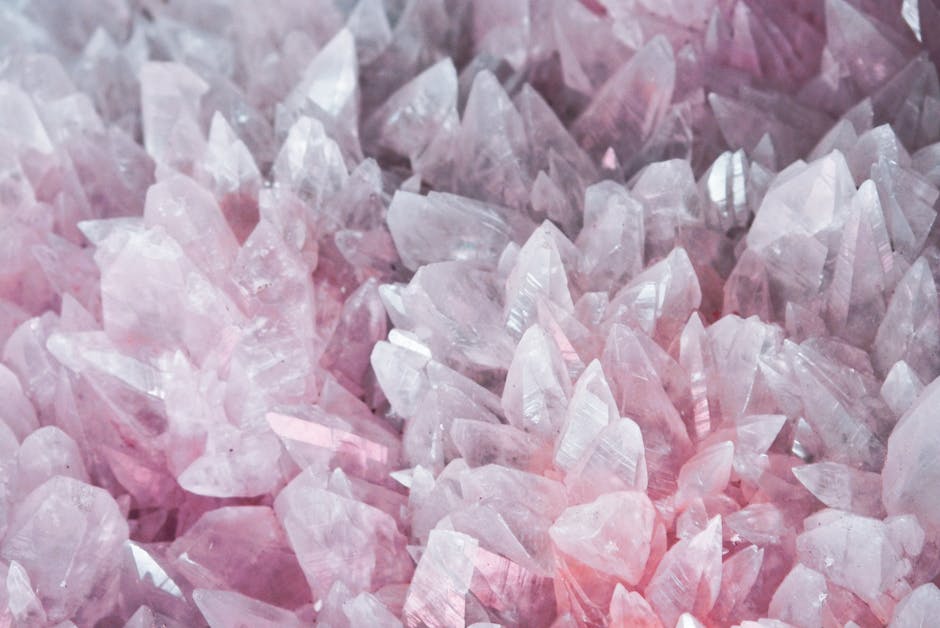
Rose quartz is a variety of quartz, which is one of the most abundant minerals on Earth. Its chemical formula is SiO₂ — silicon dioxide, the same compound that makes up regular clear quartz, amethyst, citrine, and even beach sand. What sets rose quartz apart is its color, which ranges from a very pale, almost transparent pink to a deep, milky rose.
The pink color comes from trace amounts of titanium, iron, or manganese within the crystal structure. The exact mechanism has been debated for decades. Earlier theories pointed to titanium as the primary colorant, but more recent research suggests that the color might come from microscopic inclusions of a fibrous mineral called dumortierite, not from the quartz itself. This would make rose quartz's color more similar to how a ruby gets its red from chromium inclusions in corundum, rather than from the host mineral's chemistry.
Most rose quartz is translucent rather than transparent. You can see light through thinner pieces, but the color is cloudy and soft rather than gem-clear. Transparent rose quartz does exist — it's called "pink quartz" or "pink crystalline quartz" in gemological circles — but it's rare and usually comes from a few specific locations in Brazil. The transparent variety is also sensitive to light and can fade with prolonged sun exposure, while the more common translucent rose quartz holds its color indefinitely.
Where Does Rose Quartz Come From?
Rose quartz is found on every continent, but certain locations produce distinctly different material. The three most commercially significant sources are Brazil, Madagascar, and the United States.
Brazilian rose quartz, particularly from Minas Gerais, tends to be the deepest pink and most commercially available. Minas Gerais is one of the world's great mineral-producing regions, and its pegmatite deposits yield enormous quantities of rose quartz in a range of pink shades. Some Brazilian material has a strong, saturated color that's almost peachy, and large single crystals (which are unusual for rose quartz) have been found here.
Madagascar produces rose quartz that's often paler and more uniformly translucent than the Brazilian material. It has a clean, soft pink that many people associate with the "classic" rose quartz look. Madagascar is also known for rose quartz with interesting internal features — phantom growth zones, tiny mineral inclusions, and occasionally a faint six-rayed asterism (star effect) when the stone is cut as a cabochon.
In the United States, the most notable rose quartz comes from the Black Hills of South Dakota and from several locations in Maine. American material is generally paler than Brazilian rose quartz and tends to have more inclusions. The Black Hills material has been mined since the late 1800s and is often found alongside other pegmatite minerals like tourmaline and beryl.
Other significant sources include India (which produces a lighter, sometimes slightly orange-pink material), Namibia, Mozambique, and Sri Lanka. Each location produces material with subtle differences in color tone, clarity, and inclusion patterns that experienced collectors can often identify at a glance.
How Has Rose Quartz Been Used Throughout History?
Rose quartz has a long history of cultural significance that stretches back thousands of years. It wasn't just decorative — different civilizations attached genuine meaning to this stone.
Ancient Egypt
The Egyptians used rose quartz in cosmetic and funerary contexts. Archaeological finds include rose quartz facial masks, which were believed to help prevent wrinkles and maintain a youthful complexion. These weren't just decorative — the smooth, cool surface of polished quartz was used in massage and skin treatments. Rose quartz has also been found in Egyptian tombs, suggesting it was valued enough to accompany the dead into the afterlife. The Egyptians associated the color pink with life and vitality, which fits with their use of the stone in beauty and preservation rituals.
Ancient Rome and Greece
Roman and Greek sources mention quartz as a general category, though specific references to rose quartz are less common than references to clear quartz or amethyst. The Romans used quartz in signet rings and intaglio carvings, and the pink variety would have been available from deposits in Europe and Asia Minor. Some Roman writers attributed the pink color of certain quartz to the blood of various deities — a common mythological explanation for unusual mineral colors in the ancient world.
East Asian Traditions
In Chinese culture, jade is the stone most strongly associated with virtue and beauty, but rose quartz has its own place in Chinese lapidary tradition. Chinese artisans have carved rose quartz for centuries, producing intricate figurines, snuff bottles, and decorative objects. The pink color is associated with love and romance in Chinese symbolism, and carved rose quartz pendants have been exchanged as tokens of affection. The stone was also used in feng shui practices, where it was traditionally placed in the southwest area of a home to enhance relationships.
Indigenous American Cultures
Several Native American cultures in the Americas used rose quartz and other quartz varieties in tools, ornaments, and ceremonial objects. Quartz in general was valued for its hardness and ability to hold an edge, and the pink variety would have been recognized as distinctive. Specific cultural meanings varied between tribes, but quartz was often associated with clarity, connection to the spiritual world, and the earth's energy.
What Are the Physical Properties of Rose Quartz?
From a gemological perspective, rose quartz has the following properties:
Hardness: 7 on the Mohs scale (the same as all other quartz varieties). This means it's reasonably durable for everyday wear — it will scratch glass but can be scratched by harder minerals like topaz, sapphire, and diamond. It's suitable for rings, pendants, and earrings, though rings in daily wear will accumulate scratches over time.
Cleavage: None. Quartz doesn't have natural cleavage planes, which means it doesn't split along predictable lines. Instead, it fractures conchoidally — with smooth, curved break surfaces, like thick glass. This is actually an advantage for jewelry because it means the stone is less likely to chip or split from impact compared to stones with strong cleavage (like diamond or topaz).
Specific gravity: 2.65, which is relatively light. A one-carat rose quartz will be noticeably larger than a one-carat diamond or sapphire.
Refractive index: 1.544-1.553, which gives it moderate brilliance — not as sparkly as diamond or even cubic zirconia, but with a pleasant, soft luster when well-polished.
Is Rose Quartz Treated or Enhanced?
Most commercial rose quartz on the market is natural and untreated. Unlike some other gemstones (blue topaz is almost always irradiated, most emeralds are oiled, most rubies are heat-treated), rose quartz is one of the stones that's usually sold in its natural state.
However, some rose quartz on the market is dyed. Lower-quality or very pale material can be treated with pink dyes to enhance the color. Dyed rose quartz tends to have an unnaturally uniform color that lacks the natural variation and cloudiness of genuine material. If the color looks too vivid or too even throughout the piece, it may be dyed. Dyed stones can also fade with prolonged sun exposure or wear in areas that come into contact with skin oils and chemicals.
There are also synthetic rose quartz products — lab-grown quartz that's been colored pink. These are chemically identical to natural quartz but can be identified by a gemologist using magnification to look for characteristic growth patterns and inclusions that differ from natural material.
How Should You Care for Rose Quartz?
Cleaning rose quartz is straightforward: warm water, mild soap, and a soft brush or cloth. Avoid ultrasonic cleaners — while quartz is hard enough to survive the vibrations, any internal fractures or inclusions could worsen under ultrasonic stress. Avoid steam cleaning for the same reason, and because sudden temperature changes can cause thermal shock fractures.
Rose quartz is sensitive to prolonged heat and direct sunlight. While the common translucent variety is fairly stable, extended sun exposure can cause fading in some specimens, especially those with higher titanium content. Store rose quartz away from direct light and away from harder stones that could scratch it.
Avoid contact with harsh chemicals. Household cleaners, bleach, acids, and even some perfumes can damage the surface or affect the color over time. Put rose quartz jewelry on after applying lotions and perfumes, and remove it before swimming or using cleaning products.
What's the Difference Between Rose Quartz and Pink Quartz?
This distinction matters more to mineralogists and gemologists than to most buyers, but it's worth knowing. "Rose quartz" typically refers to the common translucent, massive (non-crystalline) pink quartz that makes up the vast majority of material on the market. "Pink quartz" refers to the rare transparent to translucent crystalline variety that forms individual crystals rather than massive blocks.
The crystalline variety is sensitive to light — exposure to sunlight or even bright indoor lighting can cause the pink color to fade over time. This suggests that the coloring mechanism is different from that of common rose quartz, supporting the theory that common rose quartz gets its color from inclusions rather than from trace elements in the quartz structure itself.
If you're buying rose quartz for jewelry, you'll almost certainly be getting the common translucent variety, which is stable, durable, and holds its color well. Crystalline pink quartz is mostly a collector's mineral and is rarely cut into commercial jewelry.
How Can You Tell Real Rose Quartz From Fake?
The most common fake is glass dyed pink. Glass is actually harder to identify by eye than you might think, but there are a few tells. Real rose quartz typically has some natural inclusions — tiny fractures, wispy internal features, slight color variations. Glass tends to look too uniform and too clean, or it has bubble inclusions (tiny spherical voids) that quartz doesn't form.
Temperature can also help. Quartz feels cold to the touch and stays cool for a while, while glass warms up faster. This isn't a definitive test, but it's a quick check. Hardness is another indicator — quartz (7) will scratch glass (5.5), but won't scratch a steel file (6.5). If your "rose quartz" can be scratched by a steel knife, it's probably glass or a softer material.
For dyed material, look for color concentration in fractures and surface scratches. Natural rose quartz has color that appears evenly distributed throughout the stone (even if the shade varies), while dyed material often shows deeper color in surface-reaching cracks and scratches where the dye has pooled.
Frequently Asked Questions
Can rose quartz go in water?
Yes, briefly. Washing rose quartz in water is fine and is actually the recommended cleaning method. However, prolonged soaking isn't ideal — especially in hot water or water with chemicals. Some rose quartz contains microscopic fractures that water can penetrate, potentially weakening the stone over very long periods. For regular cleaning, a quick wash with mild soap and a soft cloth is all you need.
Why is my rose quartz cloudy?
Cloudiness is normal for rose quartz. Unlike clear quartz or amethyst, which can form in large, transparent crystals, most rose quartz forms in massive, interlocking crystal structures with microscopic inclusions that scatter light. This is what gives rose quartz its characteristic soft, translucent appearance. A completely clear rose quartz is extremely rare. If you've bought a piece expecting it to be transparent, the cloudiness isn't a defect — it's the natural state of the stone.
Does rose quartz fade in sunlight?
The common translucent rose quartz is fairly stable and doesn't usually fade significantly with normal wear. However, prolonged direct sunlight — months of sitting on a sunny windowsill, for example — can cause some fading. The rare crystalline pink quartz is much more light-sensitive and can lose its color within weeks of direct sun exposure. As a general rule, store rose quartz out of direct sunlight to preserve its color.
Is rose quartz expensive?
No, not compared to most gemstones. Rose quartz is one of the more affordable colored stones. Tumbled stones and small raw pieces cost a few dollars each. Cut and polished jewelry-grade pieces range from $5 to $50 for common sizes. Large, high-quality specimens with deep, even color can reach into the hundreds, but this is the exception. Compared to pink sapphire, pink tourmaline, or even morganite, rose quartz is very budget-friendly.
What does rose quartz pair well with in jewelry?
Rose quartz works particularly well with other pink stones like kunzite and morganite for a monochromatic look, or with clear quartz and amethyst for a quartz-family palette. It also pairs nicely with metals — rose gold is the obvious match, but sterling silver creates a clean, modern contrast, and yellow gold gives a warm, vintage feel. The soft pink is versatile enough to complement most skin tones and clothing colors.
Comments