Rhodochrosite: The Complete Guide to the Stone of Compassionate Love
Rhodochrosite: The Complete Guide to the Stone of Compassionate Love
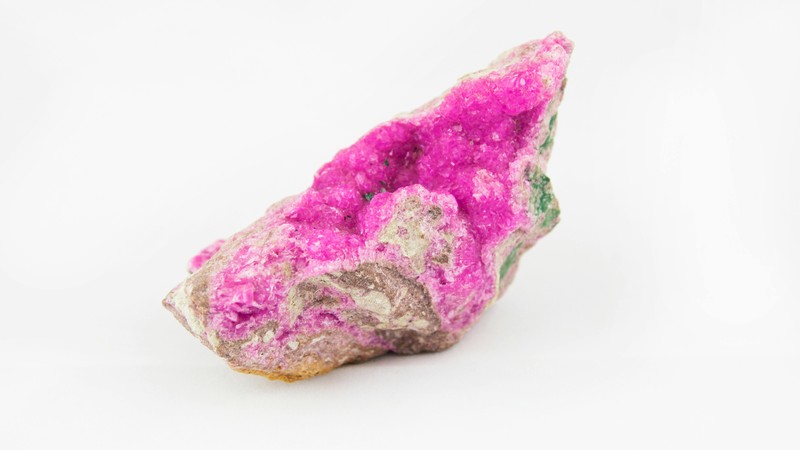
If you've ever been drawn to the swirling pinks and reds of a gemstone that looks like it holds a sunset inside, chances are you've encountered rhodochrosite. Often called the "Stone of Compassionate Love," rhodochrosite is one of the most emotionally powerful crystals in the mineral kingdom. Its signature banded patterns in shades of raspberry, salmon, and cream make it instantly recognizable — and its metaphysical reputation for healing the heart makes it irresistible to crystal collectors and spiritual seekers alike.
In this comprehensive guide, we'll explore everything rhodochrosite: what it is, where it comes from, how to use it, and why it deserves a place in your crystal collection.
What Is Rhodochrosite?
Rhodochrosite is a manganese carbonate mineral with the chemical formula MnCO₃. Its name comes from the Greek words rhodon ("rose") and chroma ("color") — a fitting tribute to its beautiful pink-to-red hues. The coloration comes directly from its manganese content, with deeper reds indicating higher manganese concentrations.
What sets rhodochrosite apart from other pink gemstones is its distinctive banding. Most specimens display concentric or angular bands in alternating shades of pink, red, salmon, orange, and white or cream. These bands form as the mineral grows in layers over time, creating a natural artwork that no two pieces share.
Rhodochrosite typically forms in hydrothermal veins, often alongside silver, lead, and copper deposits. It can also appear as a secondary mineral in the oxidation zones of manganese ore bodies. While it's found in several locations worldwide, only a few sources produce gem-quality material suitable for jewelry and collectible specimens.
Physical Properties of Rhodochrosite
Understanding the physical characteristics of rhodochrosite helps you identify genuine specimens and care for them properly. Here are the key properties:
- Color: Pink, red, salmon, orange-pink, brownish-red; often banded with white or cream layers
- Hardness: 3.5–4 on the Mohs scale (relatively soft — about as hard as a copper penny)
- Crystal System: Trigonal
- Luster: Vitreous to pearly on cleavage surfaces
- Transparency: Transparent to translucent; opaque specimens are more common
- Cleavage: Perfect rhombohedral cleavage (meaning it can split along smooth, flat planes)
- Specific Gravity: 3.45–3.60 (noticeably heavier than quartz)
- Streak: White
The relatively low hardness (3.5–4) is one of the most important things to know about rhodochrosite. It's softer than most popular gemstones, which means it scratches more easily and requires gentler care. If you're familiar with rose quartz, which rates a 7 on the Mohs scale, rhodochrosite is significantly more delicate.
Metaphysical Properties: Why Rhodochrosite Is the Stone of Compassionate Love
In the world of crystal healing, rhodochrosite is revered as one of the most powerful stones for emotional work. Here's what makes it special:
Self-Love and Inner Worth
Rhodochrosite is widely considered the premier crystal for cultivating deep, unconditional self-love. Unlike rose quartz, which radiates love outward to all beings, rhodochrosite turns the focus inward. It's said to help you recognize your own worth, release self-criticism, and develop genuine compassion for yourself — including the parts of your past you'd rather forget.
Emotional Healing and Trauma Release
One of rhodochrosite's most celebrated properties is its ability to support emotional healing, particularly around past trauma and childhood wounds. Crystal healers often recommend it for people working through grief, heartbreak, or abuse recovery. The stone is believed to gently bring repressed emotions to the surface so they can be processed and released, rather than buried deeper.
Heart Chakra Activation
As a heart chakra stone, rhodochrosite helps open, cleanse, and balance this vital energy center. When the heart chakra is blocked, you may feel closed off, defensive, or unable to give or receive love freely. Rhodochrosite is said to dissolve these blockages, allowing emotional energy to flow naturally. For those exploring the broader world of pink crystals and their healing properties, rhodochrosite is one of the most potent heart chakra activators available.
Confidence and Joy
Beyond emotional healing, rhodochrosite is associated with renewed passion, creativity, and a more positive outlook on life. It's often used to combat lethargy, depression, and emotional numbness, replacing them with enthusiasm and a sense of purpose.
How to Use Rhodochrosite in Your Daily Life
There are many ways to incorporate rhodochrosite into your spiritual practice and daily routine:
Meditation
Place a rhodochrosite specimen or tumble stone on your heart chakra (center of your chest) during meditation. Close your eyes, breathe deeply, and visualize its pink energy expanding through your chest. Many practitioners find that rhodochrosite brings up emotions quickly during meditation — this is normal and part of the healing process. Allow whatever arises to surface without judgment.
Jewelry
Wearing rhodochrosite as jewelry keeps its energy close to your body throughout the day. Pendants worn near the heart are especially popular. However, because of its low hardness (3.5–4), rhodochrosite jewelry should be worn with care — avoid wearing rings or bracelets during physical activities, and store pieces separately to prevent scratching.
Crystal Grids
Rhodochrosite works beautifully in crystal grids focused on love, healing, or emotional balance. Pair it with complementary stones like rose quartz, green aventurine, or pink tourmaline to amplify the heart-centered energy. Place the grid in your bedroom, meditation space, or anywhere you want to cultivate a loving atmosphere.
Home and Workspace Placement
Keep a piece of rhodochrosite on your nightstand to encourage self-love and peaceful sleep, or place it in your living room to promote harmonious relationships. In a workspace, it can help you approach challenges with more compassion and less self-judgment.
How to Cleanse and Care for Rhodochrosite
Because rhodochrosite is a relatively soft and porous stone, it requires more careful handling than harder crystals:
- Avoid water: Prolonged exposure to water can damage rhodochrosite, especially if it has natural fractures. A quick rinse is usually fine, but don't soak it.
- No ultrasonic cleaners: The vibrations can fracture or shatter rhodochrosite due to its perfect cleavage.
- No harsh chemicals: Avoid household cleaners, acids, and even strong soaps. Warm water with mild soap is sufficient if cleaning is needed.
- Store separately: Keep rhodochrosite away from harder stones (quartz, topaz, sapphire) that could scratch it. A soft pouch or lined box works well.
- Avoid direct sunlight: Prolonged sun exposure can fade the color over time.
- Energetic cleansing: Use smoke (sage, palo santo), sound (singing bowl, tuning fork), moonlight, or placement on selenite to cleanse rhodochrosite energetically without physical contact.
How to Tell Real Rhodochrosite from Fake
As rhodochrosite grows in popularity, the market has seen an increase in imitations. Here's how to spot the real thing:
Watch for Dyed Calcite
The most common fake is banded calcite dyed pink to mimic rhodochrosite. Real rhodochrosite has a specific gravity of 3.45–3.60 (it feels heavier than you'd expect for its size), while calcite is much lighter at 2.71. The banding patterns also differ: rhodochrosite bands tend to be more irregular and organic, while dyed calcite often shows unnaturally uniform color distribution.
Check the Hardness
Real rhodochrosite can be scratched by a copper coin (hardness ~3.5), while calcite is even softer and can be scratched by a fingernail. However, hardness testing is destructive, so it's better to rely on other methods first.
Look at the Color
Genuine rhodochrosite has a distinctive warm pink-to-red color with natural variation. If the color looks too uniform, too bright, or has an artificial "neon" quality, it may be dyed. Under UV light, some rhodochrosite shows a weak pinkish fluorescence, while dyed stones may glow differently.
Buy from Reputable Sources
The best defense against fakes is buying from trusted mineral dealers and crystal shops with good reputations. Be especially cautious with very cheap "rhodochrosite" offered on marketplace platforms — if the price seems too good to be true, it probably is.
Rhodochrosite vs. Rhodonite vs. Rose Quartz
These three pink stones are frequently confused, but they each have distinct characteristics and uses:
| Property | Rhodochrosite | Rhodochite | Rose Quartz |
|---|---|---|---|
| Composition | Manganese carbonate (MnCO₃) | Manganese silicate | Silicon dioxide (SiO₂) |
| Hardness | 3.5–4 | 5.5–6.5 | 7 |
| Appearance | Banded pink/red/white | Black manganese oxide in pink matrix | Translucent uniform pink |
| Key Energy | Self-love, trauma healing | Emotional balance, forgiveness | Universal love, peace |
| Durability | Fragile, for display/gentle wear | Moderate, good for jewelry | Durable, excellent for daily wear |
For a deeper comparison of two popular pink stones, check out our article on morganite vs rose quartz, which explores another angle of pink gemstone selection. And if you're curious about rhodonite's meaning and properties, we've covered that stone in detail as well.
Famous Sources of Rhodochrosite
Argentina — The Sweet Home Mine
Argentina is arguably the most famous source of fine rhodochrosite in the world. The Sweet Home Mine in the Capillitas district of Catamarca Province has produced some of the most spectacular crystal specimens ever found — deep red, gem-quality rhombohedra perched on contrasting matrix. These specimens are highly prized by collectors and can command extraordinary prices at mineral shows. Argentina also designated rhodochrosite as its national stone in 2002, a testament to its cultural significance.
Colorado, USA
The Sweet Home Mine in Colorado's Alma District (not to be confused with the Argentine mine of the same name) is another legendary source. Active primarily in the 1990s, this mine produced stunning deep-red rhodochrosite crystals that are considered among the finest ever discovered. Colorado rhodochrosite specimens remain highly sought after by mineral collectors worldwide.
South Africa
South Africa produces significant quantities of rhodochrosite, particularly from the Kalahari manganese fields in the Northern Cape Province. South African material tends to be more salmon-pink to orange-pink in color, often with well-defined banding. While perhaps less famous than the Argentine or Colorado material, South African rhodochrosite offers excellent quality at more accessible price points.
Other Notable Sources
Rhodochrosite is also found in Peru, Mexico, Romania, Russia, Japan, and several other countries. Each location produces material with slightly different characteristics, making origin an interesting aspect of collecting.
Conclusion
Rhodochrosite is far more than just a beautiful pink stone. Its mesmerizing banded patterns tell the story of millions of years of geological formation, while its metaphysical properties offer profound support for emotional healing and self-discovery. Whether you're a seasoned crystal collector, a spiritual practitioner, or someone simply drawn to its warm, loving energy, rhodochrosite has something meaningful to offer.
Remember that this is a delicate stone — both physically and emotionally. Handle it with care, cleanse it gently, and be patient with the healing process it may support. Like all crystals, rhodochrosite works best when approached with intention, openness, and respect for the natural beauty it carries within its layered depths.
If you're building a collection of pink stones for heart-centered work, rhodochrosite is an essential addition alongside rose quartz, rhodonite, and morganite. Each brings its own energy to the table, and together they create a powerful toolkit for love, healing, and emotional growth.
Comments