The psychology of why people collect crystals
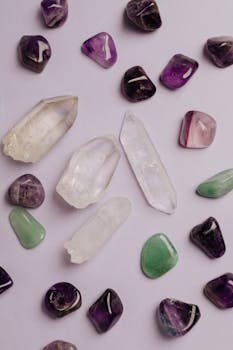
I have a drawer full of rocks, and I want to understand why
My collection started with a single piece of amethyst I picked up at a market in 2019. Purple, rough-edged, about the size of a golf ball. It cost $8. Within two years I had a shelf, then two shelves, then a dedicated drawer. Amethyst, rose quartz, black tourmaline, citrine, a chunk of labradorite I overpaid for at a gem show. None of these rocks do anything. They just sit there. And yet I keep acquiring more of them.
I am not alone. The crystal and gemstone market reached an estimated $8.4 billion globally in 2024, and it has been growing at roughly 6% annually since 2018. Social media is full of crystal collections — carefully arranged on wooden trays, photographed in golden-hour light, tagged with hashtags that accumulate millions of views. The question is not whether people collect crystals. They obviously do, in enormous numbers. The question is why, and the answer involves neuroscience, evolutionary biology, and a handful of psychological mechanisms that are far older than Instagram.
The collecting instinct is built in
Humans collect things. Stamp collections, baseball cards, vinyl records, vintage cameras, Funko Pop figures, sneakers. The specific objects change across cultures and eras, but the behavior is remarkably consistent. Psychologists have studied collecting behavior since the 1930s, and the most widely accepted framework comes from a 1991 paper by Russell Belk in the Journal of Consumer Research, which identified three core motivations: extension of self, connection to past experiences, and the pleasure of pursuit and discovery.
Crystal collecting fits neatly into all three categories. A piece of malachite you bought on a trip to Morocco is not just a rock — it is a physical record of that experience. A rose quartz given to you by a friend carries the weight of that relationship. The "extension of self" part is subtler: people who identify with certain qualities (calm, protection, creativity) often gravitate toward crystals culturally associated with those qualities, whether or not they believe the stones literally embody those properties. The rock becomes a symbol of who you want to be.
There is an evolutionary argument too. Hoarding behavior — gathering and storing resources — is adaptive. Squirrels bury acorns. Crows collect shiny objects. Early humans who gathered useful materials (flint for tools, clay for pottery, shells for decoration) had survival advantages. Our brains reward resource gathering with dopamine release, and that reward system does not distinguish between "useful resource" and "pretty purple rock." The spark of satisfaction you feel when adding a new piece to your collection is the same neural circuitry that kept your ancestors alive.
The aesthetics are not trivial
Crystals are visually striking. That is worth stating plainly because it gets lost in conversations about "energy" and "vibration." A piece of bismuth has a geometric, iridescent structure that looks alien. A raw emerald has a depth of green that no artificial pigment has ever quite replicated. Fluorite forms in perfect cubes. These are genuine aesthetic experiences, and aesthetics have measurable effects on the brain.
A 2019 study published in Frontiers in Psychology found that exposure to natural fractal patterns — the kind found in crystals, snowflakes, and tree branches — reduced stress by up to 60% as measured by cortisol levels. The researchers proposed that the human visual system evolved to process fractal patterns efficiently because they are so common in nature, and that efficient processing is inherently rewarding. Looking at a crystal is not just pretty. It triggers a neurological relaxation response.
The tactile dimension matters too. Crystals have weight, texture, temperature. Quartz feels cool to the touch. Selenite is so soft it can be scratched with a fingernail. Obsidian is glass-smooth and conchoidally fractured. Handling a crystal engages multiple sensory channels simultaneously, which research shows increases memory formation and emotional engagement. You are more likely to remember a rock you held than a rock you only saw in a photograph.
Identity and belonging
Collecting crystals has become a cultural signal. Displaying a crystal collection says something about you — or at least, about the community you want to belong to. In 2024, the hashtag #crystalsofinstagram has over 14 million posts on Instagram. #crystalhealing has 6 million. These are not niche communities. They are large, visible, and actively maintained.
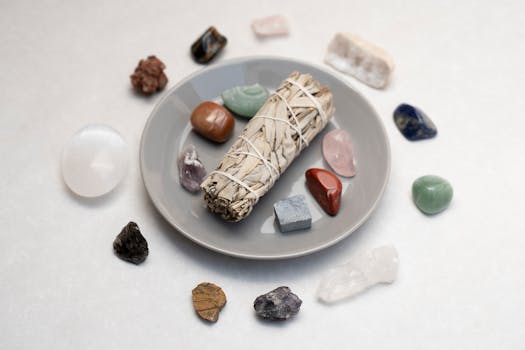
Henri Tajfel's social identity theory, developed in the 1970s, argues that people derive part of their self-concept from the groups they belong to. Collecting crystals places you within a recognizable subculture that has its own vocabulary (cleansing, charging, programming), its own aesthetics (wooden trays, sage bundles, indirect lighting), and its own social rituals (crystal shops, gem shows, online trading groups). Participating in this subculture provides belonging, and belonging is a fundamental human need — Maslow put it right above physiological needs in his hierarchy, and contemporary research has only reinforced its importance.
This is not unique to crystals. Sneaker collectors have Hypebeast. Vinyl collectors have Discogs. The mechanism is the same: objects become social currency within a community of shared interest.
The meaning-making machine
Humans are compulsive meaning-makers. We see faces in clouds, patterns in random numbers, and purpose in ambiguous events. This tendency, called apophenia, is not a bug — it is a feature. It is the same cognitive process that lets us recognize a predator hiding in tall grass. Our brains are wired to find signal in noise, and sometimes they find signal where there is none.
Crystal collecting creates abundant opportunities for meaning-making. Each stone has a name, a chemical composition, a place of origin, a hardness rating on the Mohs scale, and — in the metaphysical tradition — a set of associated properties. The layering of these information systems (geological, geographical, cultural) gives each crystal a density of meaning that is deeply satisfying to the meaning-making brain. You are not just holding a piece of rose quartz. You are holding silicon dioxide colored by trace amounts of iron and titanium, mined in Brazil, formed over millions of years in volcanic pegmatites, culturally associated with love since at least the Roman era. That is a lot to think about while holding a rock the size of a plum.
The control paradox
Here is something interesting: many crystal collectors do not actually believe in the metaphysical properties they casually reference. A 2023 survey of 1,200 crystal buyers by the market research firm CivicScience found that only 31% of respondents said they believed crystals had "real healing properties." The rest bought them for decoration, for gifts, out of curiosity, or because they simply liked how they looked. But even among the skeptics, the language of "energy" and "intention" pervades the community.
This is the control paradox. People want to feel a sense of agency over their emotional states — to believe that they can do something concrete (buy a specific stone, place it in a specific location, carry it in a specific pocket) that will make them feel calmer, braver, or more focused. That desire for agency is entirely rational. The world is chaotic and unpredictable, and attaching a specific action to a desired outcome — even if the causal link is imaginary — provides a sense of control that reduces anxiety.
Psychologists call this "illusion of control," and it is not always a negative thing. A 2015 study in the journal Organizational Behavior and Human Decision Processes found that people who believed they had personal rituals performed better under stress than those who did not, even when the rituals had no objective effect on the task. The ritual itself was the intervention.
The dark side
Not all collecting is healthy. Hoarding disorder, recognized in the DSM-5 since 2013, is characterized by persistent difficulty discarding possessions regardless of their actual value. The line between an enthusiastic collection and a hoarding problem is not always clear, but it typically involves functional impairment — when the collection interferes with living space, relationships, or financial stability.
The crystal market has its own pressures. Limited-edition releases, Instagram-fueled hype around rare specimens, and the gamification of collecting (complete the set, find the rare variant) can push people toward compulsive acquisition. A single high-quality piece of moldavite — a green glass formed by meteorite impact — can sell for over $500. Rare tourmaline specimens regularly fetch thousands. The financial stakes can become real, and the social media visibility of large collections creates a comparison spiral that is not healthy for everyone.
Why the rocks stay
I still have that piece of amethyst from 2019. It is on my desk right now, next to a chunk of black tourmaline and a small piece of pyrite that a friend gave me last year. I do not think they do anything supernatural. But I like having them around. They are beautiful, they remind me of places and people, and arranging them gives me a few minutes of quiet, focused attention that I do not get from much else in my day.
The psychology of crystal collecting is not really about crystals. It is about the things that all collecting is about: beauty, memory, identity, belonging, and the deep human need to gather the world into manageable pieces. The rocks are just the vehicle. The driver is something much older and much more interesting.
Comments