Pricing Handmade Jewelry: The Honest Guide to What You Should Really Charge
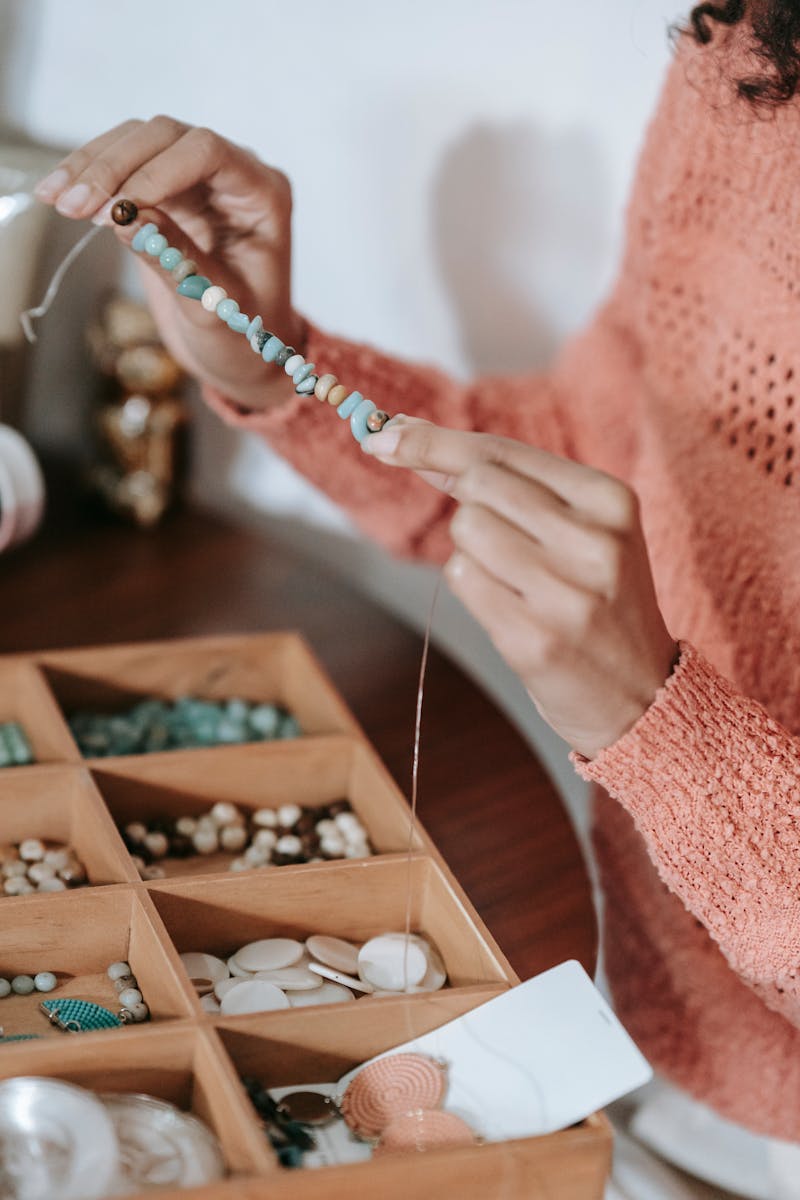
When I tell people I make handmade jewelry for a living, the first question is almost always: "How much do you charge?" And my answer — usually somewhere between $35 and $85 for a simple beaded bracelet — gets one of two reactions. Either their eyes go wide and they say "for a bracelet?!" or they nod thoughtfully and say "that seems fair."
Pricing is the single hardest part of running a handmade jewelry business. Not the making — that's the fun part. Not the selling — once you figure it out, it becomes routine. But the pricing? That's where you'll second-guess yourself every single day. Charge too little and you'll burn out working for pennies. Charge too much and you'll hear crickets. Finding that sweet spot took me over a year, and I made a lot of expensive mistakes along the way.
Here's what I've learned about pricing handmade jewelry — the honest version, without the sugarcoating.
The Cost-Plus Pricing Myth
Every jewelry business book and blog will tell you the same formula: cost of materials + cost of labor + overhead = wholesale price. Multiply by 2 for retail. Simple, right?
Except it doesn't work. Not for handmade jewelry sold directly to consumers online. Here's why:
Labor pricing is a trap. If you honestly account for your time — not just the physical making, but the designing, the photographing, the listing, the packaging, the customer service, the marketing — your labor cost alone might be $30-50 per piece. Add materials and overhead and you're suddenly pricing a simple beaded bracelet at $75-120. That might be the "correct" price, but try explaining that to someone who's comparing your work to a $12 mass-produced bracelet on Amazon.
Overhead is almost invisible until it isn't. Your workspace is your kitchen table. Your tools are paid for. Your website costs $20/month. But then you need better lighting for photos ($50), a shipping scale ($15), bubble mailers ($0.50 each), business cards ($30), craft show fees ($100-300), and suddenly overhead is real money.
The market doesn't care about your costs. Customers buy based on perceived value, not your expenses. A bracelet made with $3 of materials can sell for $60 if the design, photography, and story resonate. A bracelet made with $15 of materials might struggle to sell at $25 if the presentation doesn't match.
Cost-plus pricing is a useful floor — it tells you the absolute minimum you need to charge to not lose money. But it shouldn't be your primary pricing strategy.
The Better Approach: Value-Based Pricing
Instead of starting from your costs, start from the customer's perspective. What would this piece be worth to someone who loves it?
Ask yourself these questions:
- Who is the ideal customer? A teenager buying a gift with allowance money? A professional woman treating herself? A bride shopping for bridesmaid gifts? Each of these customers has different price expectations.
- What does this piece do for them? Is it a daily-wear staple? A statement piece for special occasions? A sentimental gift with meaning? Functional value and emotional value are both real.
- What are comparable pieces selling for? Look at other handmade sellers on Etsy, Instagram, and independent websites. Not mass-market retailers — your competition is other handmade artists at a similar quality level.
- What's the story? "I made this with rose quartz from a small mine in Brazil" is worth more than "I made this with rose quartz." The story adds perceived value, and customers will pay for it.
After you've answered these questions, set a price that feels right. Then check it against your cost floor. If the value-based price is above your floor, you're good. If it's below, you either need to find a way to increase perceived value or accept that this particular piece isn't profitable enough to keep making.
Real Pricing Benchmarks for 2026
After selling at craft shows, online, and through wholesale accounts for several years, here are the price ranges I've found work well for handmade jewelry sold directly to consumers:
Simple Beaded Bracelets
- $18-28: Basic stretchy bracelet with 1-2 bead types, no charms
- $28-42: Multi-strand, mixed materials, or with a small charm
- $42-65: Complex design, premium stones, or custom work
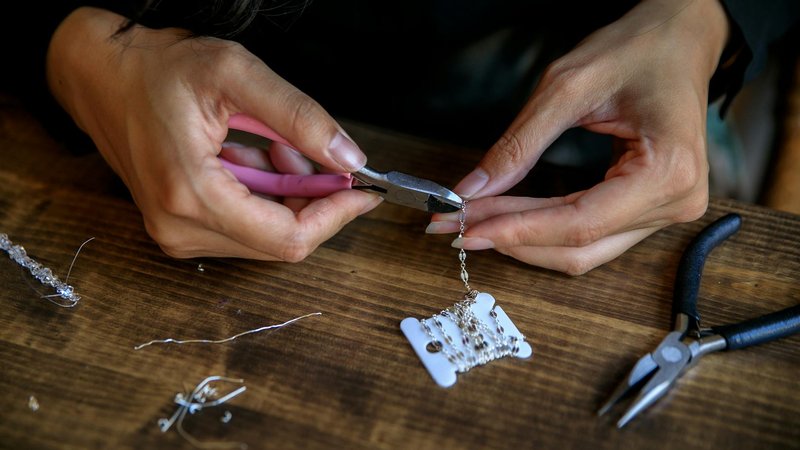
Wire-Wrapped Jewelry
- $25-40: Simple wire-wrapped pendant on cord or chain
- $40-70: Intricate wire wrapping with quality stones
- $70-120: Advanced techniques, large or rare stones, custom orders
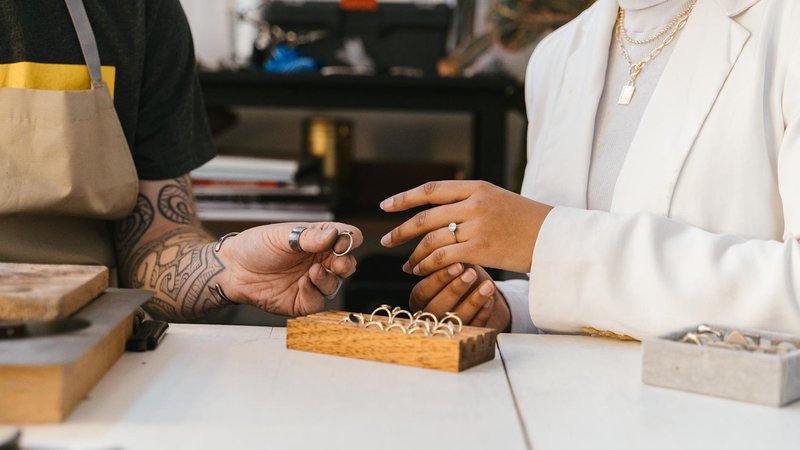
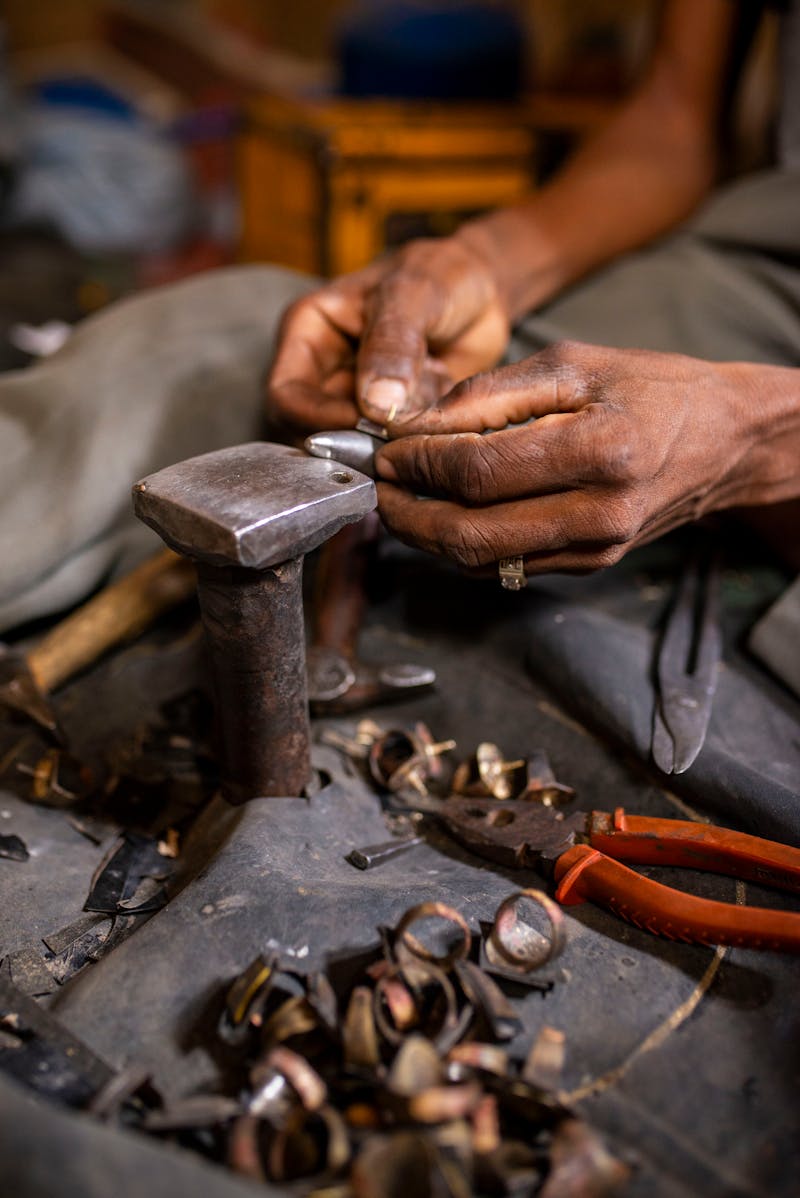
Hammered Metal Rings
- $25-40: Simple gold-fill or sterling silver band
- $40-65: Textured or wide band, gold-fill
- $65-100: Stone-set or mixed metal, gold-fill
Necklaces
- $30-50: Simple pendant on chain
- $50-85: Multi-stone or statement pendant
- $85-150: Elaborate designs, premium materials
These aren't rules — they're observations from what actually sells. Your specific market, quality level, and brand positioning will shift these numbers. But if you're currently pricing a gold-fill wire-wrapped pendant at $15, you're almost certainly leaving money on the table.
The Psychology of Pricing
Here's something that surprised me: raising my prices actually increased my sales. Not immediately, and not dramatically, but within a few months of raising my average price by about 30%, I was selling more pieces per month and making significantly more total revenue.
Why? Several reasons:
Higher prices signal higher quality. Customers who see a $20 bracelet and a $45 bracelet often assume the $45 one is better made, uses better materials, or comes from a more skilled artist. Sometimes they're right, and sometimes they're not — but the perception drives the purchase.
Higher prices attract better customers. Customers who buy at lower price points tend to be more demanding, more likely to ask for discounts, and more likely to leave negative reviews over minor issues. Customers who happily pay $50 for a handmade bracelet understand and appreciate what they're getting. They're buying the craft, not just the product.
Cheap pricing trains customers to expect cheap. If you start at $15 and later want to raise to $30, your existing customers will feel betrayed. But if you start at $35 and maintain consistent quality, nobody blinks when you introduce a premium line at $60.
The $19.99 trap is real but overrated. Ending prices in .99 or .95 does work — studies consistently show it increases conversion. But in the handmade space, round numbers like $25, $35, $50 also work well because they feel honest and transparent. I use both depending on the piece.
How to Raise Your Prices Without Losing Customers
If you're currently underpricing (and if you're reading this, you probably are — most handmade artists are), here's how to transition:
Method 1: The Gradual Increase
Raise prices by 10-15% on new pieces only. Keep existing listings at their current prices. Within 2-3 months, all your new work will be at the higher price point, and most customers won't notice because they're comparing individual pieces, not tracking your pricing over time.
Method 2: The Tiered Launch
Introduce a "premium" line at higher prices alongside your existing work. Differentiate it with better materials, more complex designs, or improved packaging. Once customers accept the premium line, raise your standard line prices to narrow the gap.
Method 3: The Clean Break
Raise everything at once by 20-30%. You will lose some customers. That's okay. The customers you lose are the price-sensitive ones who were never going to be profitable anyway. The customers who stay are the ones who value your work. This is the scariest option but often the most effective.
What NOT to Do
Don't apologize for your prices. Don't include explanations like "I know this seems expensive, but..." in your product descriptions. Don't offer discounts to people who complain about pricing. Stand behind your prices with confidence. If you don't believe your work is worth what you're charging, nobody else will either.
The Hidden Costs That Eat Your Profits
New sellers almost always underestimate these costs:
- Photography: A decent lightbox ($40-80), backdrop papers ($15), and editing software. Or professional product photography at $5-15 per image. You need 3-5 good photos per listing minimum.
- Packaging: Gift boxes ($0.50-2 each), tissue paper, stickers, thank-you cards, bubble mailers ($0.30-1 each). Nice packaging adds value but costs real money.
- Shipping: First-class packages in the US start at around $4-5. International shipping is $12-25. Offer free shipping over a certain amount to encourage larger orders.
- Platform fees: Etsy takes 6.5% + $0.20 per transaction plus 3% + $0.25 for payment processing. Your own website with Stripe costs 2.9% + $0.30. Shopify is $39/month plus transaction fees.
- Materials waste: Wire gets kinked, beads break, stones chip, glue fails. Budget at least 10% material waste into your pricing.
- Taxes: Sales tax varies by location. Self-employment tax is about 15% on your net income. Talk to an accountant.
- Time spent on non-making tasks: For every hour you spend making jewelry, you probably spend 2-3 hours on everything else — photographing, listing, posting on social media, answering messages, packing orders, bookkeeping. If you only count making time in your labor rate, you're dramatically underpricing.
Pricing for Wholesale
At some point, a boutique or gallery will ask about wholesale. The standard formula is: your retail price ÷ 2 = wholesale price. So if you sell a bracelet for $45 retail, your wholesale price is $22.50.
That means your material and labor costs need to be under $22.50 for wholesale to be viable. For most handmade jewelry, this is tight but possible if your designs are efficient and your material costs are reasonable.
Before accepting any wholesale account, calculate your true per-piece cost including a reasonable hourly rate for your time. If the wholesale price doesn't give you at least a 30% margin over cost, politely decline. It's better to have fewer accounts that are profitable than many accounts that aren't.
Also: require minimum orders. A boutique that wants to buy 3 bracelets at wholesale price isn't worth your time. Set a minimum of $150-300 for first orders and $100 for reorders. This filters out the tire-kickers and ensures every order is worth the packaging and shipping effort.
The Pricing Experiment That Changed My Business
Two years in, I was selling about 30 pieces per month at an average price of $28. Monthly revenue: roughly $840. After materials, fees, and packaging, I was probably clearing $400-500 for what amounted to a part-time job.
I did something radical: I redesigned my best-selling bracelet with slightly better materials (gold-fill chain instead of gold-plated, higher quality stones), re-photographed everything, rewrote all the descriptions to emphasize the handmade process and the story behind each piece, and repriced the collection starting at $45.
Sales dropped for about six weeks. I panicked. But then something shifted — word-of-mouth referrals from my existing customers brought in people who were happy to pay the new prices. Within three months, I was selling 25 pieces per month at an average of $52. Revenue went from $840 to $1,300 with fewer sales. My profit margin nearly doubled because the incremental material cost was only about $3-5 per piece.
The lesson: fewer sales at higher prices beats more sales at lower prices, always. You make more money per hour of work, you have less packaging and shipping to do, and you attract customers who genuinely appreciate handmade craftsmanship.
A Simple Pricing Framework You Can Use Today
If you're still not sure where to start, try this:
- Calculate your absolute floor. Add up materials + packaging + shipping materials + platform fees + a $15/hour labor rate for making time only. This is the minimum you can charge without losing money on every sale.
- Research your market. Find 5-10 artists making similar work at a similar quality level. What are they charging? Note the range.
- Set your price at or slightly above the median. If comparable pieces sell for $30-55, price yours at $40-45. Position yourself as quality but not premium.
- Test it for 30 days. Track sales volume, revenue, and customer feedback. If you're selling well, raise prices by 10% on new pieces. If sales are slow, adjust your marketing and photography before lowering prices.
- Review quarterly. Every three months, evaluate whether your prices reflect your current skill level, material costs, and market position. As you improve as an artist, your prices should rise accordingly.
The Final Truth About Pricing
There is no formula that will give you the "right" price. There's only the price that works for your specific business, your specific customers, and your specific goals. The best pricing strategy is one that lets you make a sustainable living doing work you love, without burning out or feeling resentful.
If you're currently charging $12 for a bracelet that takes you 45 minutes to make, you're not running a business — you're subsidizing your customers' accessory habit. Raise your prices. The right customers will follow.
And if someone tells you your prices are too high? Smile and say thank you. That's the best compliment a handmade artist can receive.
Comments