Moss Agate: The Garden Stone Explained
May 14, 2026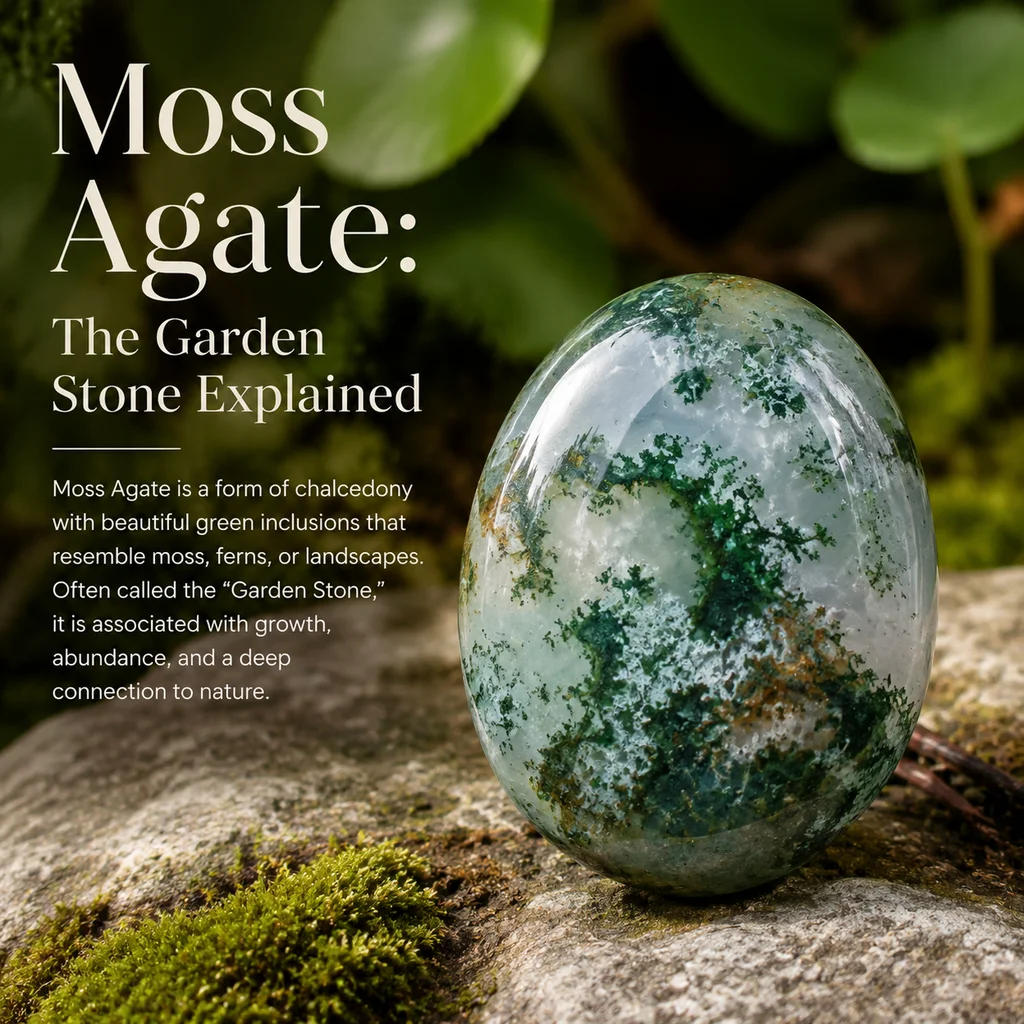
Moss Agate: The Garden Stone Explained
Hold a polished piece of moss agate up to the light and you'll see something that doesn't look like it belongs in the mineral world at all. Green filaments branch and spread through translucent white, forming patterns that look more like ferns or underwater coral than anything a rock should contain. People have been puzzled — and fascinated — by this stuff for thousands of years.
The first really good piece I ever saw was at Tucson, maybe 2019. A dealer had this cabochon, golf ball sized, and inside it looked like a perfect miniature Japanese garden — green "trees" growing up from a mossy floor, all frozen in clear chalcedony. Four hundred bucks. Should've bought it. Still think about it.
The Myth: Ancient Plants Preserved in Stone
Here's the belief that just won't die: those green inclusions are actual fossilized moss. Ancient plant material, somehow preserved inside the stone. And look, I get why people think this. The resemblance is uncanny. If you showed a piece to someone with no geological background, "fossilized moss" is probably the first thing they'd say.
Pliny the Elder certainly bought into it. Writing around 77 AD, he described stones containing "moss" and "plants" as if they were literal botanical specimens. For centuries after, naturalists classified moss agate as a fossil-bearing stone. You still run into this idea at gem shows occasionally — a dealer will mention "the ancient moss inside" and you have to politely nod along.
The moss metaphor runs deeper than just visual resemblance, though. Across quite a few cultures, moss agate picked up associations with agricultural abundance and new beginnings. Which makes sense — the stone looks like a garden, so people connected it to growth. There's documentation of farmers in parts of rural Europe burying moss agate in their fields as a good-luck practice, something that apparently continued into the 1800s. Whether it helped the crops is another matter entirely.
What's Actually Going On: Minerals, Not Moss
Those green inclusions are mineral. Manganese oxides and iron oxides, primarily. Not plant material. Not even a little bit.
The branching patterns form through dendritic growth — minerals crystallizing from solution along preferred crystallographic directions, creating tree-like structures. Same process that makes frost patterns on your car windshield in January. Same math behind river deltas seen from 30,000 feet. There's a whole field of study around this (diffusion-limited aggregation, if you want to get technical) that explains why non-living processes keep producing shapes that look suspiciously like living things. Nature has a fairly limited set of branching templates, and it reuses them everywhere.
And here's a detail that catches people off guard: the host stone isn't technically "agate" in the strict mineralogical sense. Real agate has banding — those concentric or parallel layers of different colors. Moss agate is actually chalcedony (microcrystalline quartz) with dendritic inclusions but no banding. "Dendritic chalcedony" would be the technically correct term. Nobody uses it commercially, of course, because "moss agate" sounds better and has centuries of market recognition behind it.
Color-wise, you're looking at a range from pale sage to deep forest green, with occasional brownish or reddish tones where iron content is higher. The really unusual specimens — and these are quite rare — show blue-green inclusions from trace chromium. Same element that makes emeralds green, but working in a completely different mineralogical context here. On the Mohs scale, moss agate sits at 6.5–7, typical for chalcedony.
Where It Comes From (And Why Origin Matters)
India dominates commercial production. The Deccan Plateau deposits crank out large volumes with strong green inclusions against translucent white to grayish hosts. Good cabochon material, popular for beads too. Indian supply is abundant enough that prices stay accessible — under $20 for a decent cab at most shows.
But if you want the fancy stuff, Montana is where it's at. "Montana moss agate" is a recognized trade name for good reason. The host chalcedony there is exceptionally clear, and the dendritic patterns are fine and detailed in a way that Indian material rarely matches. Montana pieces also frequently show red and black inclusions alongside the green, creating multi-colored landscape scenes. The Yellowstone River drainage basin is the main collecting area — river erosion has naturally tumbled a lot of specimens into smooth shapes, which is convenient for collectors who don't want to cut their own.
Brazil produces material with softer, more diffuse green patches rather than sharp dendrites. Russia's Ural Mountains yield specimens with notably dark green inclusions. Eastern Africa has some deposits too. After a while, you can often guess the origin just from the visual character of the piece — experienced collectors do this almost without thinking.
Buying Guide: What to Actually Look For
Evaluating moss agate isn't like grading a diamond or a sapphire. You're not looking for cut precision or color saturation in the traditional sense. You're basically shopping for a miniature landscape. Personal taste plays a huge role, which is actually kind of refreshing.
- Pattern definition: Sharp, well-defined branching patterns beat blurry green smears every time. The best pieces show dendrites that look like recognizable things — trees, ferns, coral formations. If the pattern makes you lean in and look closer, that's a good sign.
- Contrast between inclusions and host: Water-clear host material with crisp green dendrites is the gold standard. Cloudy host material mutes the effect. Think of it like looking at a landscape through clean glass versus frosted glass.
- How the pattern fills the stone: A cabochon where the "landscape" is balanced across the whole surface beats one where everything interesting is crammed into one corner. Though honestly, an off-center but spectacular pattern can still be worth it if the scene is good enough.
- Translucency: More translucent = more valuable, generally speaking. Completely opaque stuff with mossy patches exists but trades at lower prices. The gem trade sometimes considers it more "mossy chalcedony" than true moss agate.
- Watch for dye jobs: Most moss agate is sold untreated, but the lower grades occasionally get dyed to punch up the green. Natural dendritic inclusions show subtle variation in shade and intensity — if the green looks too uniform or too vividly saturated across the whole stone, that's worth questioning.
Working With It: Notes for Lapidaries and Designers
Cutting moss agate is a different game from cutting transparent stones. Each piece of rough has unique internal patterns, and the cutter has to figure out how to orient the cabochon to showcase whatever landscape is hiding inside. A talented lapidary can turn unremarkable-looking rough into something stunning — or can waste excellent material by cutting at the wrong angle. It's part skill, part puzzle-solving, part luck.
The process goes like this: before touching the grinding wheel, you examine the rough under strong light from every angle you can think of. Map out where the dendrites are concentrated, where the clearest "scenes" are, which orientation would put the best pattern on the dome of the cabochon. Sometimes this means cutting a smaller stone from a big piece of rough because the best pattern is at an awkward angle. You sacrifice yield for quality.
For jewelry settings, keep it simple. Bezel or prong mounts in silver or gold. Let the stone do the talking. I've seen designers get fancy with elaborate settings around moss agate, and it almost always feels like overkill — the setting competes with the stone's internal patterns rather than complementing them.
Care Notes
Nothing unusual here. Moss agate handles daily wear fine — no sensitivity to light, no issues with common chemicals or normal temperature ranges. Warm soapy water and a soft brush for cleaning. Ultrasonic cleaners are generally safe unless the stone has visible fractures near the surface.
The one thing to be aware of: dendritic inclusions close to the surface can occasionally create slightly weaker planes in the stone. Not common in well-cut cabochons, but if you're dealing with rough material or experimental cuts, it's something to keep in mind. Don't drop it on concrete, basically. But that's true of most things.
For a comprehensive overview, see our Ultimate Crystal Guide for Beginners.
Choosing and Caring for Your Moss Agate
Now that you've got a better understanding of moss agate, it's time to dive into how to choose, care for, and possibly use this stunning stone in your daily life. As someone who's had my fair share of crystals and gemstones over the years, I've picked up some valuable tips that I'd love to share.
Choosing the Right Moss Agate
When it comes to picking out a moss agate, there are a few factors to consider:
- Clarity: Look for a stone with high clarity. The clearer the stone, the more vibrant and vivid the moss patterns will be.
- Pattern: Personal preference plays a big role here. Some might prefer a stone with a dense moss pattern, while others might lean towards something with a more subtle design.
- Size and Shape: Determine what size and shape will best fit your collection or intended use.
- Origin: Some people are particular about where their gemstones come from, as certain origins may carry additional cultural significance.
Remember, there's no right or wrong way to choose a moss agate. It's all about what speaks to you.
Caring for Your Moss Agate
Moss agates are relatively durable and don't require too much maintenance. Here are some tips for keeping your stone in top condition:
- Storage: Keep your moss agate away from direct sunlight, as this can cause fading. A fabric-lined box or pouch is a great place to store your stones when not in use.
- Cleaning: A gentle wipe with a soft cloth is usually enough to keep your stone clean. Avoid using harsh chemicals or ultrasonic cleaners, as these can damage the stone.
- Charging: Like other crystals, moss agates can benefit from regular charging. Place them under the moonlight or in direct sunlight for a few hours to help reset their energy.
One of the best things about moss agates is that they can be used in a variety of ways, depending on your interests and needs.
Using Moss Agate in Your Daily Life
As a crystal enthusiast, I've found numerous ways to incorporate moss agate into my daily routine:
- Personal Style: A moss agate pendant or ring can be a subtle and beautiful addition to your jewelry collection, with its unique, natural patterns.
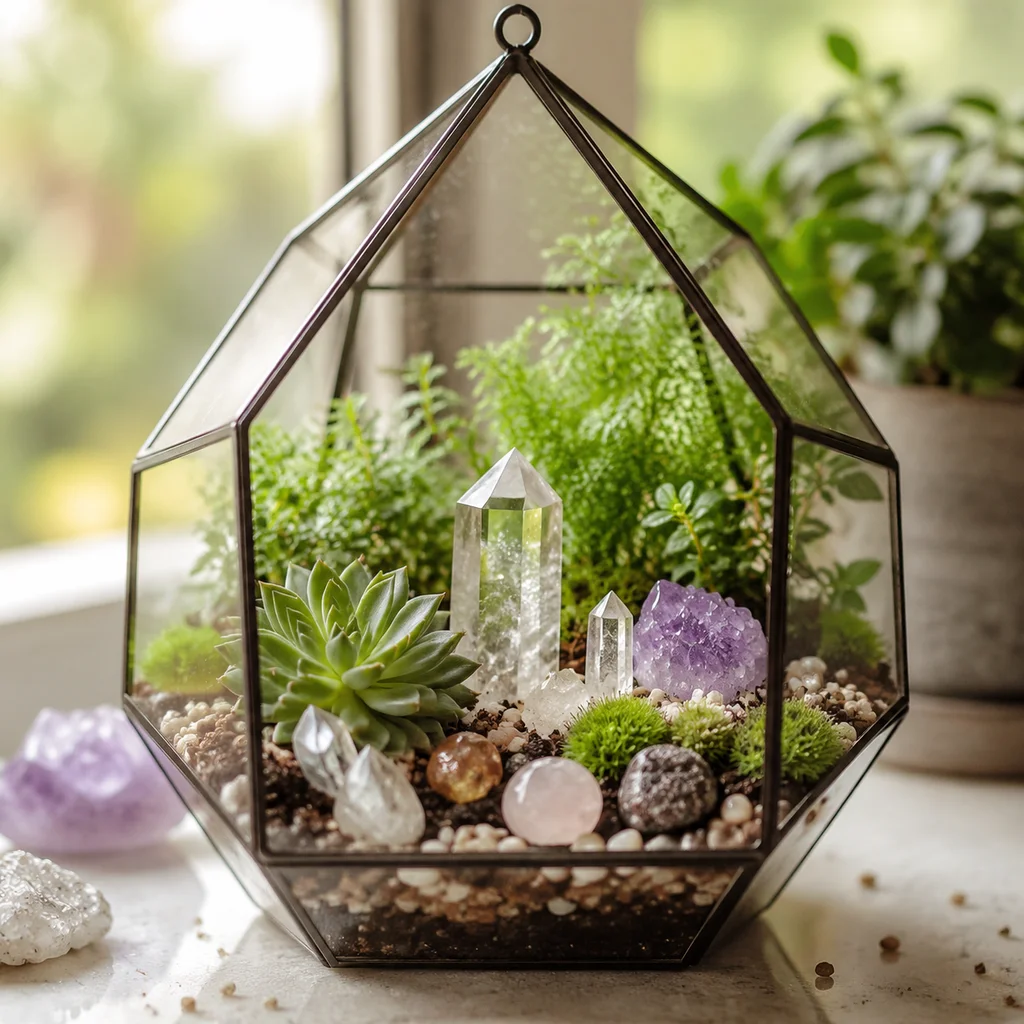
- Home Decor: Place a few pieces in your home to create a sense of tranquility and bring a touch of the natural world indoors.
- Meditation and Mindfulness: Hold a polished piece of moss agate during meditation to help foster a connection with nature and promote relaxation.
- Ambient Energy: Keep a moss agate on your desk or workspace to serve as a reminder of growth and renewal.
Combining Moss Agate with Other Crystals
Moss agates are quite versatile and can be combined with other crystals to enhance their properties. Here are a few ideas:
- Clear Quartz: The clarity and amplifying properties of clear quartz can help to amplify the healing energies of moss agate.
- Lepidolite: Combine moss agate with lepidolite to help with stress reduction and emotional healing.
- Aventurine: Use aventurine with moss agate to balance emotions and attract prosperity.
Remember, the benefits of combining crystals are largely subjective, and what works for one person may not work for another.
FAQ: Moss Agate
How should I cleanse my moss agate?
How should I cleanse my moss agate?
For best results, use a ritual of cleansing under running water or place the stone under the moonlight or in direct sunlight for a few hours.
Can I wear my moss agate jewelry in the shower?
Can I wear my moss agate jewelry in the shower?
It's generally safe to wear your moss agate jewelry in the shower, but avoid prolonged exposure to soap and chemicals as this can cause damage.
What's the best way to store my moss agate pieces?
What's the best way to store my moss agate pieces?
A soft cloth or a fabric-lined box works well to protect your stones from scratches and other damage.
Are there any negative effects of moss agate?
Are there any negative effects of moss agate?
Moss agate is generally considered safe for use, but like any crystal, it's best to avoid using it as a medical treatment. It can, however, be used to support overall well-being.
Can I use moss agate for protection?
Can I use moss agate for protection?
Moss agate is often associated with abundance and new beginnings, rather than traditional protection. However, it can still offer a sense of calm and stability.
Related Articles
- Agate Bracelet: Meaning & Uses — overview of all agate types beyond moss agate
- Green Aventurine Guide: The Stone of Opportunity — another green crystal with a loyal following
- Blue Lace Agate: Unveiling the Stone of Calm — a banded agate cousin with soothing blue tones
- Azurite-Malachite: A Vibrant Blue-Green Gemstone — vivid natural patterns in stone
- Bloodstone Bracelet: The Dark Green Stone — nature-inspired green gemstone companion
Conclusion
Moss agate is a beautiful and intriguing crystal that can add a touch of the natural world to your life. Whether you choose to use it as a personal keepsake, a meditation tool, or simply as a statement piece of jewelry, there's no denying its charm and beauty. Remember to choose a piece that speaks to you, and treat it with care. After all, it's a garden stone in a world of minerals, and it's sure to bring a bit of greenery to your life.


Comments