Moldavite: the glass from space and why people can't stop arguing about it
Moldavite is green glass that formed when a meteorite slammed into southern Germany about 14.9 million years ago. The impact site, called the Nördlinger Ries crater, is roughly 24 kilometers across. When the space rock hit, it melted local rock and sent blobs of molten material flying through the atmosphere. Those blobs cooled into glass as they fell, scattering across parts of the Czech Republic, Austria, and Germany. Geologists classify moldavite as a tektite, which just means impact glass. There are other tektites in the world — libyan desert glass, indochinites, australites — but moldavite is the only one people regularly wear as jewelry.
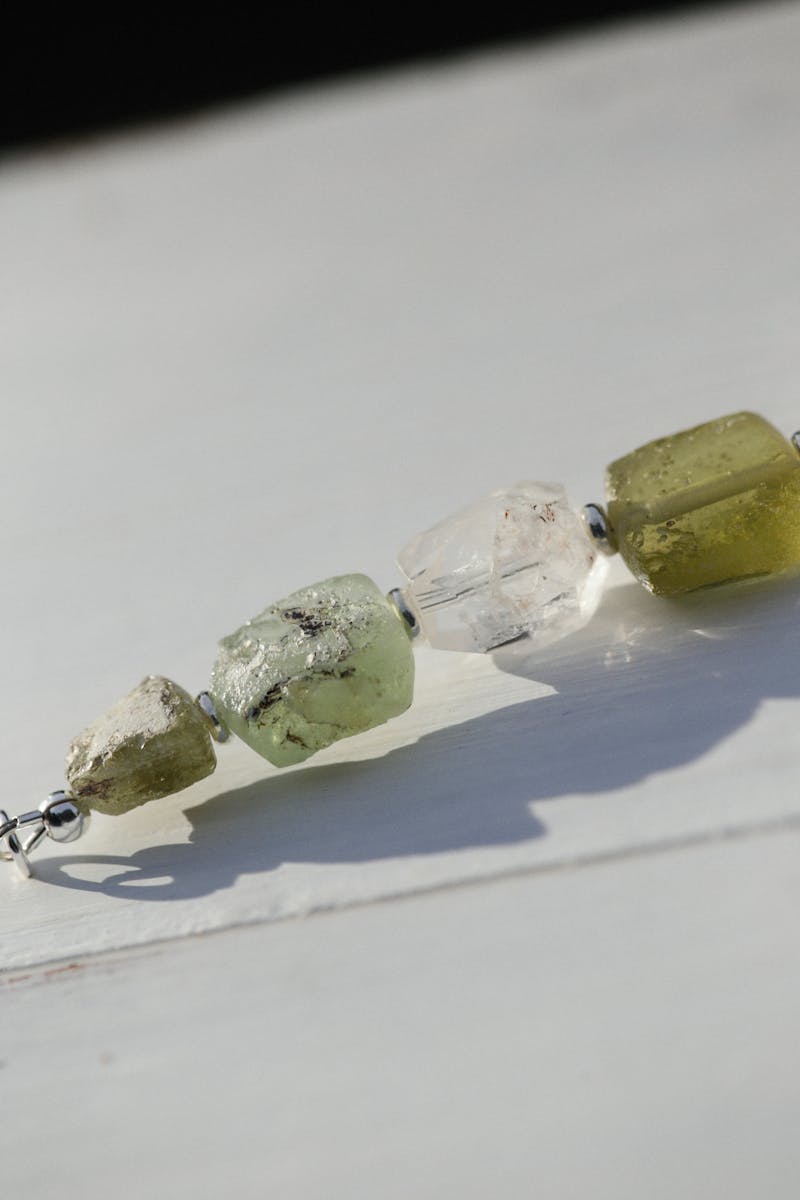
The color is what gets people. Moldavite ranges from pale olive green to a deep forest green, sometimes with a slight brownish tint. The best pieces are translucent when held up to light, with a kind of internal glow that no other green stone really matches. Most raw specimens have a deeply textured surface, all ridges and grooves and scalloped edges, because the glass cooled unevenly while spinning through the air at high speed. That texture is called "sculpting" in the trade, and it is genuinely weird looking. If you showed someone a piece of raw moldavite with no context, they would probably guess it is some kind of organic thing, not glass.
Where moldavite actually comes from
The Czech Republic, specifically the southern Bohemian region, produces essentially all of the commercial moldavite sold today. The deposits sit in sedimentary layers that date back to the Miocene epoch, and people have been finding them in fields and riverbeds for centuries. The ancient Romans apparently wore moldavite, and there is evidence of moldavite use in Neolithic Europe too. But the real rush started in the late 1980s and early 1990s, when the metaphysical market discovered the stone and demand exploded.
Here is the problem: the supply is finite. There are no new moldavite deposits being formed. What exists is what was created 14.9 million years ago, and we have been digging it up for decades. The Czech government has tightened mining regulations over the years, and many of the most productive sites are now either depleted or off-limits. Mining companies still operate in the region, but the output is a fraction of what it was twenty years ago. One Czech miner I read about estimated that the total extractable reserves might last another 10 to 20 years at current rates, though nobody really knows for sure because the deposits are irregular and hard to map.
Supply shrinking while demand grows is a pretty simple formula for price increases. In the early 2000s, you could buy a decent piece of moldavite for $20 to $50. By 2020, the same quality was going for $100 to $200, and top-grade specimens with good color and interesting sculpting now regularly sell for $300 to $800 per piece. Large museum-quality specimens have gone for thousands at auction. The price curve has been steep and fairly consistent, which has attracted speculators, which has driven prices higher, which has attracted more speculators. Classic feedback loop.
The fake moldavite problem is serious
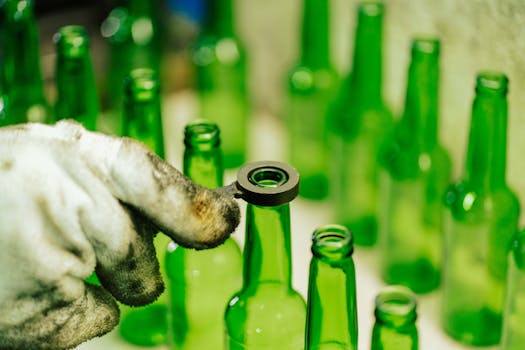
Where there is money, there are fakes. And moldavite fakes are everywhere now. The most common method involves taking ordinary green glass, melting it, and shaping it to look like natural moldavite. Some operations in China have gotten remarkably good at this. They create the right color, they mimic the surface texture with acid etching, and they even reproduce the irregular shapes. To the untrained eye, a good fake is almost indistinguishable from the real thing.
There are ways to tell them apart, though. Real moldavite has very specific internal characteristics. The bubbles inside natural moldavite are elongated and often stretched, because they formed while the glass was being flung through the air at enormous speed. Bubbles in manufactured glass tend to be round or uniformly distributed. The surface texture on real moldavite looks kind of like wet sand that has been blown by wind — irregular, layered, with small channels and pits. Fake moldavite often has a more uniform or obviously etched texture, sometimes with patterns that look too perfect or too regular.
There are scientific tests too. Moldavite has a very low water content, typically under 0.05%, because it formed at extreme temperatures. Manufactured glass usually has more water in it, which shows up on spectroscopic analysis. Real moldavite also contains specific trace elements — lechatelierite (nearly pure silica glass), baddeleyite (zirconium oxide), and sometimes small amounts of nickel and cobalt — that are consistent with an impact origin but inconsistent with factory production. If you are spending serious money on a piece, getting it tested by a gemological lab is worth the cost. Most reputable sellers will provide certificates.
The fake situation has gotten bad enough that some estimates suggest a significant percentage of moldavite listed on online marketplaces is counterfeit. I have seen listings on major e-commerce sites selling "moldavite" pendants for $8 that are clearly glass. Real moldavite at that price point basically does not exist anymore, so if the deal seems too good, it is. The old saying applies: if you buy cheap, you buy twice.
The "energy" debate
This is where things get argumentative. The metaphysical community has adopted moldavite with an enthusiasm that is hard to overstate. You will find claims that moldavite carries "extraterrestrial energy," that it accelerates spiritual transformation, that it opens the heart chakra, and that wearing it causes intense dreams and emotional shifts. Some sellers market it as a stone of "rapid change" and charge premium prices for pieces with particularly strong energy.
Here is my honest take: the "extraterrestrial energy" framing is marketing. The stone formed on Earth, from Earth materials, during an Earth impact event. A meteorite was involved as the trigger, but the glass itself is terrestrial. Calling it "from space" is misleading in the same way that calling a campfire "from the sun" would be misleading — technically there is a connection, but you are stretching the truth pretty hard.
That said, I think the stone is genuinely special, just not for mystical reasons. A meteorite impact powerful enough to create a 24-kilometer crater and scatter glass across three countries is an enormous geological event. The fact that we can hold a piece of that event in our hand, wear it around our neck, is kind of amazing when you think about it. Moldavite is a physical connection to one of the most violent moments in European geological history. You do not need to believe in cosmic energy to find that compelling.
Many people who wear moldavite genuinely report positive experiences — feeling calmer, sleeping better, having vivid dreams. Some of that is probably the placebo effect, which is real and well-documented. Some of it might be the simple act of wearing something you find beautiful and meaningful. And some people probably just like the green. There is nothing wrong with any of that. The problem starts when sellers use unfounded claims to inflate prices or when people spend money they cannot afford on stones that are supposed to solve their problems.
How to buy real moldavite without getting scammed
If you want to buy moldavite, here are some practical guidelines that will save you money and disappointment. First, know the price floor. As of 2025, genuine moldavite jewelry pieces start around $40 to $60 for small, lower-grade specimens. If you see something listed for $10 or $15, it is almost certainly fake. The raw material alone costs more than that at wholesale.
Second, buy from dealers who specialize in moldavite or tektites, not from general jewelry stores or random online listings. Specialists know the stone, they have relationships with Czech miners, and their reputation depends on selling genuine material. Ask if the piece comes with a certificate of authenticity. Not all legitimate sellers provide certificates, but it is a good sign if they do, and a bad sign if they refuse when asked.
Third, learn the basic visual cues. Look at the bubbles — if they are round and uniform, be suspicious. Look at the surface — if the texture seems too regular or has an obviously acid-etched quality, walk away. Real moldavite often has a slightly waxy or resinous luster, not the sharp, glassy shine of manufactured glass. The color should have some variation within a single piece, not a flat, uniform green.
Fourth, be careful with "facetted moldavite." Natural moldavite is almost always sold as cabochons or rough pieces because the raw material is too irregular and included for clean faceting. If you see a perfectly cut, flawless green gemstone being sold as moldavite, it is almost certainly synthetic or a different green stone entirely. There are faceted moldavite pieces out there, but they are rare, expensive, and usually have visible inclusions.
The bottom line on moldavite
Moldavite is a genuinely interesting geological specimen with a dramatic origin story. It is getting harder to find and more expensive as a result. The fakes are a real problem, and buyers need to educate themselves. The metaphysical claims attached to the stone are, in my view, mostly marketing, but the stone does not need magic to be worth collecting. It is impact glass from a 15-million-year-old catastrophe, found in only one small region of the world, and the supply is running out. That is a good enough reason to want one.
Comments