Minimalist jewelry has peaked and maximalism is creeping back in
Minimalist jewelry has peaked and maximalism is creeping back in
Meta description: After nearly a decade of dainty chains and tiny pendants dominating the jewelry world, bolder, layered, more expressive pieces are making a serious comeback.
I noticed it first on Instagram sometime last year. A friend who had spent years wearing nothing but a thin gold chain and a pair of stud earrings posted a photo in three stacked necklaces, chunky hoops, and a ring on almost every finger. It looked nothing like her usual style, and when I commented on the change, she said something that stuck with me. "I got bored of looking like I wasn't wearing anything."
She wasn't alone. Search interest for "bold jewelry" on Google Trends has climbed steadily since early 2024. On TikTok, videos tagged with "jewelry stack" or "maximalist jewelry" routinely pull in millions of views, often featuring creators layering five or six necklaces at once or piling on rings until their hands look like small art installations. Pinterest's 2025 trend report listed "maximalist accessories" as one of its top fashion predictions for the year.
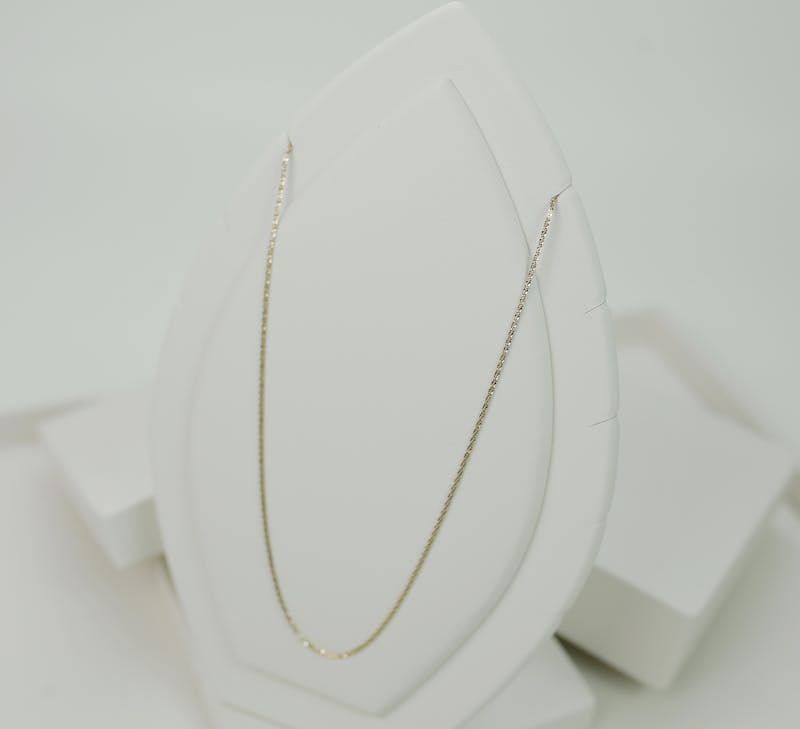
The minimalist era in jewelry, which I'd date roughly from 2015 to 2024, isn't dead. But it's no longer the default.
[IMG: A styled flat lay showing multiple layered necklaces, chunky rings, and statement earrings arranged on a neutral background]
What drove the minimalist decade
The dominance of small, delicate jewelry made sense for the time. Social media aesthetics shifted toward clean, curated feeds where every post looked like a magazine spread. Tiny diamond studs, barely-there chain necklaces, and single thin bracelets photographed well and paired with everything. Influencers gravitated toward the look because it read as effortless, and brands gravitated toward it because minimal pieces are cheaper to produce and easier to sell as everyday wear.
Catherine, a jeweler I spoke with who runs a small studio in Portland, told me she built her entire business from 2017 to 2022 on minimalist designs. "Every customer who walked in wanted the same thing. A tiny pendant, a thin band, nothing too loud. I made hundreds of them." She paused. "I was so tired of it."
There was also an economic logic. When fashion feels uncertain, people buy safe. A thin gold chain works for the office, for dinner, for a wedding. A giant statement necklace does not. The pandemic years amplified this. Nobody was dressing up. Nobody needed dramatic jewelry. Comfort and simplicity became the uniform, and jewelry followed.
The shift toward more
The reversal started, as many things do, with younger consumers. Gen Z buyers, now entering their twenties in large numbers, tend to approach personal style differently than millennials did at the same age. Where millennials gravitated toward curated minimalism, Gen Z leans into self-expression through accumulation. More is more. Layers, color, mixing metals, combining fine jewelry with costume pieces. The rules that governed accessorizing for the previous generation, no mixing gold and silver, no more than one statement piece at a time, no earrings with a necklace that competes for attention, are being ignored.
Data from jewelry market research firm The Edge Company shows that sales of statement earrings increased by roughly 22% between 2023 and 2024, while sales of basic stud earrings remained flat. Large pendant necklaces saw a 15% increase in the same period. The numbers aren't dramatic enough to declare a total trend reversal, but the direction is clear.
[IMG: Close-up of a hand wearing multiple rings of different styles and metals stacked together]
Intentional excess versus chaos
I want to be clear about something, because the word "maximalist" carries baggage. Maximalist jewelry doesn't mean throwing on everything you own and hoping it works. That's just mess. What's actually emerging is something more deliberate.
The best examples I've seen follow a logic. There's usually one anchor piece, a bold necklace or a set of dramatic earrings, supported by smaller pieces that complement rather than compete. The metals are coordinated or intentionally mixed. The textures vary. You might see a thick hammered gold cuff next to a delicate chain bracelet, which creates contrast that reads as intentional rather than accidental.
A stylist friend described it to me as "curated abundance." You're choosing a lot, but you're still choosing.
How to make the transition if you've been a minimalist
For anyone who spent the last decade building a jewelry collection of tiny, delicate things, the shift can feel intimidating. You don't have to throw anything away. The practical approach is to add a few bolder pieces to what you already own and start experimenting with layers.
Start with earrings. Swapping basic studs for slightly larger hoops or geometric drops changes the way your whole face reads without requiring any other changes. It's the lowest-commitment entry point.
Try stacking necklaces of different lengths. A choker-length piece, a mid-length pendant, and a longer chain worn together create depth. The key is varying the lengths enough that they don't tangle or visually merge into one blob.
Mix one bold piece into an otherwise simple outfit. A chunky ring with a white t-shirt and jeans. A statement cuff with a simple dress. The contrast between the outfit's simplicity and the jewelry's presence is what makes both look better.
[IMG: A woman wearing layered necklaces of different chain styles and lengths, shot from the chest up against a simple background]
What I think is actually happening
I don't believe maximalist jewelry is replacing minimalism the way minimalism replaced the big, logo-heavy jewelry of the early 2000s. What feels more accurate is that the pendulum is settling somewhere in the middle. People want options. Some days call for a single thin chain. Other days call for a ring on every finger and earrings that touch your shoulders.
The market is broadening, not pivoting. And that's better for everyone who wears jewelry, because it means more designers are making more kinds of things, and the pressure to conform to one aesthetic is lifting.
The minimalist decade gave us beautiful, wearable pieces that will never go out of style. The maximalist wave is giving us permission to have more fun. Both can coexist in the same jewelry box, and probably should.


Comments