Minimalist Jewelry Trends That Never Go Out of Style
Why Minimalist Jewelry Keeps Winning Year After Year
I started wearing minimalist jewelry about four years ago, and honestly, it's the only trend I've never gotten tired of. Not because I'm some style purist — I still experiment with chunky rings and layered chains when the mood hits. But the thin gold band I wear every single day? That's the piece I reach for without thinking, and I don't see that changing anytime soon.
The thing about minimalist jewelry is that it doesn't scream for attention. It sits on your wrist or hangs from your earlobes quietly, doing its job. And somehow, that restraint is exactly what makes it so versatile. You can wear the same delicate pendant necklace to a Tuesday team meeting and a Saturday dinner date, and it fits both situations without any effort on your part.
The Core Pieces That Define Minimalist Jewelry
After looking at what's consistently popular across seasons and scrolling through way too many outfit photos, I've narrowed it down to a handful of pieces that show up again and again.
Thin Chain Necklaces
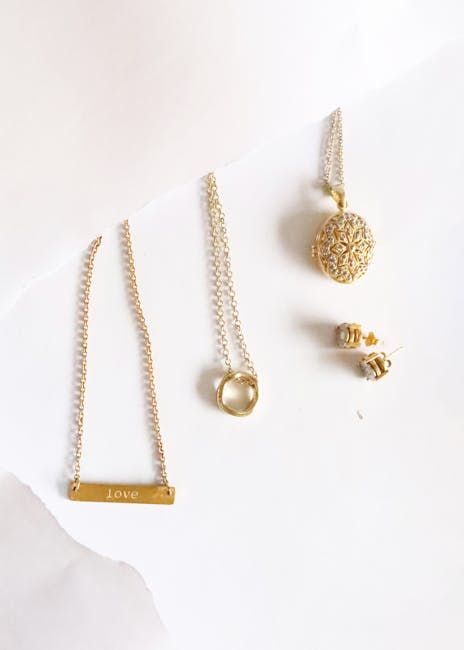
The single thin chain is probably the most recognizable piece in the minimalist playbook. We're talking chains between 0.5mm and 1mm thick, usually in yellow gold, white gold, or sterling silver. The length matters more than you'd think — a 16-inch chain sits higher on the collarbone and works well with open necklines, while 18 inches gives you a bit more breathing room for crew necks and casual tops.
What I find interesting is how this specific necklace style has stayed popular through at least six fashion cycles. Every few months, a "new" trend emerges, but the thin chain keeps selling. Jewelry market data from 2023 and 2024 shows that simple chain necklaces consistently account for roughly 30% of online necklace sales in the under-$100 category. People aren't buying these because they're trendy — they're buying them because they actually get worn.
Small Stud Earrings
There's something almost invisible about a well-chosen pair of small studs, which is precisely the point. A 3mm to 5mm round or bezel-set stone catches light without catching the eye. They work under a beanie in winter, with your hair down in spring, and with an updo at a summer wedding.
The metal choice here matters more than the stone. Gold studs tend to warm up cooler skin tones, while silver and white gold add a clean, bright edge. Rose gold sits somewhere in between and has gotten noticeably more popular since 2022, especially with younger buyers who find yellow gold a bit too traditional for everyday wear.
Delicate Stackable Rings
One ring is fine. Three or four thin rings stacked on the same finger? That's where the minimalist aesthetic actually gets interesting. The trick is keeping each ring under 2mm in width. Any wider, and the stack starts looking cluttered rather than intentional.
Mixed metals work here, and I think that's one of the more practical developments in jewelry styling over the past few years. You don't need to commit to all-gold or all-silver. A thin yellow gold band next to a silver one looks deliberate if the proportions are right. The general rule that seems to work: keep the metal tones close in warmth. Yellow gold with rose gold? Yes. Yellow gold with stark white platinum? Harder to pull off without it looking accidental.
Bar and Geometric Pendants
The horizontal bar pendant had its viral moment around 2020, and unlike most viral jewelry trends, it never really went away. The reason is simple — it's flat, sits flush against the skin, doesn't tangle in your hair, and reads as modern without trying too hard. Bar pendants work in lengths from 14 inches (choker) to 20 inches (long layering piece), though 16 to 18 inches is the sweet spot for most body types.
Geometric shapes — circles, triangles, hexagons — followed a similar trajectory. They peaked in popularity around 2021 but have settled into a steady baseline demand. The key difference from the bar pendant: geometric shapes draw the eye slightly more, so they work better as a standalone piece rather than part of a layered look.
What Makes These Pieces "Timeless" Instead of "Trendy"
I've been thinking about this distinction a lot. A trendy piece of jewelry is something that looks great in a specific context — maybe with a particular outfit silhouette or during a specific season. A timeless piece works across contexts, years, and even decades.
The minimalist pieces I listed share a few structural qualities that explain their longevity:
Low visual weight. They don't dominate your outfit. You're not "wearing jewelry" so much as you're wearing a small enhancement. This means they don't clash with bold clothing choices, busy prints, or statement accessories you might add elsewhere.
Metal-forward design. When a piece relies on its metal quality rather than ornate details, it ages better. A well-made gold chain from 2015 looks identical to a well-made gold chain from 2025. There's no design element that dates it.
Scalability. These pieces work at every price point. A $15 silver chain and a $300 solid gold chain create roughly the same visual effect from a conversational distance. That accessibility keeps demand high across different consumer segments.
How to Build a Minimalist Jewelry Collection That Actually Lasts
If you're starting from scratch, I'd suggest a specific order that maximizes versatility:
First purchase: A thin chain necklace in the metal you wear most. This is your daily driver. Pick a length that works with your most common neckline — for most people, that's 16 or 18 inches.
Second purchase: Small stud earrings in the same metal. Having a matching necklace-earring pair creates cohesion without being matchy-matchy.
Third purchase: A thin band ring. One is enough to start. You can always add more later.
Fourth purchase: A pendant necklace in a different length from your first chain. This gives you layering options — a 14-inch choker-length pendant with an 18-inch chain underneath is a combination that works with almost any top.
After those four pieces, you have a functional minimalist jewelry wardrobe. Everything beyond that is personal preference. Some people stop at four. Others accumulate a dozen thin rings and wear them all at once. Both approaches are valid.
The Metals Question: Gold, Silver, Rose Gold, or Platinum
This comes up constantly, and the honest answer is that it depends on your skin tone, your wardrobe colors, and your personal preference. But there are some practical considerations most advice columns skip.
Yellow gold requires less maintenance than silver. Silver tarnishes, especially in humid climates, and needs regular polishing. Gold doesn't tarnish — it might dull slightly over years of wear, but a quick polish brings it back. If you're the type of person who forgets to take jewelry off before showering or swimming, gold is the more practical choice.
Platinum is the most durable option but comes with a significant price premium. For minimalist pieces where the metal is the entire design, platinum makes sense if you want something that lasts decades. For thin chains and small studs, the durability difference between 14k gold and platinum is minimal in everyday wear.
Rose gold's popularity has been the most interesting trend to watch. It went from niche to mainstream between 2018 and 2022, driven partly by Apple's adoption of the color for their devices. But unlike tech trends, rose gold in jewelry has stayed because it genuinely complements a wide range of skin tones, particularly those with warm or olive undertones. It reads as softer than yellow gold but warmer than silver, which makes it surprisingly adaptable.
Caring for Minimalist Pieces Without Overthinking It
The thin chains and delicate structures that define minimalist jewelry are also its weak point. A 0.5mm chain will break if you sleep in it every night or catch it on a sweater collar. That's not a defect — it's physics.
The practical care routine that's worked for me: take jewelry off before bed, store pieces individually in small pouches or a compartmentalized box (chains tangle when they touch each other), and clean with a soft cloth after every few wears. That's it. No special solutions, no ultrasonic cleaners needed for everyday pieces.
For silver pieces specifically, keeping them in an airtight bag when you're not wearing them significantly slows tarnishing. Anti-tarnish strips work too, but a ziplock bag costs nothing and does the same job.
The Bottom Line
Minimalist jewelry works because it removes the decision-making from getting dressed. You put on your thin chain, your small studs, maybe a ring, and you're done. The pieces don't compete with each other or with your clothes. They just... work.
I've bought plenty of statement pieces over the years that I've worn twice and forgotten about. My minimalist pieces? I've worn some of them hundreds of times. That's the real test of whether a trend has staying power — not whether it looks good in a photo, but whether it survives the friction of daily life.
Comments