How to Make Resin Crystal Jewelry at Home
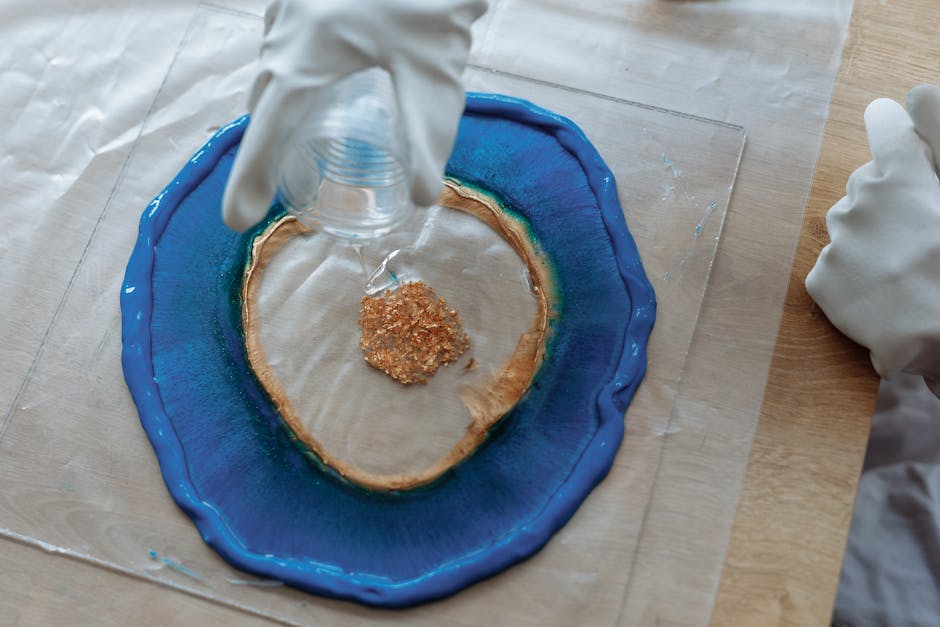
The Messy Reality of Making Resin Jewelry
Resin jewelry tutorials on social media show a perfectly clear dome with a dried flower suspended inside, lit from the side, looking like something from a museum case. What they don't show is the resin on the kitchen table, the sticky fingers, the batch that didn't cure because the room was too cold, and the mold release that stained everything.
Making resin crystal jewelry at home is absolutely doable. It's also messy, temperature-sensitive, and unforgiving of impatience. This guide assumes you're working in a kitchen or spare room, not a professional studio, and covers what actually matters for getting good results on your first few tries.
Epoxy Resin vs. UV Resin: Pick One Based on Your Project
There are two main types of resin used for jewelry, and the choice between them matters more than any other decision you'll make.
Epoxy resin (two-part) — Comes as a resin and a hardener that you mix in specific ratios. Standard jewelry epoxy is 1:1 by volume. It cures in 24-72 hours depending on the brand and temperature. Advantages: you can work with it for 30-45 minutes before it starts getting sticky (called "working time"), it produces fewer bubbles, and it's cheaper per volume. A 16-ounce kit (8oz each part) costs about $20-25 and makes dozens of pieces. This is what you want for pendants, coasters, and anything with depth.
UV resin — Cures under a UV lamp (or direct sunlight) in 2-10 minutes. It comes in a single bottle — no mixing ratios to worry about. Advantages: instant gratification, easy cleanup, great for thin layers. Disadvantages: it cures so fast that bubbles get locked in, it doesn't work well for pieces thicker than 3mm (the UV light can't penetrate), and it costs 3-4 times more per volume. A 100ml bottle runs about $15. Use UV resin for coating finished pieces or making very thin bezels, not for casting.
For embedding crystals in resin, use epoxy. The longer working time gives you space to position the stone, pop bubbles, and make adjustments. UV resin will start curing before you're done arranging things.
Setting Up Your Workspace (the Un glamorous Part)
Resin will drip on whatever is below it. Cover your surface with a silicone mat, wax paper, or a disposable plastic tablecloth. Have paper towels within arm's reach. Work in a room that's 70-75°F (21-24°C) — resin cures sluggishly below 65°F and cures too fast above 80°F, which leads to cracking.
Ventilation matters. Epoxy resin emits fumes during the first few hours of curing. Open a window or work near an exhaust fan. You don't need a respirator for hobby-grade resin, but if you're sensitive to chemical smells, a basic N95 mask helps.
You'll need: silicone molds (start with pendant-size, 25-35mm diameter), mixing cups (small plastic cups or medicine cups work), stirring sticks (popsicle sticks or dedicated craft sticks), a heat gun or kitchen torch for bubble removal, and nitrile gloves. Latex gloves react with some resins and become sticky — stick with nitrile.
Embedding Crystals: The Technique That Determines Whether It Looks Amateur or Professional
Here's the thing about putting crystals in resin: if you just drop a stone in and pour resin over it, the crystal usually sinks to the bottom, tilts to one side, or ends up pressed against the mold wall where you can't see it properly. There are two reliable ways to avoid this.
Method one: the two-pour technique. Pour a thin layer of resin (about 1/3 the mold depth) and let it partially cure for 60-90 minutes until it's the consistency of thick syrup — tacky but not fully hard. Place your crystal on this layer. It'll sink slightly and get gripped by the tacky surface, which holds it in position. Then pour the remaining resin over the top to fill the mold. This works well for stones that are denser than the resin (most natural crystals are).
Method two: the wire suspension. If your crystal is particularly heavy or oddly shaped, wrap a thin piece of craft wire around it, bend the wire ends so they rest on the rim of the mold, and position the crystal at your desired height. Pour the resin. Once cured, carefully snip the wire ends flush. This works for larger stones or when you want the crystal floating in the center of a thick piece.
A common mistake is using crystals straight from a gem show or mining site. Wash and completely dry them first. Dust, oil from your fingers, and residual polishing compound all create cloudy spots in the resin where air gets trapped against the crystal surface. A quick wash in warm water with dish soap and a thorough dry with a lint-free cloth solves this.
Bubble Removal: Not Optional
Bubbles are the number one reason resin jewelry looks homemade. They form during mixing (especially if you stir too fast) and against the surfaces of embedded objects.
Mix resin slowly. Fold the two parts together with your stir stick rather than whipping them. Scrape the sides and bottom of the cup. Mix for at least 2 full minutes — undermixed resin stays tacky or doesn't cure at all, which is worse than bubbles.
After pouring, use a heat gun on low setting (or a kitchen torch held far away) to pass over the surface. The heat thins the resin momentarily, allowing trapped bubbles to rise and pop. Keep the heat source moving — holding it in one spot for more than 2 seconds can scorch the resin or make it cure unevenly. One pass is usually enough. If you see more bubbles after the resin settles for 5 minutes, do a second pass.
For bubbles stuck against a crystal surface, a toothpick works. Gently touch the bubble with the tip and pull it away from the stone. The bubble will detach and rise. Don't poke the resin aggressively — you'll create more bubbles than you remove.
Color and Additives: Less Is More
Resin dyes and pigments are available in liquid, powder, and paste forms. Liquid dyes are the most predictable — start with 1 drop per ounce of mixed resin and add more until you reach the color you want. You can always add more; you can't take it out.
Mica powder creates metallic or pearlescent effects. A little goes a long way — 1/8 teaspoon per ounce of resin produces a noticeable shimmer. Mix it into the resin before pouring for a uniform effect, or sprinkle it into the mold before pouring for a layered, organic look.
Adding dried flowers, leaves, or small shells is straightforward — place them in the mold and pour resin over them. Press them down gently with a toothpick to make sure resin flows around all surfaces. Thick or dense botanical material (like rose petals) may need a light coat of resin first to seal them, otherwise air gets trapped underneath.
Curing and Demolding: The Waiting Is the Hardest Part
Most hobby epoxy resins need 24 hours to cure enough to demold, and 72 hours to reach full hardness. Don't rush this. If you try to remove a piece from the mold after 12 hours, it might be soft enough to deform permanently.
Temperature affects cure time directly. At 70°F, count on 24 hours. At 60°F, it might take 36-48 hours. At 80°F, 18-20 hours. If your house is cold, a small space heater pointed at your work area (not directly at the molds) helps. Don't put molds in the oven or use a hair dryer — too much heat causes cracking and yellowing.
To demold, flex the silicone mold gently with your fingers. The piece should pop out. If it doesn't, wait another 6 hours. Pulling on a partially cured piece stretches and distorts it. If a piece sticks, put the mold in the freezer for 10 minutes — the resin contracts slightly and releases from the silicone.
Sanding and Polishing: Turning Good Into Great
Resin comes out of the mold with a glossy side (the side touching the mold) and a dull side (the open face, where you poured). The open face needs sanding and polishing to match.
Start with 400-grit wet sandpaper and work through 600, 800, 1000, and 2000 grit. Sand under running water to prevent resin dust (it's fine and gets everywhere). Each grit removes the scratches from the previous one. The surface will go from matte to smooth to slightly glossy at 2000 grit.
For a high-gloss finish, apply a thin coat of polish specifically made for resin (or car polishing compound in a pinch) with a soft cloth. Buff in circular motions until the surface matches the mold side. This takes 5-10 minutes per piece.
Alternative: pour a thin layer of clear resin over the sanded surface (called "doming"). This self-levels and cures to a perfect gloss without any sanding. It adds about 1mm of thickness, so plan for that in your design.
What Goes Wrong and How to Fix It
Sticky resin after 48 hours. Usually means the mixing ratio was off. Scrape it out and start over. You can't fix undermixed resin.
Yellow tint. UV exposure or mixing with a tool that had residue on it. Store finished pieces out of direct sunlight. Some resins are more UV-resistant than others — check the product specs.
Cracks in the finished piece. Cured too fast (too warm) or too thick in one pour. Pour in layers no thicker than 1/2 inch, and wait 4-6 hours between layers.
Cloudy spots. Moisture got in — either the resin was cold when you mixed it, the room was humid, or the crystals weren't completely dry. Warm the resin bottles in warm water for 10 minutes before opening if your workspace is below 70°F.

Comments