Lepidolite: Lithium Mica Stone Guide
June 10, 2026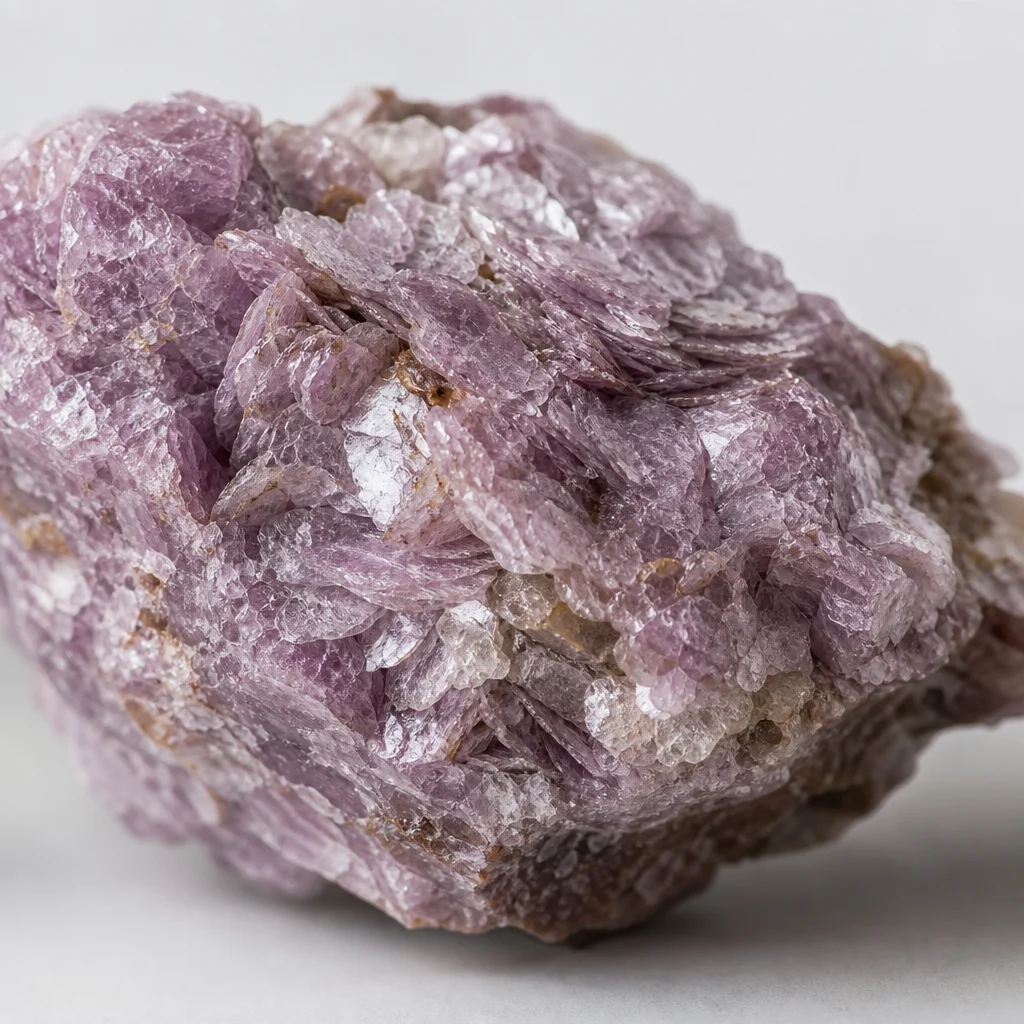
Introduction: The Enigmatic Lepidolite and Its Lithium Content
Ah, lepidolite. It's not just another pretty stone in the vast collection of crystals and minerals we know and love; it's a true enigma wrapped in a mica cloak. My fascination with lepidolite began years ago when I first stumbled upon its lithium-rich mineralogical composition. Let me take you on a journey through its unique properties, the various shades it presents, and the fascinating history that makes it such an intriguing gemstone. Lepidolite is known for its lithium content, an element that, incidentally, also finds its way into certain anxiety medications. This lithium mica is a lithium-bearing member of the mica family, and as a crystal enthusiast, I've come to admire its mineralogical intricacies. Now, before we dive too deep, let's set the record straight: crystals are not a substitute for medical treatment. However, the cultural significance of lepidolite can be quite profound.Mineralogy: Lithium Mica and Its Richness
Lepidolite is a lithium-rich mica, meaning it's a variety of the mineral muscovite that contains lithium. The presence of lithium is what gives lepidolite its unique properties and, quite frankly, its charm. It's the lithium content that sets it apart from its mica cousins and has, for centuries, intrigued mineralogists and crystal healers alike. The chemical composition of lepidolite is K(Li,Al)(AlSi3O10)(F,OH)2. The lithium content is what gives lepidolite its electric blue and purple hues, often described as a "violet twilight" or "electric lilac." It's a stone that's as dynamic as it is enigmatic, shifting between different shades of purple and pink, often with a hint of white, depending on the presence of lithium and the way it reflects light.Color Varieties: Lilac, Pink, Purple, and White
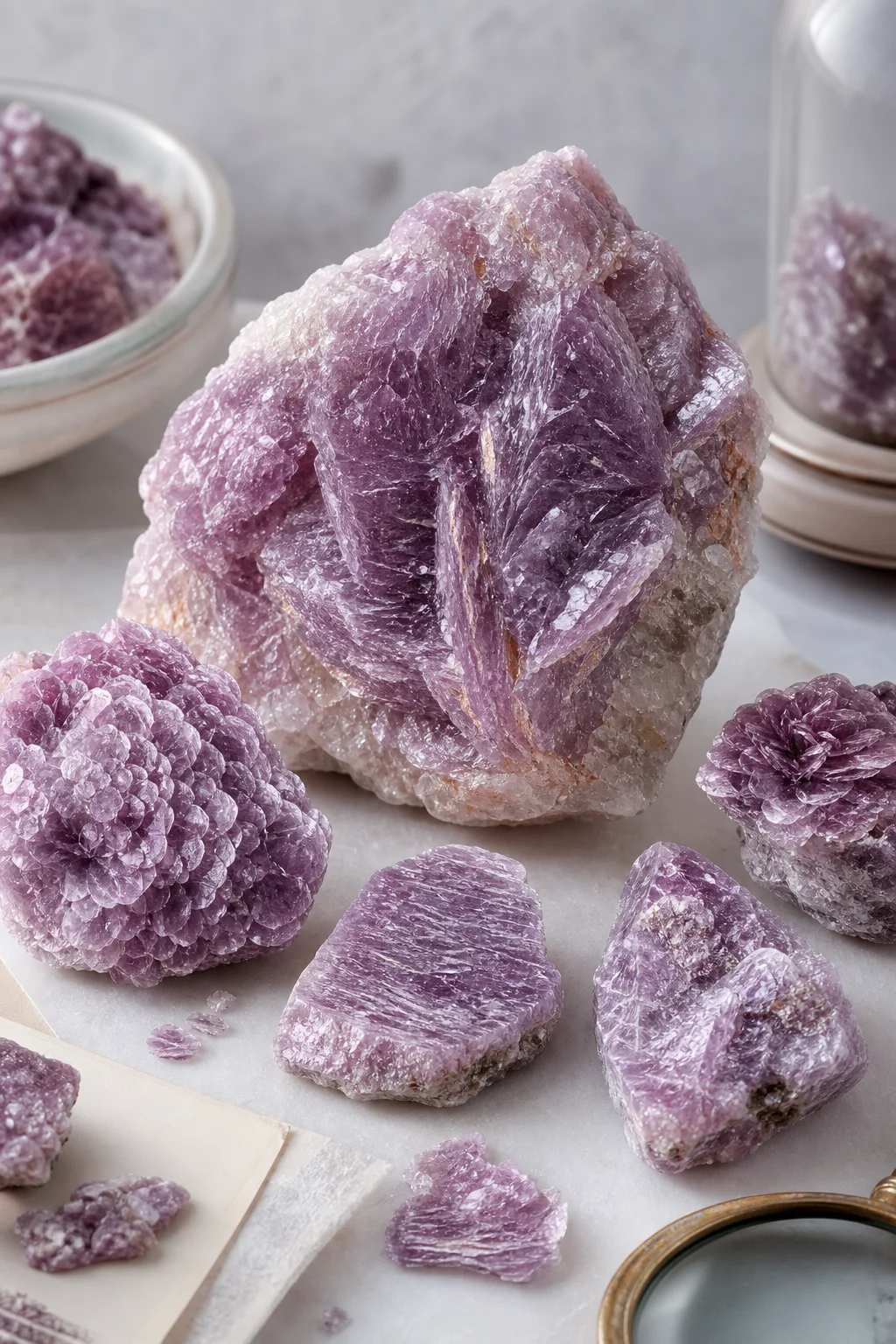
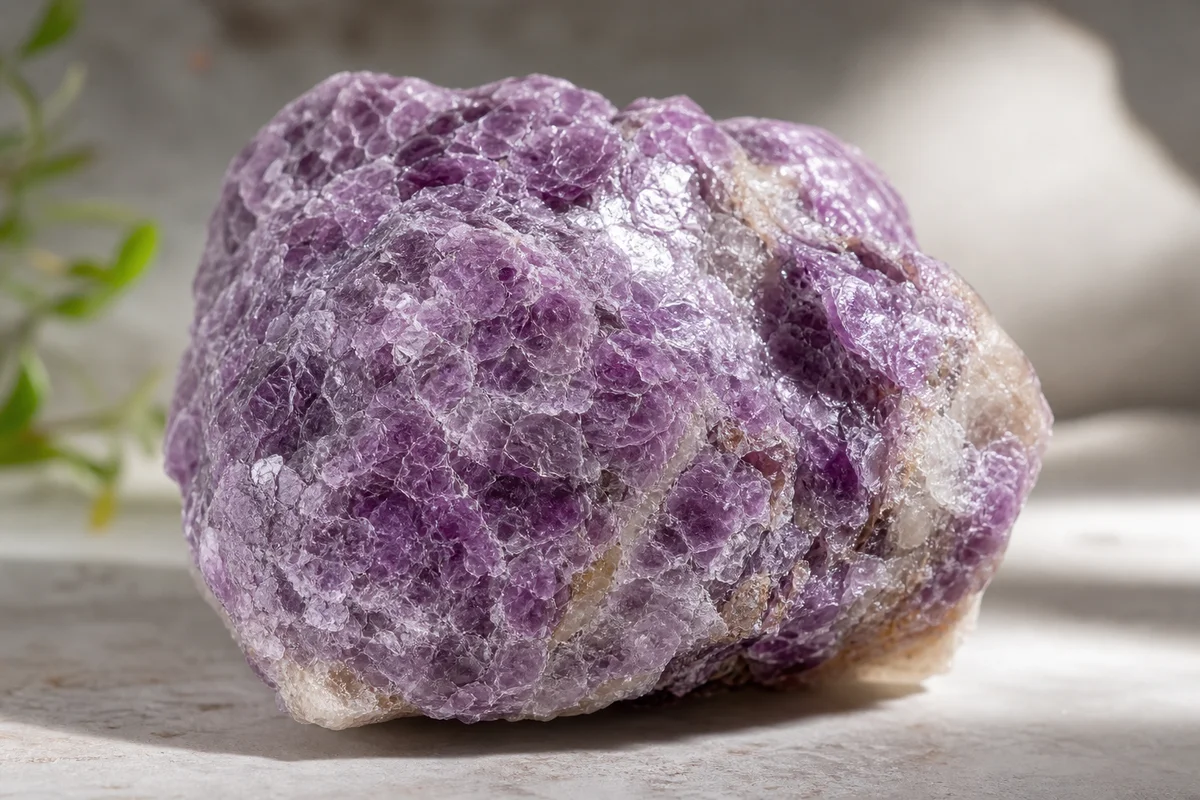
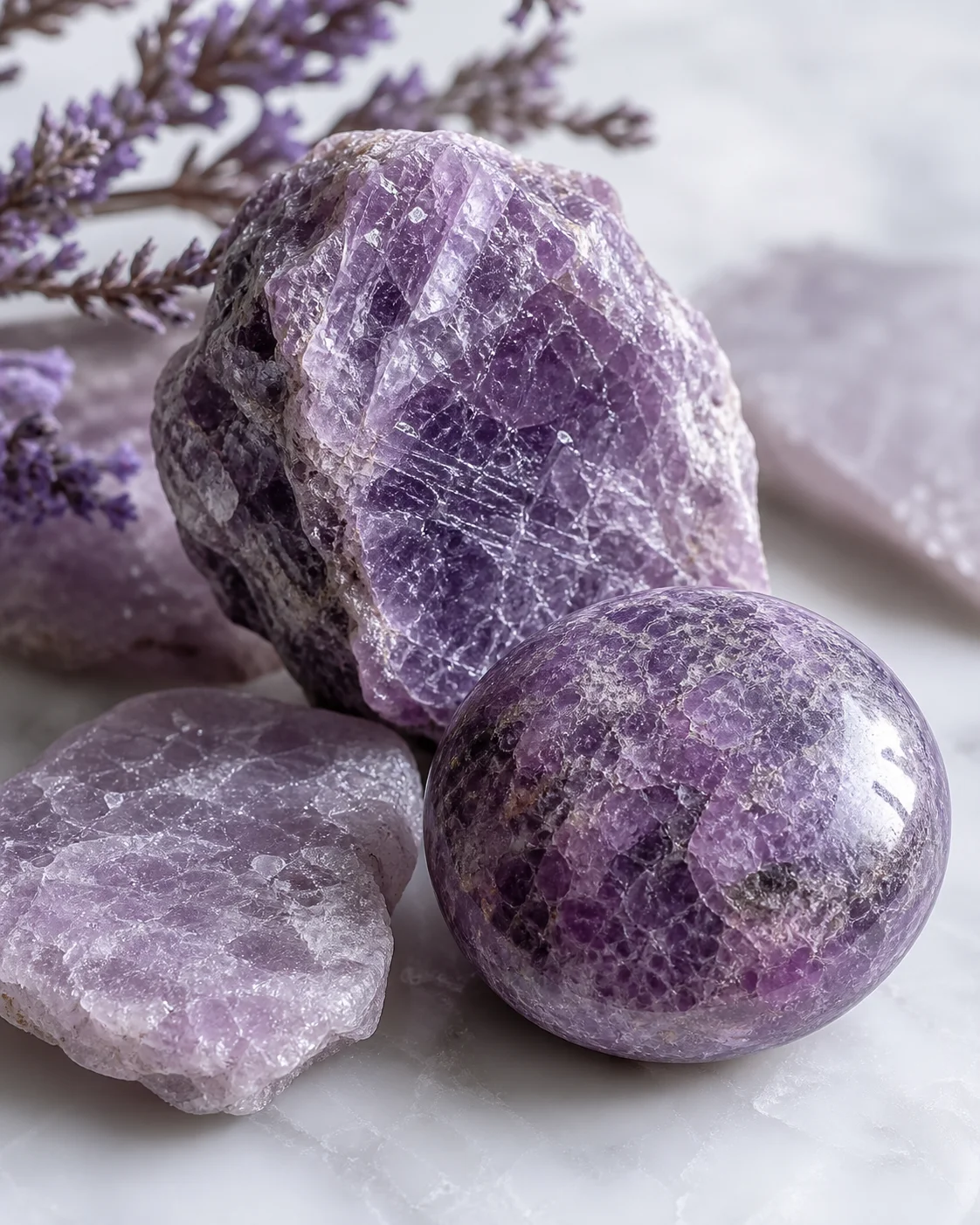
Lepidolite's color palette is a thing of beauty. It ranges from soft, delicate pinks and whites to vibrant purples and electric blues. I've seen pieces with hues so deep they seem to have been dipped in a pool of twilight. Here's a quick rundown of some of the color variations you might encounter:- Lilac: A delicate, almost ethereal shade of purple, often seen in lepidolite from Brazil.
- Pink: Soft, pastel shades that can be reminiscent of a blush or even a sunset.
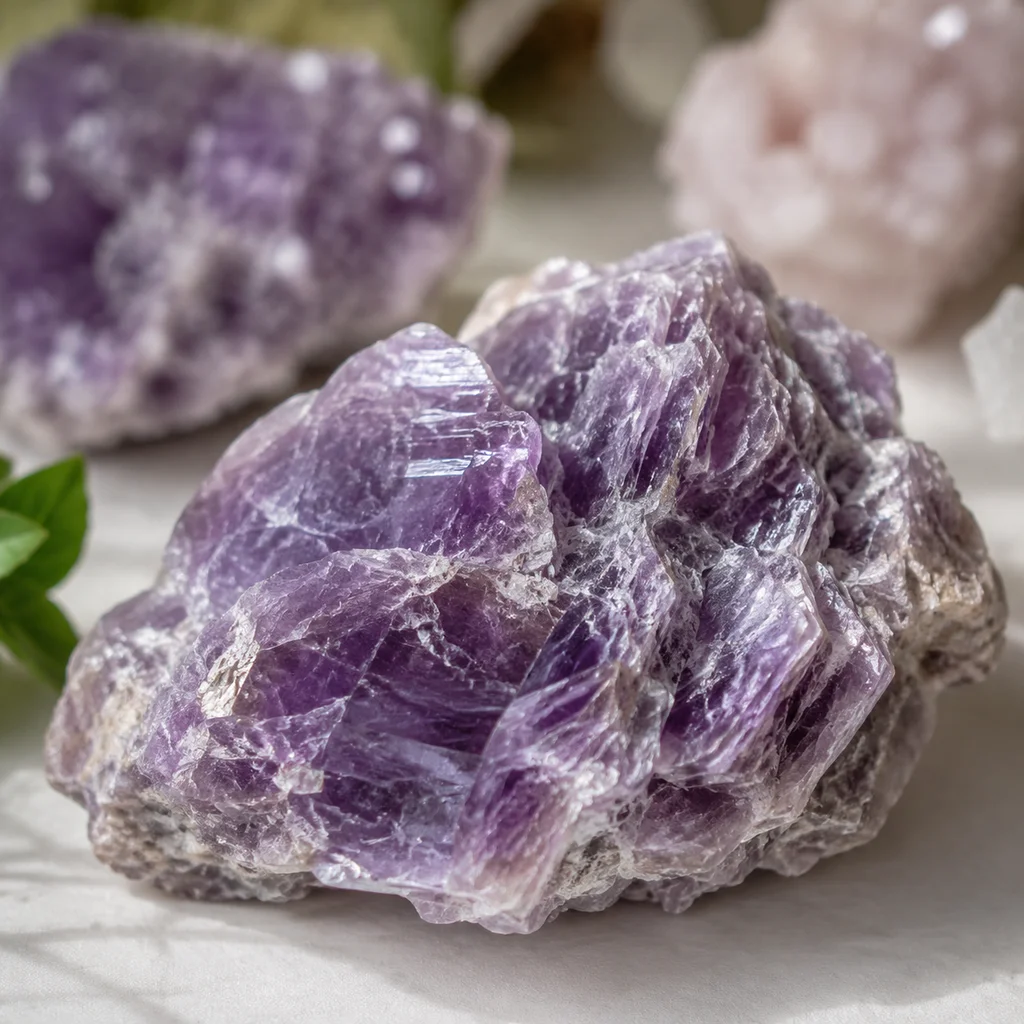
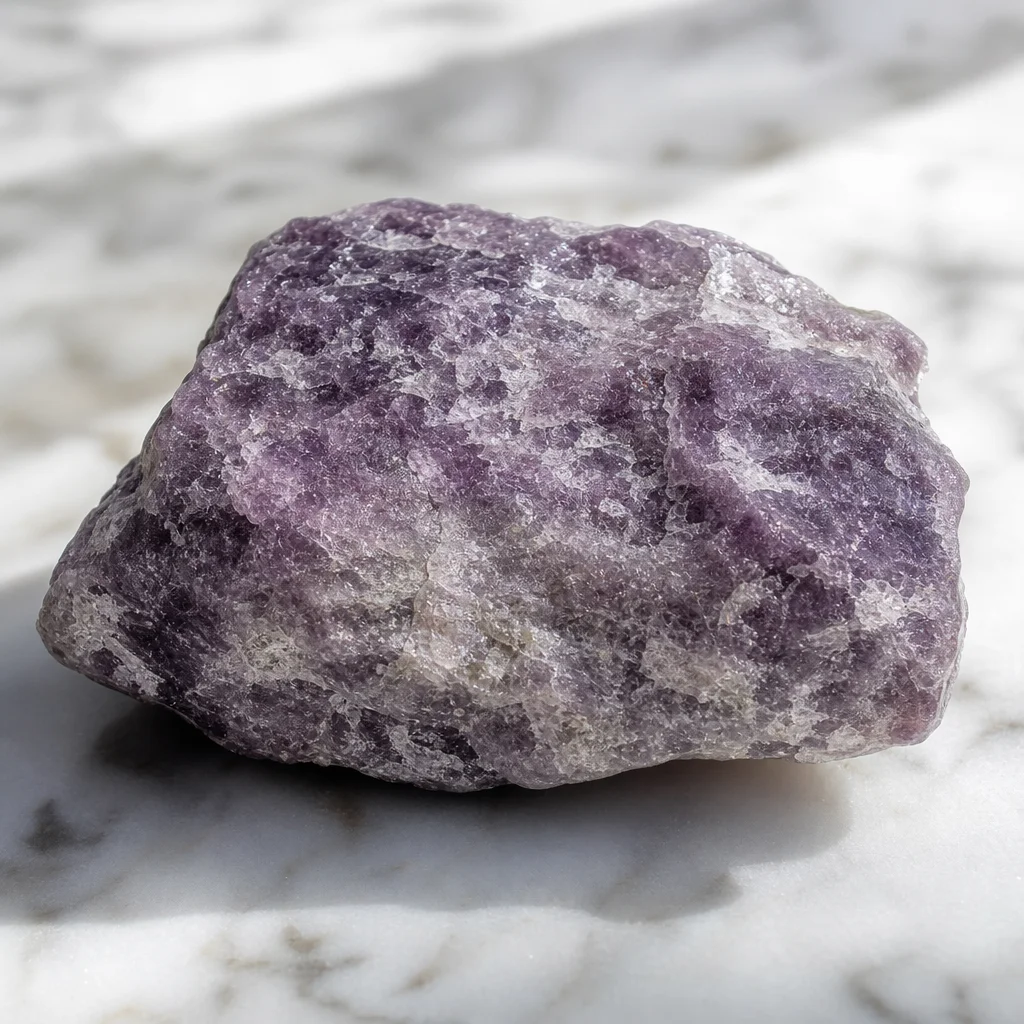
- Purple: The most common color of lepidolite, ranging from a light lavender to a deep violet.
- White: Clean, uncolored lepidolite is quite rare, and when it does occur, it's quite stunning.
Formation in Pegmatites: Mother Earth’s Hidden Treasures
Lepidolite typically forms in pegmatites, which are intrusive igneous rocks that contain crystals that are often much larger than those found in other types of rocks. These giant crystals can be several feet in length, and the presence of lepidolite in them is a sign that the pegmatite contains lithium, a crucial element for the mica's formation. The process of forming lepidolite in pegmatites is fascinating. It begins with the crystallization of potassium-rich micas, such as muscovite, which are then replaced by lithium-bearing minerals over time. This slow transformation creates the lithium mica we know and love. It's a slow process, taking thousands to millions of years, but the result is often a stunning gemstone.Real vs Fake: Spotting the Authentic Lepidolite
Identifying authentic lepidolite can be tricky, especially when dealing with the fake market. Here are some tips that have helped me over the years:- Weight: Real lepidolite is dense and heavy for its size. Hold it in your hand and compare it to other stones of similar size.
- Transparency: It's typically translucent to semi-transparent, with a velvety texture.
- Color: The color shifts from purple to blue or even pink when viewed from different angles. No other stone exhibits this unique color change.
- Luster: It has a pearly luster that reflects light beautifully.
- Fluorescence: Some varieties exhibit fluorescence under UV light, especially in purple or pink shades.
Jewelry Uses: A Fashion Statement with Durability
Lepidolite is a versatile stone that works well in jewelry, especially when it's cut into cabochons or faceted into beautiful gems. Its hardness ranges from 2.5 to 4 on the Mohs scale, making it suitable for pendants, bracelets, and rings. Its durability isn't as high as harder stones like diamond or sapphire, but it's more than enough for everyday wear. As a jewelry designer, I've used lepidolite in a variety of ways, from classic pendants to statement rings. It's a stone that can add an air of mystery and elegance to any piece, especially when it's set in silver or gold.Care: Preserving Your Lepidolite Gemstone
Taking care of your lepidolite is important, especially considering its softer nature. Here are some tips for keeping your lepidolite jewelry in pristine condition:- Avoid Heat: Lepidolite can become brittle when exposed to high temperatures, so keep it away from heat sources.
- Clean Gently: Use warm water and mild soap to clean your lepidolite jewelry, then pat it dry with a soft cloth.
- Avoid Harsh Chemicals: Do not use harsh chemicals or ultrasonic cleaners on lepidolite.
- Storage: Store your lepidolite jewelry in a soft cloth or a lined jewelry box to prevent scratches.
Cultural History: The Many Facets of Lepidolite
Throughout history, lepidolite has held various meanings and has been used in different cultures for a variety of purposes. In ancient times, it was believed to have protective properties, and it was sometimes used in rituals to ward off evil spirits. Some traditions even suggest that lepidolite can help calm the mind and ease anxiety. In modern times, lepidolite's cultural significance is just as varied. Some believe it can aid in meditation and provide a sense of inner peace. It's a stone that has been revered for its beauty and its potential to bring about positive change.Lepidolite vs. Other Micas: A Comparison Table
| Feature | Lepidolite | Muscovite | Biotite | |--------------------|------------------|--------------------|---------------------| | Composition | K(Li,Al)(AlSi3O10)(F,OH)2 | KAl2(AlSi3O10)(OH)2 | K(Mg,Fe,Al)(Si,Al)4O10(OH)2 | | Color | Purple, pink, white | Colorless, white, gray | Green, brown, black | | Hardness | 2.5-4 | 2.5-3 | 2-3 | | Transparency | Transparent to semi-transparent | Transparent to translucent | Transparent to translucent | | Luster | Pearly | Vitreous | Subvitreous | | Formation | Pegmatites | Sedimentary, metamorphic, igneous | Pegmatites, metamorphic |FAQ
Q: Is lepidolite a birthstone?
A: No, lepidolite is not a traditional birthstone. However, it's sometimes associated with the signs of Taurus (April 20th to May 20th) due to its rich purple hues.Q: Can lepidolite be used in metaphysical practices?
A: Yes, lepidolite is often used in metaphysical practices for its calming and soothing properties. However, it's worth knowing that it's not a substitute for medical treatment.Q: How can I tell if my lepidolite is real?
A: Look for a dense, heavy feel, a pearly luster, and a color change when viewed from different angles. It's also advisable to purchase from reputable sources.Q: Can lepidolite be used in jewelry?
A: Absolutely. Lepidolite is suitable for jewelry, although it is softer than some other gemstones. It's best used in pieces designed for everyday wear and with a hardness between 2.5 and 4 on the Mohs scale. And there you have it, a comprehensive guide to lepidolite, the lithium-rich mica that has captured my heart and the hearts of many others. Whether you're a crystal enthusiast, a jewelry designer, or simply someone who appreciates the beauty of nature, lepidolite is a stone that deserves a place in your collection.Practical Tips & Common Mistakes
Understanding lepidolite can be both enlightening and challenging. Here are some practical tips to help you make the most of your lepidolite experience:
- Proper Identification: When purchasing lepidolite, look for its characteristic pink to purple coloration. Avoid stones that are overly green or yellow, as these may be other minerals.
- Crystal Placement: Place your lepidolite near your bed to help you unwind and sleep better. Avoid placing it directly in sunlight, as the heat can degrade its color over time.
- Chakra Association: While lepidolite is commonly associated with the heart and throat chakras, it's important to understand that crystals don't "charge" the chakras in the same way. Instead, they are tools that can aid in the process of balancing your energy.
- Formation Awareness: Lepidolite is typically formed in granitic pegmatites. If you're collecting lepidolite, be mindful of its formation environment, as this can influence its quality and rarity.
Care & Maintenance Guide
Caring for your lepidolite requires attention to detail and respect for its unique properties:
- Regular Cleaning: Use a soft cloth and lukewarm water to gently clean your lepidolite. Avoid using harsh chemicals or abrasive materials that can scratch or damage the stone.
- Storage: Store your lepidolite in a cool, dry place away from direct sunlight. Use a fabric-lined box or pouch to prevent scratches and maintain its luster.
- Avoid Extreme Temperatures: Lepidolite is sensitive to temperature changes. Keep it away from sources of heat like radiators or ovens.
- Handle with Care: Always handle your lepidolite with clean hands. Oils and lotions can leave a residue that can harm the stone's surface.
- Regular Checkups: Periodically inspect your lepidolite for any signs of wear or damage. This can help you address any issues early on and maintain its integrity.
Geological Formation and Global Sources
Lepidolite is a phyllosilicate mineral that belongs to the mica group. It doesn’t just appear out of nowhere; it is primarily forged in the high-temperature, late-stage environments of granitic pegmatites. These volatile-rich molten rock formations cool slowly, allowing large crystals to grow and trapping rare chemical elements like lithium, rubidium, and cesium. This slow-cooling geologic process is exactly what gives lepidolite its characteristic scaly, layered appearance and its signature violet to pink hues, which are the direct result of trace amounts of manganese oxidizing within the stone.
When it comes to sourcing this lithium-rich mica, a few global destinations stand out for producing exceptional specimens. Historically, the Ural Mountains in Russia produced massive, stunning sheets of lepidolite that were heavily mined for their lithium content. Today, modern mineral collectors and commercial operations often look to Brazil, Madagascar, and Zimbabwe for the most vibrant lilac and deep purple clusters. In the United States, California’s Pala district is famous for its beautiful deposits, where lepidolite is often found nestled alongside pink tourmaline and clear quartz, creating highly sought-after aesthetic combinations.
Historical Significance and Discovery
The story of lepidolite is deeply intertwined with the advancement of modern chemistry and mineralogy. Originally named "lilalite" by German scientist Martin Heinrich Klaproth in the late 18th century due to its distinct lilac color, the stone was later officially renamed lepidolite. This new moniker was derived from the Greek word "lepidos," meaning scale, which perfectly describes the stone's flaky, aggregated physical structure. However, its true historical claim to fame arrived a few decades later when chemists began deeply analyzing its complex chemical composition.
In the 1860s, pioneering chemists Robert Bunsen and Gustav Kirchhoff used lepidolite in experiments that led to the groundbreaking discovery of two entirely new elements: rubidium and cesium. Without this unassuming mica stone, our understanding of the periodic table would be incomplete. Furthermore, during the 20th century, lepidolite became an incredibly important ore of lithium. It played a crucial role in the development of aerospace lubricants, batteries, and mood-stabilizing medications before modern, more cost-effective brine extraction methods eventually took over the lithium industry.
Metaphysical Properties and Healing Traditions
Beyond its geological and chemical marvels, lepidolite has earned a revered reputation in the world of crystal healing and metaphysics. Often dubbed the "Stone of Transition" or the "Peace Stone," it is highly sought after for its purported calming and balancing properties. Crystal practitioners believe that the natural lithium content within the stone emits a soothing energy that helps to stabilize mood swings, gently dissolve anxiety, and alleviate deep-seated stress. It is frequently recommended by energy workers for those going through turbulent life changes or seeking relief from insomnia.
In holistic traditions, lepidolite is heavily associated with the third eye, heart, and crown chakras. By opening these energy centers, the stone is said to foster spiritual growth, enhance meditation practices, and encourage deep emotional healing. Many healers suggest pairing it with black tourmaline for grounding or rose quartz for enhanced self-love. While simply holding the stone is not a medical cure-all, countless users report a tangible sense of tranquility by keeping a polished piece on their nightstand or carrying a tumbled stone in their pocket during a chaotic workday.
Frequently Asked Questions
What is the best way to cleanse my lepidolite?
Use either moonlight, sage smudging, or a saltwater soak to cleanse your lepidolite. These methods are gentle and effective for clearing negative energy from your stone.
Can lepidolite be used for healing purposes?
Yes, lepidolite is often used in healing practices. It is believed to help with stress reduction, emotional balance, and promoting a sense of calm and relaxation.
How can I tell if my lepidolite is genuine?
Look for its distinct pink to purple color, and be aware that genuine lepidolite is typically translucent. Avoid stones that feel heavy or are too dark, as these may not be genuine lepidolite.
Can lepidolite be worn as jewelry?
Yes, lepidolite can be made into beautiful jewelry pieces. However, due to its softness, it's best to avoid items that may be subjected to a lot of friction or pressure.
Geological Formation and Global Sources
Lepidolite is a phyllosilicate mineral that belongs to the mica group. It doesn’t just appear out of nowhere; it is primarily forged in the high-temperature, late-stage environments of granitic pegmatites. These volatile-rich molten rock formations cool slowly, allowing large crystals to grow and trapping rare chemical elements like lithium, rubidium, and cesium. This slow-cooling geologic process is exactly what gives lepidolite its characteristic scaly, layered appearance and its signature violet to pink hues, which are the direct result of trace amounts of manganese oxidizing within the stone.
When it comes to sourcing this lithium-rich mica, a few global destinations stand out for producing exceptional specimens. Historically, the Ural Mountains in Russia produced massive, stunning sheets of lepidolite that were heavily mined for their lithium content. Today, modern mineral collectors and commercial operations often look to Brazil, Madagascar, and Zimbabwe for the most vibrant lilac and deep purple clusters. In the United States, California’s Pala district is famous for its beautiful deposits, where lepidolite is often found nestled alongside pink tourmaline and clear quartz, creating highly sought-after aesthetic combinations.
Historical Significance and Discovery
The story of lepidolite is deeply intertwined with the advancement of modern chemistry and mineralogy. Originally named "lilalite" by German scientist Martin Heinrich Klaproth in the late 18th century due to its distinct lilac color, the stone was later officially renamed lepidolite. This new moniker was derived from the Greek word "lepidos," meaning scale, which perfectly describes the stone's flaky, aggregated physical structure. However, its true historical claim to fame arrived a few decades later when chemists began deeply analyzing its complex chemical composition.
In the 1860s, pioneering chemists Robert Bunsen and Gustav Kirchhoff used lepidolite in experiments that led to the groundbreaking discovery of two entirely new elements: rubidium and cesium. Without this unassuming mica stone, our understanding of the periodic table would be incomplete. Furthermore, during the 20th century, lepidolite became an incredibly important ore of lithium. It played a crucial role in the development of aerospace lubricants, batteries, and mood-stabilizing medications before modern, more cost-effective brine extraction methods eventually took over the lithium industry.
Metaphysical Properties and Healing Traditions
Beyond its geological and chemical marvels, lepidolite has earned a revered reputation in the world of crystal healing and metaphysics. Often dubbed the "Stone of Transition" or the "Peace Stone," it is highly sought after for its purported calming and balancing properties. Crystal practitioners believe that the natural lithium content within the stone emits a soothing energy that helps to stabilize mood swings, gently dissolve anxiety, and alleviate deep-seated stress. It is frequently recommended by energy workers for those going through turbulent life changes or seeking relief from insomnia.
In holistic traditions, lepidolite is heavily associated with the third eye, heart, and crown chakras. By opening these energy centers, the stone is said to foster spiritual growth, enhance meditation practices, and encourage deep emotional healing. Many healers suggest pairing it with black tourmaline for grounding or rose quartz for enhanced self-love. While simply holding the stone is not a medical cure-all, countless users report a tangible sense of tranquility by keeping a polished piece on their nightstand or carrying a tumbled stone in their pocket during a chaotic workday.
Frequently Asked Questions
Can I get my lepidolite jewelry wet?
We recommend keeping your handcrafted lepidolite jewelry dry. Because lepidolite is a relatively soft stone, prolonged exposure to water can cause it to flake or lose its beautiful lavender shine. To protect your artisan piece, always remove your lepidolite rings, bracelets, or pendants before washing your hands, showering, or swimming to maintain its natural beauty and structural integrity.
Comments