Layered Necklace Guide
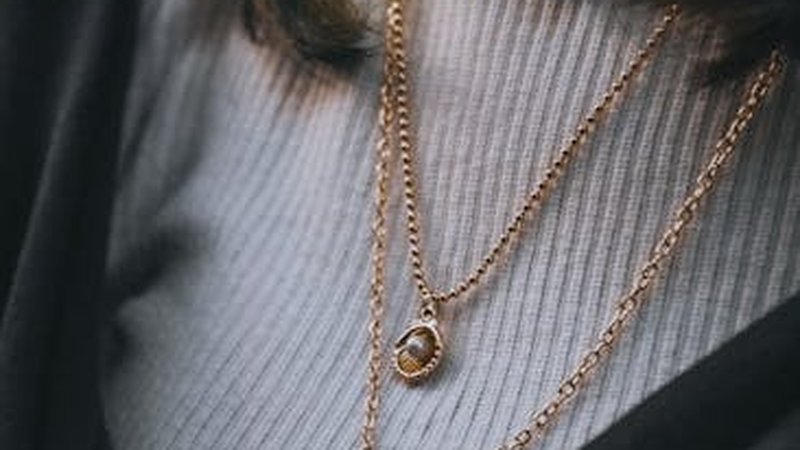
I'll admit it — I spent an embarrassing amount of time scrolling through Instagram saved folders full of women wearing perfectly stacked necklaces. Three delicate chains, a pendant, maybe a choker, all sitting at exactly the right intervals on their collarbones like some kind of jewelry sorcery. So obviously, I grabbed three random necklaces from my jewelry box and threw them on. Within twenty minutes, I had what can only be described as a metallic pretzel hanging around my neck. One chain had twisted around another, the pendants were buddies now, and the whole thing looked like I'd gotten into a fight with a jewelry tree and lost.
That was about a year ago. Since then, I've read way too much about necklace layering, made every mistake in the book, and finally figured out what actually works. This layered necklace guide is everything I wish someone had handed me before I ever attempted three chains at once.
The One Rule That Actually Matters
If you take nothing else from this entire article, remember this: your chains need at least a 2-inch gap between each length. That's it. That's the secret. When chains sit too close together, they tangle, they compete visually, and the whole layered look collapses into a messy jumble.
Here are the standard necklace lengths you'll see everywhere, measured from clasp to clasp:
Choker: 14–16 inches — sits right against the throat
Princess: 17–19 inches — lands on the collarbone, the most versatile length
Matinee: 20–24 inches — falls between the collarbone and the bust
Opera: 28–34 inches — well below the bust, more of a statement piece
For everyday layering, you'll mostly work with choker, princess, and matinee lengths. The 2-inch minimum gap means a choker at 14 inches pairs best with a princess at 16 or 17, and then a matinee at 20 or beyond. Skip the incremental lengths when you're stacking — a 16-inch and a 17-inch necklace will be at each other's throats all day.
Length Combinations That Actually Work
After a lot of trial and error (and some truly awful outfits), these are the layering combos I keep coming back to:
The Classic Three-Layer (14" + 18" + 24")
This is your go-to when you want to look put-together without overthinking it. The 4-inch gap between the choker and the middle chain, plus the 6-inch gap to the longest layer, gives you a clean cascade that works with most necklines. I wear this combination probably three times a week. The short chain hugs the neck, the middle one frames the collarbone, and the longest one adds visual length. It's foolproof.
The Minimalist Two-Layer with a Pendant (16" + 20")
Not every outfit needs three necklaces. Sometimes two is exactly right — especially for work or casual days. The trick here is to put a pendant on the longer chain only. A simple chain at 16 inches plus a pendant necklace at 20 inches gives you structure without clutter. I love this combo with a plain white tee or a button-down with a couple buttons undone. It says "I tried" without screaming it.
The Contrast Stack: Choker + Long Chain (15" + 30")
This one's bolder. A tight choker right at the throat paired with a long opera-length chain creates this cool tension between delicate and dramatic. The big gap between the two lengths is what makes it work — they're so far apart that they read as two separate statements rather than a failed attempt at layering. I break this out for going-out outfits or when I'm wearing something simple and want one strong accessory moment.
Thickness: The Golden Ratio
Here's something nobody told me early on: chain thickness matters more than you'd think, and mixing thicknesses wrong is a fast track to visual chaos.
The rule of thumb that works best for me is the one bold + two delicate approach. If you're wearing three chains, make one of them noticeably thicker or chunkier than the other two. The thick chain becomes your anchor piece, and the two thinner chains complement it without fighting for attention. If all three chains are the same thickness, they blend together and you lose the dimension that makes layering look good in the first place.
If you're only doing two layers, you can go either way — two thin chains for subtlety or one thin and one thick for contrast. Just avoid two thick chains together. That's a lot of metal happening in the same area.
Metal and Material Matching
All Gold or All Silver
The safest and most polished route. Staying within one metal family gives you a cohesive, intentional look. All gold layers feel warm and luxurious. All silver layers feel clean and modern. This is what I'd recommend if you're just starting out with layering — it's nearly impossible to mess up.
Mixed Metals (Gold + Silver)
Mixed metal layering is trendy right now and it can look incredible — but it's harder to pull off than Instagram makes it seem. The key is making the mixing look deliberate rather than accidental. If you're going to mix, try to have one dominant metal (say, two gold chains) and one accent piece in the other metal (one silver chain). That way it reads as a choice, not a mistake.
I'd also suggest keeping the mixed-metal look to two layers maximum. Three chains in two different metals starts to look scattered unless you really know what you're doing.
Same Color, Different Textures
This is an underrated approach. You can wear all gold but mix a cable chain, a box chain, and a rope chain. The color stays unified but the different textures add visual interest. Same idea with silver — try a snake chain next to a curb chain next to a bead chain. You get depth without the risk of mixed metals.
The Pendant Rule
Okay, this one's important because it's the mistake I made on my very first attempt: only one layer should have a pendant or charm.
When every chain has something dangling from it, the pendants end up bumping into each other, tangling, and creating visual noise. Pick your statement piece — the chain with the pendant — and keep every other layer as a plain chain. The pendant becomes the focal point and the other chains become the frame around it.
If you absolutely must have pendants on two layers (I've done it, I won't judge), make sure they're very different sizes and the chains are far enough apart that they don't interact. A tiny coin pendant on a short chain and a larger crystal pendant on a much longer chain can work. Two similar-sized pendants on similar-length chains will not.
How to Keep Chains From Tangling
Even with perfect length spacing, chains can still tangle throughout the day. Here are the tricks that actually help:
Buy pre-connected layered necklaces. This is the lazy solution and honestly the best one. A lot of brands sell 2-in-1 or 3-in-1 layered necklaces where the chains are already connected at the clasp. They can't tangle because they're physically attached to each other. The downside is less customization, but if you just want the look without the hassle, this is the way.
Use a clasp extender or connector ring. You can buy little connector rings that clip all your necklace clasps together at the back. This keeps the chains anchored at one point and reduces tangling significantly. Extenders also let you fine-tune lengths if your chains are a bit too close together.
Put clasps on opposite sides. This sounds minor but it helps. Instead of clasping all three necklaces at the back of your neck, try putting the clasp of the shortest chain at the back and the clasp of the longest chain slightly to the side. The asymmetry changes how the chains drape and makes them less likely to cross paths.
Give each chain a quick untwist after putting it on. Before you walk out the door, run your fingers along each chain individually and make sure it's hanging flat. Most tangles start from a chain that was already slightly twisted when you clasped it.
Neckline Pairing Guide
The best layered necklace in the world will look off if it doesn't work with your top. Here's my quick-reference guide:
V-neck: Your best friend for layering. Two or three chains follow the V-shape naturally and the open space gives each chain room to be seen. This is where the classic three-layer stack shines.
Round or crew neck: Keep it simpler. A choker plus one longer chain works well. The higher neckline already fills in the space near your collarbone, so too many chains will feel cramped. I usually go with a 15-inch choker and an 18-inch pendant for crew necks.
Off-the-shoulder or strapless: Go for it with longer layers. Multiple chains at matinee length (20–24 inches) look incredible with bare shoulders because there's nothing competing for attention. This is the one scenario where I'd say stack freely.
Turtleneck or high neck: Just skip it. Seriously. There's nowhere for the necklaces to sit, they'll bunch up on top of the fabric, and it's not a good look. Save your layering game for lower necklines.
Scoop neck: Similar to V-neck but with more curve. Two to three layers work well here. The wider opening gives you plenty of canvas.
Button-down (partially unbuttoned): The peek-through effect is gorgeous with one or two delicate chains. Keep it minimal — the shirt itself is already providing structure.
Mistakes I Made So You Don't Have To
Let me save you some embarrassment by listing every layering sin I've committed:
Three pendants, zero plain chains. My first attempt, as mentioned. Three chains, each with a different charm. They tangled immediately and looked like a craft store exploded on my chest. Lesson: one pendant max, period.
Chains too close in length. I once wore a 16-inch and a 17-inch together because they were both pretty. They sat on top of each other all day and I kept having to separate them. A 2-inch minimum gap isn't a suggestion — it's a requirement.
Same thickness on every chain. Three thin box chains at 14, 18, and 22 inches. Technically the lengths were fine, but because every chain had the same visual weight, they all sort of blended into one thick-looking mass. The whole point of layering is creating visual separation and depth. Same thickness defeats that purpose.
Layering over a crew neck t-shirt. Three chains on a tight round-neck tee. The top chain kept getting pushed up by the collar, the middle chain disappeared into the neckline, and the bottom chain sat awkwardly on the fabric. Crew necks want one, maybe two simple chains — not a full stack.
Not checking the back. I once walked around for half a day with three separate clasps all bunched up at the nape of my neck like a metal knot. Nobody told me. I looked like I was wearing a necklace disaster. Check the back, people.
Building Your Layering Collection
You don't need twenty necklaces to start layering well. Here's what I'd recommend as a starter kit:
A simple choker or collar necklace (14–15 inches, plain chain). A medium-length chain (17–18 inches). A longer chain (22–24 inches). And one pendant necklace at whatever length looks best on you — this will be your statement piece.
Start with two chains. Get comfortable with how they sit together. Then add the third when the two-chain combo feels natural. There's no rush to become a layering expert overnight. I definitely wasn't.
Layered necklaces are one of those details that can elevate even the most basic outfit — a plain white t-shirt and jeans suddenly look intentional with the right chain combination. It just takes a little understanding of length, proportion, and restraint. And significantly less tangling than my first attempt.


Comments