What Is Larimar? 6 Questions About the Blue Stone You Can Only Find in One Country
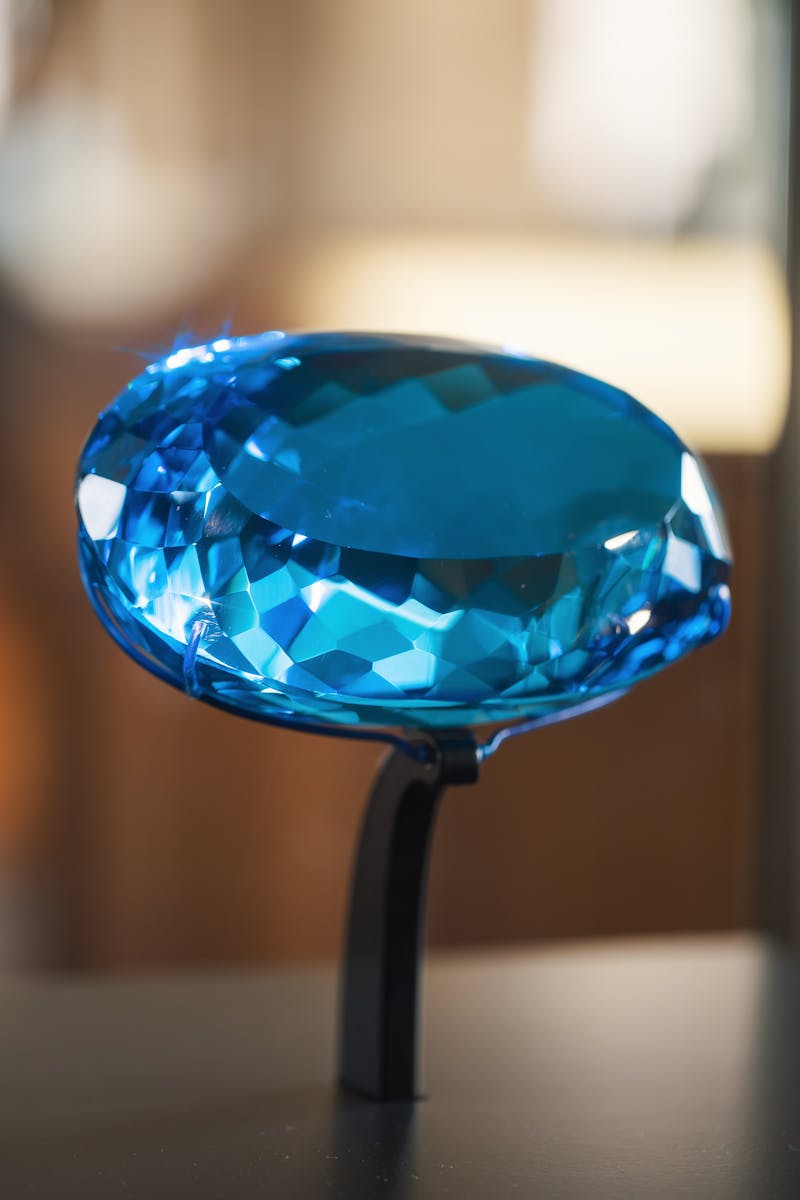
What Is Larimar? 6 Questions About the Blue Stone You Can Only Find in One Country
Meta description: Larimar only comes from one mine in the Dominican Republic. Here's what makes this rare blue pectolite special, from its volcanic origins to how to wear it without damaging it.
There's a stone the color of shallow Caribbean water that exists in exactly one place on earth. Not one continent. Not one country. One mine, in one province, on one island. I first saw larimar at a gem show in Tucson and assumed it was dyed howlite or treated turquoise. The vendor laughed and told me I wasn't the first person to think that. Then she told me something that stopped me mid-handling: it comes from a volcano.
[IMG: Raw larimar specimen showing natural blue and white patterns against a dark background]
Where does larimar actually come from?
The only commercial source of larimar is a single volcanic deposit near the town of Los Chupaderos, in the Barahona province of the Dominican Republic. The mine sits about 10 kilometers inland from the southwestern coast, wedged into the side of a basaltic hill formed by ancient volcanic activity. Miners dig by hand through dense laterite soil, and the work is slow. Production has never been large, and the stone has never been found in commercially viable quantities anywhere else.
Geologists have identified pectolite deposits in a few other locations, including parts of Canada, the US, and Japan. But those deposits produce white or colorless pectolite, not blue. The copper substitution that gives larimar its color seems specific to the Dominican volcanic environment, likely tied to the interaction between pectolite-forming hydrothermal fluids and copper-bearing minerals in the local basalt.
The Dominican government knows how valuable this exclusivity is. Export of raw larimar is restricted, and the stone has been promoted as a national treasure since the 1990s.
What mineral is larimar, technically?
Larimar is pectolite, a calcium sodium silicate mineral with the formula NaCa₂Si₃O₈(OH). On the Mohs scale it sits between 4.5 and 5, which puts it softer than apatite and about the same hardness as a copper coin. That's important context for anyone thinking about daily wear.
The blue color isn't from a separate pigment or dye. It comes from copper ions (Cu²⁺) that substitute into the crystal structure during formation, replacing some of the calcium. More copper means deeper blue. Less copper shifts the stone toward white or light gray. The characteristic patterns you see in polished pieces, those swirly clouds of white running through blue, represent variations in copper content during the crystal growth process. Some people call these patterns "volcanic blue" when the color is particularly saturated, though that's a trade term rather than a geological classification.
[IMG: Polished larimar cabochon displaying the typical blue and white cloud pattern in natural light]
Who found it and how did it get its name?
The story goes that a Peace Corps volunteer named Norman Rilling and a Dominican geologist named Miguel Méndez were walking along a beach near Barahona in 1974 when they noticed blue pebbles in the sand. They traced the stones upstream to their source and confirmed the find. Some accounts place the initial discovery a few years earlier, with local residents noticing the blue stones washing down the Bahoruco River during heavy rains, but Méndez and Rilling get the formal credit.
Miguel Méndez named the stone by combining the first syllable of his daughter's name, Larissa, with the Spanish word for sea, "mar." So larimar is, more or less, "Larissa's sea." I think that's a better origin story than most gemstone names get. Many stones are named after their discoverer or their chemical composition. Larimar is named after a geologist's daughter and the ocean that colored it.
The stone caught on quickly in the local market and then in the broader Caribbean jewelry scene, but it didn't reach the US gem market in any significant way until the early 1980s. Even now, outside of specialist gem circles and Caribbean tourism shops, larimar is not widely known.
Why is larimar so expensive compared to other colored stones?
The price of larimar reflects genuine scarcity. A decent quality cabochon, say a 10mm round with good blue color and interesting pattern, typically runs between $8 and $25 retail. A large pendant stone with deep volcanic blue can exceed $100. Compare that to blue howlite (dyed, essentially the same look) at $1-3 per cabochon, and you see the premium people pay for the real thing.
But rarity alone doesn't explain all of it. Mining costs are high because the deposit is hard to access and the stone fractures easily during extraction. A lot of rough material is lost to cracking before it ever reaches a cutting wheel. The yield of jewelry-grade material from raw larimar is estimated around 15-20%, meaning miners process a lot of waste rock to get sellable stones. That inefficiency drives the price up.
There's also the tourism factor. Most larimar is sold in the Dominican Republic to visitors, and tourist-oriented pricing is always higher than wholesale. If you buy larimar outside the DR, you're paying additional margins for import, distribution, and retail markup. I've seen the same quality stone priced three times higher in a Florida gallery compared to what a vendor in Santo Domingo was asking.
Can you wear larimar every day?
I wouldn't recommend it for a ring or bracelet that takes regular contact with hard surfaces. At Mohs 4.5-5, larimar will scratch from household dust (which contains quartz particles at Mohs 7). It will chip if knocked against a counter or door frame. This is a pendant and earring stone, something that hangs and moves gently rather than gets bumped.
Heat is another concern. Prolonged direct sunlight can cause the blue color to fade, which is unusual for a mineral whose color comes from structural copper rather than an organic pigment. But thermal expansion at high temperatures can create microfractures that whiten the stone's appearance over time. If you live in a hot climate and leave larimar on a sunny windowsill for weeks, you might notice it looking paler when you come back to it.
The best storage is a soft pouch away from harder stones. Anti-tarnish paper isn't necessary since larimar doesn't oxidize, but it should be kept somewhere with stable humidity. Extreme dryness can make it more brittle.
[IMG: Larimar pendant on a simple silver chain, showing how the stone catches light through its translucent blue sections]
Is larimar treated or enhanced?
Most larimar on the market is natural and untreated. The color you see is the color that came out of the ground. Some lower-grade material gets stabilized with a clear resin to improve durability, similar to how turquoise is sometimes treated. This isn't common in the higher-end market, but it happens with commercial grade stones sold in tourist shops.
Dyed howlite is the main imitation to watch for. Howlite is white with gray veining, and when dyed blue, it can look superficially similar to larimar, especially from a distance. The giveaway is the matrix pattern: howlite has a web-like gray veining that's irregular and dark, while larimar has soft, cloud-like white patterns that blend into the blue rather than forming sharp lines. If you're unsure, a basic scratch test works. Howlite is Mohs 3.5, so a steel knife will mark it. Larimar, at 4.5-5, will resist.
If the price seems too good to be true, it usually is. Genuine larimar with strong blue color under $5 for a finished piece should raise questions. The stone is too scarce and too difficult to mine for that kind of pricing to be sustainable with real material.
Related Articles
- Sunstone bracelet: the stone that literally catches light
- Serpentine Bracelet: The Green Stone Named After Snakes for a Reason
- Moonstone Complete Guide: Meaning, Properties, and How to Use It
- Tarnish on silver jewelry explained: why it happens and how to reverse it
- How to stack bracelets: a practical guide to getting it right
Comments