The Difference Between Lab-Grown and Natural Diamonds
Why This Question Matters More Than Ever
The diamond market has changed dramatically in the past decade. Lab-grown diamonds have gone from a niche curiosity to a mainstream product that sits in display cases right next to natural diamonds in jewelry stores around the world. If you are shopping for an engagement ring or any significant diamond purchase, understanding the real differences between these two types of diamonds is essential. This is not a simple question with a simple answer. The distinction involves chemistry, geology, economics, and personal values in ways that most buyers do not expect.
Let me be clear about something upfront: lab-grown diamonds are real diamonds. They are not diamond simulants like cubic zirconia or moissanite. They have the same chemical composition, the same crystal structure, the same optical properties, and the same physical hardness as natural diamonds. A lab-grown diamond is, in every scientifically meaningful sense, a diamond. The question is not whether one is "real" and the other is "fake." The question is about origin, value, and what matters to you as a buyer.
How Natural Diamonds Form
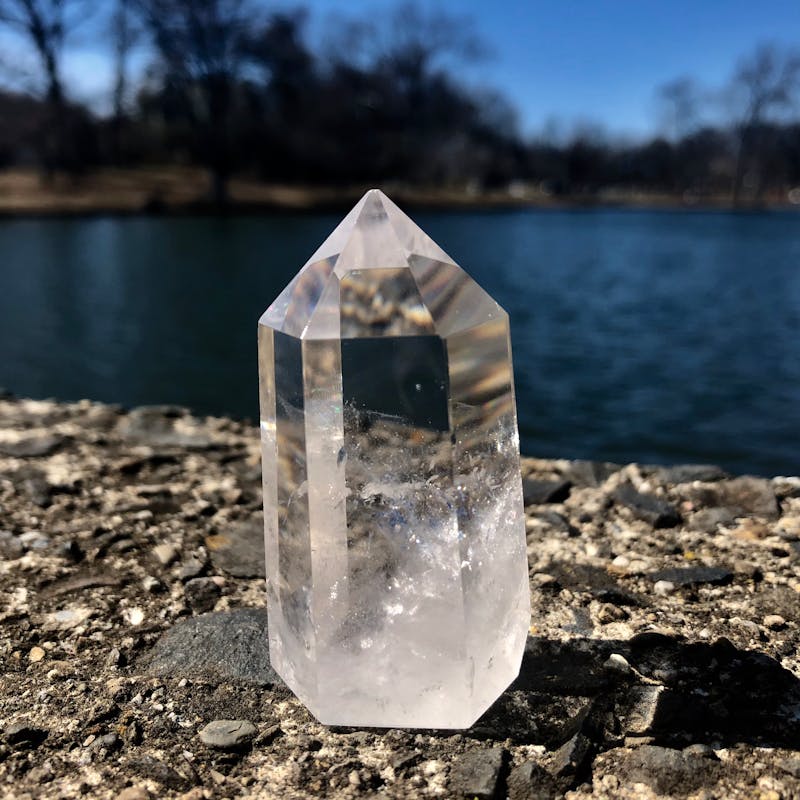
Natural diamonds form deep within the Earth's mantle, roughly 150 to 250 kilometers below the surface. At these depths, temperatures reach 900 to 1,300 degrees Celsius, and pressures are approximately 45 to 60 kilobars, which is about 45,000 to 60,000 times atmospheric pressure at sea level. Under these extreme conditions, carbon atoms arrange themselves into the crystal lattice structure that gives diamond its extraordinary hardness and brilliance.
Most natural diamonds that reach the surface were brought up by volcanic eruptions through structures called kimberlite pipes. These are deep, narrow channels formed by magma moving rapidly from the mantle toward the surface. The journey from formation to the surface takes millions of years. The diamonds that survive this violent transport and are accessible through mining represent a tiny fraction of the diamonds that actually formed in the mantle. Most remain buried too deep to ever be reached.
The Age of Natural Diamonds
One of the most remarkable facts about natural diamonds is their age. Most mined diamonds are between one billion and 3.5 billion years old. That means the diamond in a piece of jewelry was forming beneath the Earth's surface before multicellular life existed, before the first fish swam in the oceans, before the first plants grew on land. This deep time is part of what gives natural diamonds their mystique and, for many buyers, their emotional significance. A natural diamond is a genuine piece of the Earth's history, preserved in crystal form for billions of years.
This age also means that every natural diamond is unique in ways that go beyond the standard grading metrics. The specific trace elements and inclusions trapped within each stone tell a story about the conditions deep in the mantle at the time and place of its formation. No two natural diamonds have exactly the same internal characteristics when examined at high magnification.
How Lab-Grown Diamonds Are Made
Lab-grown diamonds are produced using two main methods, both of which replicate the conditions under which natural diamonds form, but in a controlled laboratory environment. The first method is High Pressure High Temperature, or HPHT. In this process, a small diamond seed is placed in a chamber where carbon source material is subjected to extreme pressure and temperature, similar to conditions in the Earth's mantle. Carbon dissolves in a metal catalyst and precipitates onto the seed crystal, gradually building up a larger diamond layer by layer.
The second method is Chemical Vapor Deposition, or CVD. In CVD, a diamond seed is placed in a vacuum chamber, and a mixture of methane and hydrogen gases is introduced. Microwave energy or hot filaments break apart the methane molecules, releasing carbon atoms that settle onto the seed crystal and build up a diamond layer. CVD operates at much lower pressures than HPHT and produces diamonds with somewhat different growth characteristics. Both methods can produce gem-quality diamonds that are visually indistinguishable from natural diamonds without specialized testing.
Can You Tell the Difference?
To the naked eye, no. A trained gemologist with a standard loupe cannot reliably distinguish a lab-grown diamond from a natural one. Both have the same refractive index, the same dispersion, the same hardness, and the same overall appearance. Even under standard gemological microscopy, the differences are subtle and require specific training to identify. Lab-grown diamonds often have metallic inclusions from the HPHT growth process or specific growth patterns visible under certain lighting conditions, but these are not features that most people would notice or know to look for.
The definitive way to tell the difference is through laboratory testing. Major gemological laboratories like the Gemological Institute of America (GIA) and the International Gemological Institute (IGI) use specialized instruments to detect the subtle differences in trace elements, growth patterns, and fluorescence that distinguish lab-grown from natural diamonds. Any reputable lab-grown diamond sold today should come with a certification that clearly identifies it as laboratory-grown. This disclosure is required by law in many countries, including the United States under Federal Trade Commission guidelines. If you encounter a dealer who cannot or will not confirm the origin of a diamond, that is a significant red flag regardless of the price.
The Price Difference and What It Means
This is where the distinction becomes practically important for most buyers. Lab-grown diamonds typically cost 40 to 80 percent less than comparable natural diamonds, depending on size, quality, and market conditions. A one-carat lab-grown diamond with good cut, color, and clarity might cost $1,500 to $3,000, while a similar natural diamond would typically range from $4,000 to $8,000 or more. The gap is even larger for bigger stones. At two or three carats, lab-grown diamonds can be a fraction of the natural price.
However, there is an important caveat that many buyers do not consider: the resale value. Natural diamonds have historically held their value reasonably well, particularly high-quality stones with strong grading. Lab-grown diamonds, by contrast, have been experiencing significant price declines as production technology improves and supply increases. A lab-grown diamond purchased today may be worth considerably less in five or ten years. If you are buying a diamond as an investment or care about long-term value retention, this is a critical factor to weigh.
Why Lab-Grown Diamond Prices Keep Falling
The economics of lab-grown diamond production are fundamentally different from mining. Mining requires enormous capital investment in exploration, equipment, and infrastructure, and there is a finite supply of economically viable deposits. Lab-grown diamond production, on the other hand, is essentially a manufacturing process. As the technology improves, costs come down, and more producers enter the market. The cost of producing a lab-grown diamond has been dropping steadily for years, and there is no reason to expect this trend to reverse.
Major diamond mining companies like De Beers have responded to this competitive pressure by launching their own lab-grown diamond brands at lower price points, which has further commoditized the market. Some industry analysts predict that lab-grown diamond prices will eventually approach the cost of production plus a modest margin, which could make them significantly cheaper than they are today. This is great news for buyers who prioritize upfront savings, but less encouraging for those who view their purchase as a store of value.
Environmental and Ethical Considerations
The environmental argument for lab-grown diamonds is more nuanced than most marketing suggests. Lab-grown diamond production requires substantial energy, particularly for the HPHT process. If that energy comes from fossil fuels, the carbon footprint can be significant. Some estimates suggest that producing a one-carat lab-grown diamond can generate 100 to 200 kilograms of carbon dioxide equivalent, depending on the energy source and production method. Mining natural diamonds also has a substantial environmental footprint, including land disturbance, water use, and energy consumption for extraction and processing.
On the ethical front, lab-grown diamonds have a clearer advantage. The natural diamond industry has made significant progress in addressing conflict diamond issues since the Kimberley Process was established in 2003, but concerns about labor practices, environmental degradation, and community displacement in mining regions persist. Lab-grown diamonds sidestep these issues entirely, which is appealing to consumers who want their purchase to align with their values. However, the lab-grown industry is not without its own labor concerns, particularly in countries where production facilities operate with less regulatory oversight.
Making the Right Choice for You
There is no objectively correct choice between natural and lab-grown diamonds. The right decision depends on what you value most. If deep geological history, tradition, and potential long-term value retention are important to you, a natural diamond is likely the better choice. If you want the look and durability of a diamond at a lower price, or if ethical and environmental considerations are your priority, a lab-grown diamond may be more appealing. Many couples are also choosing to allocate the savings from a lab-grown diamond toward a better setting, a larger stone, or other priorities in their lives. Whatever you decide, make sure you are buying from a reputable source with proper certification, and understand exactly what you are getting for your money.
Comments