Lab Grown vs Natural Diamonds: The Complete Honest Guide
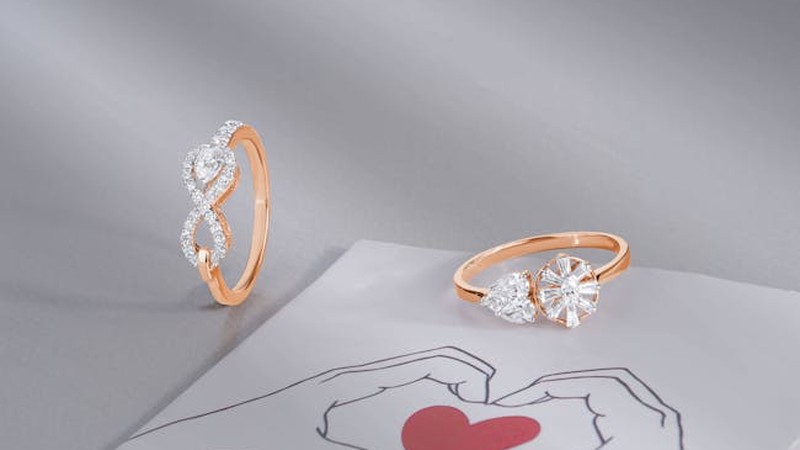
Last spring, my friend Marcus sat across from me at a coffee shop, staring at his laptop like it had personally insulted him. He was two weeks out from proposing to his girlfriend, and he'd narrowed it down to two diamonds — one natural, one lab-grown — that looked identical on screen but had wildly different price tags. He kept refreshing the same comparison page, going back and forth, asking me the same question: "Are lab grown diamonds even real?"
I told him to close the laptop and listen. Because the answer isn't as simple as "yes" or "no," and it's definitely not what most jewelry store salespeople will tell you. After watching Marcus agonize over this decision for days — and eventually helping him land on a stone that made both his girlfriend and his bank account happy — I figured it was worth writing everything down. If you're in the same boat, here's what you actually need to know about lab grown vs natural diamonds.
What Exactly Is a Lab-Grown Diamond?
Let's start with the most common question I hear: are lab grown diamonds real? The short answer is yes. They're not cubic zirconia. They're not moissanite. They're not glass or rhinestone or whatever else your skeptical aunt told you about at Thanksgiving.
A lab-grown diamond is a diamond. Period. It has the same chemical composition (pure carbon arranged in a crystal lattice), the same physical properties (10 on the Mohs hardness scale), and the same optical characteristics (that famous fire and brilliance) as a diamond pulled out of the earth. A jeweler with a standard loupe cannot tell the difference. Even most gemological labs need specialized equipment to distinguish them.
So how do they make them? There are two main methods, and understanding both helps explain why they're the real deal.
HPHT: The Pressure Cooker Method
HPHT stands for High Pressure High Temperature, and it's basically what the earth does, just sped up. Scientists take a tiny diamond "seed" — a sliver of natural diamond — place it in a chamber, and subject it to extreme heat (around 1,500°C) and extreme pressure (roughly 1.5 million pounds per square inch). Under these conditions, carbon atoms bond to the seed and crystallize layer by layer, growing into a full diamond over a matter of weeks.
This method has been around since the 1950s. It was originally developed for industrial purposes — think diamond-tipped drill bits and saw blades — but the technology has gotten sophisticated enough to produce gem-quality stones.
CVD: The Space-Age Method
CVD stands for Chemical Vapor Deposition, and it sounds like something out of a sci-fi movie. Instead of crushing carbon with pressure, this method uses a plasma reactor. A diamond seed is placed in a vacuum chamber filled with carbon-rich gases (usually methane and hydrogen). The gases are ionized into plasma, and carbon atoms literally rain down onto the seed, building up layer by layer at temperatures around 800–1000°C.
CVD diamonds tend to have fewer metallic inclusions than HPHT diamonds, and the process allows for more control over the final color and clarity. It's the newer of the two methods and is increasingly popular among lab-diamond producers.
Both methods produce real diamonds. The Federal Trade Commission updated its guidelines in 2018 to explicitly state that lab-grown diamonds are, in fact, diamonds. No qualifiers needed.
So What's the Difference, Then?
If they're chemically identical, you're probably wondering why anyone still buys natural diamonds. And that's a fair question. The differences are real, but they're mostly about origin, perception, and economics — not about the stone itself.
Price: The Big One
This is where most people perk up. Lab-created diamonds typically cost 30–70% less than natural diamonds of equivalent quality. For Marcus, that meant choosing between a 1-carat natural diamond for about $5,500 or a 1.5-carat lab-grown diamond for roughly the same price. Same cut, same color grade, same clarity — but noticeably larger and still cheaper.
Why the gap? Natural diamonds are scarce — or at least, the supply is tightly controlled. The mining process is expensive, and decades of marketing (hello, De Beers) have created perceived value that goes beyond the physical properties of the stone. Lab-grown diamonds don't have that scarcity premium. The technology is getting more efficient every year, and prices have been steadily dropping since lab diamonds hit the consumer market in any meaningful way.
Some people see the price difference as a red flag — "if it's that cheap, something must be wrong." But it's really just economics. It costs significantly less to grow a diamond in a controlled environment over a few weeks than to dig one out of the ground, ship it across multiple continents, and run it through a supply chain built over a century.
Resale Value: The Elephant in the Room
Okay, here's where things get a bit uncomfortable, and I think it's important to be honest about it. Natural diamonds hold their resale value better than lab-grown diamonds. Not great — the diamond resale market is rough for everyone — but better.
If you buy a natural diamond at retail and try to sell it a few years later, you might get 30–50% of what you paid, depending on the stone and the buyer. Lab-grown diamonds? You're looking at more like 10–25%. Some jewelers won't even buy them back. The reason is simple: as production technology improves and prices continue to fall, the lab-grown diamond you buy today will likely be worth less tomorrow. It's like buying a TV — it depreciates.
Marcus was initially bothered by this. He wanted the ring to be an "investment." But here's the thing most people don't talk about: engagement rings are almost never good investments. The markup on retail diamonds is enormous, and the secondary market reflects that. If you're buying a diamond as a financial play, you're doing it wrong. If you're buying it as a symbol of commitment, then the resale value is honestly secondary.
Environmental and Ethical Considerations
This is where lab-grown diamonds have a genuinely strong case, though it's not as one-sided as some marketing would have you believe.
Traditional diamond mining is environmentally intensive. It involves moving enormous amounts of earth — roughly 250 tons of earth are displaced for every single carat of diamond. Mining operations can contaminate local water supplies, destroy ecosystems, and leave behind massive open pits. Then there's the human cost. The term "blood diamonds" or "conflict diamonds" refers to stones mined in war zones and sold to finance armed conflict. While the Kimberley Process was established in 2003 to prevent these diamonds from entering the market, it's been widely criticized for loopholes and enforcement issues.
Lab-grown diamonds avoid most of these problems. No mining, no displaced communities, no conflict financing concerns. The environmental footprint is lower — though not zero. Growing diamonds requires significant electricity, and if that electricity comes from fossil fuels, the carbon footprint can actually be substantial. Some estimates put the carbon emissions of lab-grown diamonds at roughly three times that of mined diamonds, though this varies wildly depending on the energy source and the specific study you're looking at. Producers who use renewable energy have a much stronger story to tell.
So the ethical picture is nuanced. Lab-grown is better on the mining and conflict front, but the energy question is real. Natural diamonds, despite their problems, do provide employment in developing countries — the industry supports an estimated 10 million people globally. It's not a simple good vs. bad equation.
Can Anyone Tell the Difference?
Short answer: not without equipment. Long answer: still mostly no, but gemological labs can.
Under normal viewing conditions — which is to say, wearing the ring, showing it to friends, having it appraised at a local jeweler — a lab-grown diamond is indistinguishable from a natural one. They look the same. They sparkle the same. They pass the "does it look like a real diamond?" test with flying colors.
Professional gemological laboratories like GIA and IGI can identify lab-grown diamonds using spectroscopic analysis. HPHT diamonds sometimes have metallic inclusions that natural diamonds don't, and both HPHT and CVD diamonds can have specific growth patterns visible under specialized UV lighting. But you need a lab for this, not a jeweler's loupe.
This is worth knowing for disclosure reasons. If you're buying a lab-grown diamond, it will come with a certification that identifies it as such. If you're buying natural, the certification will say that too. You can't (and shouldn't try to) pass one off as the other. It's fraud, and any reputable jeweler will catch it during appraisal.
How to Choose: A Practical Framework
After all the research Marcus and I did, here's the framework that actually helped him decide. Maybe it'll help you too.
Choose Natural If:
You value tradition and the romance of a stone that formed billions of years ago deep within the earth. Resale value matters to you, even if it's marginal. You like the idea of something genuinely scarce and one-of-a-kind — no two natural diamonds are exactly alike, and some people find meaning in that. Your budget allows for it without causing stress. The person receiving the diamond has expressed a preference for natural stones (this one matters more than anything else on this list).
Choose Lab-Grown If:
You want the biggest, highest-quality diamond your budget can stretch to. Ethical and environmental concerns weigh on you. You're practical about the fact that the diamond market is not an investment vehicle. You'd rather put the money you save toward the wedding, a down payment, a trip, or literally anything else. The person receiving the diamond doesn't have a strong preference either way (and in my experience, most people under 35 really don't).
What Marcus Ended Up Choosing
I know you're wondering. Marcus went with a 1.2-carat lab-grown diamond, VS1 clarity, F color, excellent cut. Set in a simple platinum solitaire. Total cost: about $3,200, compared to the $6,000+ he was looking at for a comparable natural stone. He put the savings toward the honeymoon.
His now-fiancée absolutely loves it. When he told her it was lab-grown, her response was, "Oh, cool — it's really sparkly." And that was it. No disappointment, no existential crisis about authenticity. She liked the ring, she liked the size, she liked that he'd thought about it so carefully.
My Honest Take
Lab-grown diamonds are real diamonds. They're not fake, they're not inferior, and they're not a compromise — they're a choice. A smart one for a lot of people, especially if you're working with a budget and want to maximize quality.
Natural diamonds still have a place. There's something genuinely compelling about a stone that took a billion years to form, and the tradition and romance around them isn't nothing. If you can afford it and it matters to you or your partner, go for it.
But don't let anyone — especially someone with a commission on the line — tell you that one is "better" than the other in any objective sense. They're the same material. The difference is in the story you want to tell, and the price you're willing to pay for it.
Do your homework. Set your budget. Have the conversation with your partner. And whatever you choose, don't overthink it — the diamond is just the opening act. The real story is what comes after.
Comments