The Koh-i-Noor diamond: 105 carats of colonial controversy
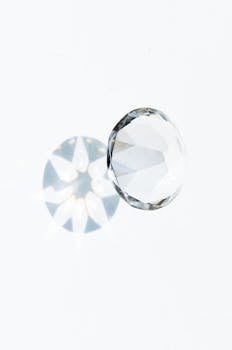
The Koh-i-Noor diamond currently sits in the Tower of London, set into the front of the Queen Mother's Crown, where millions of visitors see it every year. It weighs 105.6 carats. It is colorless, or very nearly so, with a faint blue-white tinge that gemologists sometimes describe as "exceptional white." By any technical standard, it is a remarkable stone. But the Koh-i-Noor is famous not primarily for its appearance. It is famous because at least three countries want it back, and the country that has it refuses to give it up.
India, Pakistan, and Afghanistan have all, at various times, claimed ownership of the Koh-i-Noor. India's claims are the most persistent. The Indian government has formally requested the diamond's return multiple times, most recently in 2023. Pakistan has raised the issue periodically since partition in 1947. Afghanistan has made claims based on the diamond's passage through Afghan hands in the 18th century. The British government's position is straightforward: the diamond was acquired legally under the Treaty of Lahore in 1849, and it is British property.
The dispute over the Koh-i-Noor is not just about a piece of carbon. It is about colonialism, sovereignty, and who gets to write history.
Where the Koh-i-Noor came from
The earliest confirmed reference to the Koh-i-Noor places it in India. The diamond was almost certainly mined in the Golconda region of what is now Telangana, in southern India. Golconda was the world's primary source of diamonds from roughly the 15th to the 18th century. The mines there produced some of the most famous diamonds in history, including the Hope Diamond and the Regent Diamond. The Koh-i-Noor is believed to have been extracted sometime in the 13th century, though the exact date is uncertain.
Its original weight was significantly larger than its current 105.6 carats. The diamond was recut at least twice, most famously in 1852 on the orders of Prince Albert, who was dissatisfied with its appearance. The recutting reduced the stone from roughly 186 carats to its present size but improved its brilliance. Whether this was an improvement or a mutilation depends on your perspective.
The diamond's early history is poorly documented. It appears in various Mughal records and accounts, but the references are sometimes contradictory. It may have been owned by the Kakatiya dynasty of Golconda before passing into Mughal hands. It may have been among the loot taken by various invaders and dynastic rivals over the centuries. The historical record is murky enough that competing claims all have some textual basis, which is part of what makes the ownership dispute so difficult to resolve.
Passage through empires
What is reasonably well documented is the Koh-i-Noor's passage through a series of South Asian empires. By the early 16th century, the diamond was in the possession of the Mughal Empire, which controlled much of the Indian subcontinent. Mughal emperors valued large diamonds as symbols of divine authority. The Peacock Throne, built by Shah Jahan in the 17th century, reportedly held the Koh-i-Noor among its many jewels.
In 1739, the Persian ruler Nader Shah invaded India, sacked Delhi, and looted the Mughal treasury. He took the Peacock Throne and its jewels back to Persia. According to legend, it was Nader Shah who gave the diamond its current name. "Koh-i-Noor" means "Mountain of Light" in Persian. The story goes that when Nader Shah first saw the diamond, he exclaimed "Koh-i-Noor!" and the name stuck. Whether this is true or a later embellishment is unclear, but the name has been in continuous use since the 18th century.
After Nader Shah's assassination in 1747, the Koh-i-Noor passed to Ahmad Shah Durrani, the founder of the Durrani Empire in Afghanistan. It stayed in Afghan hands, with some interruptions, for roughly 70 years. The Afghan period is one of the reasons Afghanistan claims the diamond. Ahmad Shah Durrani's descendants held it until the early 19th century, when it re-entered India through a complex series of diplomatic exchanges and military conflicts involving the Sikh Empire.
By the 1830s, the Koh-i-Noor was in the possession of Ranjit Singh, the founder of the Sikh Empire, who ruled from Lahore in what is now Pakistan's Punjab province. Ranjit Singh valued the diamond and wore it on ceremonial occasions. When he died in 1839, the Sikh Empire began to disintegrate. The Koh-i-Noor became a focal point of the power struggles that followed.
How Britain acquired the Koh-i-Noor
The British East India Company had been expanding its influence in northern India throughout the early 19th century. After Ranjit Singh's death, the Sikh Empire weakened through a series of succession crises and regency conflicts. The British fought two wars against the Sikhs, known as the Anglo-Sikh Wars. The Second Anglo-Sikh War ended in 1849 with the British victory at the Battle of Gujrat.
Under the terms of the Treaty of Lahore, signed on March 29, 1849, the Sikh Empire was annexed by the British. The treaty specifically required the surrender of the Koh-i-Noor diamond to the British Crown. The signatory on the Sikh side was Maharaja Duleep Singh (also spelled Dalip Singh), who was 11 years old at the time. Duleep Singh had been placed on the throne as a child after the death of his father, Maharaja Sher Singh, and the regency council that governed in his name was effectively controlled by the British.
The legality of this transfer is the core of the dispute. The British position is that the Treaty of Lahore was a valid legal instrument signed by the sovereign of the Sikh Empire, and that the diamond was therefore legitimately acquired. Critics argue that an 11-year-old signing under the effective control of a colonial power cannot be said to have freely ceded anything. The British had just defeated the Sikh military, occupied Lahore, and dissolved the Sikh state. The treaty was not negotiated between equals.
The Koh-i-Noor was shipped to England and presented to Queen Victoria in 1850. Victoria wore it as a brooch for several years before it was set into a crown. It has remained in the British royal collection ever since.
The curse of the Koh-i-Noor
A persistent legend holds that the Koh-i-Noor carries a curse: it brings bad luck to any man who wears it, but is safe for women. The origin of this belief is unclear, but it has been circulating since at least the 19th century. The Hindu text commonly cited in connection with the curse states that "only God or a woman can wear it with impunity."
The historical record provides some basis for the superstition. Several male owners of the Koh-i-Noor met violent ends. Nader Shah was assassinated. Ahmad Shah Durrani's empire fragmented after his death. Ranjit Singh died of natural causes, but his successors were deposed, imprisoned, or killed within a decade. Duleep Singh, who surrendered the diamond, lived a troubled life in exile and died in poverty in a Paris hotel room in 1893.
Queen Victoria, by contrast, wore the diamond for years without apparent ill effect. After her, the diamond was worn by Queen Alexandra, Queen Mary, and Queen Elizabeth (the Queen Mother). All lived to advanced ages. The British royal family has apparently taken the curse seriously enough to restrict the diamond's use to female members of the family. No male monarch has worn it since Victoria.
The curse is probably retrospective pattern-matching rather than a real supernatural phenomenon. Many male rulers in South Asian history met violent ends regardless of whether they owned a famous diamond. But the legend has become part of the Koh-i-Noor's mystique and is frequently mentioned in discussions about who should have it.
Modern repatriation demands
India has been the most vocal claimant. The Indian government first raised the issue of the Koh-i-Noor's return in 1947, around the time of independence. Requests have been renewed at various intervals since then. In 2016, the Indian government told the Supreme Court that it would not pursue the diamond's return through legal channels, citing the complexities of international law and the risk of opening claims to other Indian artifacts held abroad. In 2023, however, the Indian government appeared to reopen the issue, stating that it would "make all efforts" to bring the Koh-i-Noor back. The exact legal mechanism for doing so was not specified.
Pakistan has also claimed the diamond, arguing that it was taken from Lahore, which is now in Pakistan. The Pakistani claim was formalized in a parliamentary resolution in 2016. Afghanistan has made less formalized claims, but Afghan officials have periodically raised the issue, pointing to the diamond's passage through the Durrani Empire.
The British government has consistently rejected all claims. The official position is that the diamond was acquired in accordance with the laws of the time and that there is no legal basis for its return. British museums and the royal family have also argued that returning the Koh-i-Noor would set a precedent that could empty museums in London, Paris, and Berlin of artifacts acquired during the colonial era.
The repatriation debate is part of a larger global conversation about colonial-era artifacts. Greece wants the Parthenon Marbles back from the British Museum. Nigeria wants the Benin Bronzes. Ethiopia wants its looted manuscripts. The Koh-i-Noor is the most famous single artifact in this debate, and its resolution, or lack thereof, will influence how similar disputes are handled in the future.
The Koh-i-Noor today
The Koh-i-Noor is on public display in the Jewel House at the Tower of London, set into the front cross of the Queen Mother's Crown. The crown was made in 1937 for Queen Elizabeth, the wife of King George VI, and was placed on her coffin during her funeral in 2002. The crown and the diamond are among the most visited exhibits in the Tower of London, which draws roughly three million visitors annually.
The diamond is small by the standards of modern celebrity gems. The Cullinan Diamond, also in the British royal collection, was cut into several stones, the largest of which (Cullinan I, or the Great Star of Africa) weighs 530 carats. But the Koh-i-Noor has something the Cullinan stones lack: a disputed history. Every facet of its story is contested. Where it was mined, who owned it, how it changed hands, whether its current possession is legitimate — these are questions that have no universally accepted answer.
The Koh-i-Noor is a diamond, and a valuable one, but its real significance is political. It is a physical reminder of the British Empire's expansion into South Asia and the complex legacy of colonialism. That is why it matters, and that is why the debate over its ownership is unlikely to end anytime soon.
Comments