Karat vs Carat: The Difference Explained (With Shopping Examples)
Karat vs carat: the most confusing word pair in jewelry
I've watched jewelry store employees get this wrong. I've seen it misspelled in product listings from major retailers. I've had a gemologist friend sigh deeply when yet another article mixes them up. Karat and carat sound identical, look nearly identical, and mean completely different things. Here's the full breakdown.
What is a karat?
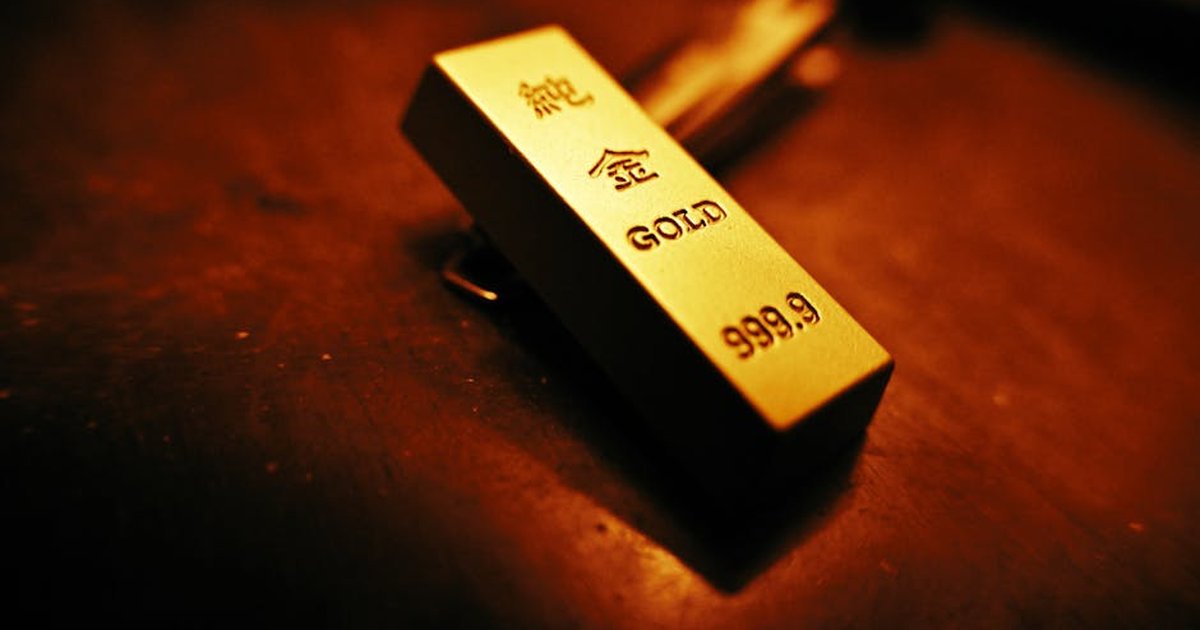
A karat (abbreviated K or kt) is a unit of purity for gold. Pure gold is 24 karats — meaning 24 out of 24 parts are gold, with zero other metals mixed in. That sounds great until you try to wear it. Pure gold is so soft you can bend a 24K ring with your bare hands. It scratches. It dents. It's practically useless for daily-wear jewelry.
That's why most gold jewelry is alloyed — mixed with other metals for strength. Here's what the common karat numbers actually mean:
- 24K — 99.9% gold. Soft, yellow, scratches easily. Common in Indian and Chinese wedding jewelry, rare in Western everyday pieces.
- 22K — 91.7% gold. Still quite soft. Popular in South Asian jewelry. Noticeably warmer yellow than 18K.
- 18K — 75% gold. The sweet spot for fine jewelry in most of the world. Durable enough for daily wear, still visibly rich in color.
- 14K — 58.3% gold. The standard in the United States. Harder, more scratch-resistant, less expensive. The color is paler — more of a muted gold.
- 10K — 41.7% gold. The minimum that can legally be called "gold" in the US. Very durable, very pale, the most affordable option.
- 9K — 37.5% gold. Common in the UK and Australia. Rarely seen in American jewelry stores.
The metals mixed in change the color too. More copper gives you rose gold. More nickel or palladium gives you white gold. More silver gives you green gold (yes, that's real, and no, it's not popular).
What is a carat?
A carat (abbreviated ct) is a unit of weight for gemstones and pearls. One carat equals exactly 0.2 grams, or 200 milligrams. The word comes from carob seeds, which were historically used as counterweights on balance scales because they're remarkably uniform in weight.
Key things to know about carats:
- Carat measures weight, not size. A one-carat diamond and a one-carat ruby can be very different physical sizes because ruby is denser. The diamond will look bigger.
- Carat is not the same as millimeters. Two one-carat diamonds can look different sizes depending on how they're cut. A deep-cut diamond looks smaller face-up than a shallow-cut one of the same weight.
- Price per carat is not linear. A two-carat diamond costs significantly more than twice the price of a one-carat diamond. Larger stones are exponentially rarer.
- The abbreviation matters. "ct" for a single stone. "ct tw" or "tcw" for total carat weight across multiple stones. A ring described as "1 ct tw" might have twenty tiny stones adding up to one carat — not one big one.
Karat vs carat: side-by-side comparison
- What it measures: Karat = gold purity. Carat = gemstone weight.
- Applies to: Karat = gold only. Carat = diamonds, rubies, sapphires, emeralds, and any other gemstone.
- Scale: Karat = 0 to 24. Carat = fractions of a gram (0.2g per carat).
- Abbreviation: Karat = K or kt. Carat = ct.
- Origin: Karat comes from the Arabic "qirat," meaning a small weight of gold. Carat also derives from "qirat" via carob seeds, but the two units diverged centuries ago.
- Spelling difference: In British English, karat is sometimes spelled "carat" for gold purity too, which makes the confusion worse. In American English, the distinction is cleaner: karat for gold, carat for gems.
And then there's "karat" vs "caret"
Just when you thought it couldn't get more confusing, there's a third word: caret. A caret is the proofreading symbol (^) used to mark where something should be inserted in text. It has nothing to do with jewelry. But autocorrect doesn't know that, and I've seen jewelry listings reference "1 caret diamond" more times than I can count.
Why this actually matters when you're shopping
Mixing up karat and carat can cost you real money. Here are the most common scenarios:
Scenario 1: You see "14K, 2ct" on a ring listing. This means 14 karat gold (58.3% pure) with a two-carat total weight of diamonds. Now you know what both numbers mean.
Scenario 2: A seller advertises "pure carat gold." This is nonsense. They mean either pure karat gold (24K) or they're confusing the terms. Ask for clarification before buying.
Scenario 3: You're comparing two similar rings. One is "18K, 0.5ct" and the other is "14K, 1ct." The first has better gold quality but a smaller diamond. The second has lower gold purity but a bigger stone. Which matters more to you depends on your priorities.
Scenario 4: Someone offers you a "24-carat gold chain." They probably mean 24 karat. But if they actually mean 24 carats of gold by weight, that's a chain weighing 4.8 grams of pure gold — which would cost roughly $300+ just in material. Price check accordingly.
The quick memory trick
Here's how I remember it: Karat has a K because it's about Karat-content (how much gold is in it). Carat has a C because it's about the Carat-weight of a Crystal.
It's not perfect, but it works. Karat = K = gold content. Carat = C = crystal/diamond weight. The British spelling overlap is annoying, but in practice, context makes it obvious. Nobody weighs gold in fractions of a gram when discussing purity, and nobody measures diamond weight on a 24-point scale.
One more thing: points
You'll also see gemstone weight expressed in points, especially for smaller stones. One point equals 0.01 carat. So a "50-point diamond" is a 0.50 carat diamond. A "15-point diamond" is 0.15 carat. This is just a decimal convenience — no new unit to learn, just a different way of writing the same thing.
Points are commonly used for melee diamonds (the tiny accent stones in halo settings and pavé bands). When a ring says "0.35 ct tw," that total weight is usually split across dozens of melee diamonds, each measured in points.
Comments